Spain is one of Europe’s most diverse and captivating destinations, occupying the majority of the Iberian Peninsula in southwestern Europe and bordered by Portugal, France, the Mediterranean Sea, and the Atlantic Ocean. Renowned for its rich cultural heritage, varied landscapes, world-class cuisine, and distinctive regional identities, Spain has long remained among the world’s most visited countries. What distinguishes Spain is the unique variety found within its borders. Visitors can experience the cosmopolitan energy of major cities, centuries of architectural achievement, Mediterranean coastlines, volcanic island landscapes, mountain ranges, historic towns, and some of Europe’s most celebrated culinary traditions, often within a single journey. Each region possesses its own character, customs, gastronomy, and historical influences, creating a destination that feels both unified and beautifully diverse. From the historical sites and renowned museums of Madrid to the architectural masterpieces of Barcelona, the Moorish heritage of Andalusia, the gastronomic excellence of the Basque Country, and the sun-drenched shores of the Balearic and Canary Islands, Spain offers a breadth of experiences that appeal to a wide range of travelers. Whether seeking cultural immersion, coastal escapes, outdoor adventure, culinary discovery, or luxury hospitality, Spain presents opportunities throughout the year. Its extensive transportation network, modern infrastructure, and exceptional collection of hotels and resorts further contribute to its reputation as one of Europe’s most rewarding destinations.
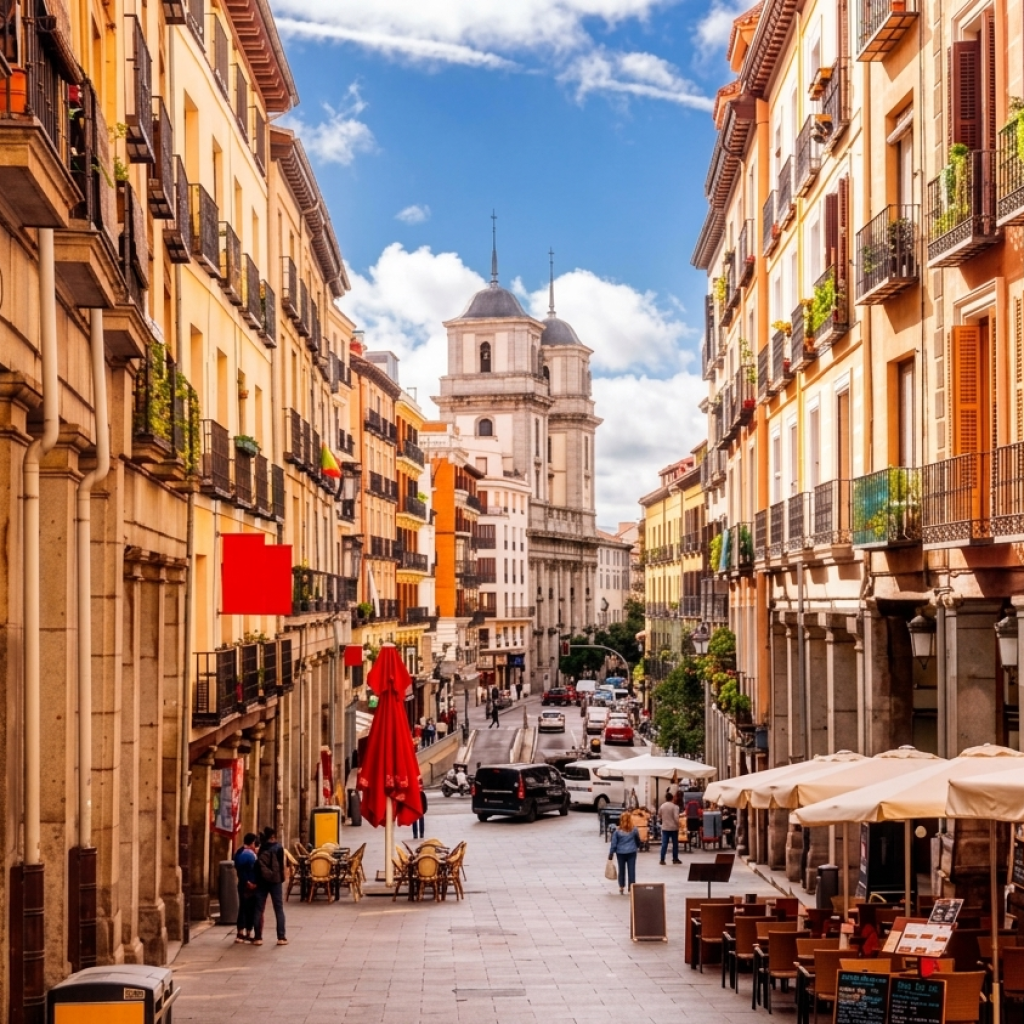
Madrid
Spain’s capital is defined by royal heritage, grand architecture, world-renowned museums, and a culinary scene that continues to evolve alongside centuries-old traditions. Located in the heart of the Iberian Peninsula, Madrid serves as the country’s political, cultural, and economic centre, offering visitors an experience that differs considerably from Spain’s coastal destinations. Monumental landmarks, historic neighbourhoods, extensive green spaces, and some of Europe’s most important art collections make it one of the country’s most rewarding city breaks.
Landmarks & Historical Sites
Royal Palace of Madrid
The Royal Palace serves as the official venue for state ceremonies and remains the largest functioning royal palace in Europe. Visitors can explore lavish reception halls, royal collections, ceremonial rooms, and historic armouries that reflect centuries of Spanish monarchy and court life.
Plaza Mayor
Dating back to the early 17th century, Plaza Mayor has played a central role in Madrid’s public life for generations. The square has hosted markets, celebrations, royal events, and cultural gatherings, and today remains one of the city’s most recognisable landmarks.
Puerta del Sol
Often considered the symbolic heart of Madrid, Puerta del Sol is home to several of the city’s most important monuments, including the famous Bear and Strawberry Tree statue. It also marks Kilometre Zero, the point from which Spain’s national road network is measured.
Almudena Cathedral
Located beside the Royal Palace, Almudena Cathedral combines neoclassical, neo-Gothic, and contemporary architectural influences. Its lengthy construction period, spanning more than a century, has resulted in a distinctive appearance unlike many of Spain’s older cathedrals.
Temple of Debod
One of Madrid’s most unexpected attractions, the Temple of Debod is an authentic ancient Egyptian temple gifted to Spain in recognition of its assistance in preserving Nubian monuments. Positioned within a hilltop park, it also offers some of the city’s finest sunset views.
Gran Vía
Gran Vía is Madrid’s most famous boulevard, lined with theatres, hotels, shops, and notable early 20th-century architecture. The avenue remains one of the city’s busiest districts and serves as a focal point for entertainment, commerce, and nightlife.
Museums & Culture
Prado Museum
The Prado Museum houses one of the world’s most important collections of European art, with works spanning several centuries. Masterpieces by Velázquez, Goya, El Greco, Rubens, and Titian make it an essential destination for anyone interested in art history.
Reina Sofía Museum
Dedicated to modern and contemporary art, the Reina Sofía is best known for displaying Pablo Picasso’s Guernica, one of the most influential works of the 20th century. Its collection also includes works by Salvador Dalí and Joan Miró.
Thyssen-Bornemisza Museum
Completing Madrid’s renowned Golden Triangle of Art, the Thyssen-Bornemisza presents an extensive collection covering artistic movements from the Renaissance through to modern times. The museum provides a broad overview of European painting rarely found within a single institution.
Sorolla Museum
Located inside the former residence of Joaquín Sorolla, this museum offers insight into the life and work of one of Spain’s most celebrated painters. The preserved house, gardens, and personal collections create a more intimate cultural experience than the city’s larger museums.
CaixaForum Madrid
Housed within a striking former power station, CaixaForum hosts rotating exhibitions dedicated to art, photography, science, history, and design. Its distinctive architecture and cultural programme have made it one of Madrid’s leading contemporary cultural venues.
Neighbourhoods & Districts
Salamanca
Salamanca is one of Madrid’s most elegant districts, characterised by wide avenues, refined architecture, luxury boutiques, and high-end dining. The neighbourhood has long been associated with the city’s more affluent residential and commercial life.
La Latina
Known for its historic streets and lively atmosphere, La Latina is one of Madrid’s most popular districts for traditional dining and social gatherings. The area is particularly known for its tapas bars and vibrant weekend activity.
Malasaña
Malasaña has become synonymous with Madrid’s creative and independent spirit. The district combines cultural venues, vintage shops, independent cafés, and nightlife with a strong local character.
Chamberí
Often overlooked by first-time visitors, Chamberí provides a glimpse into everyday life in Madrid. Its residential streets, traditional markets, and local cafés create a more relaxed atmosphere away from the busiest tourist areas.
Lavapiés
Lavapiés is one of Madrid’s most multicultural neighbourhoods, shaped by communities from across the world. The district’s diverse restaurants, galleries, theatres, and cultural spaces contribute to its distinctive identity.
Nightlife & Entertainment
Gran Vía
Often referred to as Madrid’s answer to Broadway, Gran Vía is the centre of the city’s entertainment scene. Historic theatres, live performances, rooftop venues, cinemas, and illuminated landmarks make it one of the busiest areas after sunset. The avenue remains a focal point for both cultural events and nightlife throughout the year.
Chueca
Chueca is one of Madrid’s most vibrant districts and is known for its energetic atmosphere, late-night venues, and diverse social scene. The neighbourhood is filled with restaurants, cocktail bars, terraces, and cultural events that continue well into the evening.
Malasaña Nightlife
Malasaña played a central role in Madrid’s cultural transformation during the late 20th century and remains one of the city’s most popular nightlife districts. Independent music venues, bars, and creative spaces contribute to its distinctive character and youthful atmosphere.
Rooftop Bars & City Views
Madrid’s growing rooftop scene offers visitors panoramic views across the city’s historic skyline. Many terraces overlook landmarks such as Gran Vía, the Royal Palace, and the city centre, providing a different perspective of the Spanish capital after dark.
Nature & Outdoor Attractions
El Retiro Park
Originally created as a royal retreat, El Retiro has become Madrid’s most celebrated public park. Landscaped gardens, monuments, walking paths, and a large boating lake make it a popular destination for both residents and visitors.
Crystal Palace
Situated within El Retiro Park, the Crystal Palace is an elegant glass pavilion originally constructed in the 19th century. Today it hosts rotating exhibitions and contemporary art installations.
Madrid Río Park
Developed along the banks of the Manzanares River, Madrid Río has transformed former infrastructure into a network of parks, gardens, cycling paths, and recreational areas. It provides one of the city’s most extensive outdoor spaces.
Casa de Campo
Covering more than 1,500 hectares, Casa de Campo is Madrid’s largest green space. The park offers walking trails, cycling routes, viewpoints, and access to attractions including the Madrid Zoo and amusement park.
Shopping & Markets
El Rastro
Held on Sundays and public holidays, El Rastro is Madrid’s most famous open-air market. For centuries, visitors have explored its extensive collection of antiques, vintage items, artwork, clothing, books, and local products spread across the historic streets of La Latina.
Mercado de San Miguel
Located near Plaza Mayor, Mercado de San Miguel is one of Madrid’s most celebrated food markets. Visitors can sample a wide variety of Spanish specialities, including seafood, cured meats, cheeses, wines, and traditional tapas.
Salamanca Shopping District
The Salamanca district is home to Madrid’s most prestigious shopping streets. Luxury boutiques, designer brands, elegant architecture, and exclusive retailers have established the neighbourhood as one of Spain’s leading shopping destinations.
Gran Vía Shopping
Alongside its theatres and entertainment venues, Gran Vía also serves as one of Madrid’s principal retail corridors. International brands, flagship stores, department stores, and independent retailers attract shoppers throughout the year
Day Trips & Nearby Destinations
Toledo
Located less than an hour from Madrid, Toledo is one of Spain’s most historically significant cities. Its medieval streets, cathedral, synagogues, and Islamic influences reflect centuries of coexistence between Christian, Jewish, and Muslim communities.
Segovia
Segovia is best known for its preserved Roman aqueduct, one of the finest surviving examples of Roman engineering in Europe. The city is also home to a medieval cathedral and the Alcázar, a fortress that is said to have inspired fairy-tale castles.
El Escorial
Built during the reign of King Philip II, El Escorial combines a royal palace, monastery, library, basilica, and royal pantheon within a single monumental complex. It remains one of Spain’s most important historical sites.
Aranjuez
Situated south of Madrid, Aranjuez is known for its royal palace and extensive landscaped gardens. The town played an important role in Spain’s royal history and remains one of the country’s most elegant historic destinations.
Food & Local Specialties
Cocido Madrileño
Cocido madrileño is Madrid’s signature dish, traditionally prepared using chickpeas, vegetables, meats, and sausages. The meal is often served in multiple stages, reflecting culinary traditions that have endured for generations.
Bocadillo de Calamares
Despite Madrid’s inland location, the bocadillo de calamares has become one of the city’s most recognisable foods. The simple sandwich combines fried squid with fresh bread and is particularly associated with the area surrounding Plaza Mayor.
Callos a la Madrileña
This traditional slow-cooked stew is prepared with tripe, chorizo, and morcilla sausage. Rich and hearty, it remains a staple of many traditional Madrid taverns.
Churros con Chocolate
Popular as both a breakfast and late-evening treat, churros con chocolate consist of fried dough served alongside thick hot chocolate for dipping. The combination has become one of Spain’s most recognisable culinary traditions.
Jamón Ibérico
Served throughout Madrid’s markets, taverns, and restaurants, jamón ibérico is among Spain’s most prized food products. The cured ham is valued for its complex flavour and remains an important part of Spanish gastronomy.
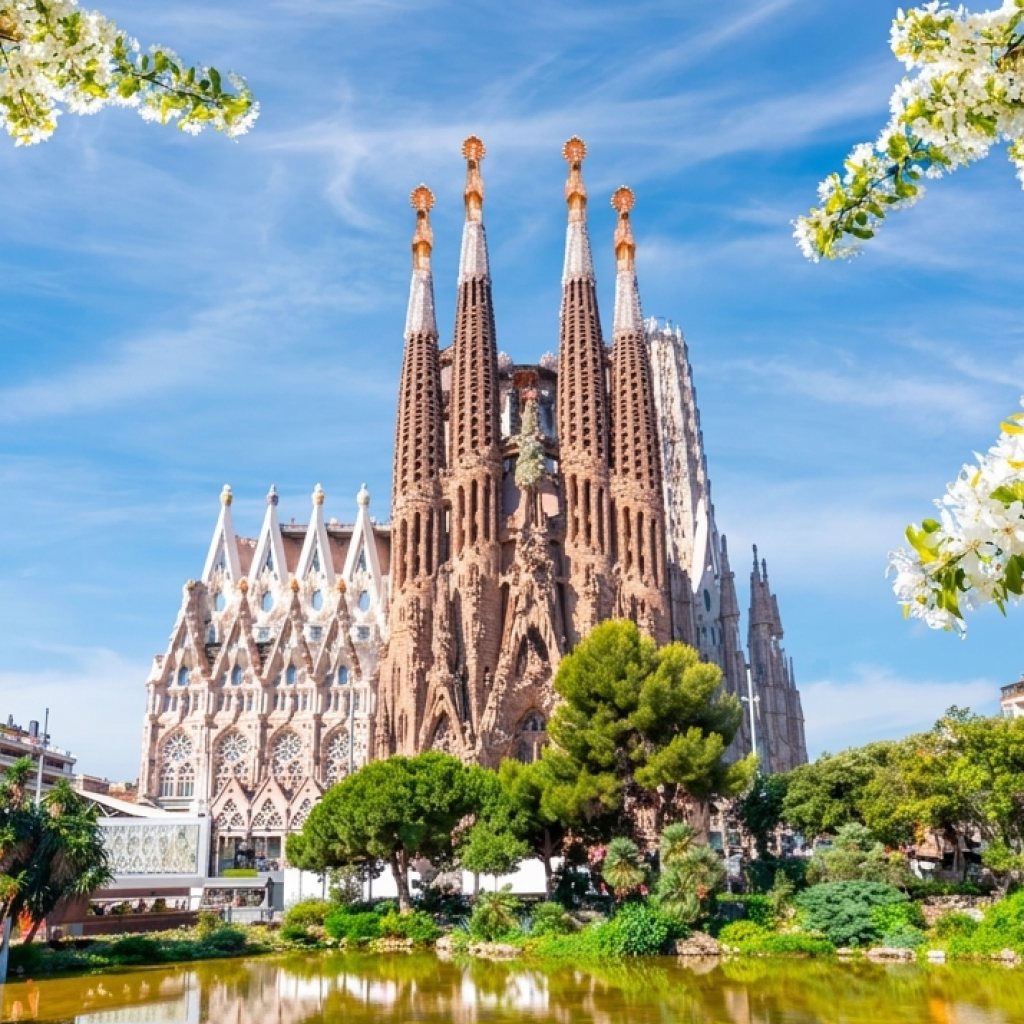
Barcelona
Barcelona is one of Europe’s most distinctive cities, shaped by a combination of Mediterranean coastline, architectural innovation, and a cultural identity deeply rooted in Catalan history and traditions. While the city is internationally recognised for the works of Antoni Gaudí and its vibrant waterfront, the wider Catalonia region extends far beyond Barcelona itself, encompassing medieval cities, mountain landscapes, renowned wine regions, and some of Spain’s most beautiful stretches of coastline. Together, Barcelona and Catalonia offer a blend of culture, history, gastronomy, and natural scenery that differs noticeably from many other parts of the country.
Landmarks & Historical Sites
Sagrada Família
The Sagrada Família is Barcelona’s most recognised landmark and one of the world’s most ambitious architectural projects. Designed by Antoni Gaudí, the basilica combines Gothic and Art Nouveau influences through intricate façades, soaring towers, and highly symbolic design elements that continue to evolve as construction progresses.
Park Güell
Originally conceived as a residential development, Park Güell has become one of Barcelona’s most visited attractions. The site showcases Gaudí’s imaginative use of colour, mosaics, organic forms, and architecture while offering expansive views across the city.
Casa Batlló
Located along the prestigious Passeig de Gràcia, Casa Batlló is one of Gaudí’s most celebrated creations. Its flowing façade, colourful ceramic details, and unconventional design challenge traditional architectural conventions and highlight the architect’s distinctive artistic vision.
Casa Milà (La Pedrera)
Known locally as La Pedrera, this building is recognised for its sculptural stone exterior and striking rooftop chimneys. The structure represents one of the finest examples of Catalan Modernism and remains among Barcelona’s most important architectural achievements.
Gothic Quarter
The Gothic Quarter forms the historic heart of Barcelona and preserves much of the city’s medieval character. Narrow alleyways, hidden squares, Roman remains, and centuries-old buildings create one of the most atmospheric districts in the city.
Arc de Triomf
Constructed as the principal entrance to the 1888 Barcelona Universal Exposition, the Arc de Triomf differs from many European triumphal arches through its distinctive red-brick design. Today it serves as a prominent landmark connecting the city centre with Ciutadella Park.
Beaches & Coastline
Barceloneta Beach
Barceloneta is Barcelona’s most famous urban beach and offers direct access to the Mediterranean from the city centre. Its wide sandy shoreline, waterfront restaurants, and lively promenade make it one of the city’s most visited coastal areas.
Nova Icària Beach
Located near the Olympic Port, Nova Icària provides a more relaxed atmosphere than Barceloneta while remaining easily accessible. The beach is particularly popular among families and visitors seeking a quieter stretch of coastline.
Bogatell Beach
Bogatell is known for its spacious layout and generally calmer atmosphere. The beach attracts both residents and visitors looking for a balance between accessibility and a less crowded environment.
Mar Bella Beach
Situated further along the coastline, Mar Bella offers a broader beachfront and open views of the Mediterranean. Its location away from the busiest tourist areas contributes to a more laid-back atmosphere.
Sitges Beaches
Located southwest of Barcelona, Sitges is one of Catalonia’s most popular seaside destinations. The town combines sandy beaches, a picturesque historic centre, and a vibrant cultural scene that attracts visitors throughout the year.
Costa Brava Coves
The Costa Brava coastline is characterised by rugged cliffs, hidden coves, turquoise waters, and small fishing villages. Many of its secluded beaches can only be reached on foot or by boat, adding to their appeal.
Ocata Beach
Situated in El Masnou, Ocata Beach is known for its long stretches of golden sand and relatively uncrowded atmosphere. Its proximity to Barcelona makes it a popular alternative to the city’s urban beaches.
Castelldefels Beach
Stretching for several kilometres southwest of Barcelona, Castelldefels Beach offers one of the widest and most spacious shorelines in the region. The beach is particularly popular for water sports, long walks, and family-friendly coastal escapes.
Museums & Culture
Picasso Museum
The Picasso Museum houses one of the most extensive collections dedicated to Pablo Picasso’s formative years. The collection provides valuable insight into the artistic development of one of the 20th century’s most influential artists.
National Art Museum of Catalonia (MNAC)
Located on Montjuïc Hill, the museum contains one of Spain’s most significant art collections. Its holdings range from Romanesque frescoes and Gothic masterpieces to works from the modern era.
MACBA
The Barcelona Museum of Contemporary Art focuses on modern and contemporary artistic expression through rotating exhibitions and permanent collections. Its striking modern building has become a landmark within the El Raval district.
Joan Miró Foundation
Dedicated to the life and work of Joan Miró, this institution showcases paintings, sculptures, drawings, and experimental works by one of Catalonia’s most celebrated artists. The museum also offers panoramic views across Barcelona from its Montjuïc location.
El Born Cultural Centre
Built within a former market structure, El Born Cultural Centre preserves archaeological remains uncovered beneath the site. The centre provides insight into Barcelona’s urban development and historical events that shaped the city.
Neighbourhoods & Districts
El Born
El Born combines medieval streets with contemporary culture, independent boutiques, galleries, and restaurants. The district has become one of Barcelona’s most popular areas for exploring both historic landmarks and modern city life.
Gràcia
Once an independent town, Gràcia retains a distinctive local character centred around small squares, community life, and independent businesses. The neighbourhood offers a noticeably different atmosphere from the more tourist-oriented areas of Barcelona.
Eixample
Recognisable for its geometric street grid, Eixample is home to many of Barcelona’s most important modernist buildings. Wide avenues, elegant architecture, and a central location make it one of the city’s defining districts.
Gothic Quarter
The Gothic Quarter remains one of Barcelona’s most historically significant areas. Its network of medieval streets contains churches, plazas, Roman remains, and some of the city’s oldest surviving buildings.
Poblenou
Formerly an industrial district, Poblenou has evolved into one of Barcelona’s leading creative and technology hubs. The area combines renovated warehouses, modern developments, beaches, and a growing cultural scene.
Football Culture
Spotify Camp Nou
Football forms an important part of Barcelona’s identity, and Spotify Camp Nou remains one of the city’s most significant landmarks. Home to FC Barcelona, the stadium has hosted some of the sport’s most memorable matches and continues to attract visitors from around the world.
FC Barcelona Museum
Located within the stadium complex, the museum showcases trophies, historical exhibits, interactive displays, and memorabilia documenting the club’s achievements and influence on Catalan culture and international football.
Matchday Atmosphere
Experiencing a football match in Barcelona provides insight into the city’s strong sporting traditions. The atmosphere surrounding major fixtures reflects the deep connection between the club, local identity, and generations of supporters.
Nightlife & Entertainment
El Born Evenings
As day transitions into night, El Born becomes one of Barcelona’s most atmospheric districts. Historic streets fill with restaurants, wine bars, terraces, and cultural venues that create a lively yet relaxed atmosphere.
Gothic Quarter Nightlife
The Gothic Quarter combines centuries-old architecture with a thriving evening scene. Hidden squares, historic buildings, live music venues, and late-night cafés contribute to its distinctive character after dark.
Beach Clubs & Waterfront Entertainment
Barcelona’s Mediterranean coastline supports a vibrant nightlife scene centred around the waterfront. Beach clubs, seaside lounges, and entertainment venues attract both residents and visitors throughout the year.
Festivals & Cultural Events
The city hosts numerous festivals celebrating music, culture, art, and local traditions. Events such as the La Mercè transform streets, squares, and public spaces into large-scale cultural celebrations.
Nature & Outdoor Attractions
Montjuïc Hill
Rising above the city and harbour, Montjuïc offers gardens, museums, historic fortifications, and panoramic viewpoints. The area plays an important role in Barcelona’s cultural and recreational life.
Tibidabo
Situated on the highest point of the Collserola mountain range, Tibidabo provides sweeping views across Barcelona and the Mediterranean. The summit is also home to the historic Tibidabo Amusement Park and the Temple of the Sacred Heart.
Collserola Natural Park
One of the largest metropolitan parks in Europe, Collserola provides extensive hiking and cycling routes just beyond the city centre. Its forests and viewpoints offer a natural contrast to Barcelona’s urban environment.
Ciutadella Park
Ciutadella Park serves as one of Barcelona’s principal green spaces. Visitors will find landscaped gardens, a boating lake, monuments, museums, and one of the city’s most impressive fountains.
Day Trips & Nearby Destinations
Girona
Girona is known for its exceptionally preserved medieval centre, city walls, and historic Jewish Quarter. The city’s architecture and riverside setting have made it one of Catalonia’s most rewarding destinations beyond Barcelona.
Montserrat
Montserrat is one of Catalonia’s most significant religious and natural landmarks. The mountain range is home to a Benedictine monastery, hiking routes, and dramatic rock formations that dominate the surrounding landscape.
Costa Brava
Stretching north toward the French border, the Costa Brava encompasses seaside towns, fishing villages, coastal trails, and hidden coves. The region remains one of Spain’s most celebrated coastal destinations.
Figueres
Figueres is best known as the birthplace of Salvador Dalí and home to the Dalí Theatre-Museum. The institution houses one of the world’s largest collections dedicated to the surrealist artist.
Tarragona
Founded during the Roman era, Tarragona contains some of Spain’s most important ancient remains. Its amphitheatre, city walls, and archaeological sites provide insight into the region’s significance during the Roman Empire.
Food & Local Specialties
Pa amb Tomàquet
Pa amb tomàquet is one of Catalonia’s most traditional dishes, consisting of bread rubbed with ripe tomato and finished with olive oil. Despite its simplicity, it remains a staple of Catalan cuisine.
Escalivada
Prepared using roasted vegetables such as peppers, aubergines, and onions, escalivada reflects the region’s agricultural traditions. The dish is commonly served as a starter or accompaniment.
Crema Catalana
Often compared to crème brûlée, crema catalana is a traditional dessert featuring a rich custard base topped with a layer of caramelised sugar. It remains one of Catalonia’s most recognised sweet dishes.
Seafood Rice Dishes
Catalonia’s Mediterranean coastline has contributed to a strong culinary tradition centred around seafood and rice. Numerous regional variations can be found throughout coastal towns and cities.
Tapas Culture
Although tapas are enjoyed throughout Spain, Barcelona offers an extensive range of traditional and contemporary interpretations. Markets, neighbourhood bars, and restaurants provide opportunities to experience both local Catalan specialities and wider Spanish cuisine.
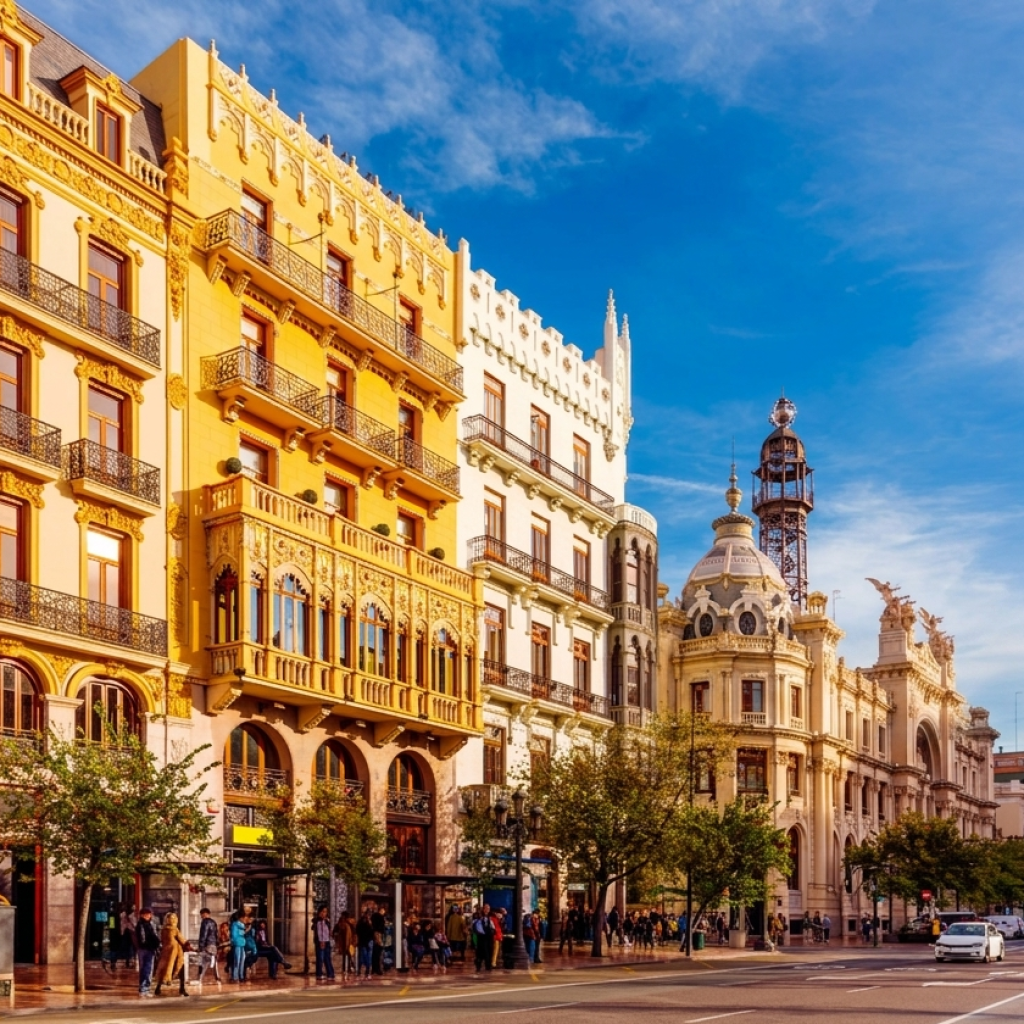
Valencia
Valencia occupies a unique position within Spain, combining centuries of commercial history with contemporary architecture, Mediterranean beaches, and one of the country’s most influential culinary traditions. Located along Spain’s eastern coast, the city developed as an important trading centre whose prosperity is still reflected in its historic monuments, markets, and urban layout. Today, Valencia balances its historic core with modern cultural institutions, expansive green spaces, and a coastline that attracts visitors throughout the year, making it one of Spain’s most well-rounded destinations.
Landmarks & Historical Sites
City of Arts and Sciences
The City of Arts and Sciences has become Valencia’s defining landmark and one of Spain’s most recognisable architectural complexes. Designed by Valencian architect Santiago Calatrava, the futuristic site includes museums, exhibition spaces, an opera house, and Europe’s largest aquarium, creating a striking contrast with the city’s historic centre.
Valencia Cathedral
Valencia Cathedral reflects the city’s long and varied history through a blend of Romanesque, Gothic, Renaissance, Baroque, and Neoclassical architectural styles. The cathedral is also associated with the Holy Grail tradition, with a chalice housed inside that many believe inspired centuries of legends.
La Lonja de la Seda
Recognised as a UNESCO World Heritage Site, La Lonja de la Seda, or Silk Exchange, stands as one of Europe’s finest examples of late Gothic civil architecture. The building reflects Valencia’s importance as a major commercial centre during the height of Mediterranean trade.
Torres de Serranos
These imposing medieval towers once formed part of Valencia’s defensive walls and served as one of the city’s principal entrances. Today, visitors can climb the structure for views across the historic centre and surrounding districts.
Torres de Quart
Built to protect Valencia from invasion, the Torres de Quart remain one of the best-preserved sections of the city’s former fortifications. Marks left by cannon fire during historical conflicts are still visible on the stone façade.
Beaches & Coastline
Malvarrosa Beach
Malvarrosa Beach is Valencia’s most famous stretch of coastline, known for its broad sandy shoreline and lively promenade. Restaurants, cafés, and beachside walks make it one of the city’s most popular seaside destinations.
Las Arenas Beach
Located adjacent to Malvarrosa, Las Arenas combines easy city access with a vibrant coastal atmosphere. The area is lined with hotels, restaurants, and waterfront terraces overlooking the Mediterranean.
Patacona Beach
Situated north of the city centre, Patacona offers a more relaxed environment while maintaining many of the facilities found along Valencia’s main beaches. Its spacious shoreline makes it particularly popular among residents.
El Saler Beach
Bordering Albufera Natural Park, El Saler offers a more natural coastal environment than Valencia’s urban beaches. Sand dunes, pine forests, and protected landscapes contribute to its distinctive character.
Pinedo Beach
Located south of Valencia, Pinedo remains one of the quieter sections of coastline in the region. Its local atmosphere and less developed surroundings appeal to visitors seeking a more relaxed beach experience.
Museums & Culture
Oceanogràfic
Oceanogràfic is the largest aquarium in Europe and one of Valencia’s most visited attractions. Its extensive exhibits showcase marine ecosystems from around the world, including the Mediterranean, Arctic, Antarctic, and tropical environments.
Museum of Fine Arts Valencia
Housing one of Spain’s most important art collections outside Madrid, the museum contains works spanning several centuries. Paintings by Valencian masters, alongside works by artists such as El Greco and Velázquez, form part of its extensive collection.
IVAM (Valencian Institute of Modern Art)
IVAM was among Spain’s first institutions dedicated exclusively to modern and contemporary art. Its exhibitions focus on international artistic movements while maintaining a strong connection to Valencian culture and creativity.
Fallas Museum
The Fallas Museum celebrates Valencia’s most famous festival, Las Fallas, which takes place every March. Visitors can explore preserved figures, historical displays, and exhibits that illustrate the traditions behind one of Spain’s most celebrated cultural events.
Neighbourhoods & Districts
El Carmen
Located within Valencia’s historic centre, El Carmen is characterised by medieval streets, historic buildings, and lively public squares. The district combines cultural landmarks with restaurants, galleries, and a vibrant evening atmosphere.
Ruzafa
Ruzafa has emerged as one of Valencia’s most creative neighbourhoods, attracting artists, designers, and independent businesses. Its cafés, galleries, restaurants, and cultural venues have made it one of the city’s most dynamic districts.
Ensanche
Known for its elegant avenues and modern residential developments, Ensanche represents Valencia’s expansion beyond its historic walls. The district is popular for shopping, dining, and architectural variety.
Cabanyal
Once an independent fishing community, Cabanyal retains a distinctive identity shaped by its maritime heritage. Colourful tiled façades, traditional architecture, and proximity to the beach contribute to its unique atmosphere.
Festivals & Cultural Traditions
Las Fallas
Las Fallas is Valencia’s most famous celebration and one of Spain’s most spectacular festivals. Held every March, the event features enormous artistic monuments, fireworks displays, traditional costumes, parades, and cultural activities before the sculptures are ceremonially burned in a dramatic finale.
Mascletà
A central component of Las Fallas, the Mascletà is a daily pyrotechnic performance focused on rhythm, sound, and precision. Thousands gather in the city centre to experience one of Valencia’s most distinctive traditions.
Traditional Valencian Heritage
Throughout the year, Valencia preserves many of its regional customs through local celebrations, religious events, traditional music, and historic ceremonies that continue to play an important role in community life.
Markets & Local Life
Central Market (Mercado Central)
One of Europe’s largest and most impressive food markets, Mercado Central occupies a magnificent modernist building in the heart of the city. Fresh produce, seafood, meats, cheeses, spices, and regional specialities make it an essential stop for experiencing Valencian gastronomy.
Colón Market
Originally built in the early 20th century, Colón Market combines historic architecture with contemporary dining and shopping experiences. The restored structure has become one of Valencia’s most attractive social and culinary spaces.
Silk & Commercial Heritage
Valencia’s historic prosperity was closely connected to Mediterranean trade. Markets, merchant districts, and landmarks such as La Lonja de la Seda continue to reflect the city’s importance as one of Spain’s major commercial centres.
Nature & Outdoor Attractions
Turia Gardens
Created within the former course of the Turia River, Turia Gardens stretch for several kilometres through the city. The park provides walking paths, cycling routes, sports facilities, gardens, and green spaces that connect many of Valencia’s major attractions.
Albufera Natural Park
Located just south of the city, Albufera is one of Spain’s most important wetland ecosystems. The park is known for its freshwater lagoon, birdlife, rice fields, and traditional fishing communities.
Jardín del Turia
Beyond serving as a recreational space, the Jardín del Turia offers numerous viewpoints, gardens, and cultural sites along its route. Its transformation from riverbed to urban park is considered one of Valencia’s most successful urban planning achievements.
Sierra Calderona Natural Park
Situated north of Valencia, Sierra Calderona provides hiking routes, forest landscapes, and panoramic viewpoints overlooking the surrounding countryside. The park offers a natural escape within easy reach of the city.
Day Trips & Nearby Destinations
Xàtiva
Xàtiva is best known for its hilltop castle, which overlooks the surrounding valleys and historic town below. The destination also played an important role in Valencian history and was the birthplace of the influential Borgia family.
Peñíscola
Positioned on a rocky peninsula extending into the Mediterranean, Peñíscola is one of Spain’s most striking coastal towns. Its fortified old town and castle create a dramatic setting above the sea.
Sagunto
Sagunto contains some of the most significant Roman remains in eastern Spain, including a remarkably preserved theatre and ancient fortifications. The town’s strategic importance can be traced back more than two thousand years.
Requena
Located inland from Valencia, Requena is recognised for its vineyards, historic centre, and wine production. The surrounding region has become one of Spain’s leading destinations for wine tourism.
Food & Local Specialties
Paella Valenciana
Originating in the rice-growing areas surrounding Valencia, Paella Valenciana remains one of Spain’s most recognised dishes. Traditional recipes typically combine rice with rabbit, chicken, local beans, and vegetables, reflecting the agricultural heritage of the region.
Horchata
Horchata is a refreshing drink made from tiger nuts, which are cultivated extensively in the Valencian region. It is traditionally served chilled and often accompanied by elongated pastries known as fartons.
Fideuà
Developed along the Mediterranean coast, fideuà replaces rice with short noodles while incorporating seafood and rich broth. The dish remains particularly popular in coastal communities around Valencia.
All i Pebre
Traditionally associated with Albufera, all i pebre is a garlic and paprika-based stew often prepared with eel. The dish reflects the region’s historic connection to its wetlands and fishing traditions.
Buñuelos
These fried pastries are especially associated with Valencia’s Fallas celebrations. Often enjoyed with sugar or hot chocolate, they remain a popular seasonal treat throughout the region.
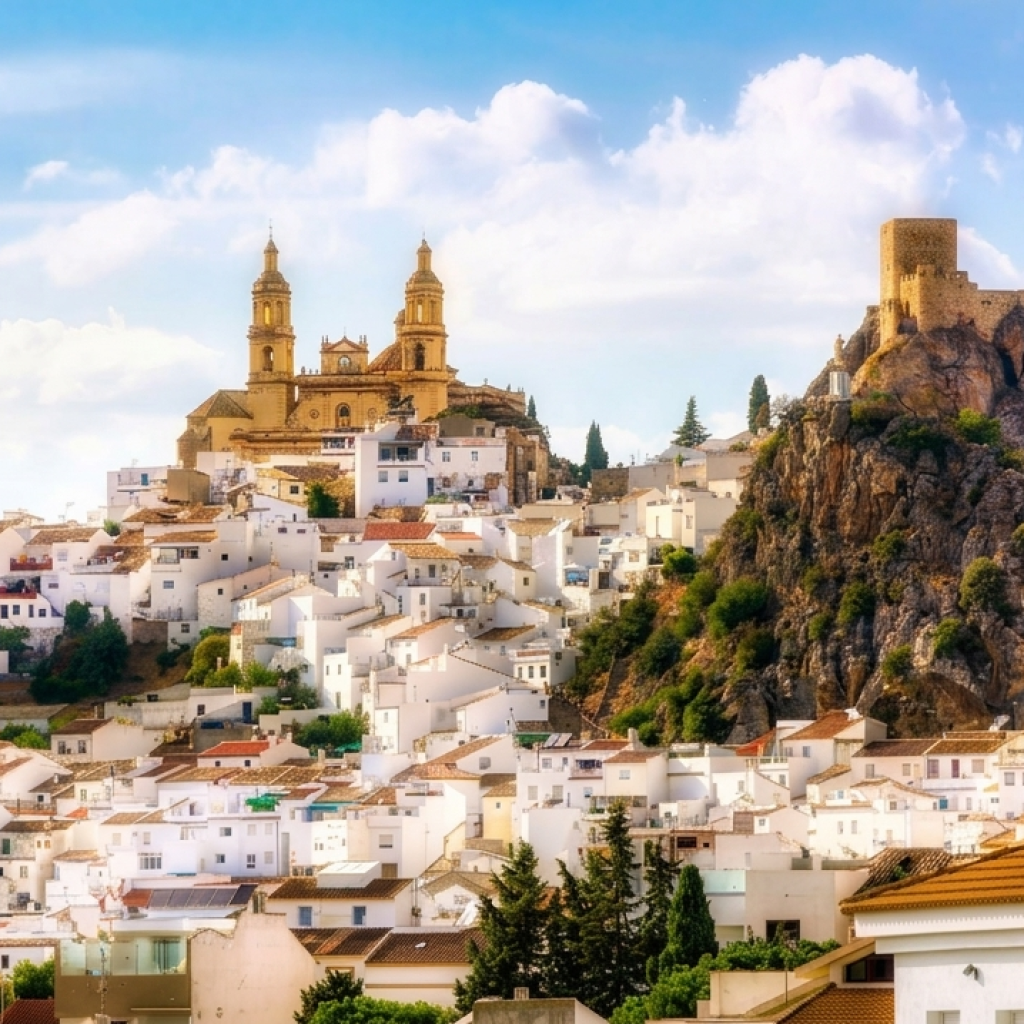
Andalusia
Andalusia is Spain’s largest autonomous region and one of the country’s most culturally influential destinations. Shaped by centuries of Roman, Islamic, Jewish, and Christian history, the region is known for its monumental architecture, historic cities, whitewashed villages, flamenco traditions, and varied landscapes stretching from mountain ranges to both the Atlantic Ocean and Mediterranean Sea. From the palaces of Granada and Seville to the coastal towns of Málaga and Cádiz, Andalusia offers some of Spain’s most distinctive cultural and natural experiences.
Landmarks & Historical Sites
Alhambra (Granada)
Overlooking Granada from Sabika Hill, the Alhambra is one of the most celebrated examples of Islamic architecture in Europe. Its palaces, courtyards, gardens, and intricate decorative details reflect the artistic and political achievements of the Nasrid dynasty during the final centuries of Muslim rule on the Iberian Peninsula.
Royal Alcázar of Seville
The Royal Alcázar remains one of the oldest royal palaces still in use anywhere in the world. Its ornate courtyards, tiled halls, gardens, and blend of Islamic, Gothic, Renaissance, and Baroque influences illustrate centuries of architectural evolution.
Seville Cathedral
Built on the site of a former mosque, Seville Cathedral is among the largest Gothic cathedrals in the world. The vast interior houses significant religious artworks and the tomb traditionally associated with Christopher Columbus.
La Giralda
Originally constructed as a minaret during the Almohad period, La Giralda later became the cathedral’s bell tower following the Christian reconquest of Seville. The structure remains one of the city’s most recognisable landmarks and offers panoramic views across the historic centre.
Mezquita-Cathedral (Córdoba)
The Mezquita-Cathedral stands as one of Spain’s most extraordinary architectural monuments. Its forest of red-and-white arches reflects its origins as a grand mosque, while the cathedral inserted into its centre illustrates the religious transformations that shaped the region.
Plaza de España (Seville)
Constructed for the Ibero-American Exposition of 1929, Plaza de España combines Renaissance Revival architecture with decorative ceramic work celebrating Spain’s provinces. Its grand scale, bridges, canals, and semi-circular design have made it one of Andalusia’s most visited landmarks.
Beaches & Coastline
Costa de la Luz
Stretching along Andalusia’s Atlantic coast, Costa de la Luz is known for its expansive beaches, rolling dunes, and relatively undeveloped landscapes. The coastline offers a quieter alternative to some of Spain’s more heavily visited resort regions.
Costa del Sol
One of Europe’s most recognised coastal destinations, Costa del Sol extends along Málaga Province and encompasses numerous seaside towns and resorts. The region combines beaches, marinas, golf courses, and year-round sunshine with a growing cultural and culinary scene.
Nerja Beaches
Nerja’s coastline is characterised by sheltered coves, clear waters, and dramatic cliffs overlooking the Mediterranean. Several beaches are located beneath the town’s famous Balcón de Europa viewpoint.
Tarifa Beaches
Situated at the southernmost point of mainland Europe, Tarifa offers sweeping beaches where the Atlantic Ocean meets the Mediterranean Sea. The area’s consistent winds have made it one of Europe’s leading destinations for kitesurfing and windsurfing.
Marbella Beaches
Marbella combines long stretches of sand with upscale resorts, marinas, and beach clubs. The coastline remains one of the most established luxury tourism destinations in Spain.
Cádiz Beaches
The historic city of Cádiz is surrounded by attractive urban beaches that combine coastal scenery with centuries of maritime history. Their location within one of Western Europe’s oldest continuously inhabited cities creates a unique setting.
Almería Coast
The coastline of Almería offers a more rugged and undeveloped character than many other parts of southern Spain. Volcanic landscapes, secluded coves, and protected natural areas contribute to its distinctive appeal.
Museums & Culture
Picasso Museum Málaga
Located in the city where Pablo Picasso was born, the museum houses an extensive collection spanning different periods of the artist’s career. The institution provides valuable insight into the development of one of the most influential figures in modern art.
Museum of Fine Arts Seville
Housed within a former convent, the Museum of Fine Arts contains one of Spain’s most important collections of classical painting. Its galleries showcase works by prominent Andalusian artists from the medieval period through to the modern era.
Flamenco Venues in Seville
Seville is widely regarded as one of the spiritual homes of flamenco. Throughout the city, traditional venues present performances that combine singing, guitar, and dance, preserving one of Spain’s most recognised cultural traditions.
Centro Andaluz de Arte Contemporáneo
Located within a former monastery on the banks of the Guadalquivir River, this contemporary art centre hosts exhibitions by Spanish and international artists. The contrast between historic architecture and modern art creates a distinctive cultural experience.
Neighbourhoods & Districts
Santa Cruz (Seville)
Santa Cruz forms the historic heart of Seville and was once the city’s Jewish quarter. Its narrow streets, hidden courtyards, and historic buildings create one of Andalusia’s most atmospheric urban environments.
Triana (Seville)
Situated across the Guadalquivir River, Triana has long been associated with flamenco, ceramics, and maritime traditions. The district maintains a strong local identity and remains deeply connected to Seville’s cultural heritage.
Albaicín (Granada)
The Albaicín preserves much of Granada’s Moorish past through its labyrinth of narrow streets, whitewashed houses, and hillside viewpoints. The district also provides some of the finest views of the Alhambra.
Judería (Córdoba)
Córdoba’s historic Jewish Quarter reflects the city’s importance as a centre of learning and cultural exchange during the medieval period. Whitewashed streets, flower-filled patios, and historic monuments characterise the district today.
Málaga Centro
Málaga’s city centre combines Roman, Moorish, and modern influences within a compact urban setting. Historic landmarks, museums, shopping streets, and public squares make it one of southern Spain’s most dynamic city centres.
Flamenco Heritage
Birthplace of Flamenco
Andalusia is widely regarded as the birthplace of flamenco, a cultural tradition that combines singing, guitar, dance, and emotional storytelling. The art form developed through centuries of cultural exchange and remains one of the region’s most recognised contributions to Spanish culture.
Seville’s Flamenco Scene
Seville remains one of the leading centres of flamenco performance. Traditional venues, theatres, and cultural institutions throughout the city preserve and celebrate the art form through both historic and contemporary interpretations.
Jerez de la Frontera
Jerez plays a particularly important role in flamenco history and is closely associated with some of the tradition’s most influential performers and styles. The city continues to host performances and cultural events dedicated to preserving this heritage.
Festivals & Celebrations
Feria de Abril (Seville)
The Feria de Abril is one of Spain’s most famous festivals. For a week, Seville is transformed by colourful tents, traditional dress, horse-drawn carriages, music, dancing, and celebrations that attract visitors from across the world.
Semana Santa
Holy Week celebrations in Andalusia are among the most significant religious events in Spain. Processions featuring elaborate floats, centuries-old traditions, and historic brotherhoods take place throughout cities including Seville, Málaga, Granada, and Córdoba.
Carnival of Cádiz
Known for its creativity and humour, the Carnival of Cádiz is one of Spain’s most distinctive festivals. Costumed performers, satirical musical groups, and public celebrations fill the city with a uniquely festive atmosphere.
Romería del Rocío
One of Spain’s largest religious pilgrimages, the Romería del Rocío brings together hundreds of thousands of participants who travel across Andalusia to the village of El Rocío, creating one of the country’s most remarkable cultural gatherings.
Nature & Outdoor Attractions
Sierra Nevada
Home to the highest mountains on mainland Spain, Sierra Nevada offers dramatic landscapes, alpine scenery, and extensive hiking opportunities. During winter, the region also hosts one of Europe’s southernmost ski resorts.
Caminito del Rey
Once considered one of the world’s most dangerous walkways, Caminito del Rey has been carefully restored into a spectacular cliffside route. The path follows steep gorges and suspended walkways through some of Andalusia’s most dramatic scenery.
Doñana National Park
Recognised as one of Europe’s most important wetland ecosystems, Doñana supports a remarkable diversity of wildlife. The park contains marshes, forests, lagoons, and dunes that provide habitat for numerous migratory bird species.
El Torcal de Antequera
El Torcal is renowned for its unusual limestone formations, shaped by millions of years of geological activity. Walking trails pass through a landscape that appears almost otherworldly compared with much of southern Spain.
Day Trips & Nearby Destinations
Ronda
Perched above a deep gorge in Málaga Province, Ronda is one of Andalusia’s most dramatic towns. Its famous Puente Nuevo bridge connects the historic and modern sections of the settlement while offering spectacular views of the surrounding landscape.
Frigiliana
Often considered one of Andalusia’s most attractive white villages, Frigiliana is known for its steep streets, traditional architecture, and mountain setting. The village preserves much of its historic character while offering views across the surrounding countryside.
Zahara de la Sierra
Positioned on a hillside overlooking a turquoise reservoir, Zahara de la Sierra is one of the most picturesque villages in Andalusia. Its elevated location and traditional whitewashed buildings make it a standout destination within the region.
Úbeda & Baeza
These neighbouring towns are recognised as UNESCO World Heritage Sites for their exceptional Renaissance architecture. Their palaces, churches, and historic squares reflect a period of significant prosperity and artistic achievement.
Food & Local Specialties
Gazpacho
Gazpacho is a chilled soup prepared using tomatoes, peppers, cucumber, olive oil, and garlic. Particularly popular during Andalusia’s warmer months, it remains one of the region’s most iconic dishes.
Salmorejo
Originating in Córdoba, salmorejo is a thicker and creamier variation of gazpacho. It is traditionally served with chopped egg and cured ham, creating a simple yet distinctive regional speciality.
Fried Fish (Pescaíto Frito)
Found throughout Andalusia’s coastal towns and cities, fried fish consists of lightly battered seafood served fresh from the Mediterranean or Atlantic. The dish remains a cornerstone of the region’s maritime culinary traditions.
Jamón Ibérico
Produced from Iberian pigs raised across parts of southern Spain, jamón ibérico is regarded as one of the country’s most prized food products. Its rich flavour and lengthy curing process have made it a staple of Spanish gastronomy.
Tapas Culture
Andalusia played a significant role in the development of Spain’s tapas tradition. Across the region, small dishes are shared socially, allowing visitors to sample a wide variety of local ingredients and regional specialities within a single meal.
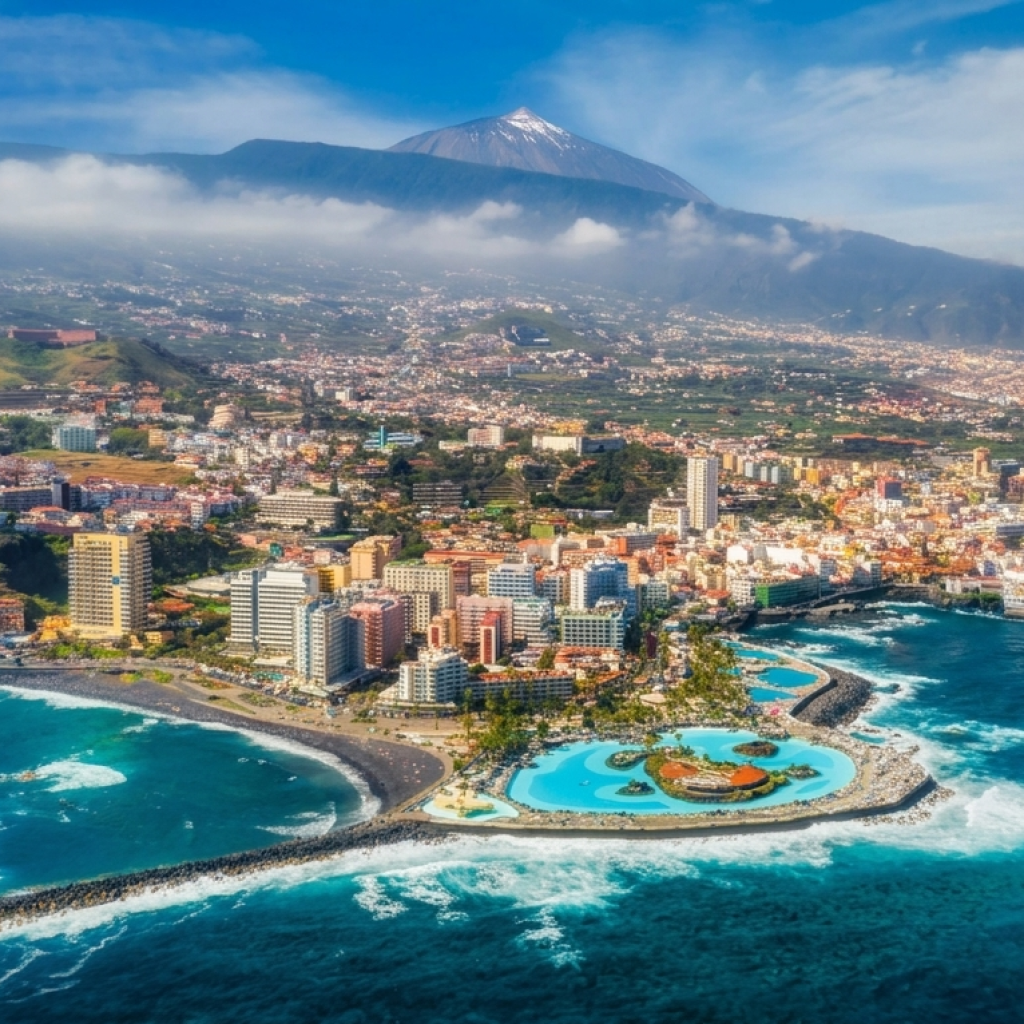
Canary Islands
Located in the Atlantic Ocean off the north-west coast of Africa, the Canary Islands form one of Spain’s most geographically distinctive and diverse regions. Comprising seven principal islands, the archipelago is characterised by volcanic landscapes, year-round mild temperatures, dramatic coastlines, protected natural environments, and a cultural identity shaped by centuries of maritime history and geographical isolation. Although often associated with beaches and winter sunshine, the Canary Islands offer far greater diversity than many visitors initially expect. Across the archipelago, landscapes range from volcanic peaks and lava fields to subtropical forests, desert-like dunes, deep ravines, fertile valleys, and rugged Atlantic coastlines. Each island possesses its own distinct identity, with Tenerife known for Spain’s highest mountain, Lanzarote for its extraordinary volcanic terrain, Gran Canaria for its varied landscapes, Fuerteventura for its beaches, and the smaller islands offering some of the archipelago’s most preserved natural environments. This combination of natural diversity, outdoor experiences, cultural heritage, and year-round accessibility has established the Canary Islands as one of Europe’s most unique destinations.
Tenerife
Tenerife is the largest and most visited island in the Canary archipelago, offering concentration of landscapes and experiences within a relatively compact area. Dominated by Mount Teide, Spain’s highest peak, the island combines volcanic terrain, historic towns, subtropical forests, dramatic coastlines, black-sand beaches, and modern resort areas. The contrast between Tenerife’s north and south is particularly notable, with the greener and more traditional northern regions differing significantly from the sunnier southern coastline.
Beyond its beaches, Tenerife is defined by its geological diversity and natural scenery. Visitors can move from cloud forests and mountain villages to volcanic national parks and Atlantic coastlines within a single day. This extraordinary variety has helped establish Tenerife as one of Spain’s most complete destinations for nature, culture, outdoor activities, and hospitality.
Historic Sites & Cultural Attractions
San Cristóbal de La Laguna
A UNESCO World Heritage Site, La Laguna served as Tenerife’s original capital and remains one of the Canary Islands’ most important historic cities. Its colonial architecture, churches, traditional houses, and pedestrian streets provide insight into the island’s cultural heritage.
Cathedral of La Laguna
Located within the historic centre, the cathedral is one of Tenerife’s most significant religious landmarks and an important symbol of the island’s ecclesiastical history.
Plaza del Adelantado
One of the oldest public squares in Tenerife, this historic gathering place remains at the heart of La Laguna’s cultural life.
Castillo de San Cristóbal
Although only parts of the original fortification remain visible today, the site reflects Tenerife’s strategic importance during centuries of Atlantic maritime trade.
Iglesia de la Concepción
One of the oldest churches in the Canary Islands, recognised for its distinctive bell tower and historical significance.
Puerto de la Cruz Historic Centre
Among the island’s oldest tourism destinations, Puerto de la Cruz combines traditional Canarian architecture, historic squares, and a strong connection to Tenerife’s maritime heritage.
Beaches & Coastline
Playa de las Teresitas
Located near Santa Cruz, this golden-sand beach is framed by volcanic mountains and calm waters protected by an offshore breakwater.
Playa Jardín
Designed with the involvement of César Manrique, Playa Jardín combines black volcanic sand with landscaped gardens and coastal views.
Playa del Duque
One of Tenerife’s most established beaches, known for its promenade, surrounding hospitality offerings, and well-maintained coastline.
Playa de Benijo
Situated beneath dramatic cliffs in the Anaga region, Playa de Benijo is among Tenerife’s most scenic and photogenic coastal locations.
Playa de las Vistas
A popular beach in southern Tenerife characterised by calm waters and a wide sandy shoreline.
Playa El Médano
Recognised internationally for windsurfing and kitesurfing, El Médano offers a more natural and active coastal environment.
Los Gigantes Coastline
This section of coastline is dominated by immense sea cliffs that rise several hundred metres above the Atlantic Ocean.
Punta de Teno
Located at Tenerife’s western edge, Punta de Teno offers rugged coastal scenery, a lighthouse, and panoramic Atlantic views.
Astronomy & Starlight Observation
Teide Observatory (Izaña)
One of the world’s most important astrophysical observatories, located above 2,300m on Mount Teide. Its position above the cloud layer and strict atmospheric protection makes it a reference site for solar physics and deep-space observation, used by international research institutions.
Teide National Park Starlight Zones
Designated UNESCO Starlight Reserve areas where light pollution is strictly controlled. The volcanic terrain and altitude create near-perfect visibility of the Milky Way, making it one of Europe’s strongest destinations for structured astro-tourism.
Roques de García Night Sky Area
A volcanic formation zone frequently used for astrophotography due to its open horizons, dramatic silhouettes, and complete absence of urban light interference.
Water Sports & Ocean Experiences
El Médano Windsurf & Kitesurf Hub
A globally recognised wind sports destination due to consistent Atlantic trade winds and wide open beaches. It hosts international competitions and attracts professional athletes year-round.
Los Gigantes Diving Cliffs
Deep volcanic drop-offs create dramatic underwater landscapes with vertical walls, caves, and rich marine biodiversity, making it one of Tenerife’s most iconic dive zones.
Teno–La Gomera Whale Corridor
A protected marine passage between islands where resident pilot whales and dolphins live year-round, offering one of Europe’s most reliable whale-watching ecosystems.
Festivals & Cultural Traditions
Santa Cruz de Tenerife Carnival
One of the world’s largest and most internationally recognised carnivals, blending Latin American influence, Canarian heritage, and elaborate costume culture with large-scale street performances.
Romería de San Benito (La Laguna)
A traditional pilgrimage celebrating rural Tenerife identity, where local communities dress in traditional attire and parade agricultural heritage through music and dance.
Fiestas del Cristo de La Laguna
A major religious celebration rooted in Tenerife’s historic capital, combining processions, fireworks, and centuries-old devotional traditions.
Villages & Scenic Towns
Garachico
Once Tenerife’s principal port before being partially destroyed by volcanic eruptions, Garachico remains one of the island’s most attractive historic towns.
La Orotava
Known for its traditional Canarian architecture, balconies, gardens, and colonial heritage, La Orotava offers one of the island’s most important cultural experiences.
Candelaria
This coastal town is home to the Basilica of Candelaria and serves as one of the Canary Islands’ most important pilgrimage destinations.
Puerto de la Cruz
Combining historic architecture, botanical gardens, coastal promenades, and cultural attractions, Puerto de la Cruz remains one of Tenerife’s most characterful destinations.
El Médano
A relaxed coastal town recognised for outdoor sports, beaches, and a more local atmosphere than many southern resorts.
Masca
Nestled within a dramatic mountain valley, Masca is among Tenerife’s most photographed villages and offers spectacular scenery.
Nature & Outdoor Attractions
Teide National Park
A UNESCO World Heritage Site, Teide National Park contains some of Europe’s most extraordinary volcanic landscapes and surrounds Mount Teide, Spain’s highest mountain at 3,715 metres.
Mount Teide
The island’s defining landmark dominates the skyline and provides some of the most remarkable panoramic views in Spain.
Anaga Rural Park
Known for its ancient laurel forests, mountain ridges, and remote villages, Anaga preserves one of the Canary Islands’ most important natural environments.
Teno Rural Park
Characterised by rugged mountains, coastal cliffs, and traditional settlements, Teno represents one of Tenerife’s least developed regions.
Los Gigantes Cliffs
These immense volcanic cliffs form one of the island’s most recognisable natural features.
Whale and Dolphin Watching Areas
The waters between Tenerife and La Gomera are among Europe’s most important locations for observing resident whale and dolphin populations.
Food & Local Specialties
Papas Arrugadas
Small potatoes boiled in heavily salted water and traditionally served with local sauces.
Mojo Rojo & Mojo Verde
The Canary Islands’ most famous sauces, prepared using peppers, herbs, garlic, olive oil, and regional ingredients.
Conejo en Salmorejo
A traditional rabbit dish marinated in herbs, spices, and wine before being slow-cooked.
Fresh Atlantic Seafood
Tenerife’s fishing heritage continues to influence local cuisine, particularly in coastal communities.
Canarian Goat Cheese
Produced throughout the archipelago, goat cheese remains one of Tenerife’s most important regional products.
Local Wines
Volcanic soils and unique growing conditions contribute to distinctive wines produced throughout the island.
Lanzarote
Shaped by powerful volcanic eruptions during the eighteenth century, the island’s landscape is defined by lava fields, volcanic cones, black rock formations, and vast open terrain that often appears more similar to a different planet than a traditional Mediterranean destination. Despite these dramatic conditions, Lanzarote has developed a unique relationship between nature, architecture, and sustainability that distinguishes it from the rest of the Canary Islands.
Much of the island’s identity has been influenced by artist and architect César Manrique, whose vision helped preserve Lanzarote’s traditional character and limit large-scale urban development. Whitewashed villages, volcanic vineyards, protected coastlines, and carefully integrated cultural attractions coexist with some of Europe’s most extraordinary geological landscapes. The result is a destination where nature remains the defining feature of almost every experience.
Historic Sites & Cultural Attractions
César Manrique Foundation
Built within volcanic lava bubbles created by ancient eruptions, the former home of César Manrique offers insight into the artist’s influence on Lanzarote’s development and identity.
Castillo de San José
This eighteenth-century fortress now houses a contemporary art museum overlooking the harbour of Arrecife.
Castillo de San Gabriel
Located on a small islet connected to Arrecife, this historic fortification played an important role in defending Lanzarote from pirate attacks.
Teguise Historic Centre
The island’s former capital remains one of the Canary Islands’ most attractive historic towns, known for its traditional architecture and cultural heritage.
LagOmar
An exceptional architectural complex integrated into volcanic rock formations and associated with local legends involving actor Omar Sharif.
International Museum of Contemporary Art
Located within Castillo de San José, the museum houses modern works while preserving the historic structure.
Beaches & Coastline
Papagayo Beaches
A collection of protected coves widely regarded as the finest beaches on Lanzarote, known for clear water and natural surroundings.
Playa Famara
Situated beneath dramatic cliffs, Famara is renowned for surfing, expansive scenery, and Atlantic views.
Playa Blanca Coastline
This southern coastal area combines beaches, promenades, and easy access to nearby natural attractions.
Playa de las Cucharas
Located in Costa Teguise, this beach is particularly popular for windsurfing and water sports.
Caletón Blanco
Known for its white sand contrasting against black volcanic rock formations.
Playa de los Pocillos
One of the island’s longest beaches, offering extensive open shoreline and calm conditions.
El Golfo Coast
Recognised for volcanic scenery and proximity to one of Lanzarote’s most unusual natural landmarks, the Green Lagoon.
Punta Mujeres Coastline
A quieter coastal area known for natural swimming pools and traditional fishing village character.
Water Sports & Ocean Experiences
Famara Surf Coastline
A dramatic 6km stretch of beach backed by cliffs, exposed to strong Atlantic swells. It is Lanzarote’s primary surf zone and a key training location for European surfers.
Playa Blanca Sailing Gateway
Southern Lanzarote acts as a maritime departure point for sailing routes toward Fuerteventura and offshore volcanic islets, supported by modern marina infrastructure.
Costa Teguise Windsports Area
A controlled coastal environment offering consistent wind conditions suitable for windsurfing and beginner-friendly water sports, making it a major training hub.
Festivals & Cultural Traditions
Fiestas de San Ginés (Arrecife)
The island’s main capital festival combining maritime heritage, religious processions, concerts, and community celebrations centred around the port identity.
Romería de Teguise
A traditional pilgrimage that reflects Lanzarote’s rural and agricultural history, with locals travelling in traditional dress accompanied by music and decorated carts.
Fiestas de Los Dolores (Mancha Blanca)
Held at the island’s patron saint sanctuary, deeply connected to Lanzarote’s volcanic past and historical protection from eruptions.
Villages & Scenic Towns
Teguise
Lanzarote’s former capital remains one of the island’s most historically significant settlements. Its whitewashed buildings, traditional plazas, churches, and narrow streets preserve much of the island’s architectural heritage and provide a glimpse into pre-tourism Lanzarote.
Haría
Known as the “Valley of a Thousand Palms,” Haría sits within one of Lanzarote’s greenest regions. Surrounded by volcanic hills and palm groves, the village offers a noticeably different landscape from the island’s more arid southern areas.
Yaiza
Often regarded as one of the most attractive villages in the Canary Islands, Yaiza is characterised by traditional whitewashed architecture, carefully maintained public spaces, and proximity to several of Lanzarote’s major natural attractions.
Arrecife
The island’s capital combines commercial activity, waterfront promenades, historic fortifications, and cultural institutions. While often overlooked by visitors, it remains central to Lanzarote’s modern identity.
Playa Blanca
Located on the southern coast, Playa Blanca has evolved from a small fishing community into one of Lanzarote’s principal resort areas while retaining access to some of the island’s finest beaches.
Costa Teguise
This purpose-built coastal destination combines beaches, water sports, hospitality offerings, and easy access to many of Lanzarote’s cultural and natural landmarks.
Punta Mujeres
A traditional fishing village known for its natural swimming pools, relaxed atmosphere, and strong connection to local maritime traditions.
Nature & Outdoor Attractions
Timanfaya National Park
The defining landscape of Lanzarote, Timanfaya showcases vast lava fields, volcanic craters, and geological formations created by the major eruptions of the eighteenth century. It remains one of Spain’s most extraordinary natural environments.
Montañas del Fuego
Located within Timanfaya National Park, these volcanic formations reveal the island’s geological power and remain among Lanzarote’s most visited attractions.
Jameos del Agua
Created from a collapsed volcanic tunnel and transformed by César Manrique, this unique site combines natural geology, architecture, art, and culture.
Cueva de los Verdes
Part of an extensive volcanic tunnel system formed thousands of years ago, this cave network offers one of the island’s most remarkable geological experiences.
Mirador del Río
Perched high above the northern coastline, this viewpoint provides spectacular panoramas of La Graciosa and the surrounding Atlantic Ocean.
Los Volcanes Natural Park
Covering a large portion of central Lanzarote, this protected area contains lava fields, volcanic cones, and landscapes shaped by historic eruptions.
Green Lagoon (Charco de los Clicos)
One of Lanzarote’s most unusual natural landmarks, this bright green lagoon contrasts dramatically against black volcanic rock and the Atlantic coastline.
La Geria
This unique wine-growing region demonstrates how local agriculture adapted to volcanic conditions. Vineyards planted within individual volcanic hollows create one of the Canary Islands’ most distinctive landscapes.
Food & Local Specialties
Papas Arrugadas
The Canary Islands’ iconic salt-crusted potatoes remain a staple throughout Lanzarote and are traditionally served with local sauces.
Mojo Sauces
Both Mojo Rojo and Mojo Verde feature prominently across the island’s cuisine and accompany many traditional dishes.
Fresh Atlantic Seafood
Fish such as grouper, sea bass, and tuna continue to play an important role in Lanzarote’s coastal gastronomy.
Sancocho Canario
A traditional Canarian fish dish commonly prepared with salted fish, potatoes, and local accompaniments.
Goat Cheese
Lanzarote produces highly regarded goat cheeses that reflect the island’s agricultural traditions and volcanic environment.
Volcanic Wines
La Geria’s unique vineyards produce wines cultivated in volcanic ash, creating some of the Canary Islands’ most distinctive wine-growing conditions.
Gran Canaria
Gran Canaria is often described as a continent in miniature due to the variety of landscapes found across the island. Within a relatively short distance, visitors encounter golden dunes, volcanic mountains, pine forests, fertile valleys, dramatic cliffs, historic towns, and modern coastal resorts. This diversity has helped establish Gran Canaria as one of Spain’s most complete destinations, offering experiences that extend far beyond its beaches.
The island’s interior is particularly impressive, with rugged mountain scenery and traditional villages contrasting sharply with the coastal environments. While destinations such as Maspalomas and Las Palmas attract significant attention, much of Gran Canaria’s appeal lies in its ability to combine nature, culture, gastronomy, and outdoor exploration. Few islands in Europe offer such a broad range of landscapes and experiences within a single destination.
Historic Sites & Cultural Attractions
Vegueta
The historic heart of Las Palmas preserves centuries of architectural heritage through colonial buildings, traditional courtyards, museums, and public squares. It remains one of the most important historic districts in the Canary Islands.
Cathedral of Santa Ana
Located within Vegueta, this landmark cathedral combines Gothic, Renaissance, and Neoclassical influences and serves as one of the island’s most significant religious monuments.
Casa de Colón
Dedicated to the history of Atlantic exploration and Christopher Columbus’ connections to the Canary Islands, this museum occupies one of Las Palmas’ most notable historic buildings.
Plaza de Santa Ana
The cultural centre of historic Las Palmas, surrounded by government buildings, the cathedral, and traditional architecture.
Castillo de La Luz
One of the oldest fortifications in the Canary Islands, originally constructed to defend Las Palmas from maritime attacks.
Cueva Pintada Museum
Located in Gáldar, this archaeological site preserves important examples of pre-Hispanic Canarian culture and indigenous rock art.
Beaches & Coastline
Maspalomas Beach
One of Spain’s most famous beaches, extending alongside the island’s iconic dune system and offering a vast stretch of golden sand.
Maspalomas Dunes
Although technically a natural attraction, the dunes form one of the most distinctive coastal landscapes in Europe and remain the island’s defining image.
Playa de Las Canteras
Often regarded as one of Europe’s finest urban beaches, Las Canteras combines clear waters, a natural reef, and a vibrant waterfront atmosphere.
Playa del Inglés
One of Gran Canaria’s best-known coastal destinations, recognised for its long sandy beach and extensive tourism infrastructure.
Puerto de Mogán Coast
This attractive coastal area combines a marina, beaches, waterfront promenades, and traditional architecture.
Amadores Beach
Known for its calm turquoise waters and sheltered bay, making it one of the island’s most popular swimming beaches.
Güigüí Beach
Accessible primarily by hiking trail or boat, this remote beach offers one of the island’s most unspoiled coastal experiences.
Sardina del Norte
A quieter coastal destination particularly known for diving and underwater visibility.
Festivals & Cultural Celebrations
Las Palmas Carnival
One of Spain’s most important urban carnivals, known for drag performances, international music influence, and large-scale street parades that transform the capital into a month-long celebration.
Fiesta del Pino (Teror)
The most important religious pilgrimage in Gran Canaria, dedicated to the island’s patron saint, drawing thousands of participants from across the archipelago.
Romería de Agaete
A coastal pilgrimage blending fishing traditions, religious devotion, and rural identity, symbolising the link between land and sea communities.
Water Sports & Ocean Experiences
Las Canteras Reef System
A rare natural lava reef creates calm, protected waters in the heart of the capital, making it one of Europe’s few urban surfing and swimming ecosystems.
Maspalomas Coastal Windsports Zone
A vast southern coastline influenced by strong trade winds, supporting kitesurfing, windsurfing, and sailing across open dune-backed beaches.
Puerto Rico Marina Watersports Hub
A developed maritime centre offering jet skiing, parasailing, boat excursions, and recreational sailing activities year-round.
Villages & Scenic Towns
Teror
One of the island’s most important historic towns, recognised for its traditional Canarian balconies, religious significance, and preserved architecture.
Tejeda
Situated among dramatic mountain landscapes, Tejeda is frequently considered one of Spain’s most beautiful villages.
Puerto de Mogán
Often referred to as the “Little Venice” of the Canary Islands due to its canals, bridges, marina, and colourful waterfront.
Arucas
Known for its striking neo-Gothic church and historic rum production, Arucas combines cultural heritage with local industry.
Agaete
Located on the north-west coast, Agaete offers volcanic scenery, natural swimming pools, and access to some of the island’s most impressive landscapes.
Firgas
This hillside village is recognised for its traditional streets, water features, and panoramic views across northern Gran Canaria.
Nature & Outdoor Attractions
Roque Nublo
One of the Canary Islands’ most iconic natural landmarks, this volcanic rock formation rises dramatically above the island’s mountainous interior.
Pico de las Nieves
The highest point on Gran Canaria provides extensive views across the island and, on clear days, toward neighbouring Tenerife and Mount Teide.
Tamadaba Natural Park
Known for its extensive pine forests, cliffs, and Atlantic viewpoints, Tamadaba preserves one of the island’s most important natural environments.
Caldera de Bandama
A large volcanic crater located near Las Palmas that provides insight into the island’s geological history.
Barranco de Guayadeque
One of Gran Canaria’s most impressive valleys, containing cave dwellings, archaeological sites, and dramatic landscapes.
Maspalomas Dunes Nature Reserve
Protected dune systems, lagoons, and coastal ecosystems form one of Spain’s most unique natural environments.
Agaete Valley
Known for its fertile landscapes, coffee plantations, and mountain scenery, this valley presents a different side of Gran Canaria.
Food & Local Specialties
Papas Arrugadas
The Canary Islands’ signature potato dish remains central to Gran Canaria’s traditional cuisine.
Mojo Rojo & Mojo Verde
These traditional sauces accompany many local dishes and represent one of the region’s defining culinary traditions.
Sancocho Canario
A traditional fish dish closely associated with Canarian gastronomy and often served during celebrations and holidays.
Chorizo de Teror
A distinctive soft sausage spread that has become one of Gran Canaria’s best-known regional products.
Bienmesabe
A traditional almond-based dessert originating in the Canary Islands and particularly associated with Gran Canaria.
Local Coffee from Agaete
Gran Canaria is home to one of Europe’s few coffee-growing regions, with plantations concentrated in the Agaete Valley.
Canarian Cheeses
Locally produced cheeses remain an important part of the island’s agricultural and culinary identity.
Fuerteventura
Fuerteventura is the oldest island in the Canary archipelago and is widely recognised for possessing some of the most extensive and unspoiled beaches in Europe. Unlike the dramatic volcanic landscapes of Tenerife or Lanzarote, Fuerteventura is defined by open horizons, rolling desert-like terrain, vast dune systems, and a coastline that stretches for hundreds of kilometres. The island’s geography has created a destination strongly connected to the ocean, attracting visitors seeking beaches, outdoor activities, and a slower pace of life.
Its consistent climate, clear waters, and Atlantic winds have established Fuerteventura as one of the world’s leading destinations for surfing, kitesurfing, windsurfing, and other water-based activities. Beyond its coastline, visitors discover traditional villages, volcanic landscapes, protected natural parks, and a cultural heritage shaped by centuries of maritime connections and rural traditions. While beach tourism remains central to the island’s appeal, Fuerteventura offers considerably more diversity than many visitors initially expect.
Historic Sites & Cultural Attractions
Betancuria
Founded in 1404, Betancuria was the first capital of the Canary Islands and remains one of Fuerteventura’s most historically significant settlements. Surrounded by mountains, the village preserves traditional architecture, religious landmarks, and a strong connection to the island’s early history.
Santa María Church
Located in Betancuria, this historic church represents one of the island’s most important religious and architectural landmarks.
Casa Santa María
A cultural centre that provides insight into traditional Canarian life, customs, and local history through exhibitions and educational displays.
Ecomuseo de La Alcogida
This open-air museum preserves traditional rural buildings and demonstrates how local communities lived before modern tourism transformed the island.
Tefía Windmills
Among Fuerteventura’s most recognisable cultural symbols, these historic windmills reflect the island’s agricultural heritage and grain production traditions.
Puerto del Rosario Historic Quarter
The island’s capital contains public art installations, cultural venues, historic buildings, and waterfront spaces that reveal Fuerteventura’s modern identity.
Beaches & Coastline
Cofete Beach
Often regarded as the island’s most spectacular beach, Cofete stretches for kilometres along a remote section of the Jandía Peninsula. Backed by dramatic mountains and exposed to the Atlantic Ocean, it remains one of Spain’s most striking coastal landscapes.
Sotavento Beach
Known internationally for windsurfing and kitesurfing, Sotavento combines shallow lagoons, white sand, and ideal conditions for water sports.
Corralejo Beaches
Located beside the Corralejo Dunes, these beaches offer turquoise waters, extensive sandy shores, and views towards Lanzarote.
Playa del Matorral
A long sandy beach situated near Morro Jable, known for its lighthouse and calm swimming conditions.
El Cotillo Beaches
This coastal area contains both wild Atlantic beaches and sheltered lagoons, making it one of the island’s most diverse beach destinations.
Playa de Esquinzo
A quieter beach characterised by open landscapes and clear waters away from the busiest tourist areas.
Playa de la Concha
Located near El Cotillo, this protected bay offers calm waters and a more relaxed coastal atmosphere.
Ajuy Coast
Unlike much of the island’s sandy shoreline, Ajuy features dramatic black sand beaches and volcanic cliffs.
Villages & Scenic Towns
Corralejo
Originally a small fishing village, Corralejo has evolved into one of Fuerteventura’s most popular destinations while retaining strong connections to the surrounding natural environment.
El Cotillo
Known for its relaxed atmosphere, traditional fishing heritage, and excellent beaches, El Cotillo remains one of the island’s most appealing coastal settlements.
Morro Jable
Located in southern Fuerteventura, Morro Jable combines a historic fishing quarter with modern tourism infrastructure and access to some of the island’s finest beaches.
Betancuria
Beyond its historical importance, Betancuria remains one of the most picturesque villages in the Canary Islands due to its traditional architecture and mountain setting.
Ajuy
A small coastal settlement known for its volcanic coastline, sea caves, and dramatic natural scenery.
La Oliva
This historic inland town preserves important examples of traditional Canarian architecture and local heritage.
Water Sports & Ocean Experiences
Sotavento Lagoon Competition Zone
A world-renowned windsurfing and kitesurfing venue where shallow tidal lagoons and constant wind conditions create ideal professional competition environments.
Corralejo Surf Atlantic Coast
Northern beaches exposed directly to Atlantic swells, producing consistent surf conditions and a strong international surf community presence.
El Cotillo Diving & Reef Coast
Volcanic reef formations and crystal-clear waters create one of the island’s most important diving and snorkelling ecosystems.
Festivals & Cultural Traditions
Fiesta de la Virgen de la Peña (Betancuria)
The island’s most significant religious festival, blending pilgrimage traditions with rural community gatherings in Fuerteventura’s historic first capital.
Carnaval de Puerto del Rosario
A vibrant urban celebration combining music, costume culture, and local Canarian identity in the island’s capital.
Romería de La Oliva
A traditional rural festival highlighting agricultural heritage, livestock traditions, and community-based cultural expression.
Nature & Outdoor Attractions
Corralejo Natural Park
One of the island’s most recognisable landscapes, this protected area contains vast dune systems that create a striking contrast against the Atlantic Ocean.
Jandía Natural Park
Covering much of southern Fuerteventura, the park protects mountains, beaches, coastal habitats, and wildlife.
Calderón Hondo
This well-preserved volcanic crater offers one of the island’s most accessible volcanic hiking experiences.
Ajuy Caves
Formed millions of years ago, these sea caves are among the oldest geological formations in the Canary Islands.
Isla de Lobos
Located between Fuerteventura and Lanzarote, this protected island contains volcanic landscapes, walking trails, and rich marine ecosystems.
Mirador de Morro Velosa
Designed by César Manrique, this viewpoint offers sweeping panoramas across central Fuerteventura.
Barranco de las Peñitas
A dramatic valley featuring rock formations, hiking routes, and one of the island’s most scenic inland landscapes.
Food & Local Specialties
Majorero Cheese
Produced from local goat’s milk, Majorero cheese is one of the Canary Islands’ most celebrated culinary products and holds protected designation status.
Papas Arrugadas
Traditional salt-crusted potatoes remain a staple across the island’s cuisine.
Mojo Sauces
Mojo Rojo and Mojo Verde continue to accompany many traditional Canarian dishes.
Fresh Atlantic Seafood
Fish such as grouper, tuna, and sea bass remain central to many coastal restaurants and local recipes.
Gofio
This roasted grain flour has been an essential part of Canarian cuisine for centuries and continues to appear in both savoury and sweet dishes.
Goat Meat Dishes
Goat farming has long played an important role in Fuerteventura’s economy, influencing many traditional recipes.
La Palma
Often referred to as La Isla Bonita (“The Beautiful Island”), La Palma is one of the greenest and most environmentally significant islands in the Canary archipelago. Unlike the arid landscapes of Lanzarote and Fuerteventura, La Palma is characterised by dense forests, volcanic peaks, deep ravines, fertile valleys, and extensive protected natural areas. The island’s dramatic geography has earned it recognition as one of Europe’s premier destinations for hiking, nature exploration, and astronomy.
Much of La Palma remains relatively untouched by large-scale tourism, allowing visitors to experience a more authentic and nature-focused side of the Canary Islands. Its landscapes range from subtropical forests and volcanic terrain to coastal cliffs and traditional villages. Combined with exceptionally clear night skies and a strong commitment to environmental preservation, La Palma offers one of the most distinctive island experiences in Spain.
Historic Sites & Cultural Attractions
Santa Cruz de La Palma
The island’s capital contains one of the most attractive historic centres in the Canary Islands, featuring colourful wooden balconies, colonial architecture, and centuries of maritime history.
Plaza de España
Located at the heart of Santa Cruz, this historic square is surrounded by some of the city’s most significant civic and religious buildings.
Iglesia de El Salvador
One of La Palma’s most important religious landmarks, reflecting the island’s colonial-era heritage.
Naval Museum
Housed inside a replica of Christopher Columbus’ ship, the museum explores La Palma’s historical relationship with Atlantic navigation and trade.
Real Santuario de Las Nieves
An important pilgrimage site dedicated to the island’s patron saint and closely linked to local cultural traditions.
Los Llanos de Aridane Historic Centre
One of the island’s principal towns, known for traditional architecture, public squares, and cultural life.
Astronomy & Starlight Observation
Roque de los Muchachos Observatory
One of the most advanced astronomical observatories in the Northern Hemisphere, positioned at 2,400m altitude above cloud cover, used by multiple international space agencies.
La Palma Starlight Reserve
The entire island is protected under strict lighting laws, making it one of the clearest and darkest night sky destinations in the world.
Llano del Jable Viewing Plateau
A high-altitude natural viewing area offering unobstructed night sky visibility, often used for guided astronomy tourism experiences.
Festivals & Cultural Traditions
Bajada de la Virgen de las Nieves
A five-yearly celebration considered the most important cultural event on the island, combining religious devotion, music, and large-scale theatrical performances.
Fiestas Lustrales of Santa Cruz de La Palma
Historic celebrations reflecting the island’s maritime heritage and colonial-era identity.
Fiestas de Los Llanos de Aridane
A local celebration blending agricultural traditions, music, and community identity in the island’s main western town.
Beaches & Coastline
Puerto Naos Beach
One of La Palma’s largest beaches, recognised for its volcanic sand and dramatic surroundings.
Charco Verde
A sheltered beach known for calm waters and its distinctive natural setting.
Playa de Nogales
Often considered one of the most beautiful beaches in the Canary Islands, surrounded by cliffs and accessible via a scenic walking trail.
Tazacorte Beach
Located on the island’s sunnier western coast, this beach combines volcanic scenery with a pleasant waterfront atmosphere.
Playa de Los Cancajos
A popular beach close to the capital that offers calm waters and convenient access for visitors.
Echentive Beach
A newer volcanic beach created through geological activity, highlighting the island’s dynamic landscape.
Natural Pools of La Fajana
These seawater pools provide an alternative coastal experience and remain popular with both locals and visitors.
Villages & Scenic Towns
Santa Cruz de La Palma
A historic port city with colonial architecture, colourful streets, and a strong maritime heritage.
Los Llanos de Aridane
The island’s largest municipality serves as an important cultural and commercial centre.
San Andrés
A small historic village surrounded by fertile landscapes and traditional architecture.
Tazacorte
Known for its colourful buildings, banana plantations, and sunny climate.
Puntagorda
Located in the island’s north-west, Puntagorda offers mountain scenery, local markets, and access to hiking routes.
Garafía
One of the most remote areas of La Palma, known for rugged landscapes, traditional settlements, and exceptional viewpoints.
Nature & Outdoor Attractions
Caldera de Taburiente National Park
The island’s defining natural attraction, this enormous volcanic crater contains forests, waterfalls, hiking trails, and some of the most spectacular scenery in Spain.
Roque de los Muchachos
The highest point on La Palma offers extraordinary views above the clouds and hosts one of the world’s leading astronomical observatories.
Roque de los Muchachos Observatory
Recognised internationally for astronomical research due to La Palma’s exceptionally clear skies and limited light pollution.
Los Tilos Forest
One of the best-preserved laurel forests in the Canary Islands and part of a UNESCO Biosphere Reserve.
Cumbre Vieja
This volcanic ridge gained international attention following recent eruptions and remains one of the island’s most fascinating geological areas.
Marcos y Cordero Trails
A network of hiking routes passing through tunnels, forests, and mountain landscapes.
Cubo de La Galga
A lush forest area offering some of the island’s most scenic walking trails.
Food & Local Specialties
Papas Arrugadas
The traditional Canarian potato dish remains a staple throughout La Palma.
Mojo Sauces
Both red and green mojo continue to accompany many local meals.
Palmero Cheese
Produced from local goat’s milk, this cheese represents one of the island’s most important agricultural products.
Bienmesabe Palmero
A rich almond-based dessert strongly associated with La Palma.
Local Wines
Volcanic soils and varied elevations contribute to distinctive wine production across the island.
Fresh Seafood
Fish and seafood remain central to coastal gastronomy and local culinary traditions.
La Gomera
La Gomera is a forest haven, defined by ancient forests, dramatic ravines, volcanic landscapes, and centuries-old traditions that remain deeply connected to everyday life. While neighbouring islands have experienced significant tourism development, La Gomera has largely preserved its natural environment and cultural identity, making it one of the most authentic destinations in Spain.
The island is best known for Garajonay National Park, a UNESCO World Heritage Site that protects one of Europe’s last remaining laurel forests, an ecosystem that once covered large parts of the continent millions of years ago. Beyond its forests, La Gomera offers steep valleys, traditional villages, coastal viewpoints, and an extensive network of walking trails that connect much of the island. Visitors are often drawn by the slower pace of life, the island’s natural beauty, and traditions such as Silbo Gomero, a unique whistled language still taught in local schools today.
Historic Sites & Cultural Attractions
Torre del Conde
Built during the fifteenth century, Torre del Conde is the oldest preserved military fortification in the Canary Islands. Located in San Sebastián de La Gomera, the stone tower played an important role during the early Spanish colonisation of the archipelago.
Church of the Assumption (Iglesia de la Asunción)
One of the island’s most significant religious landmarks, this historic church is closely linked to Christopher Columbus’ final stop before crossing the Atlantic in 1492.
Casa de Colón
According to local tradition, Columbus stayed here while preparing for his voyage to the Americas. Today the building serves as a museum exploring the island’s historical connections to Atlantic exploration.
San Sebastián Historic Centre
The island’s capital contains narrow streets, traditional architecture, plazas, and historic buildings that preserve much of La Gomera’s colonial-era character.
Silbo Gomero Cultural Heritage
Recognised by UNESCO as Intangible Cultural Heritage, Silbo Gomero is a unique whistled language originally developed to communicate across the island’s deep valleys and ravines.
Archaeological Museum of La Gomera
The museum explores the island’s indigenous Guanche heritage, archaeological discoveries, and historical development.
Beaches & Coastline
Playa de Santiago
Located on the island’s southern coast, Playa de Santiago combines a traditional fishing village atmosphere with volcanic beaches and calm coastal waters.
Playa de Valle Gran Rey
One of La Gomera’s best-known beaches, surrounded by towering cliffs and recognised for its sunsets and relaxed atmosphere.
Playa de Vueltas
A sheltered beach popular with both visitors and local residents due to its calm waters and central location within Valle Gran Rey.
Playa de la Calera
This long black-sand beach offers expansive views of the Atlantic Ocean and forms one of the island’s most attractive coastal areas.
Playa de San Sebastián
Located beside the island’s capital, this beach provides easy access to historic landmarks and waterfront promenades.
Playa del Inglés
One of the island’s most scenic beaches, surrounded by dramatic cliffs and volcanic landscapes.
Playa de Alojera
A quieter coastal destination known for its natural setting and strong connection to traditional island life.
Festivals & Cultural Traditions
Fiestas Lustrales of San Sebastián
The island’s most important cultural celebration, combining religious processions with traditional music, dance, and community identity.
Romería de Valle Gran Rey
A pilgrimage reflecting rural life and agricultural traditions, where communities gather in costume and traditional music.
Silbo Gomero Demonstration Festivals
Cultural events showcasing the UNESCO-recognised whistled language used historically for communication across deep ravines.
Water Sports & Ocean Experiences
Valle Gran Rey Whale Watching Waters
Deep Atlantic waters surrounding the island support resident populations of pilot whales and dolphins year-round.
Playa de Santiago Kayaking Routes
Calm southern coastal waters ideal for exploring volcanic cliffs, sea caves, and hidden coves.
Los Órganos Boat Excursions
A volcanic formation accessible by sea, resembling giant organ pipes rising vertically from the ocean, often visited by boat tours.
Villages & Scenic Towns
San Sebastián de La Gomera
The island’s capital serves as both its cultural and historical centre, combining maritime heritage, historic landmarks, and traditional Canarian architecture.
Valle Gran Rey
Perhaps the island’s most famous destination, Valle Gran Rey is characterised by terraced hillsides, palm groves, dramatic cliffs, and coastal villages.
Agulo
Often described as one of the most beautiful villages in the Canary Islands, Agulo is known for its traditional architecture and exceptional views toward Tenerife and Mount Teide.
Hermigua
Surrounded by banana plantations and steep valleys, Hermigua remains one of the island’s most picturesque settlements.
Vallehermoso
Located beneath dramatic mountain landscapes, Vallehermoso preserves a strong agricultural heritage and access to some of the island’s most impressive scenery.
Playa de Santiago
Beyond its beach, this former fishing village offers a quieter and more traditional side of La Gomera.
Nature & Outdoor Attractions
Garajonay National Park
The island’s most important natural attraction protects one of the world’s largest remaining laurel forests and forms the ecological heart of La Gomera.
Alto de Garajonay
The highest point on the island provides panoramic views across La Gomera and, on clear days, neighbouring Canary Islands.
La Laguna Grande
A mist-covered plateau surrounded by ancient forest that remains one of the most atmospheric locations within Garajonay National Park.
Mirador de Abrante
This dramatic glass-floored viewpoint projects over a cliff edge and offers extraordinary views toward Agulo and the Atlantic Ocean.
Los Órganos
Accessible primarily by boat, these remarkable volcanic formations resemble giant organ pipes rising vertically from the sea.
Benchijigua Valley
A striking landscape of volcanic peaks, ravines, and traditional agricultural terraces.
La Gomera Trail Network
Hundreds of kilometres of hiking routes connect forests, villages, coastlines, and mountain viewpoints throughout the island.
Food & Local Specialties
Almogrote
One of La Gomera’s most famous culinary traditions, this spread combines aged cheese, peppers, garlic, and olive oil.
Palm Honey (Miel de Palma)
Produced from the sap of Canary Island palm trees, this sweet syrup is unique to La Gomera and appears in numerous local dishes.
Gofio
A roasted grain flour that has formed part of Canarian cuisine for centuries.
Papas Arrugadas
Traditional salt-crusted potatoes served alongside local sauces.
Mojo Sauces
Both Mojo Rojo and Mojo Verde remain staples of Gomera’s culinary traditions.
Fresh Atlantic Seafood
Fish such as tuna, grouper, and sea bass feature prominently in local cuisine.
Goat Cheese
Locally produced cheeses continue to play an important role in the island’s agricultural and gastronomic heritage.
El Hierro
El Hierro is the smallest, most remote, and arguably most untouched of the Canary Islands. Often overlooked by international visitors, the island has developed a reputation as one of Spain’s leading destinations for sustainability, nature conservation, and responsible tourism. Its volcanic landscapes, rugged coastline, marine reserves, and low visitor numbers create an experience that feels markedly different from the larger islands of the archipelago.
The island’s isolation has helped preserve both its environment and traditional way of life. Visitors encounter dramatic cliffs, lava fields, ancient forests, natural swimming pools, and small villages that remain closely connected to local culture and agriculture. El Hierro has also become internationally recognised for its ambitious renewable energy initiatives and commitment to environmental sustainability.
Historic Sites & Cultural Attractions
Valverde Historic Centre
The island’s capital preserves traditional Canarian architecture, historic churches, and a distinctly local atmosphere rarely found in larger tourism destinations.
Church of Santa María de la Concepción
One of El Hierro’s most important religious landmarks and a central feature of Valverde’s historic centre.
Ecomuseum of Guinea
This cultural site preserves traditional island homes while exploring the history, customs, and rural life of El Hierro.
Lagartario Giant Lizard Centre
Dedicated to the conservation of the endangered El Hierro Giant Lizard, one of the island’s most important endemic species.
Orchilla Lighthouse
Historically regarded as one of the westernmost points of the known world and once considered a reference point for navigation.
Cultural Heritage of El Hierro
Traditional farming practices, stone architecture, and centuries-old customs remain deeply woven into daily life across the island.
Water Sports & Ocean Experiences
La Restinga Marine Reserve Diving Zone
One of Europe’s most biologically rich marine reserves, featuring volcanic underwater landscapes, coral ecosystems, and exceptional visibility.
Charco Azul Natural Pools
Lava-formed swimming pools filled by Atlantic waters, offering safe ocean bathing within a dramatic volcanic environment.
El Golfo Freediving Areas
Deep volcanic coastal waters known for extreme clarity and vertical underwater formations ideal for experienced divers.
Festivals & Cultural Traditions
Fiestas de La Frontera
Community-based celebrations rooted in agricultural cycles and rural traditions.
Fiestas de Valverde
The capital’s main cultural festival combining religious processions, music, and traditional island identity.
Village Agricultural Festivals (Isora & Sabinosa)
Small-scale traditional celebrations preserving El Hierro’s rural heritage and local customs.
Beaches & Coastline
Tacorón
Known for its calm turquoise waters and volcanic scenery, Tacorón is one of the island’s most attractive swimming areas.
La Restinga Coast
The southern coastline surrounding La Restinga is internationally recognised for diving and marine biodiversity.
Charco Azul
One of El Hierro’s most beautiful natural swimming pools, formed by volcanic rock and Atlantic waters.
La Maceta Natural Pools
Located near Frontera, these natural pools provide a safe and scenic alternative to traditional beaches.
Arenas Blancas
One of the few white-sand beaches in the Canary Islands, created from marine deposits rather than volcanic sand.
Verodal Beach
A striking red-sand beach surrounded by volcanic cliffs and dramatic coastal scenery.
Villages & Scenic Towns
Valverde
The island’s capital and principal administrative centre, characterised by traditional architecture and hillside views.
La Frontera
Located within the fertile El Golfo Valley, La Frontera serves as one of the island’s most important agricultural communities.
La Restinga
This small fishing village has become internationally recognised among divers due to the exceptional marine environments surrounding the island.
Sabinosa
A traditional village known for its rural character, thermal springs, and local wine production.
Isora
Perched above dramatic coastal cliffs, Isora offers some of the island’s most impressive panoramic views.
Tigaday
Often considered the social centre of the El Golfo Valley, surrounded by fertile landscapes and volcanic scenery.
Nature & Outdoor Attractions
El Golfo Valley
One of the island’s defining landscapes, formed by a massive geological collapse that created dramatic cliffs and fertile agricultural land.
Roque de Bonanza
A distinctive volcanic sea stack that has become one of El Hierro’s most recognisable natural landmarks.
La Dehesa
A remote plateau known for juniper trees shaped by powerful Atlantic winds and some of the island’s most isolated scenery.
Sabinar de El Hierro
The island’s famous wind-sculpted juniper forest represents one of the most photographed landscapes in the Canary Islands.
Malpaso
The highest point on El Hierro provides extensive views across the island and surrounding ocean.
Marine Reserve of La Restinga-Mar de las Calmas
One of Europe’s most important marine protected areas and among the continent’s premier diving destinations.
Orchilla
Located on the island’s western edge, Orchilla offers volcanic landscapes, isolation, and historical significance.
Food & Local Specialties
Quesadilla Herreña
The island’s most famous dessert, prepared using cheese, anise, eggs, and local ingredients.
El Hierro Cheese
Locally produced cheeses remain central to the island’s culinary identity.
Fresh Atlantic Seafood
Fish and seafood continue to play a significant role in local gastronomy, particularly in coastal communities.
Pineapple Production
El Hierro is known throughout the Canary Islands for producing exceptionally high-quality pineapples.
Local Wines
Volcanic soils and traditional cultivation methods contribute to distinctive wine production across the island.
Mojo Sauces
Traditional red and green mojo accompany many local dishes.
Papas Arrugadas
The Canary Islands’ iconic salt-crusted potatoes remain a staple throughout the island’s cuisine.
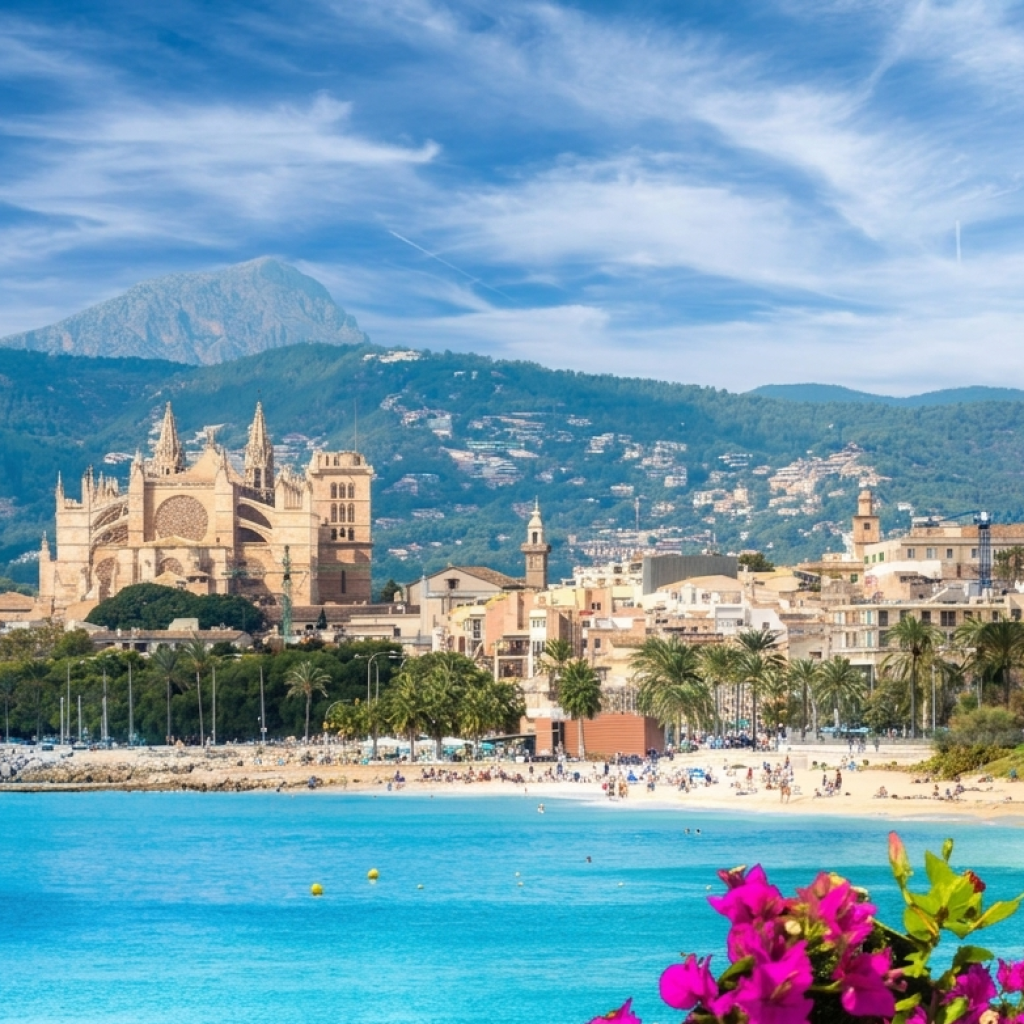
Balearic Islands
Located in the western Mediterranean, the Balearic Islands form one of Spain’s most distinctive regions, comprising Mallorca, Menorca, Ibiza, and Formentera. Although often grouped together, each island possesses a markedly different identity shaped by its landscapes, history, culture, and approach to tourism. From the mountain ranges and historic cities of Mallorca to the protected natural environments of Menorca, the evolving wellness and hospitality scene of Ibiza, and the pristine coastlines of Formentera, the archipelago offers a remarkable variety of experiences within a relatively small geographical area. The islands are united by Mediterranean traditions, exceptional coastlines, maritime heritage, and a strong connection to local gastronomy, yet each destination provides its own character and atmosphere. Today, the Balearic Islands remain among Spain’s most sought-after destinations, attracting visitors with a combination of historic landmarks, protected natural landscapes, picturesque coastal towns, world-class hospitality, and some of the Mediterranean’s most celebrated beaches.
Mallorca
Mallorca is the largest island in the Balearic archipelago and one of the Mediterranean’s most diverse destinations. While its coastline attracts international attention, the island’s appeal extends far beyond its beaches. Historic cities, mountain villages, monasteries, vineyards, olive groves, and dramatic coastal landscapes create a destination that combines culture, nature, gastronomy, and outdoor exploration within a relatively compact area.
The island is shaped by the Serra de Tramuntana mountain range, which stretches along much of the north-western coastline and forms one of Spain’s most impressive natural landscapes. Between the mountains and the sea, visitors encounter traditional stone villages, scenic coastal roads, secluded coves, and some of the Balearic Islands’ most distinctive scenery. Palma, the island’s capital, complements these landscapes with Gothic architecture, historic districts, marinas, museums, and a growing culinary scene that has helped position Mallorca among Europe’s leading island destinations.
Historic Sites & Cultural Attractions
Palma Cathedral (La Seu)
Overlooking Palma Bay, Palma Cathedral is one of the largest Gothic cathedrals in Europe and among Mallorca’s most recognisable landmarks. Construction began during the thirteenth century following the Christian conquest of the island, while later contributions by Antoni Gaudí helped shape portions of its interior. Its enormous stained-glass rose window and prominent waterfront setting make it one of the defining symbols of Mallorca.
Bellver Castle
Built during the early fourteenth century, Bellver Castle is one of the few circular castles in Europe. Positioned on a hill above Palma, it offers sweeping views across the city, harbour, and surrounding coastline while providing insight into Mallorca’s medieval history.
Royal Palace of La Almudaina
Originally constructed as an Islamic fortress before becoming a royal residence, La Almudaina reflects the island’s transition between Moorish and Christian rule. The palace remains one of Palma’s most important historic buildings and continues to serve official functions today.
Lluc Monastery
Nestled within the Serra de Tramuntana mountains, Lluc Monastery has long served as Mallorca’s spiritual centre. Pilgrims and visitors come to admire its religious significance, mountain surroundings, and centuries-old traditions.
Valldemossa Charterhouse
This historic monastery complex gained international recognition through the stay of composer Frédéric Chopin and writer George Sand during the winter of 1838–1839. Today it remains one of Mallorca’s most visited cultural landmarks.
Alcúdia Old Town
Surrounded by remarkably preserved medieval walls, Alcúdia offers narrow streets, historic churches, traditional squares, and centuries of local history. It remains one of the island’s finest examples of a fortified settlement.
Capdepera Castle
Constructed to defend Mallorca from pirate attacks and coastal invasions, this hilltop fortress dominates the surrounding landscape and provides extensive views across the island’s eastern coastline.
Beaches & Coastline
Es Trenc
Often regarded as Mallorca’s most famous natural beach, Es Trenc is known for its white sand, shallow turquoise waters, and protected coastal environment. Its undeveloped surroundings distinguish it from many resort beaches elsewhere in the Mediterranean.
Cala Formentor
Located on the island’s northern peninsula, Cala Formentor combines crystal-clear water with mountain scenery and pine forests that extend almost to the shoreline.
Playa de Muro
Stretching for several kilometres along the Bay of Alcúdia, Playa de Muro is one of Mallorca’s longest beaches and is particularly known for its soft sand and calm waters.
Cala Mondragó
Situated within Mondragó Natural Park, this picturesque cove combines protected landscapes, walking trails, and clear Mediterranean waters.
Cala Varques
Accessible via a scenic walking route, Cala Varques remains one of Mallorca’s more secluded beaches and is surrounded by cliffs, pine forests, and natural caves.
Cala Agulla
Framed by dunes and protected woodland, Cala Agulla offers a more natural setting than many of the island’s urban beaches.
Cala Mesquida
Known for its extensive dune system and open coastal scenery, Cala Mesquida is one of the island’s most distinctive natural beaches.
Cala Deià
Situated below the village of Deià, this small rocky cove has become one of Mallorca’s most photographed coastal locations.
Sa Calobra
Reached via one of Spain’s most scenic mountain roads, Sa Calobra is surrounded by dramatic cliffs and marks the entrance to the Torrent de Pareis gorge.
Cala Tuent
Located along a quieter section of the Tramuntana coastline, Cala Tuent offers a more peaceful alternative to nearby Sa Calobra.
Sailing & Yachting
Palma International Boat Show
One of the Mediterranean’s leading nautical events, attracting global yacht manufacturers, designers, and luxury marine brands.
Puerto Portals Marina Scene
A luxury yacht hub combining high-end sailing culture, international clientele, and Mediterranean lifestyle experiences.
Palma Bay Sailing Routes
Calm, protected waters ideal for regattas, leisure sailing, and coastal yacht exploration around historic Palma.
Festivals & Cultural Celebrations
Sant Sebastià (Palma)
The capital’s largest festival, featuring bonfires, live music, fireworks, and street celebrations across the historic centre.
Fira del Ram (Palma)
A traditional fair combining amusement culture with long-standing local festive traditions.
La Patrona (Pollença)
A historic reenactment festival commemorating the battle between locals and invading forces, deeply tied to Mallorcan identity.
Beach Club & Coastal Lifestyle
Nikki Beach Mallorca
International beach club combining music, dining, and luxury seaside leisure culture in a social Mediterranean setting.
Purobeach Palma
A lifestyle-focused beach club blending wellness, sunset music, and refined coastal dining experiences.
Anima Beach Club
Urban beachfront venue in Palma offering a modern interpretation of Mediterranean coastal lifestyle.
Villages & Scenic Towns
Valldemossa
Set within the Tramuntana mountains, Valldemossa is known for its stone houses, narrow streets, flower-filled balconies, and historic monastery complex. It remains one of Mallorca’s most celebrated villages.
Deià
Overlooking the Mediterranean from a hillside position, Deià has long attracted artists, writers, and creative communities. Its combination of scenery, architecture, and cultural heritage has made it one of Mallorca’s most distinctive destinations.
Sóller
Surrounded by orange groves and mountain landscapes, Sóller combines historic architecture with a strong agricultural heritage. The town remains connected to Palma by a historic wooden railway.
Port de Sóller
Built around a natural harbour, Port de Sóller combines waterfront promenades, beaches, and mountain scenery within one of Mallorca’s most attractive coastal settings.
Fornalutx
Often recognised as one of Spain’s most beautiful villages, Fornalutx is characterised by traditional stone architecture and its position within the Tramuntana mountains.
Pollença
Known for its historic centre, cultural traditions, and proximity to Cap de Formentor, Pollença remains one of northern Mallorca’s most important towns.
Santanyí
Built largely from local sandstone, Santanyí is recognised for its markets, galleries, traditional architecture, and access to some of the island’s most attractive beaches.
Artà
Located in north-eastern Mallorca, Artà combines historic streets, local markets, and a hilltop sanctuary overlooking the surrounding countryside.
Nature & Outdoor Attractions
Serra de Tramuntana
Designated a UNESCO World Heritage Site, the Serra de Tramuntana mountain range forms the backbone of Mallorca’s north-western coastline. The region contains mountain villages, scenic roads, hiking trails, olive groves, and some of the island’s most spectacular viewpoints.
Cap de Formentor
The northernmost point of Mallorca is known for its dramatic cliffs, panoramic viewpoints, and sweeping views across the Mediterranean.
Torrent de Pareis
This impressive canyon cuts through the Tramuntana mountains before reaching the coast at Sa Calobra. Its dramatic geology has made it one of Mallorca’s most famous natural landmarks.
Dragonera Island
Located off Mallorca’s western coast, Dragonera is a protected natural reserve known for its wildlife, hiking routes, and rugged landscapes.
Mondragó Natural Park
Combining beaches, wetlands, forests, and walking trails, Mondragó Natural Park protects one of Mallorca’s most ecologically important coastal areas.
Cúber Reservoir
Surrounded by mountain peaks, the reservoir forms part of one of Mallorca’s most popular hiking regions within the Tramuntana range.
S’Albufera Natural Park
Mallorca’s largest wetland reserve provides important habitats for migratory birds and remains one of Spain’s most significant birdwatching destinations.
Food & Local Specialties
Ensaïmada
Mallorca’s most famous pastry is recognised by its spiral shape and light texture. It has become one of the island’s best-known culinary symbols.
Sobrasada
This cured sausage, seasoned with paprika and local spices, remains one of Mallorca’s most traditional food products.
Tumbet
A classic Mallorcan dish consisting of layered vegetables, including potatoes, aubergines, peppers, and tomato sauce.
Frito Mallorquín
One of Mallorca’s oldest traditional dishes, combining meat, vegetables, herbs, and seasonal ingredients.
Pa amb Oli
A simple but widely enjoyed local staple made from bread, olive oil, tomatoes, and regional produce.
Almond-Based Products
Mallorca’s long history of almond cultivation influences many local desserts, pastries, and traditional recipes.
Local Olive Oils
Produced throughout the Tramuntana region, Mallorcan olive oils remain an important part of the island’s culinary identity.
Ibiza
Ibiza is one of the Mediterranean’s most recognised islands, yet its modern identity extends far beyond the reputation that first brought it international attention. While nightlife and electronic music remain part of the island’s global image, Ibiza has increasingly developed into a destination centred around wellness, gastronomy, sustainability, nature, and luxury hospitality. Across much of the island, visitors now encounter boutique countryside retreats, farm-to-table restaurants, protected natural landscapes, wellness centres, and coastal communities that offer a very different experience from the stereotypes often associated with Ibiza.
The island’s landscape is characterised by pine-covered hills, secluded coves, rugged coastlines, and traditional villages that have retained much of their local character. Beyond the beaches, Ibiza contains centuries of history visible through fortified old towns, archaeological sites, and traditional fincas scattered across the countryside. This balance between culture, nature, wellbeing, and contemporary hospitality has helped reshape Ibiza into one of Spain’s most diverse island destinations.
Historic Sites & Cultural Attractions
Dalt Vila
Overlooking Ibiza Town, Dalt Vila is a UNESCO World Heritage Site and one of the best-preserved fortified coastal settlements in the Mediterranean. Its defensive walls, cobbled streets, historic buildings, and elevated viewpoints provide insight into centuries of Phoenician, Roman, Arab, and Spanish influence on the island.
Ibiza Cathedral
Situated at the highest point of Dalt Vila, Ibiza Cathedral dates largely from the sixteenth century and reflects both Gothic and Baroque influences. Its position offers panoramic views across Ibiza Town, the harbour, and surrounding coastline.
Puig des Molins Necropolis
One of the most significant Phoenician archaeological sites in the Mediterranean, this ancient burial ground contains thousands of tombs dating back more than two thousand years and highlights Ibiza’s importance as a trading centre in antiquity.
Archaeological Museum of Ibiza
Located within Dalt Vila, the museum presents artefacts spanning the Phoenician, Punic, Roman, and Islamic periods, helping visitors understand the island’s complex historical development.
Marina Quarter
Situated below Dalt Vila, the Marina Quarter combines historic buildings, waterfront promenades, independent boutiques, galleries, and restaurants within one of Ibiza’s most vibrant urban districts.
Wellness Culture
Atzaró Agroturismo Spa
A countryside wellness retreat combining organic gardens, yoga platforms, holistic treatments, and traditional Ibizan architecture.
Las Dalias Wellness Culture
Evolving from its hippy market origins, now a hub for spiritual workshops, healing sessions, and alternative wellness practices.
Music & Nightlife Heritage
Pacha Ibiza
One of the most iconic clubs in the island, central to Ibiza’s transformation into a global electronic music capital since the 1970s.
Amnesia Ibiza
Historic venue that played a key role in the development of house and techno culture in Europe.
Ushuaïa Ibiza Beach Stage
Open-air daytime club concept that redefined global DJ culture and festival-style beach events.
Sailing & Coastal Lifestyle
Marina Botafoch Yacht Port
Luxury marina combining nightlife access, superyachts, and high-end Mediterranean maritime culture.
Cala Jondal Beach Lifestyle Scene
A coastal area where yachts anchor offshore and beach clubs create a social waterfront lifestyle environment.
Ibiza–Formentera Sailing Corridor
One of the Mediterranean’s most popular yacht routes, connecting Ibiza’s coastline with Formentera’s turquoise waters.
Beaches & Coastline
Cala Comte
Widely regarded as one of Ibiza’s most beautiful beaches, Cala Comte is known for its turquoise waters, small offshore islets, and exceptional sunset views across the Mediterranean.
Cala Bassa
Surrounded by pine forests and calm waters, Cala Bassa combines natural scenery with easy swimming conditions, making it one of the island’s most popular beaches.
Cala Salada
Located on Ibiza’s western coast, Cala Salada is characterised by clear water, rocky cliffs, and a more natural setting than many of the island’s larger beaches.
Cala d’Hort
This beach is best known for its direct views of Es Vedrà, one of Ibiza’s most recognisable natural landmarks. The combination of dramatic scenery and crystal-clear water has made it one of the island’s most photographed coastal locations.
Cala Xarraca
Situated on Ibiza’s quieter northern coastline, Cala Xarraca is known for its clear waters, rocky surroundings, and opportunities for snorkelling.
Benirràs Beach
Benirràs combines a relaxed atmosphere with scenic coastal views and has long been associated with sunset gatherings overlooking the sea.
Ses Salines Beach
Located within a protected natural park, Ses Salines is known for its long stretch of sand, shallow waters, and ecological importance.
Cala Tarida
One of Ibiza’s longest beaches, Cala Tarida offers white sand, calm water, and a series of smaller coves along the surrounding coastline.
Cala Vadella
Sheltered within a curved bay, Cala Vadella is particularly popular for swimming due to its calm waters and protected location.
Es Cavallet
Part of the Ses Salines Natural Park, Es Cavallet is recognised for its natural surroundings, dune landscapes, and unspoiled coastal environment.
Villages & Coastal Areas
Santa Gertrudis
Located in the centre of the island, Santa Gertrudis combines traditional village life with cafés, galleries, boutiques, and a growing creative community. It has become one of Ibiza’s most sought-after year-round destinations.
Sant Joan de Labritja
Situated in northern Ibiza, Sant Joan offers a quieter atmosphere defined by rural landscapes, local markets, and a strong connection to the island’s agricultural heritage.
Sant Josep de sa Talaia
One of Ibiza’s largest municipalities, Sant Josep encompasses some of the island’s most attractive beaches, traditional villages, and natural landscapes.
Portinatx
Located on the northern coast, Portinatx is known for its clear waters, sheltered coves, and relaxed atmosphere compared with busier parts of the island.
Es Cubells
Perched on cliffs overlooking the Mediterranean, Es Cubells offers dramatic coastal views and remains one of Ibiza’s most picturesque villages.
Santa Eulària des Riu
Known for its marina, promenade, and family-friendly atmosphere, Santa Eulària has developed into one of Ibiza’s most established residential and hospitality centres.
Nature & Outdoor Attractions
Es Vedrà Viewpoints
Rising dramatically from the sea off Ibiza’s south-western coast, Es Vedrà is one of the island’s most iconic natural landmarks and is visible from several scenic viewpoints.
Ses Salines Natural Park
This protected area encompasses wetlands, salt flats, beaches, and marine ecosystems that support important migratory bird populations.
Sa Talaia
At 475 metres above sea level, Sa Talaia is the highest point on Ibiza and offers panoramic views across much of the island.
Atlantis (Sa Pedrera)
Once a sandstone quarry, Atlantis is known for its unusual rock formations, natural pools, and striking coastal setting beneath the cliffs near Es Vedrà.
Northern Coastal Trails
The island’s northern coastline contains some of Ibiza’s most scenic walking routes, connecting cliffs, coves, pine forests, and quieter stretches of shoreline.
Food & Local Specialties
Bullit de Peix
One of Ibiza’s most traditional dishes, Bullit de Peix consists of locally caught fish cooked with potatoes and typically served alongside rice.
Sofrit Pagès
A hearty rural dish combining meat, potatoes, peppers, and local spices, reflecting Ibiza’s agricultural traditions.
Flaó
This distinctive dessert combines fresh cheese, mint, and pastry, creating one of Ibiza’s most recognisable sweet specialities.
Local Seafood
Fresh fish, squid, prawns, and shellfish remain central to the island’s culinary identity and feature prominently in traditional coastal cuisine.
Ibizan Herbs Liqueur
Produced using a blend of local herbs and botanicals, this traditional liqueur has been made on the island for generations.
Formentera
Formentera is the smallest of the four principal Balearic Islands and is widely regarded as one of the Mediterranean’s most pristine coastal destinations. Accessible primarily by ferry from Ibiza, the island has preserved much of its natural character through limited development, protected landscapes, and a slower pace of life that distinguishes it from many larger tourism destinations.
The island’s appeal lies in its simplicity. White-sand beaches, crystal-clear waters, cycling routes, coastal paths, and small villages define much of the landscape. Rather than focusing on large-scale attractions, Formentera encourages visitors to experience the surrounding environment, whether through exploring remote coves, cycling between lighthouses, or enjoying fresh seafood along the waterfront. This combination of natural beauty and tranquillity has made Formentera one of Spain’s most desirable island escapes.
Historic Sites & Cultural Attractions
La Mola Lighthouse
Situated on the island’s eastern cliffs, La Mola Lighthouse overlooks dramatic coastal scenery and has become one of Formentera’s most recognisable landmarks.
Cap de Barbaria Lighthouse
Located at the southern end of the island, this isolated lighthouse stands above rugged cliffs and offers some of Formentera’s most striking coastal views.
Ethnological Museum of Formentera
This museum provides insight into the island’s traditional way of life, agricultural practices, and cultural heritage.
Traditional Windmills
Historic windmills scattered throughout the island reflect Formentera’s agricultural past and remain important cultural symbols.
Defensive Coastal Towers
Constructed to protect the island from pirate raids, these historic watchtowers continue to overlook key sections of the coastline.
Sailing & Yachting
La Savina Marina Gateway
Main maritime entry point to the island, serving ferries and private yachts accessing protected waters.
Espalmador Anchorage Zone
A highly exclusive natural anchorage near untouched beaches and protected marine environments.
Migjorn Sailing Coastline
Long southern stretch frequently used for yacht exploration due to calm waters and open coastal scenery.
Beach Club & Coastal Lifestyle
Besos Beach (Migjorn)
Minimalist beachfront venue focused on natural surroundings, simple luxury, and relaxed Mediterranean dining.
Chezz Gerdi
Artistic beach club blending bohemian design, waterfront dining, and informal luxury lifestyle.
Tiburon Beach Experience Venues
Small-scale coastal restaurants reflecting Formentera’s understated, nature-led hospitality culture.
Beaches & Coastline
Ses Illetes
Frequently ranked among Europe’s finest beaches, Ses Illetes is known for its white sand and exceptionally clear turquoise waters.
Llevant Beach
Stretching along the island’s northern coastline, Llevant offers a more open and natural environment than nearby Ses Illetes.
Cala Saona
This sheltered bay is surrounded by reddish cliffs and is particularly popular for swimming and sunset views.
Migjorn Beach
Extending along much of the southern coast, Migjorn offers a mixture of sandy stretches, rocky sections, and quieter coastal areas.
Es Arenals
Located along the Migjorn coastline, Es Arenals is known for its shallow waters and broad sandy shoreline.
Es Pujols Beach
Situated beside the island’s main resort area, this beach combines easy access with clear Mediterranean waters.
S’Alga Beach
Located on the nearby island of Espalmador, S’Alga is known for its untouched appearance and natural surroundings.
Villages & Coastal Areas
Sant Francesc Xavier
The island’s capital serves as its cultural and administrative centre, featuring traditional architecture, cafés, boutiques, and local markets.
Es Pujols
Formentera’s main tourism centre combines restaurants, waterfront promenades, beaches, and accommodation within a compact coastal setting.
El Pilar de la Mola
Situated on the island’s elevated eastern plateau, this village is known for its artisan market and rural atmosphere.
La Savina
As the island’s main port, La Savina serves as the gateway to Formentera while also providing access to nearby lagoons and nature reserves.
Sant Ferran de ses Roques
This small village remains closely linked to Formentera’s artistic and bohemian heritage and retains a relaxed local atmosphere.
Nature & Outdoor Attractions
Ses Salines Natural Park
Shared with Ibiza, this protected area contains wetlands, marine ecosystems, and some of the most important natural habitats in the Balearic Islands.
La Mola Plateau
The island’s elevated eastern region offers panoramic views, rural landscapes, and scenic cycling routes.
Coastal Cycling Routes
Formentera’s relatively flat terrain and compact size have made cycling one of the most popular ways to explore the island.
Estany des Peix
This sheltered lagoon provides calm waters and serves as an important habitat for local wildlife.
Estany Pudent
One of Formentera’s largest natural lagoons, Estany Pudent supports birdlife and forms part of the island’s protected ecosystem.
Food & Local Specialties
Peix Sec
Traditionally prepared dried fish remains one of Formentera’s most distinctive culinary products and is often used in local salads.
Fresh Seafood
The island’s fishing heritage continues to influence many traditional dishes centred around locally sourced seafood.
Mediterranean Rice Dishes
Rice-based dishes prepared with seafood and seasonal ingredients remain a staple of Formentera’s cuisine.
Flaó
This traditional Balearic dessert is also found on Formentera and remains closely associated with the islands’ culinary heritage.
Local Wines
Small-scale vineyards contribute to a growing wine culture that reflects the island’s agricultural traditions.
Menorca
Menorca offers a quieter and more nature-oriented alternative to its neighbouring islands while preserving a strong sense of local identity and cultural heritage. Recognised as a UNESCO Biosphere Reserve, the island has maintained much of its natural character through protected landscapes, traditional settlements, and relatively limited large-scale development. The result is a destination defined by turquoise coves, historic towns, prehistoric monuments, scenic coastal routes, and a slower pace of life that appeals to visitors seeking authenticity and natural beauty.
Unlike many Mediterranean islands that have undergone extensive urbanisation, Menorca remains closely connected to its agricultural traditions, fishing communities, and maritime history. The island’s appeal extends well beyond its beaches, encompassing centuries-old fortresses, archaeological sites dating back thousands of years, protected wetlands, and one of the Mediterranean’s most extensive coastal walking networks. This combination of cultural heritage and environmental preservation has established Menorca as one of Spain’s most rewarding island destinations.
Historic Sites & Cultural Attractions
Ciutadella Historic Centre
Once Menorca’s capital, Ciutadella remains one of the island’s most beautiful historic towns. Its narrow streets, elegant stone buildings, traditional squares, and historic harbour reflect centuries of Mediterranean influence and continue to serve as one of Menorca’s cultural centres.
Cathedral of Menorca
Located in the heart of Ciutadella, the cathedral was constructed during the fourteenth century on the site of a former mosque. It remains one of the island’s most important religious and architectural landmarks.
Fortress of La Mola
Officially known as the Fortress of Isabella II, this vast nineteenth-century military complex overlooks the entrance to Mahón Harbour and provides insight into Menorca’s strategic importance throughout European history.
Mahón Historic Centre
The island’s capital combines Georgian architecture, historic streets, waterfront promenades, and one of the largest natural harbours in the world. Its architecture reflects centuries of British, French, and Spanish influence.
Naveta des Tudons
Among Menorca’s most significant archaeological sites, this prehistoric stone monument dates back more than three thousand years and remains one of Europe’s best-preserved prehistoric burial structures.
Talayotic Settlements
Scattered throughout the island, these ancient settlements provide evidence of Menorca’s prehistoric civilisation. Sites such as Torre d’en Galmés and Talatí de Dalt offer some of the most important archaeological remains in the Balearic Islands.
Beaches & Coastline
Cala Macarella
Surrounded by pine-covered cliffs and turquoise waters, Cala Macarella is widely considered one of Menorca’s most iconic beaches.
Cala Macarelleta
Located beside Cala Macarella, this smaller cove is known for its clear waters, white sand, and secluded atmosphere.
Cala Turqueta
One of Menorca’s most photographed beaches, Cala Turqueta is characterised by vivid turquoise waters and protected natural surroundings.
Cala Mitjana
Situated along the southern coast, Cala Mitjana combines pine forests, cliffs, and calm waters within a picturesque natural setting.
Cala Pregonda
Distinctive for its reddish-golden sand and unusual rock formations, Cala Pregonda offers a landscape unlike any other beach on the island.
Son Bou Beach
The longest beach in Menorca, Son Bou stretches for several kilometres and borders important wetland habitats.
Cala Galdana
Known for its horseshoe-shaped bay, Cala Galdana combines dramatic scenery with calm swimming conditions.
Binibèquer Coast
The coastline surrounding Binibèquer features rocky coves, clear waters, and traditional fishing village scenery.
Cavalleria Beach
Located on the northern coast, Cavalleria is recognised for its red-toned sands, rugged landscapes, and undeveloped surroundings.
Punta Nati Coastline
This windswept coastal region showcases dramatic cliffs, traditional stone walls, and some of Menorca’s most spectacular sunsets.
Villages & Scenic Towns
Ciutadella
The island’s historic capital combines architectural heritage, lively squares, waterfront dining, and one of the most attractive old towns in the Balearic Islands.
Mahón (Maó)
Built around a vast natural harbour, Mahón serves as Menorca’s administrative and cultural centre while maintaining a distinctly maritime character.
Binibèquer Vell
Designed to resemble a traditional Mediterranean fishing village, Binibèquer is known for its whitewashed buildings, narrow alleys, and coastal setting.
Es Mercadal
Situated at the centre of the island beneath Monte Toro, Es Mercadal provides access to many of Menorca’s interior landscapes and traditional communities.
Fornells
This picturesque fishing village is widely recognised for its harbour, seafood restaurants, and strong connection to Menorca’s maritime traditions.
Sant Lluís
Known for its relaxed atmosphere and traditional architecture, Sant Lluís reflects Menorca’s rural heritage and local way of life.
Nature & Outdoor Attractions
Monte Toro
The highest point on Menorca offers panoramic views across much of the island and serves as one of its most important natural landmarks.
S’Albufera des Grau Natural Park
This protected reserve forms the ecological heart of Menorca and contains wetlands, forests, lagoons, coastal habitats, and diverse wildlife.
Camí de Cavalls
Encircling the entire island, this historic coastal trail stretches for approximately 185 kilometres and provides access to some of Menorca’s most remote landscapes and beaches.
Favàritx Lighthouse
Located within a striking lunar-like landscape on the island’s eastern coast, Favàritx is among Menorca’s most distinctive natural and photographic locations.
Cala Morell Cliffs
Combining dramatic coastal scenery with prehistoric cave systems, Cala Morell offers one of the island’s most unique landscapes.
Northern Coastal Reserve
The island’s northern coastline remains one of the least developed regions in the Balearics and contains some of Menorca’s most impressive geological formations.
Food & Local Specialties
Caldereta de Langosta
Menorca’s most famous dish, this traditional lobster stew has long been associated with the fishing village of Fornells and remains a defining part of the island’s cuisine.
Mahón Cheese
Produced on the island for centuries, Mahón cheese is one of Spain’s most recognised regional cheeses and holds protected designation status.
Sobrasada
This traditional cured sausage is found throughout the Balearics but remains an important part of Menorcan cuisine.
Oli Aigua
A simple traditional soup prepared with vegetables, olive oil, and water that reflects the island’s rural culinary heritage.
Fresh Seafood
Fish, shellfish, squid, and other seafood feature prominently across Menorca’s coastal restaurants and traditional recipes.
Gin de Menorca
Introduced during British rule, locally produced gin remains one of Menorca’s most distinctive beverages and forms part of the island’s unique cultural heritage.
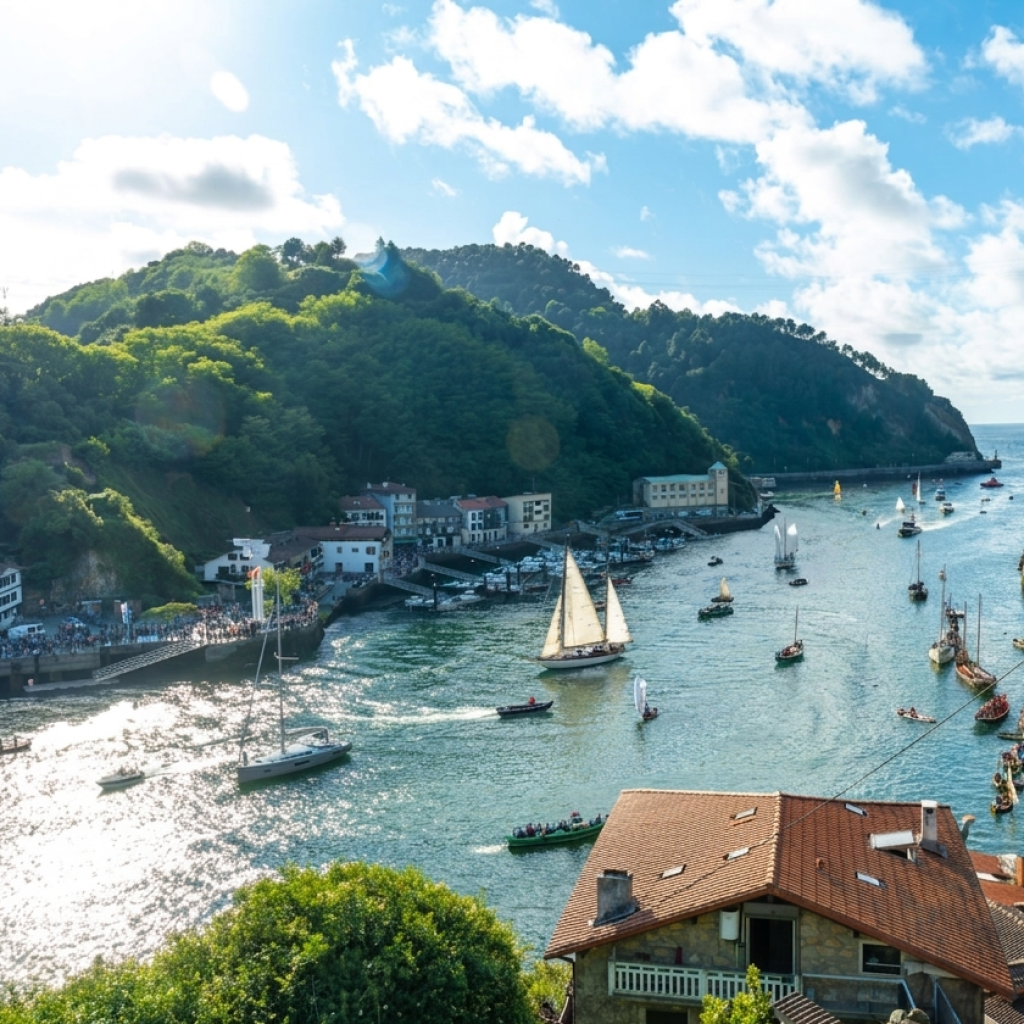
Basque Country
The Basque Country occupies Spain’s northern Atlantic coastline and is one of the country’s most distinctive regions. Known for its unique language, strong cultural identity, world-renowned gastronomy, and dramatic coastal scenery, it offers an experience that differs considerably from the Mediterranean destinations that define much of Spain’s tourism industry. The region combines elegant coastal cities, historic fishing towns, rugged cliffs, green mountains, and a cultural heritage that has remained remarkably preserved for centuries. Stretching from the French border to the Bay of Biscay, the Basque Country is home to internationally recognised destinations such as Bilbao and San Sebastián, alongside smaller towns that have maintained strong maritime traditions and local customs. Visitors encounter a landscape where contemporary architecture stands beside medieval streets, where Atlantic cuisine is deeply connected to local produce and seafood, and where outdoor experiences range from coastal walks and surfing beaches to mountain trails and protected natural reserves.
Cities & Historic Centres
Bilbao
Bilbao has undergone one of Europe’s most successful urban transformations, evolving from an industrial centre into a major cultural destination. Contemporary architecture, riverfront redevelopment, renowned museums, and a thriving food scene have positioned the city among Spain’s most dynamic urban destinations.
San Sebastián (Donostia)
Often regarded as one of Europe’s most beautiful coastal cities, San Sebastián combines elegant Belle Époque architecture with world-famous gastronomy and exceptional beaches. The city’s compact historic centre, scenic bay, and culinary reputation attract visitors from across the globe.
Vitoria-Gasteiz
The capital of the Basque Autonomous Community offers a more traditional atmosphere than Bilbao or San Sebastián. Its medieval old town, green spaces, and well-preserved historic centre provide insight into the region’s cultural heritage.
Hondarribia
Located near the French border, Hondarribia is known for its fortified old town, colourful waterfront district, and maritime character. The town’s historic streets and coastal setting make it one of the Basque Country’s most attractive destinations.
Getaria
This small fishing town is recognised for its historic harbour, seafood traditions, and connection to explorer Juan Sebastián Elcano. Its location between vineyards and the Atlantic coastline contributes to its enduring appeal.
Landmarks & Cultural Sites
Guggenheim Museum Bilbao
The Guggenheim transformed Bilbao’s international profile following its opening in 1997. Designed by Frank Gehry, the museum’s titanium-clad structure is considered one of the most influential architectural works of the modern era.
San Juan de Gaztelugatxe
Connected to the mainland by a winding stone bridge and staircase, this dramatic islet is one of northern Spain’s most iconic landmarks. The small hermitage at its summit overlooks some of the region’s most spectacular coastal scenery.
Vizcaya Bridge (Puente Colgante)
Recognised as a UNESCO World Heritage Site, the Vizcaya Bridge was the world’s first transporter bridge. The structure remains operational today and represents a significant achievement in engineering history.
Basilica of Loyola
Built near the birthplace of Saint Ignatius of Loyola, founder of the Jesuit order, this Baroque basilica is one of the region’s most important religious landmarks. Its monumental architecture attracts both pilgrims and visitors interested in history.
Miramar Palace
Overlooking La Concha Bay in San Sebastián, Miramar Palace served as a summer residence for Spanish royalty. Its gardens provide some of the finest views of the city’s coastline.
Bilbao Cathedral
Located within Bilbao’s historic centre, the cathedral combines Gothic architecture with later additions spanning several centuries. It remains one of the city’s most significant religious monuments.
Beaches & Coastline
La Concha Beach
Widely regarded as one of Europe’s finest urban beaches, La Concha is known for its crescent-shaped bay, golden sand, and elegant waterfront promenade. The beach has become the defining image of San Sebastián.
Zurriola Beach
Located east of San Sebastián’s old town, Zurriola attracts surfers and active beachgoers throughout the year. Its stronger waves distinguish it from the calmer waters of La Concha.
Ondarreta Beach
Positioned at the western end of La Concha Bay, Ondarreta offers a quieter atmosphere while maintaining spectacular views of the surrounding coastline.
Itzurun Beach
Famous for its dramatic geological formations, Itzurun Beach showcases layers of rock created over millions of years. The site forms part of the Basque Coast Geopark.
Laga Beach
Situated within the Urdaibai Biosphere Reserve, Laga Beach is surrounded by protected natural landscapes and rolling green hills. Its setting makes it one of the region’s most scenic coastal areas.
Bakio Beach
Bakio combines a long sandy shoreline with a relaxed coastal atmosphere and proximity to Gaztelugatxe. The beach is particularly popular among surfers and outdoor enthusiasts.
Playa de Saturrarán
Nestled between steep green hills and the Atlantic Ocean, Saturrarán offers a more secluded coastal experience than many of the region’s larger beaches.
Flysch Coast
Stretching between Zumaia, Deba, and Mutriku, this coastline reveals extraordinary geological formations exposed by centuries of erosion. The cliffs are considered among Europe’s most significant geological landscapes.
Coastal Towns & Villages
Zumaia
Zumaia is best known for its dramatic Flysch cliffs and scenic coastal setting. The town serves as one of the best gateways for exploring the Basque Coast Geopark.
Bermeo
Historically one of the region’s most important fishing ports, Bermeo retains a strong maritime identity. Its colourful harbour and proximity to Gaztelugatxe make it a popular stop along the coast.
Lekeitio
Surrounded by beaches and rugged headlands, Lekeitio combines traditional Basque architecture with a picturesque waterfront. The town remains one of the coast’s hidden gems.
Mundaka
Mundaka enjoys an international reputation among surfers due to its celebrated left-hand wave. Beyond surfing, the town offers a charming historic centre and natural surroundings.
Getaria
Getaria’s fishing heritage remains visible throughout its harbour and historic streets. The town is also renowned for its seafood restaurants and nearby vineyards.
Mutriku
Mutriku preserves a traditional fishing-town atmosphere with narrow streets and a well-preserved historic core overlooking the Atlantic.
Museums & Culture
San Telmo Museum
Located in San Sebastián, San Telmo explores the history, traditions, and development of Basque society. Its collections provide valuable insight into the region’s identity and heritage.
Fine Arts Museum of Bilbao
One of Spain’s most respected art museums, the institution houses works spanning several centuries and artistic movements. The collection includes Basque, Spanish, and international artists.
Basque Museum
Situated in Bilbao’s old town, the Basque Museum focuses on the region’s cultural traditions, language, and social history. Exhibits help explain the uniqueness of Basque identity within Spain.
Chillida Leku
Dedicated to sculptor Eduardo Chillida, this open-air museum combines art and landscape across extensive gardens and exhibition spaces.
Balenciaga Museum
Located in Getaria, the museum celebrates the life and work of fashion designer Cristóbal Balenciaga. It remains the only museum in the world dedicated entirely to his legacy.
Nature & Outdoor Attractions
Urdaibai Biosphere Reserve
Recognised by UNESCO, Urdaibai contains wetlands, forests, beaches, and estuaries that support significant biodiversity. It is considered one of the Basque Country’s most important natural areas.
Gorbeia Natural Park
Centred around Mount Gorbeia, the park features forests, waterfalls, caves, and extensive hiking routes. It is one of the region’s most popular outdoor destinations.
Aizkorri-Aratz Natural Park
Home to some of the highest peaks in the Basque Country, this protected landscape attracts hikers and nature enthusiasts throughout the year.
Basque Coast Geopark
The geopark preserves millions of years of geological history visible within its coastal cliffs. Guided walks and boat tours offer opportunities to explore this remarkable landscape.
Pagoeta Natural Park
Known for its forests, traditional farmhouses, and walking trails, Pagoeta offers a quieter natural escape near the coast.
Mount Igueldo
Overlooking San Sebastián and La Concha Bay, Mount Igueldo provides some of the region’s most iconic panoramic views.
Day Trips & Nearby Destinations
Saint-Jean-de-Luz
Located just across the French border, Saint-Jean-de-Luz combines Basque heritage with French coastal charm. Its harbour, beaches, and historic centre make it an excellent cross-border excursion.
Biarritz
One of France’s most elegant Atlantic resorts, Biarritz offers grand architecture, surfing culture, and dramatic coastal scenery within easy reach of the Basque Country.
Laguardia
Situated in the Rioja Alavesa wine region, Laguardia is a fortified medieval town surrounded by vineyards. The destination is particularly popular among wine enthusiasts.
Pamplona
Known internationally for the San Fermín festival, Pamplona also offers impressive fortifications, historic streets, and important cultural landmarks throughout the year.
Rioja Alavesa
This wine-producing region combines rolling vineyards, traditional villages, and acclaimed wineries. It represents one of Spain’s most celebrated wine destinations.
Food & Local Specialties
Pintxos
Pintxos are the Basque Country’s most famous culinary tradition, consisting of small dishes typically served atop slices of bread. Bars throughout the region display dozens of varieties ranging from simple classics to highly creative modern interpretations.
Bacalao al Pil-Pil
This traditional dish combines salt cod, olive oil, garlic, and chilli peppers into a rich emulsion. It remains one of the most recognised recipes in Basque cuisine.
Txangurro
Prepared using spider crab, txangurro reflects the region’s close relationship with the Atlantic Ocean. The dish is particularly associated with coastal communities.
Basque Cheesecake
Originating in San Sebastián, Basque cheesecake has gained international recognition for its caramelised exterior and creamy centre. It has become one of Spain’s most celebrated desserts.
Txakoli
Txakoli is a lightly sparkling white wine produced along the Basque coast. Its crisp character makes it a popular accompaniment to seafood and pintxos.
Marmitako
Traditionally prepared by fishermen, marmitako is a hearty tuna and potato stew deeply connected to the region’s maritime heritage.
Idiazabal Cheese
Produced from sheep’s milk in the Basque Country and neighbouring Navarre, Idiazabal is one of Spain’s most respected traditional cheeses. Its smoky and complex flavour profile has earned international recognition.
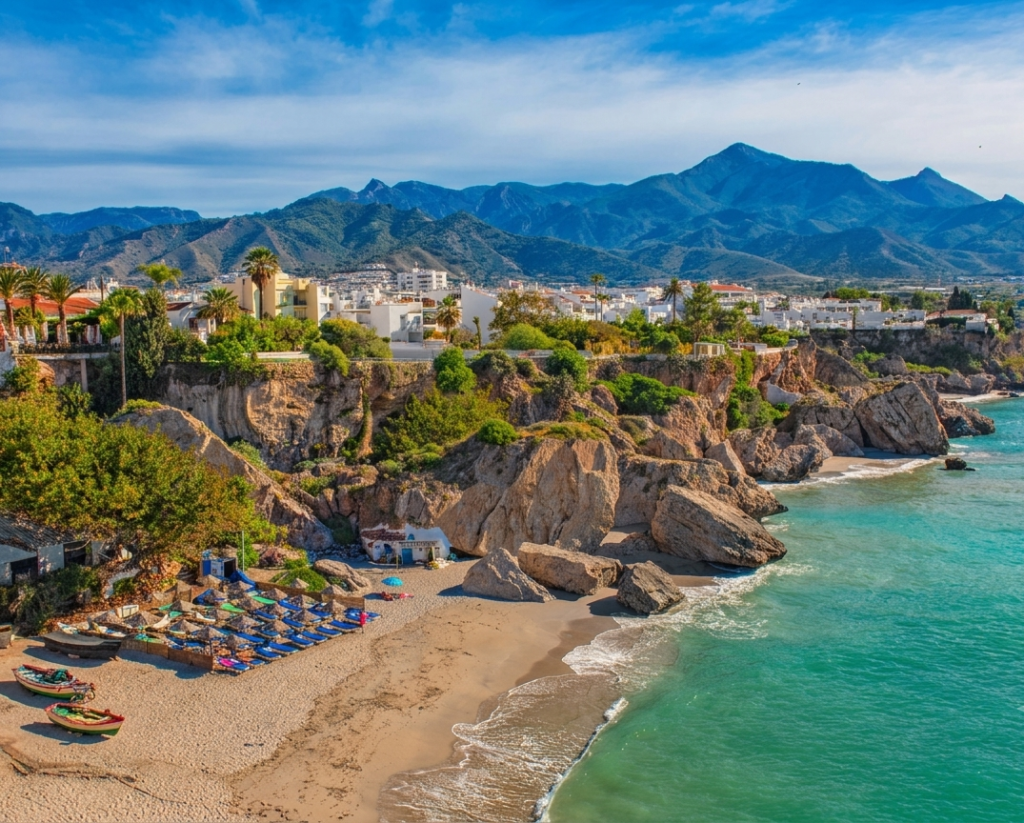
Costa del Sol
Stretching along the southern Mediterranean coast of Andalusia, Costa del Sol is one of Europe’s most established coastal destinations and one of Spain’s most recognised tourism regions. The coastline extends from Málaga in the east toward the province of Cádiz in the west, encompassing historic cities, resort towns, marinas, beaches, mountain villages, golf courses, and some of the country’s most significant luxury hospitality developments. While Costa del Sol became internationally known during the twentieth century as a beach destination, the region today offers a far broader experience. Visitors encounter Roman ruins, Moorish fortifications, contemporary cultural institutions, protected natural landscapes, traditional Andalusian villages, and a culinary scene deeply connected to the Mediterranean. The combination of year-round sunshine, extensive coastline, modern infrastructure, and diverse destinations has helped establish Costa del Sol as one of Spain’s most visited regions. Beyond its beaches, the area is increasingly recognised for luxury hospitality, wellness retreats, golf tourism, gastronomy, yachting, and outdoor activities. From the cultural attractions of Málaga to the marinas of Marbella and the dramatic scenery surrounding Nerja, Costa del Sol presents a diverse coastal landscape that appeals to a wide range of visitors
Málaga
Málaga is the cultural and economic heart of Costa del Sol, combining over two thousand years of history with one of Spain’s most dynamic urban waterfronts. While many visitors arrive through Málaga Airport before continuing elsewhere along the coast, the city itself has evolved into one of Andalusia’s most compelling destinations. Roman remains, Moorish fortifications, Renaissance architecture, contemporary museums, and Mediterranean beaches coexist within a highly walkable city centre.
In recent years, Málaga has established itself as one of Spain’s leading cultural destinations through significant investment in museums, public spaces, waterfront redevelopment, and gastronomy. Visitors can explore ancient landmarks in the morning, spend the afternoon on the coast, and finish the day in lively plazas, rooftop terraces, or traditional Andalusian restaurants. This balance between history, culture, coastline, and modern city life makes Málaga one of the most complete urban destinations in southern Spain.
Historic Sites & Cultural Attractions
Alcazaba of Málaga
One of Spain’s best-preserved Moorish fortresses, the Alcazaba was constructed during the eleventh century and overlooks much of the city from its elevated position. Defensive walls, courtyards, gardens, and intricate Islamic architectural details provide insight into Málaga’s period under Muslim rule.
Gibralfaro Castle
Standing above the Alcazaba, Gibralfaro Castle offers some of the finest panoramic views in Costa del Sol. Originally built to strengthen the city’s defences, the fortress overlooks Málaga’s harbour, historic centre, and Mediterranean coastline.
Málaga Cathedral
Often referred to as La Manquita (“The One-Armed Lady”) due to its unfinished southern tower, Málaga Cathedral represents one of Andalusia’s most significant Renaissance landmarks. Its interior contains impressive chapels, detailed stonework, and a richly decorated choir.
Roman Theatre
Located at the foot of the Alcazaba, the Roman Theatre dates back to the first century BC and remains one of the city’s most important archaeological sites. The structure reflects Málaga’s origins as an important Roman settlement.
Picasso Museum Málaga
Dedicated to Málaga-born artist Pablo Picasso, the museum houses a substantial collection spanning various stages of his artistic career. It remains one of the city’s most visited cultural institutions.
Centre Pompidou Málaga
Recognisable by its colourful glass cube along the waterfront, this branch of the famous Paris institution showcases rotating exhibitions of modern and contemporary art.
Carmen Thyssen Museum
Located within a restored historic palace, the museum focuses primarily on nineteenth-century Spanish and Andalusian art.
Málaga Historic Centre
The city’s historic core combines pedestrian streets, traditional plazas, churches, historic buildings, and lively public spaces that reflect centuries of cultural and architectural development.
Beaches & Coastline
La Malagueta Beach
Situated within walking distance of the historic centre, La Malagueta is Málaga’s most recognisable urban beach. Its central location makes it one of the city’s most accessible coastal areas.
Playa de la Caleta
Located east of La Malagueta, this beach offers a more residential atmosphere and a quieter stretch of coastline lined with palm trees and historic villas.
Pedregalejo Beaches
Once a traditional fishing district, Pedregalejo is now known for its small beaches, waterfront promenade, and seafood restaurants overlooking the Mediterranean.
El Palo Beach
Retaining much of its local character, El Palo remains closely linked to Málaga’s fishing heritage and is particularly known for its beachside seafood establishments.
Playa de Guadalmar
Located near the mouth of the Guadalhorce River, this beach offers a less urban setting and proximity to protected natural environments.
Baños del Carmen
One of Málaga’s most historic seaside areas, featuring small coves, coastal views, and one of the city’s most distinctive waterfront settings.
Marinas & Waterfront Areas
Muelle Uno
Málaga’s modern waterfront district has transformed the city’s harbour into a vibrant area of restaurants, boutiques, cultural venues, and public spaces overlooking the marina.
Palmeral de las Sorpresas
This landscaped waterfront promenade stretches alongside the harbour and has become one of Málaga’s most popular walking areas.
Málaga Marina
Home to leisure vessels, luxury yachts, and visiting cruise ships, the marina contributes significantly to the city’s maritime identity.
Port of Málaga
One of the oldest continuously operating ports in the Mediterranean, the harbour remains central to the city’s economic and historical development.
Nature & Outdoor Attractions
Montes de Málaga Natural Park
Located just north of the city, this protected landscape contains forests, hiking routes, wildlife habitats, and panoramic viewpoints overlooking the coastline.
Botanical Garden of La Concepción
Among Spain’s most important tropical and subtropical gardens, this historic estate contains exotic plants, landscaped pathways, and nineteenth-century architecture.
Guadalhorce Nature Reserve
A protected wetland area near the coast that provides habitat for migratory birds and serves as one of the region’s most important ecological sites.
Gibralfaro Viewpoints
Several scenic viewpoints around Gibralfaro provide sweeping views across Málaga, the harbour, and the Mediterranean Sea.
Day Trips & Nearby Destinations
Nerja
A popular eastern coastal excursion from Málaga, often chosen for a more traditional seaside atmosphere, dramatic viewpoints, and access to some of the most scenic stretches of coastline in the province.
Frigiliana
Frequently paired with Nerja, offering visitors a mountain village experience that contrasts with Málaga’s urban waterfront environment.
Caminito del Rey
One of the province’s most sought-after outdoor excursions, attracting visitors interested in dramatic landscapes and adventure-focused experiences beyond the coast.
Ronda
Often visited as a full-day inland journey, providing a completely different perspective on Andalusia through mountain scenery, historic architecture, and elevated landscapes.
Antequera
A convenient inland excursion from Málaga for visitors interested in archaeology, natural formations, and lesser-explored parts of the province.
Food & Local Specialties
Espetos de Sardinas
Perhaps Málaga’s most famous culinary tradition, fresh sardines are skewered and grilled over open fires directly on the beach.
Ajoblanco
A chilled almond and garlic soup that originated in Andalusia and remains particularly popular throughout Málaga Province.
Boquerones
Fresh anchovies are served either fried or marinated in vinegar and form an important part of local cuisine.
Porra Antequerana
A thicker variation of gazpacho that is especially popular across the region.
Fresh Mediterranean Seafood
From red prawns to sea bass and octopus, seafood remains central to Málaga’s gastronomy.
Sweet Málaga Wines
Produced for centuries in the surrounding hills, Málaga’s fortified wines continue to be among the region’s most distinctive products.
Marbella
Marbella is one of Europe’s most recognised luxury coastal destinations, known for its combination of Mediterranean beaches, high-end hospitality, golf resorts, fine dining, and yachting culture. However, beyond its international reputation for luxury tourism lies a historic Andalusian town with centuries of history, traditional architecture, and a distinctly local character that continues to shape the city’s identity.
Situated between the Mediterranean Sea and the Sierra Blanca mountains, Marbella benefits from a unique microclimate that contributes to its year-round appeal. Visitors can spend time exploring the historic centre, relaxing on beaches, dining at internationally acclaimed restaurants, or visiting some of Spain’s most prestigious resorts and marinas. This combination of traditional Andalusian heritage and contemporary luxury has helped establish Marbella as one of the most important destinations along Costa del Sol.
Historic Sites & Cultural Attractions
Marbella Old Town (Casco Antiguo)
The historic centre remains one of Marbella’s most charming areas, characterised by narrow streets, flower-filled balconies, whitewashed buildings, and traditional Andalusian architecture.
Plaza de los Naranjos
Dating back to the fifteenth century, this picturesque square forms the heart of Marbella’s historic centre and is surrounded by cafés, historic buildings, and orange trees.
Church of Our Lady of the Incarnation
One of Marbella’s most important religious landmarks, known for its baroque façade and prominent position within the old town.
Murallas del Castillo
Remains of Marbella’s medieval defensive walls provide insight into the town’s Islamic past.
Avenida del Mar
This open-air promenade connects the historic centre with the coast and features a collection of sculptures designed by Salvador Dalí.
Ralli Museum Marbella
A respected museum specialising in Latin American and European contemporary art.
Beaches & Coastline
Playa de Venus
One of Marbella’s most central beaches, located close to the historic centre and waterfront promenade.
Playa de la Fontanilla
Popular for its accessibility, beach clubs, and wide sandy shoreline.
Playa de Cabopino
Often regarded as one of Marbella’s most attractive beaches, featuring protected dunes and a more natural setting.
Playa de Nagüeles
Located along the prestigious Golden Mile, this beach is associated with many of Marbella’s luxury hotels and residences.
Playa del Alicate
A quieter beach known for its spacious shoreline and relaxed atmosphere.
Playa de Puerto Banús
Combining beach access with proximity to one of Europe’s most famous marinas.
Marinas & Waterfront Areas
Puerto Banús
The most famous marina on Costa del Sol, Puerto Banús is internationally recognised for luxury yachts, designer boutiques, waterfront dining, and high-end hospitality.
Marbella Marina
Located near the city centre, Marbella Marina offers a more traditional maritime atmosphere while remaining close to beaches and restaurants.
Golden Mile
Stretching between Marbella and Puerto Banús, the Golden Mile is home to luxury resorts, exclusive residences, and some of the most prestigious properties in Spain.
Paseo Marítimo
Marbella’s extensive seafront promenade links beaches, restaurants, marinas, and coastal districts along the waterfront.
Nature & Outdoor Attractions
La Concha Mountain
The most recognisable natural landmark overlooking Marbella. Hiking routes to the summit provide spectacular views across Costa del Sol and, on clear days, toward North Africa.
Sierra Blanca
This mountain range creates Marbella’s distinctive backdrop and offers numerous walking and hiking opportunities.
Dunas de Artola
Protected coastal dunes near Cabopino represent one of the region’s most important natural coastal ecosystems.
Nagüeles Park
A popular green space at the foothills of Sierra Blanca used for walking, recreation, and outdoor activities.
Day Trips & Nearby Destinations
Mijas Pueblo
A popular escape from the coastline, offering mountain views and a traditional Andalusian setting within easy reach of Marbella.
Ronda
Frequently visited from Marbella due to direct road connections through the mountains, making it one of the most accessible inland excursions from the coast.
Estepona
Often explored as a neighbouring coastal destination, particularly for visitors interested in a quieter atmosphere and a more traditional town centre.
Gibraltar
A unique cross-cultural excursion that appeals to visitors interested in history, strategic geography, and views across the Strait of Gibraltar.
Casares
Typically visited as part of scenic inland routes that showcase the white villages and countryside landscapes behind Costa del Sol
Food & Local Specialties
Espetos
Fresh sardines grilled over open flames remain a staple throughout Marbella’s coastline.
Gambas al Pil Pil
Prawns cooked with garlic, olive oil, and chilli are among the most popular dishes in local restaurants.
Fried Mediterranean Seafood
Anchovies, squid, prawns, and other seafood feature prominently throughout the city.
Andalusian Tapas
Traditional tapas culture remains deeply rooted in Marbella’s historic centre and surrounding neighbourhoods.
Local Olive Oils
Produced throughout Andalusia, high-quality olive oils accompany much of the regional cuisine.
Chivo Lechal Malagueño
Roast milk-fed goat is one of the province’s most traditional inland dishes and remains part of Málaga’s culinary heritage.
Estepona
Estepona has emerged as one of Costa del Sol’s most attractive coastal destinations while successfully preserving much of its traditional Andalusian character. Unlike some resort-focused areas along the coastline, Estepona combines a historic town centre, extensive beaches, public art, modern hospitality developments, marinas, and nearby natural landscapes within a setting that still feels distinctly local.
Over the past decade, the town has undergone significant revitalisation, transforming its historic centre into one of the most visually appealing urban areas in southern Spain. Flower-filled streets, pedestrian plazas, colourful murals, and carefully restored buildings have helped establish Estepona as a destination that balances authenticity with contemporary tourism infrastructure. Visitors can spend time exploring the old town, relaxing along the Mediterranean coast, visiting nearby mountain landscapes, or enjoying the growing culinary and hospitality scene that continues to shape the town’s identity.
Historic Sites & Cultural Attractions
Estepona Old Town
The historic centre is widely regarded as one of the most attractive in Andalusia. Narrow pedestrian streets, whitewashed buildings, colourful flower displays, and traditional plazas create a distinctly Andalusian atmosphere throughout the town.
Plaza de las Flores
Situated at the heart of the old town, this lively square is surrounded by cafés, restaurants, and historic buildings, making it one of Estepona’s most recognisable gathering places.
Clock Tower (Torre del Reloj)
Dating back to the fifteenth century, the tower remains one of the oldest surviving landmarks in Estepona and reflects the town’s historical development through different periods.
Church of Nuestra Señora de los Remedios
One of the town’s most important religious landmarks, featuring architectural influences from several centuries of construction and restoration.
Castillo de San Luis
Although only fragments remain today, this former fortress offers insight into Estepona’s defensive history during the late medieval period.
Ruta de los Murales Artísticos
Estepona has become known for its collection of large-scale murals integrated throughout the town, transforming public spaces into an open-air cultural gallery.
Orchidarium Estepona
One of the largest orchid collections in Europe, housed within a modern architectural structure that has become a notable attraction in its own right.
Beaches & Coastline
Playa de la Rada
The town’s principal beach stretches alongside the seafront promenade and offers easy access to restaurants, cafés, and the historic centre.
Playa del Cristo
A sheltered bay with calm waters and a family-friendly atmosphere, particularly popular during the summer months.
Playa El Padrón
Located east of the town centre, this beach combines a more natural setting with several hospitality developments nearby.
Playa de Guadalobón
A quieter section of coastline offering a less crowded alternative to the central beaches.
Playa Bahía Dorada
Known for its relaxed atmosphere and views toward the western coastline of Costa del Sol.
Playa Arroyo Vaquero
A spacious stretch of beach popular with visitors seeking a more tranquil coastal environment.
Punta Plata Beach
Situated near several resort developments, this beach provides long stretches of sand and open Mediterranean views.
Marinas & Waterfront Areas
Estepona Marina
One of the town’s most vibrant waterfront districts, combining restaurants, cafés, leisure facilities, and moorings for yachts and recreational vessels.
Paseo Marítimo de Estepona
The seafront promenade stretches along much of the coastline and connects beaches, public spaces, and waterfront attractions.
Puerto Deportivo de Estepona
A focal point for boating activities and maritime tourism within the town.
Mirador del Carmen
A recently developed cultural and viewing complex that offers elevated perspectives across the coastline and marina.
Nature & Outdoor Attractions
Sierra Bermeja
Rising behind Estepona, Sierra Bermeja is one of Andalusia’s most distinctive mountain ranges, recognised for its rare red-coloured peridotite rock formations.
Los Reales de Sierra Bermeja
Among the highest accessible points in the region, offering extensive views across Costa del Sol, Gibraltar, and the North African coastline on clear days.
Estepona Botanical Route
A network of landscaped streets and gardens that contribute significantly to the town’s reputation as one of the most attractive urban environments on the coast.
Selwo Aventura
A large wildlife and conservation park featuring species from Africa, Asia, and Europe within expansive natural-style habitats.
Laguna Village Coastal Area
A scenic section of coastline popular for walking, beach access, and waterfront leisure activities.
Day Trips & Nearby Destinations
Casares
One of the easiest inland excursions from Estepona, providing access to traditional Andalusian village life within a short drive from the coast.
Marbella
Frequently visited for its marina, shopping districts, dining scene, and broader range of hospitality experiences.
Gibraltar
A popular day trip due to its proximity, offering a distinctly different cultural and historical environment compared to mainland Spain.
Genal Valley
Often explored by visitors seeking forests, mountain villages, and seasonal landscapes beyond the Mediterranean coastline.
Ronda
A common inland excursion from Estepona, connecting coastal stays with one of Andalusia’s most iconic mountain destinations.
Food & Local Specialties
Espetos de Sardinas
Fresh sardines grilled over open flames continue to be one of the defining dishes of the Costa del Sol coastline.
Fresh Mediterranean Seafood
Sea bass, sea bream, octopus, prawns, and seasonal fish feature prominently across Estepona’s restaurants and waterfront dining venues.
Gambas al Pil Pil
Garlic prawns cooked in olive oil remain a staple throughout the region.
Andalusian Tapas
Traditional tapas culture remains central to dining in both the old town and marina districts.
Local Olive Oils
High-quality olive oils produced throughout Andalusia play an important role in local gastronomy.
Chacinas and Regional Cured Meats
Traditional cured meats from inland Andalusia are commonly featured alongside local cheeses and wines.
Fuengirola
Fuengirola is one of Costa del Sol’s most established coastal destinations, known for its extensive beaches, long waterfront promenade, marina, and year-round atmosphere. Originally a small fishing settlement, the town has evolved into a major tourism destination while maintaining strong connections to its maritime heritage and local traditions.
Its appeal largely stems from accessibility and variety. Visitors can explore historical landmarks, spend time on several kilometres of coastline, enjoy family-friendly attractions, or use Fuengirola as a base for exploring nearby destinations throughout Andalusia. The town’s waterfront remains the centre of daily life, while its location between Málaga, Marbella, and the inland mountain villages makes it one of the most convenient destinations along Costa del Sol.
Although often associated with beach tourism, Fuengirola also offers historical sites, cultural attractions, outdoor activities, and a growing culinary scene that extends beyond its coastal setting.
Historic Sites & Cultural Attractions
Sohail Castle
Overlooking the mouth of the Fuengirola River, Sohail Castle dates back to the tenth century and remains the town’s most important historical landmark. The fortress frequently hosts cultural events, concerts, and festivals throughout the year.
Roman Archaeological Site of Finca del Secretario
This archaeological site preserves remains of a Roman settlement, including fish-salting facilities that highlight Fuengirola’s ancient connection to the sea.
Fuengirola Historic Centre
The town centre combines traditional plazas, local markets, churches, and commercial streets that reflect the area’s evolution from fishing village to modern coastal destination.
Church of Nuestra Señora del Rosario
One of the town’s principal religious landmarks and an important part of local cultural life.
Bioparc Fuengirola
Recognised internationally for its immersive habitat design, the park focuses on conservation and education while showcasing species from around the world.
Museo de Historia de Fuengirola
A local museum dedicated to the area’s archaeological discoveries and historical development.
Beaches & Coastline
Playa de Los Boliches
One of Fuengirola’s most popular beaches, known for its wide shoreline, promenade, and strong connection to the surrounding neighbourhood.
Playa de Fuengirola
The central urban beach stretches alongside much of the town and offers easy access to restaurants, cafés, and leisure facilities.
Playa de San Francisco
A well-maintained beach located close to the marina and town centre.
Playa del Castillo
Positioned near Sohail Castle, this beach combines coastal scenery with views of one of the town’s most recognisable landmarks.
Playa de Carvajal
Located on the eastern edge of Fuengirola, this beach offers a slightly quieter atmosphere while remaining well connected to the town.
Playa de Torreblanca
A spacious beach known for its relaxed environment and long stretches of sand.
Playa de Santa Amalia
Popular among both visitors and local residents, particularly during the summer season.
Marinas & Waterfront Areas
Fuengirola Marina
The marina serves as one of the town’s main leisure hubs, accommodating recreational vessels, waterfront restaurants, and boating activities.
Paseo Marítimo Rey de España
Stretching for several kilometres along the coast, this promenade is among the longest on Costa del Sol and forms the backbone of Fuengirola’s waterfront.
Puerto Deportivo de Fuengirola
A focal point for maritime tourism, fishing excursions, and water-based activities.
Sohail Riverfront Area
The area surrounding the river mouth and castle combines walking routes, public spaces, and coastal scenery.
Nature & Outdoor Attractions
Sohail River Park
A green space surrounding the Fuengirola River that provides walking routes and recreational areas.
Coastal Walking Routes
Several sections of coastline can be explored on foot through interconnected promenades and beachfront pathways.
Carvajal Coastal Cliffs
Offering elevated views of the Mediterranean and neighbouring coastal districts.
Sierra de Mijas
Located inland from Fuengirola, this mountain range provides hiking opportunities and panoramic viewpoints overlooking the coast.
Fuengirola Seafront Parks
Numerous landscaped parks and public gardens are integrated throughout the town’s coastal areas.
Day Trips & Nearby Destinations
Mijas Pueblo
The most common excursion from Fuengirola, offering a dramatic shift from the beachfront environment to mountain scenery and traditional Andalusian architecture.
Benalmádena
Frequently visited for its marina, cable car, waterfront attractions, and coastal leisure facilities located immediately along the neighbouring coastline.
Málaga
A convenient day trip for visitors interested in museums, architecture, gastronomy, and a more urban cultural experience.
Marbella
Often chosen for shopping, dining, marinas, and a different perspective on Costa del Sol’s luxury hospitality scene.
Caminito del Rey
One of the most popular inland adventures accessible from Fuengirola, particularly among visitors seeking outdoor experiences beyond the coast.
Food & Local Specialties
Espetos de Sardinas
A defining dish of the Costa del Sol coastline, traditionally prepared over open fires near the beach.
Boquerones Fritos
Lightly fried anchovies remain one of the most popular seafood dishes throughout the region.
Fresh Mediterranean Seafood
Local restaurants feature seasonal fish, prawns, squid, octopus, and shellfish sourced from nearby waters.
Andalusian Tapas
Small plates remain central to social dining across Fuengirola’s restaurants and taverns.
Paella and Rice Dishes
Seafood-based rice dishes are widely available throughout the town’s coastal dining scene.
Sweet Málaga Wines
Traditional fortified wines from nearby Málaga Province continue to accompany regional cuisine and desserts.
Benalmádena
Benalmádena occupies one of the most geographically varied stretches of Costa del Sol, extending from the Mediterranean shoreline to the elevated slopes of the Sierra de Mijas. Rather than functioning as a single destination, it unfolds across three distinct areas: the traditional whitewashed village of Benalmádena Pueblo, the coastal districts surrounding its beaches, and the modern marina that has become one of the most recognisable waterfront developments in southern Spain.
The town is particularly notable for the diversity of experiences concentrated within a relatively compact area. Visitors can explore historic village streets overlooking the coast, walk through landscaped parks and botanical gardens, spend time along the waterfront, or access mountain viewpoints with panoramic views across the Mediterranean. This variety has helped establish Benalmádena as one of the most versatile destinations on Costa del Sol, appealing equally to families, outdoor enthusiasts, and visitors interested in culture, leisure, and coastal living.
Historic Sites & Cultural Attractions
Benalmádena Pueblo
The historic heart of the municipality remains centred around narrow streets, traditional Andalusian architecture, flower-filled squares, and elevated viewpoints overlooking the coastline.
Colomares Castle
One of the most unusual monuments in Spain, this elaborate structure was built as a tribute to Christopher Columbus and the discovery of the Americas. Its architecture incorporates Gothic, Romanesque, Byzantine, and Mudéjar influences.
Stupa of Enlightenment
Standing above the coast, this Buddhist monument is the largest stupa in Europe and has become one of Benalmádena’s most recognisable landmarks.
Church of Santo Domingo
Positioned beside one of the town’s finest viewpoints, the church has long served as an important religious and historical landmark within Benalmádena Pueblo.
Benalmádena Archaeological Museum
The museum explores the area’s early settlements and archaeological discoveries, including artefacts linked to ancient Mediterranean civilisations.
Casa de la Cultura
A cultural venue that hosts exhibitions, performances, and events throughout the year.
Beaches & Coastline
Playa de Bil Bil
Recognisable for the distinctive Bil Bil Castle overlooking the shoreline, this beach is among the most photographed stretches of coast in Benalmádena.
Playa de Santa Ana
One of the town’s most popular beaches, featuring a wide promenade lined with restaurants and cafés.
Playa Malapesquera
Located beside the marina, this beach attracts visitors due to its central location and range of nearby amenities.
Playa Arroyo de la Miel
A well-positioned urban beach offering easy access to both coastal and residential areas.
Playa de Torrequebrada
Known for its darker sand and rock formations, this section of coastline offers a more natural setting than many neighbouring beaches.
Playa de Carvajal
Situated on the boundary with Fuengirola, Carvajal provides a spacious shoreline and views along the western Costa del Sol.
Marinas & Waterfront Areas
Puerto Marina Benalmádena
Widely regarded as one of the most distinctive marinas in Europe, Puerto Marina combines Moorish-inspired architecture, luxury yachts, waterfront restaurants, and leisure facilities.
Sea Life Benalmádena Waterfront
Located within the marina district, the aquarium contributes to the area’s family-oriented appeal.
Paseo Marítimo
The seafront promenade connects much of Benalmádena’s coastline and remains one of the most active public spaces in the municipality.
Bil Bil Waterfront
The coastal area surrounding Bil Bil Castle combines beaches, gardens, and open Mediterranean views.
Nature & Outdoor Attractions
Mount Calamorro
One of the highest points overlooking Costa del Sol, accessible by cable car and offering extensive views across the coastline and Mediterranean Sea.
Butterfly Park of Benalmádena
Home to hundreds of butterfly species within a tropical environment, this attraction has become one of the town’s most distinctive natural experiences.
Parque de la Paloma
A landscaped urban park containing lakes, walking paths, botanical collections, and free-roaming animals.
Sierra de Mijas Foothills
The mountain landscapes above Benalmádena provide hiking routes and elevated viewpoints overlooking the coast.
Cable Car Routes
The Benalmádena Cable Car offers direct access to panoramic viewpoints and walking trails at higher elevations.
Day Trips & Nearby Destinations
Mijas Pueblo
Frequently combined with Benalmádena due to its close proximity and elevated position overlooking the coastline.
Málaga
An easy cultural excursion that complements Benalmádena’s resort atmosphere with museums, historic landmarks, and urban experiences.
Fuengirola
Often visited along the coastal corridor for additional beaches, waterfront areas, and family-oriented attractions.
Caminito del Rey
A popular inland excursion for visitors looking to experience Andalusia’s more dramatic natural landscapes.
Marbella
Frequently explored for its luxury hospitality, marina culture, and historic centre, providing a different coastal experience from Benalmádena.
Food & Local Specialties
Espetos de Sardinas
Fresh sardines grilled over open fires remain a defining culinary tradition throughout Costa del Sol.
Boquerones
Anchovies prepared either fried or marinated continue to feature prominently in local cuisine.
Seafood Rice Dishes
The Mediterranean influences much of the local gastronomy, particularly through rice dishes featuring fish and shellfish.
Gambas al Pil Pil
Prawns cooked with garlic, olive oil, and chilli remain one of the region’s most popular dishes.
Andalusian Tapas
Traditional tapas culture continues to shape dining experiences throughout the town’s restaurants and plazas.
Málaga Wines
Sweet wines from nearby vineyards remain closely linked to the culinary traditions of the province.
Torremolinos
Torremolinos occupies a unique place in the history of modern tourism in Spain. During the mid-twentieth century, it became one of the first Mediterranean destinations to attract large numbers of international visitors, helping transform Costa del Sol into one of Europe’s most important tourism regions. While its reputation was built on sunshine, beaches, and nightlife, the town has gradually evolved into a far more diverse destination centred around coastal living, gastronomy, public spaces, and year-round leisure.
Today, Torremolinos combines extensive beaches with vibrant neighbourhoods, pedestrian promenades, cultural attractions, and one of the most accessible waterfront environments on the Andalusian coast. Its atmosphere remains energetic and cosmopolitan, reflecting decades of international influence while retaining strong connections to its fishing heritage and local traditions. The result is a destination that feels noticeably different from both the luxury focus of Marbella and the historic character of Málaga.
Historic Sites & Cultural Attractions
Casa de los Navajas
Built in the early twentieth century, this elegant mansion overlooks the Mediterranean and represents one of Torremolinos’ most distinctive architectural landmarks.
Torre de Pimentel
The medieval watchtower from which Torremolinos takes its name remains one of the town’s most important historical symbols.
Parish Church of San Miguel
A longstanding religious and cultural landmark located in the heart of the town.
Molino de Inca Botanical Garden
A historic watermill complex surrounded by gardens, walking paths, and native vegetation.
Cultural Centre Pablo Ruiz Picasso
A venue hosting exhibitions, performances, and cultural events throughout the year.
Historic Fishing Heritage
Although much of the town has modernised, districts such as La Carihuela preserve aspects of Torremolinos’ original fishing community identity.
Beaches & Coastline
Playa de La Carihuela
One of the most famous beaches on Costa del Sol, closely associated with traditional seafood restaurants and the town’s fishing heritage.
Playa del Bajondillo
Located directly below the town centre, this beach provides convenient access to restaurants, shops, and waterfront facilities.
Playa de Los Álamos
Popular for its broad shoreline, beach clubs, and contemporary coastal atmosphere.
Playa Playamar
Known for its spacious layout and long stretches of sand along the eastern coastline.
Playa de Montemar
A quieter coastal section situated between Torremolinos and Benalmádena.
Playa del Saltillo
Offering easy access to both towns while maintaining a more relaxed environment.
Marinas & Waterfront Areas
La Carihuela Promenade
One of the most active waterfront areas in the municipality, lined with seafood restaurants and Mediterranean views.
Paseo Marítimo de Torremolinos
The extensive seafront promenade connects much of the coastline and remains central to daily life within the town.
Benalmádena Marina Access
Torremolinos benefits from immediate proximity to Puerto Marina, one of the most significant marina developments on Costa del Sol.
Bajondillo Waterfront
The area surrounding Bajondillo Beach combines hospitality venues, public spaces, and coastal viewpoints.
Nature & Outdoor Attractions
Molino de Inca Gardens
Combining botanical collections, water features, and historic structures, the gardens provide one of the town’s most attractive green spaces.
Parque de la Batería
A landscaped hilltop park offering panoramic views of the coastline, lakes, walking routes, and observation points.
Coastal Walking Routes
The waterfront paths connecting Torremolinos with neighbouring destinations remain among the most popular outdoor experiences in the area.
Mediterranean Viewpoints
Several elevated points throughout the municipality offer extensive views across the coastline and sea.
Day Trips & Nearby Destinations
Málaga
One of the easiest excursions from Torremolinos, allowing visitors to combine beach-focused stays with cultural attractions and historic landmarks.
Benalmádena
Often explored alongside Torremolinos due to the seamless connection between their waterfront districts and coastal promenades.
Mijas Pueblo
A popular mountain excursion that offers a strong contrast to the urban coastline and beach environment.
Caminito del Rey
Frequently chosen by visitors seeking a full-day outdoor adventure within easy reach of the coast.
Marbella
A common westward coastal excursion for visitors interested in luxury marinas, upscale dining, and a different side of Costa del Sol.
Food & Local Specialties
Pescaíto Frito
Lightly fried fish remains one of the defining dishes of the Andalusian coastline.
Espetos de Sardinas
Traditionally grilled beside the beach, sardines continue to represent one of Costa del Sol’s most recognisable culinary traditions.
Calamari and Octopus Dishes
Fresh seafood plays a central role throughout the restaurants of La Carihuela and surrounding waterfront districts.
Andalusian Tapas
The town’s diverse dining scene continues to be rooted in traditional tapas culture.
Churros con Chocolate
Often enjoyed for breakfast or late evening, this classic Spanish combination remains popular throughout Torremolinos.
Nerja
Located at the eastern edge of Costa del Sol, Nerja offers a noticeably different atmosphere from many of the region’s larger coastal destinations. Rather than high-rise developments and extensive resort districts, the town is characterised by whitewashed streets, dramatic cliffs, secluded coves, mountain backdrops, and a historic centre that has retained much of its traditional Andalusian character. Its position between the Mediterranean Sea and the mountains of the Axarquía region creates some of the most varied scenery along the southern Spanish coastline.
Nerja’s appeal extends beyond its beaches. The town is home to one of Spain’s most important archaeological and geological sites, the famous Nerja Caves, while nearby natural landscapes provide opportunities for hiking, kayaking, and exploring protected environments. Combined with panoramic coastal viewpoints, a strong culinary tradition, and easy access to neighbouring white villages, Nerja has become one of the most rewarding destinations in southern Spain for visitors seeking a balance between culture, coastline, and nature.
Historic Sites & Cultural Attractions
Nerja Caves (Cuevas de Nerja)
Among Spain’s most significant natural and archaeological attractions, the caves contain enormous chambers, prehistoric cave paintings, and some of the largest stalactites and stalagmites in Europe. Discovered in 1959, they remain one of Andalusia’s most visited landmarks.
Balcón de Europa
Originally a defensive coastal viewpoint, this elevated promenade extends above the Mediterranean and has become the defining symbol of Nerja. The viewpoint offers uninterrupted views of the coastline, surrounding cliffs, and distant mountains.
Church of El Salvador
Located beside the Balcón de Europa, this eighteenth-century church combines Baroque and Mudéjar influences and remains one of the town’s most recognisable historic buildings.
Nerja Historic Centre
The old town preserves much of its traditional Andalusian layout, featuring whitewashed streets, small plazas, artisan shops, and local restaurants.
Museo de Nerja
This museum explores the history of the region, including prehistoric settlements, archaeological discoveries, and the significance of the Nerja Caves.
Aqueduct of El Águila
Built during the nineteenth century, this impressive aqueduct remains one of the most distinctive architectural landmarks in the surrounding area.
Beaches & Coastline
Burriana Beach
The largest and most popular beach in Nerja, known for its wide shoreline, waterfront restaurants, and range of water-based activities.
Playa de Calahonda
Situated beneath the Balcón de Europa, this picturesque beach is among the most photographed coastal locations in the town.
Playa Carabeo
A small cove surrounded by cliffs and traditional buildings, offering a more intimate coastal setting.
Playa El Salón
Accessible via pathways from the town centre, this sheltered beach provides a quieter alternative to the larger beaches nearby.
Playa de Maro
Located within a protected natural environment east of Nerja, this beach is recognised for its exceptionally clear waters and dramatic surroundings.
Cala Barranco de Maro
A secluded cove popular among visitors interested in snorkelling and exploring the coastline by kayak.
Playa Torrecilla
One of the town’s most accessible beaches, situated close to hotels, restaurants, and the historic centre.
Marinas & Waterfront Areas
Balcón de Europa Waterfront
The coastal area surrounding the Balcón de Europa remains the social and visual centre of Nerja, connecting beaches, viewpoints, and public spaces.
Burriana Promenade
A lively waterfront lined with restaurants, cafés, and beach facilities overlooking the Mediterranean.
Maro Coastal Area
The coastline east of Nerja contains some of the most untouched and scenic stretches of Costa del Sol.
Clifftop Coastal Viewpoints
Numerous elevated viewpoints around Nerja provide sweeping perspectives across the Mediterranean and surrounding coastline.
Nature & Outdoor Attractions
Sierras de Tejeda, Almijara and Alhama Natural Park
One of Andalusia’s largest protected natural areas, featuring mountain landscapes, forests, wildlife, and extensive hiking routes.
Maro-Cerro Gordo Cliffs Natural Area
Protected coastal cliffs, hidden coves, and marine habitats make this one of the most scenic coastal environments in southern Spain.
Río Chíllar
A popular hiking route that follows a shallow river through narrow gorges and rocky landscapes.
Cascada Grande de Maro
One of the region’s most impressive waterfalls, accessible by kayak or boat along the coastline.
El Cielo Peak
The highest summit in the surrounding mountain range offers extensive views across the Mediterranean and inland Andalusia.
Day Trips & Nearby Destinations
Frigiliana
The most popular excursion from Nerja, combining coastal stays with one of Andalusia’s most celebrated mountain villages.
Málaga
Frequently visited for cultural attractions, transport connections, and access to a wider range of museums and urban experiences.
Granada
A highly rewarding inland excursion that allows visitors to combine Costa del Sol with one of Spain’s most historically significant cities.
Almuñécar
Often explored as part of eastern coastal routes that continue beyond Costa del Sol into the neighbouring Costa Tropical region.
Cómpeta
A quieter inland alternative that introduces visitors to the rural landscapes and traditional villages of the Axarquía region.
Food & Local Specialties
Espetos de Sardinas
Fresh sardines grilled over open fires remain one of the most iconic dishes along the coastline.
Ajoblanco
This chilled almond-based soup has deep roots in the Axarquía region surrounding Nerja.
Fresh Mediterranean Seafood
Sea bass, red mullet, octopus, squid, and prawns feature prominently in local cuisine.
Choto al Ajo Cabañil
A traditional goat dish associated with the inland villages of the region.
Tropical Fruits
The nearby subtropical climate supports the cultivation of mangoes, avocados, and custard apples.
Local Sweet Wines
Produced throughout Málaga Province, these wines remain closely linked to regional gastronomy.
Mijas
Perched on the slopes of the Sierra de Mijas above Costa del Sol, Mijas presents a side of southern Spain that differs significantly from the coastline below. The municipality is divided between the historic mountain village of Mijas Pueblo and the coastal districts of Mijas Costa, creating a destination that combines traditional Andalusian heritage with Mediterranean landscapes. While many visitors are drawn by the village’s whitewashed architecture and panoramic viewpoints, the wider area also includes beaches, golf courses, nature reserves, and access to some of the region’s most attractive mountain scenery.
Mijas Pueblo remains one of the most recognisable white villages in Andalusia. Narrow cobbled streets, flower-filled facades, historic chapels, artisan workshops, and spectacular coastal views have helped establish its reputation among both domestic and international visitors. Unlike many destinations along Costa del Sol, Mijas is defined less by the sea itself and more by the relationship between mountains, countryside, and coastline, creating an experience that feels distinctly Andalusian.
Historic Sites & Cultural Attractions
Mijas Pueblo Historic Centre
The village’s historic core preserves traditional Andalusian architecture, whitewashed houses, narrow lanes, and public squares that reflect centuries of local history.
Ermita de la Virgen de la Peña
Built into the rock face during the seventeenth century, this small chapel remains one of Mijas’ most important religious landmarks.
Plaza de la Constitución
The principal square of the village serves as a focal point for local life and community gatherings.
Mijas Bullring
One of Spain’s most unusual bullrings, recognised for its oval shape and distinctive setting overlooking the surrounding landscape.
Contemporary Art Centre (CAC Mijas)
A respected museum showcasing works by Spanish and international artists.
Historical Ethnological Museum
The museum explores traditional life, customs, and rural heritage within the region.
Beaches & Coastline
Playa de La Cala de Mijas
One of the most popular beaches within Mijas Costa, combining a wide shoreline with a lively seafront atmosphere.
Playa El Bombo
Located close to La Cala de Mijas, this beach is known for its accessibility and coastal facilities.
Playa de Calahonda
A long stretch of coastline offering both developed and quieter beach areas.
Playa de Riviera
Popular among visitors seeking a relaxed beach environment with easy access to nearby amenities.
Playa de Cabopino
Situated near the municipal boundary, this beach is known for its protected dunes and natural surroundings.
Playa del Chaparral
A quieter section of coastline backed by pine forests and open coastal landscapes.
Marinas & Waterfront Areas
La Cala de Mijas Waterfront
The coastal heart of Mijas Costa combines beaches, restaurants, cafés, and walking routes overlooking the Mediterranean.
Senda Litoral Coastal Path
Part of the wider coastal walkway network that links beaches and waterfront areas throughout Costa del Sol.
Cabopino Marina
Located close to Mijas, this marina offers a more intimate atmosphere than many of the larger ports along the coast.
Calahonda Coastal Promenades
Several waterfront walking routes connect beaches and residential areas along the coastline.
Nature & Outdoor Attractions
Sierra de Mijas
The mountain range surrounding the village provides hiking routes, scenic viewpoints, and extensive views across Costa del Sol.
Mirador del Compás
One of the village’s most famous viewpoints, offering panoramic perspectives stretching from the mountains to the Mediterranean.
Coastal Pine Forests
Several natural areas along Mijas Costa preserve native vegetation and walking trails.
Sendero Puerto Málaga Route
A popular hiking route through the mountains above the village.
Fuente de la Muralla Gardens
A peaceful landscaped area overlooking the surrounding countryside and coastline.
Day Trips & Nearby Destinations
Benalmádena
Frequently visited for its marina, waterfront attractions, and coastal leisure facilities that complement Mijas’ mountain setting.
Fuengirola
The most immediate coastal extension of a stay in Mijas, providing easy access to beaches, promenades, and seaside dining.
Marbella
Often chosen for luxury hospitality experiences, marina culture, and a more upscale coastal atmosphere.
Málaga
A natural cultural excursion that complements Mijas’ traditional village character with museums, architecture, and gastronomy.
Ronda
One of the most popular inland journeys from Mijas, linking the white villages of the coast with Andalusia’s dramatic mountain landscapes.
Food & Local Specialties
Sopa de Maimones
A traditional Andalusian garlic soup associated with the rural heritage of the region.
Chivo Lechal Malagueño
Roast milk-fed goat remains one of the most traditional dishes of Málaga Province.
Local Olive Oils
High-quality olive oils produced throughout Andalusia play an important role in regional cuisine.
Fresh Mediterranean Seafood
Along Mijas Costa, seafood remains central to many local menus and culinary traditions.
Andalusian Tapas
Traditional tapas continue to shape dining culture across both the village and coastal districts.
Sweet Málaga Wines
Produced in the surrounding province for centuries, these wines remain closely connected to local gastronomy.
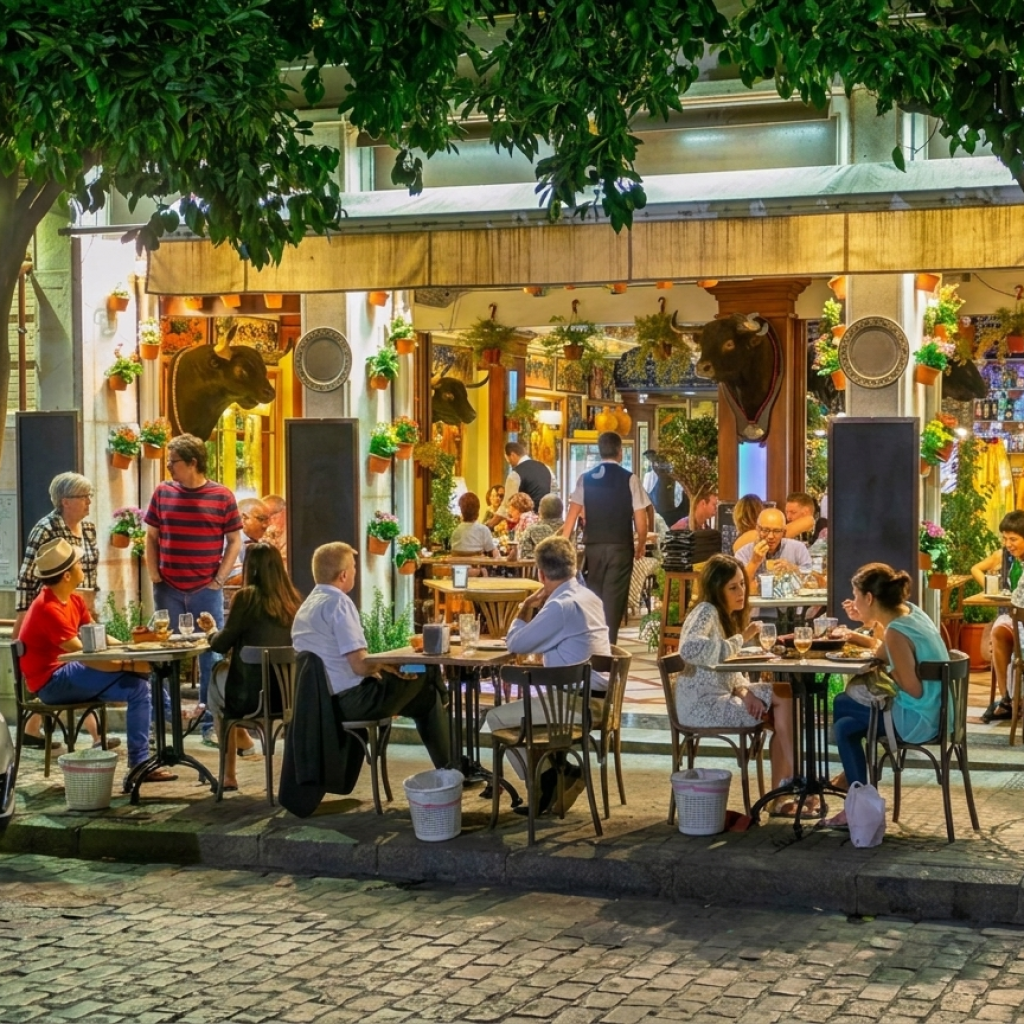
Spanish Cuisine & Culture
Spain’s cultural identity is shaped by strong regional traditions that vary considerably across the country. From the Basque Country and Catalonia to Andalusia, Valencia, and the islands, each region maintains its own customs, architecture, cuisine, and local character while contributing to Spain’s broader cultural landscape. Food remains an important part of everyday life, with markets, family gatherings, cafés, and tapas culture continuing to play a central role in communities throughout the country. Festivals such as Semana Santa, Las Fallas, and San Fermín highlight centuries-old traditions that remain deeply rooted in Spanish society. Spain’s artistic and architectural heritage is equally significant, ranging from Roman ruins and Moorish palaces to Gothic cathedrals, modernist landmarks, and contemporary museums. Together with traditions such as flamenco, football culture, and a lifestyle centred around public squares, promenades, and outdoor social life, these influences help shape one of Europe’s most distinctive cultural identities.
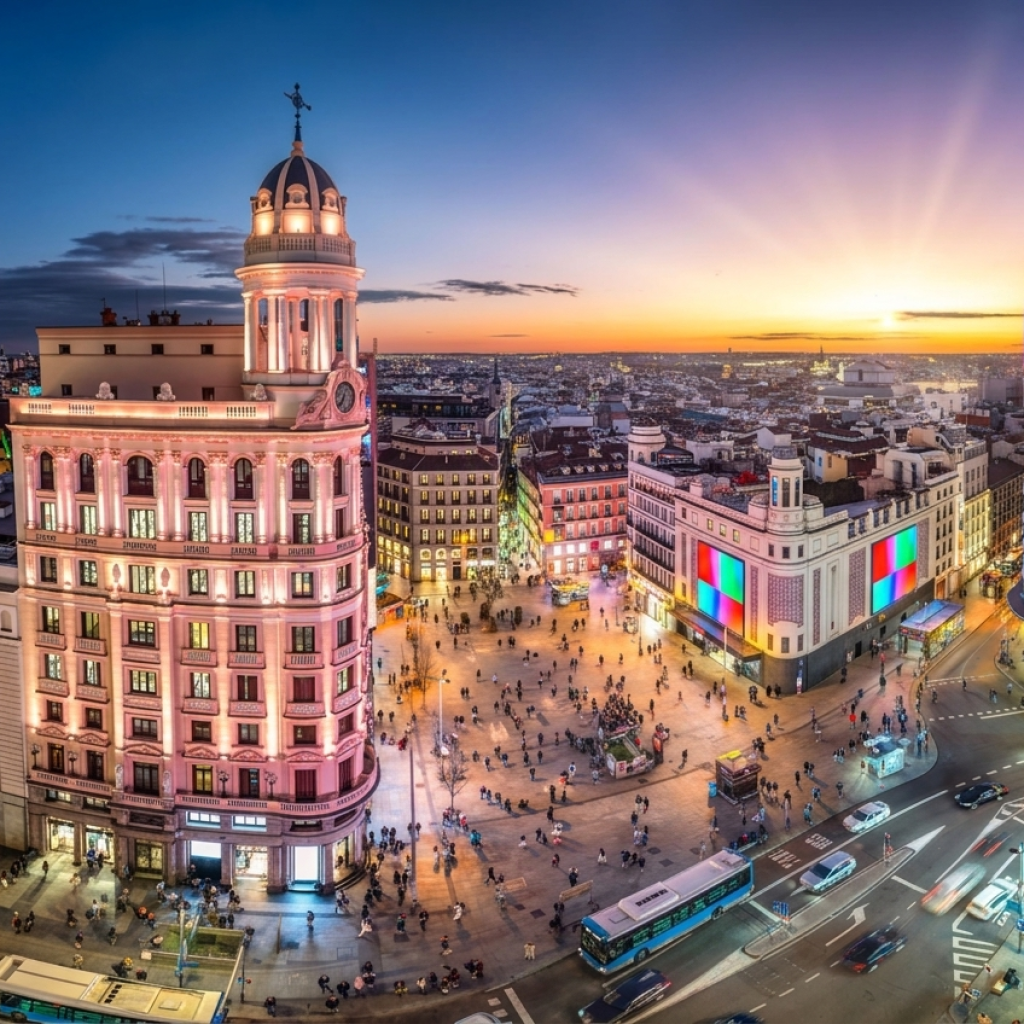
Getting Around Spain
Spain’s modern transport network makes travelling between regions relatively straightforward. High-speed AVE trains connect many of the country’s major cities, including Madrid, Barcelona, Valencia, Seville, Málaga, and Córdoba, while regional rail services provide access to smaller destinations. Domestic flights are particularly useful for reaching the Balearic and Canary Islands, while ferry services connect island communities with the mainland and neighbouring islands. Public transport systems in cities such as Madrid, Barcelona, Valencia, Bilbao, and Seville provide efficient options for local travel. For visitors exploring rural regions, coastal villages, mountain landscapes, or island interiors, car hire often offers the greatest flexibility. Combined with extensive rail, road, air, and ferry networks, Spain is one of Europe’s easiest countries to explore across multiple regions within a single trip.
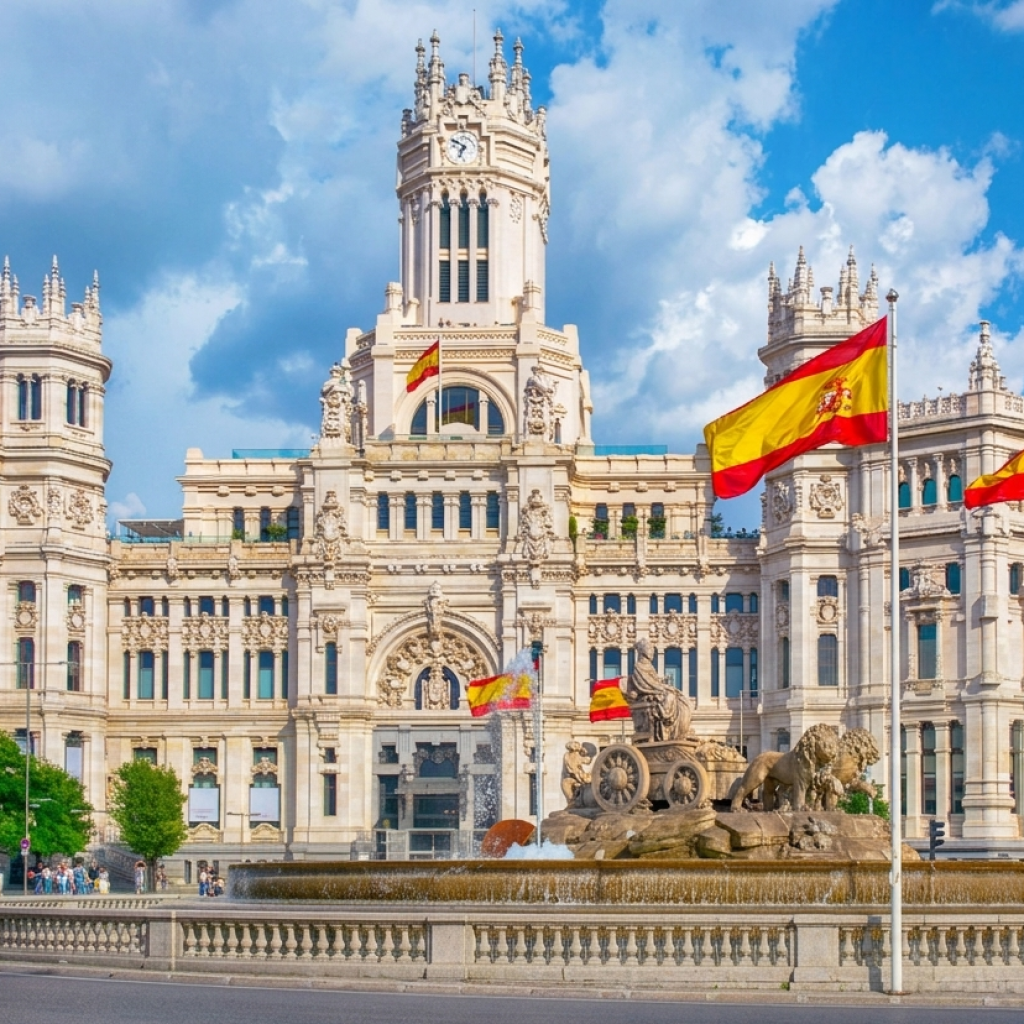
Best Time to Visit
Spain is a year-round destination, although the ideal time to visit depends largely on the regions visitors intend to explore and the experiences they seek. Seasonal variations can be significant between northern Spain, the Mediterranean coast, and the islands, making it important to plan accordingly.
Spring (March to May)
Spring is widely regarded as one of the best times to visit Spain. Temperatures are generally mild, landscapes are at their most vibrant, and many destinations experience lower visitor numbers compared to the summer months.
This season is particularly well suited for exploring cities such as Madrid, Barcelona, Valencia, and Seville, where comfortable weather allows visitors to enjoy cultural attractions, historic neighborhoods, and outdoor dining. Spring also coincides with several notable celebrations and festivals that showcase Spain’s cultural traditions.
Summer (June to August)
Summer marks the peak travel season across much of Spain. Long days, warm temperatures, and lively atmospheres draw visitors to the country’s beaches, islands, and coastal regions.
The Balearic Islands, Costa del Sol, Costa Brava, and numerous Mediterranean destinations experience their busiest period during these months. While coastal areas benefit from sea breezes, inland cities and parts of southern Spain can experience intense heat, particularly during July and August. Travelers prioritizing beach holidays, island escapes, and vibrant nightlife often find summer the most appealing time to visit.
Autumn (September to November)
Autumn offers an excellent balance between favorable weather and reduced crowds. Sea temperatures remain pleasant in many coastal destinations, while cities become more comfortable for sightseeing as summer heat gradually subsides.
This season is particularly rewarding for travelers interested in gastronomy, wine regions, cultural exploration, and road trips. Many destinations maintain a lively atmosphere while offering a more relaxed experience than during peak summer months.
Winter (December to February)
Winter presents a different perspective on Spain. Major cities continue to offer cultural attractions, museums, shopping districts, and festive celebrations, while visitor numbers are generally lower than during the warmer seasons.
The Canary Islands stand out as one of Europe’s most attractive winter sun destinations, benefiting from mild temperatures throughout the year. Southern coastal regions also enjoy comparatively pleasant conditions, making winter an appealing option for travelers seeking a quieter experience and favorable climate within Europe.
Ultimately, Spain’s diversity allows it to remain attractive in every season. Whether exploring historic cities in spring, enjoying island escapes in summer, discovering culinary traditions in autumn, or seeking winter sunshine in the Canary Islands, visitors can find rewarding experiences throughout the year.
