There is a fundamental difference between a hotel you book to visit a destination and a hotel that is the very reason you board the plane. For over a century, Europe has defined the language of world-class hospitality. It is the birthplace of the Belle Époque palace, the preserved aristocratic estate, the Mediterranean cliffside hideaway and the haute-couture sanctuary. Yet, in an era of homogenised luxury, true distinction has become increasingly rare. In this inaugural volume of the Vacation Glance Luxury Collection, we move beyond the superficial metrics of five-star ratings and corporate amenities.
The 13 properties brought together here were selected to a far more exacting standard: each represents a singular expression of architecture, heritage, atmosphere and a deeply rooted sense of place. From the quiet olive groves of the Peloponnese and the dramatic landscapes of Lake Como to the historic avenues of Paris and the wild sanctuaries of the Tuscan countryside, these hotels do not merely accommodate guests—they become part of the memories created there. They are places where service is elevated to an art form, where design honours centuries of craftsmanship and where the experience of staying within their walls rivals the character of the region itself. The defining quality of a truly extraordinary luxury hotel is not simply its thread count or the extravagance of its amenities, but how deeply it connects guests to the place they have travelled to experience.
The properties selected for this Vacation Glance collection were chosen for one crucial reason: they are exceptional gateways to experiencing their respective destinations in depth. Rather than competing with their surroundings, these hotels act as curators, bridging the gap between the property and the local culture. They immerse guests in the character of a destination through exceptional access and an unwavering commitment to hospitality.
We selected these icons because their deep-rooted heritage and rich history provide a direct window into the soul of their respective regions. Through magnificent architecture and visionary design, they offer a physical expression of local character. Their carefully curated experiences, expansive on-site activities and vibrant ecosystems of world-class restaurants, charming cafés and atmospheric bars ensure that guests do not simply visit a destination, but experience it from within.
Château de la Messardière
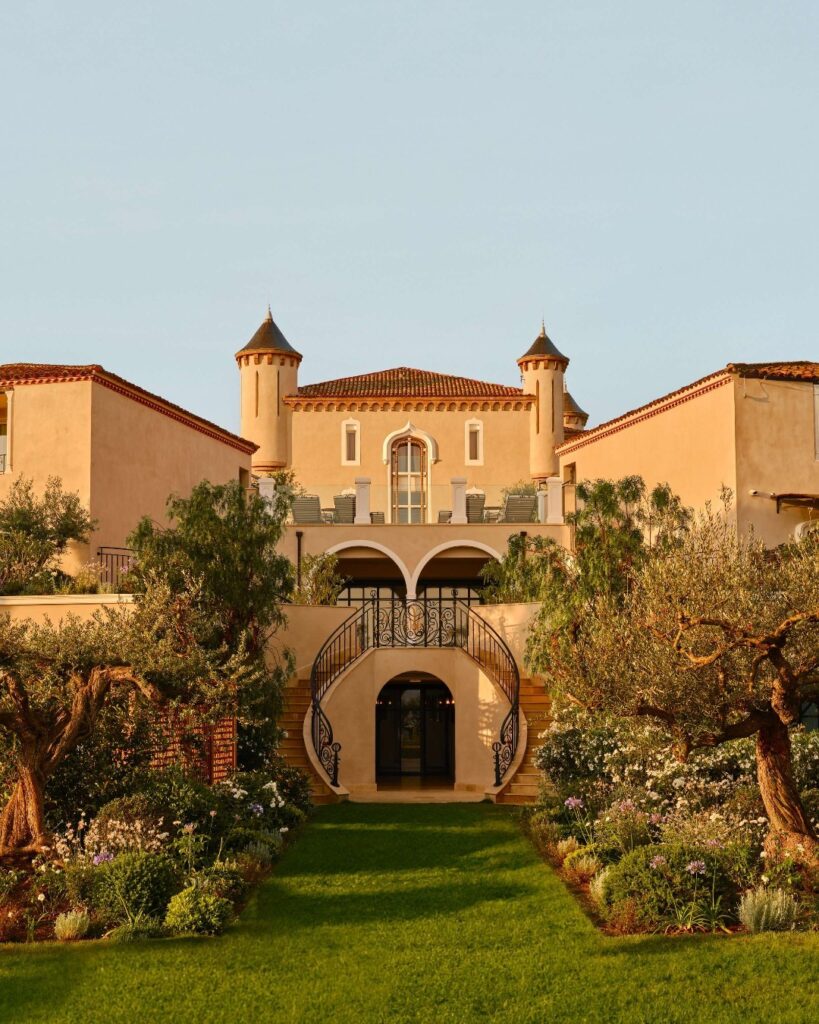
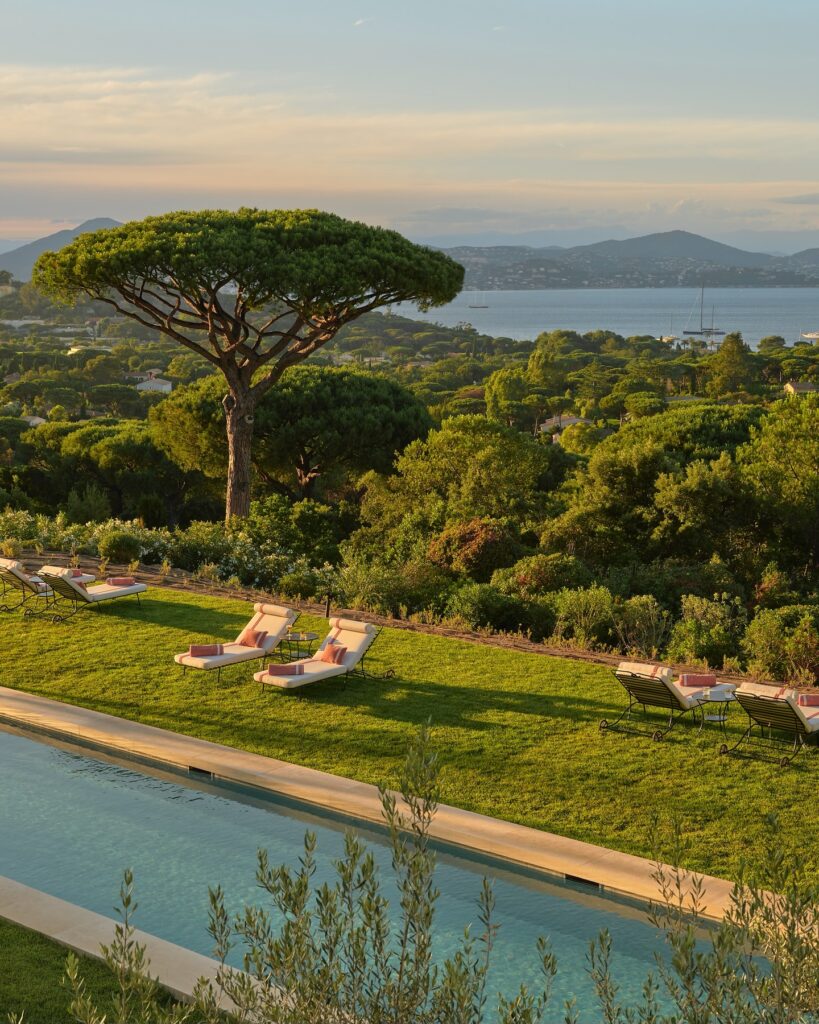
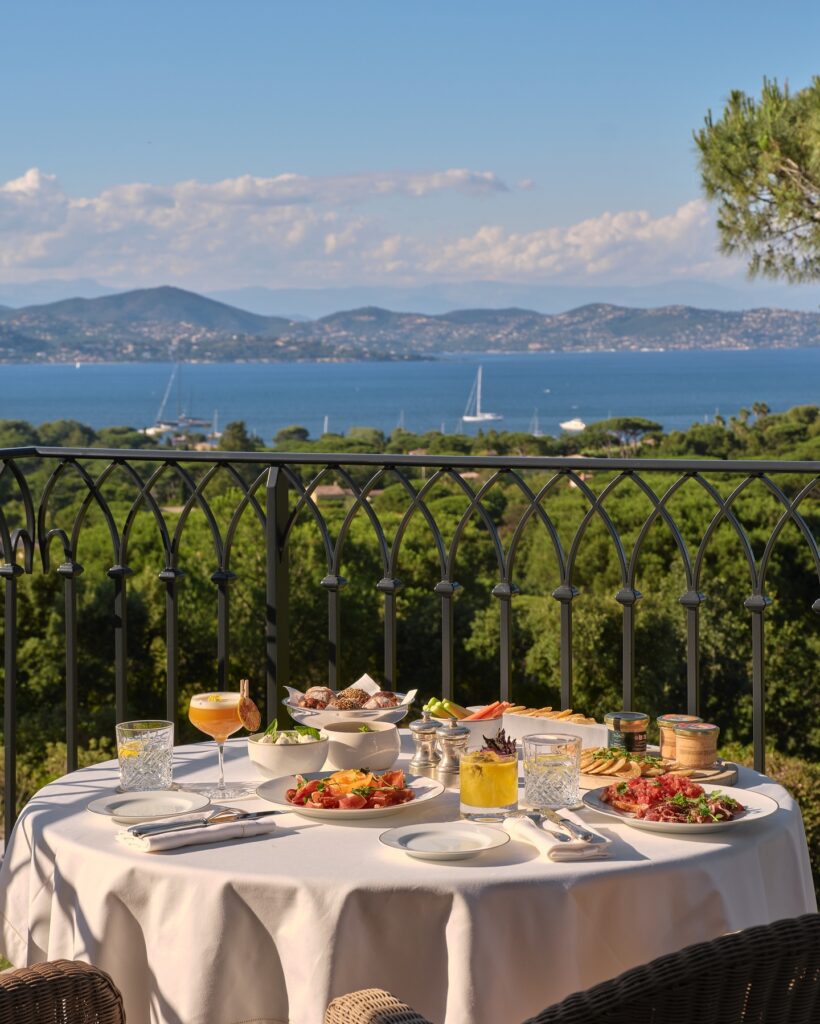
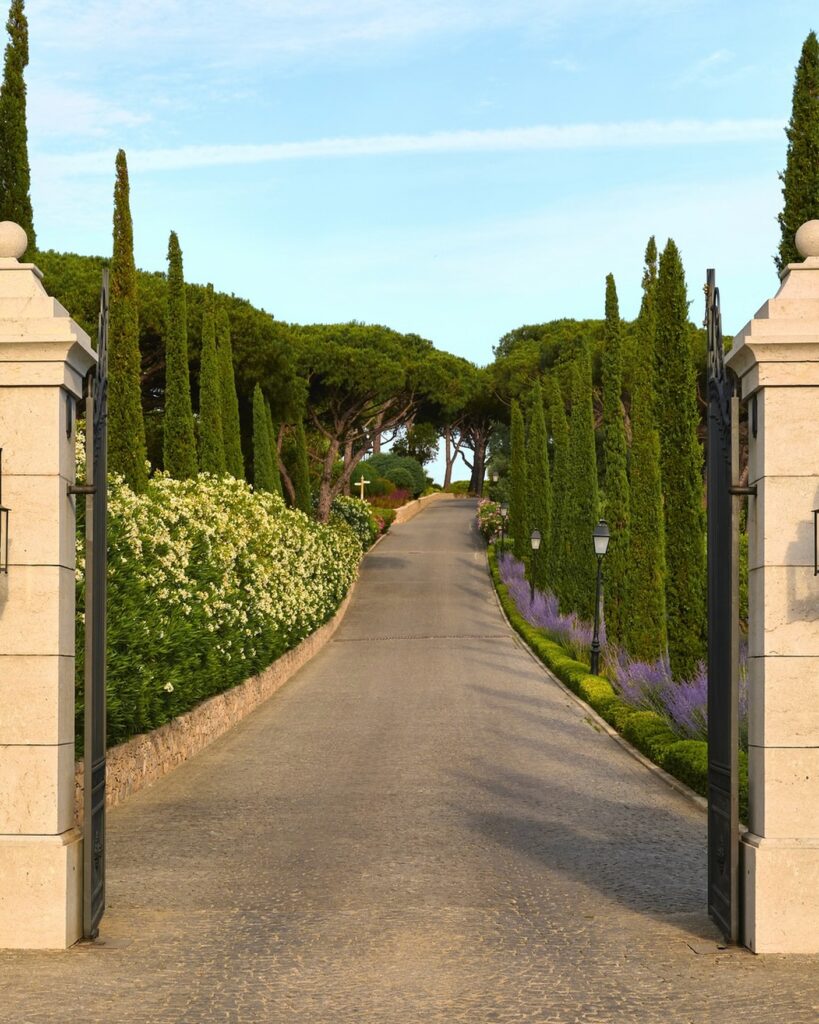
Occupying a commanding hilltop position overlooking the Gulf of Saint-Tropez and the sweeping crescent of Pampelonne Bay, Airelles Château de la Messardière is not merely a glamorous Riviera hotel—it is a 12.5-hectare private kingdom. Originally built in the 19th century as a magnificent wedding gift by a French cavalry officer, the turreted château was recently acquired by the ultra-exclusive Airelles collection and subjected to an exhaustive, no-expense-spared transformation. Today, it offers a deeply compelling duality: it is an impossibly peaceful, pine-shaded country estate that feels entirely removed from the frenetic energy of Saint-Tropez, yet it operates as an all-access pass to the very best of the Riviera, granting guests exclusive beach clubs, Michelin-pedigree dining, and a fleet of private Rolls-Royces.
Accommodation
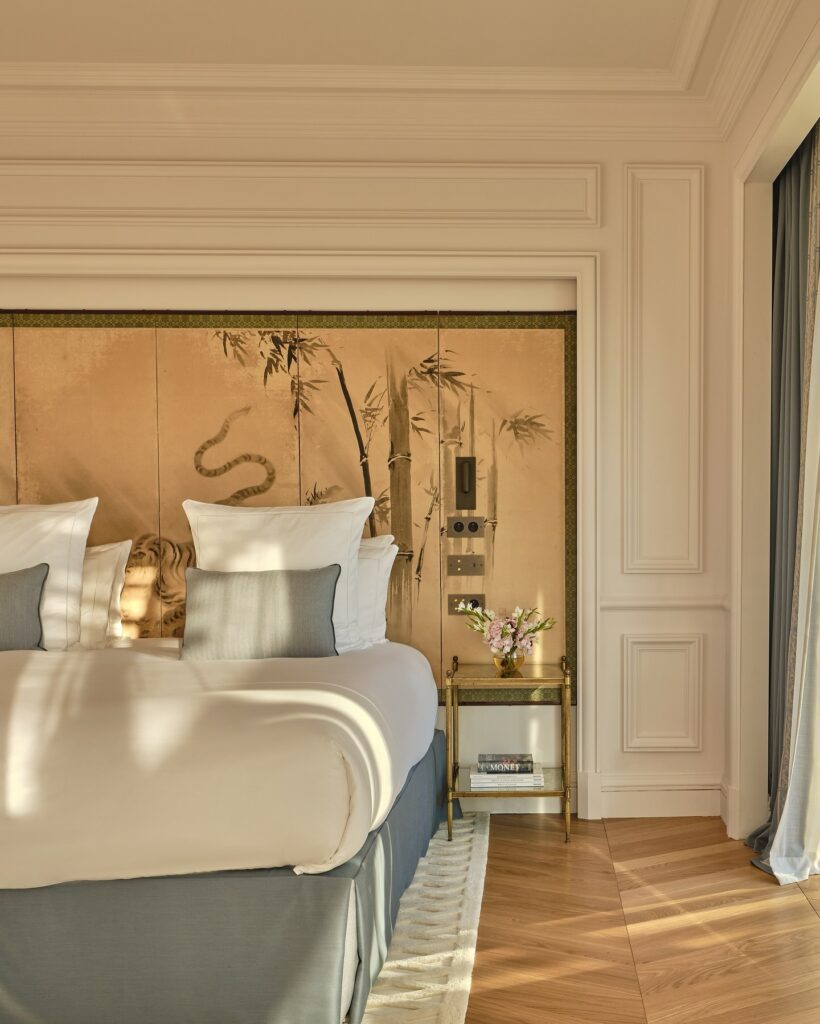
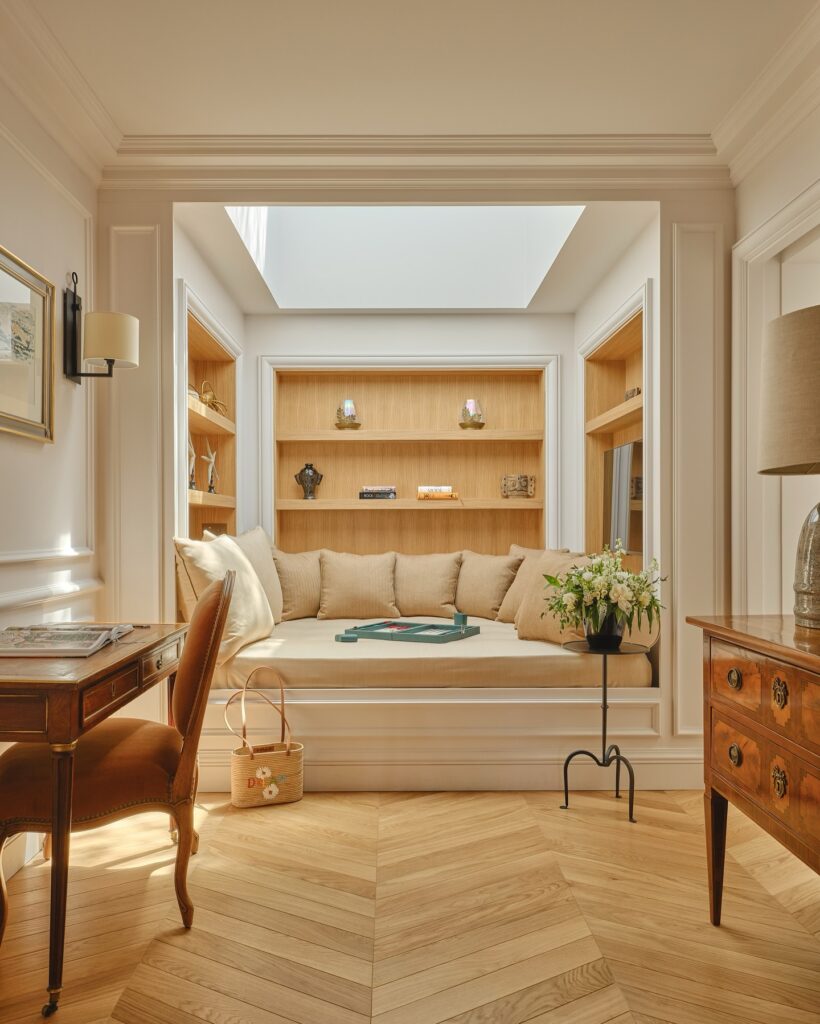
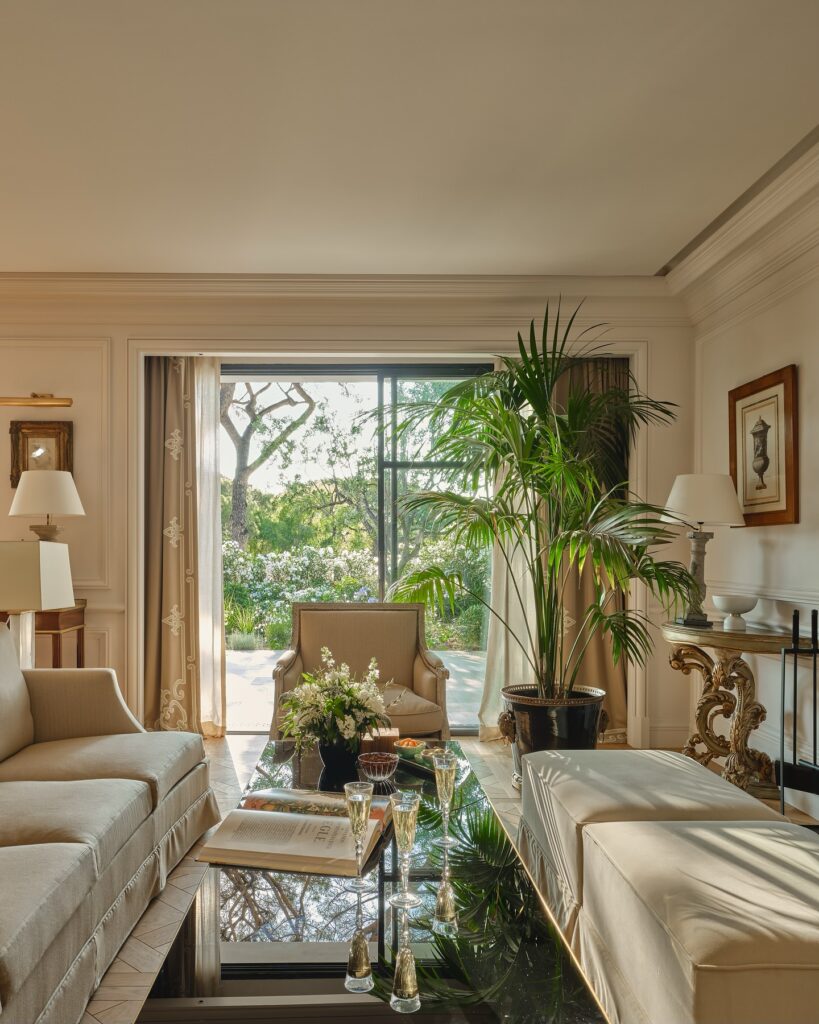
The estate features 99 sumptuously appointed rooms and suites, reimagined by acclaimed French interior architect Christophe Tollemer. The design vocabulary leans heavily into luminous Provençal elegance, utilizing terracotta tiles, king-size beds, bespoke wooden furnishings, and private terraces that gaze out over ancient pine forests or the azure Mediterranean. For the ultimate Tropezian home-from-home, the signature suites are masterful. The Belvedere Suite offers unmatched sunset views over the water, while the Riviera Suite, housed within the Château’s south tower, features a private spa bath and walk-in closet. For absolute seclusion, the estate offers magnificent Private Villas nestled within the gardens. Functioning as fully independent residences, these three-to-four-bedroom homes feature their own private swimming pools, dedicated hosts, and expansive outdoor entertaining spaces, allowing guests to experience the Château with the privacy of a private Riviera estate.
Dining
The culinary ecosystem at Château de la Messardière is wildly ambitious, bringing together some of the most celebrated names in global gastronomy. Matsuhisa Saint-Tropez brings Chef Nobu Matsuhisa’s legendary Japanese-Peruvian fusion to a chic, panoramic terrace. guests dine on Salmon Sashimi Tacos and Wagyu Beef Fillet while watching the sun set over the bay. La Table de La Messardière serves as the elegant, everyday heart of the hotel. It is here that guests experience lavish breakfast buffets featuring creations by world-renowned pastry chef Cédric Grolet, whose hyper-realistic, exquisite creations are integrated into the hotel’s daily rhythm. For sun-drenched Mediterranean flavors, Palladio serves refined Italian fare—such as Lemon Mint Ricotta Ravioli and Roasted Langoustines—on a terrace shaded by ancient olive trees. During the summer, the hotel also hosts high-profile pop-ups, such as welcoming the legendary Parisian brasserie Le Voltaire from the banks of the Seine. Evening rituals culminate at 1904, a moody, impeccably styled cocktail bar paying homage to the Belle Époque, where mixologists craft bespoke drinks tailored to each guest’s exact palate.
Wellness
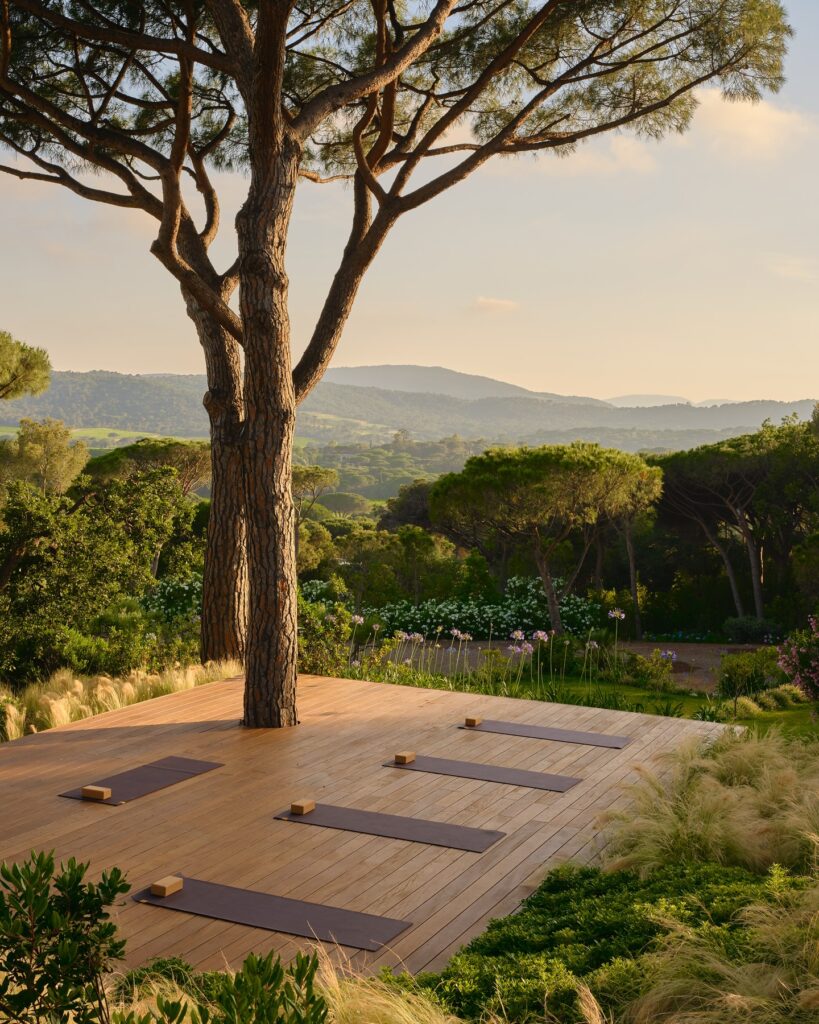
Hidden within the estate is the 1,000-square-meter Airelles Spa, operating in partnership with the prestigious Swiss cellular cosmetics clinic Valmont and Laboratoires Botanique Avancée (LBA). The sanctuary is built around a stunning, adults-only indoor swimming pool and features nine treatment rooms, a traditional hammam, a sauna, and an outdoor yoga studio. Beyond traditional massages, the spa operates with clinical precision, offering the Soin Majestueux lifting facial, specialized fascial release therapies, and dedicated sessions with resident osteopath Tom Pichaud. For fitness, guests have access to a state-of-the-art outdoor Technogym, pristine clay tennis courts, and two brand-new padel courts.
Architecture & Design
Unlike the stark, modern minimalist resorts that dot the coast, the Château is a fiercely romantic celebration of 19th-century architecture. Its distinctive cupolas, honey-toned stone, and winding staircases evoke a fairytale grandeur. Christophe Tollemer’s restoration preserved this soul while injecting the interiors with a lighter, fresher palette. The true architectural triumph, however, is how the buildings interact with the 12.5-hectare grounds. Cypress, jasmine, rosemary, and ancient olive trees weave between the terraces, ensuring that the scent of Provence follows guests throughout the entire property.
Heritage & Philosophy
The philosophy of Château de la Messardière is what truly sets it apart from its competitors. The Airelles brand operates on a model of “hyper-generosity.” Rather than nickel-and-diming guests, almost every conceivable luxury is woven seamlessly into the experience. There is no signing of bills by the pool; the minibar is complimentary and replenished daily, laundry services are entirely included, and the fleet of luxury vehicles operates at the guests’ whim. It is a philosophy designed to completely eliminate friction, allowing guests to experience the resort as if it were the private home of a very wealthy, exceedingly gracious friend.
Facilities & Experiences
The estate is a playground of unrivaled proportions. Guests can rotate between an incredible array of pools, including a glittering infinity pool overlooking Pampelonne Bay and a spectacular, dedicated lap pool nestled in the gardens. For children, the hotel has created Summer Camp—an astonishing 500-square-meter private villa dedicated entirely to younger guests. Designed with a pirate and mermaid theme, it features its own swimming pool, trampolines, an arcade, a Lego room, and a treehouse. To bridge the gap between the hilltop estate and the sea, the hotel maintains a fleet of vintage Mini Mokes and Rolls-Royce Cullinans. At a moment’s notice, guests are chauffeured down to Jardin Tropezina, the hotel’s elegant private beach club on Pampelonne Bay, where they can recline on sun loungers before enjoying lunch crafted by celebrated chef Jean-François Piège.
Why Plan a Trip Around Airelles Château de la Messardière?
Saint-Tropez is famously crowded, energetic, and exhausting. Château de la Messardière offers the ultimate luxury: the ability to engage with the glamour of the Riviera strictly on your own terms. It is the only property in the region where you can wake up in a 12.5-hectare private pine forest, eat Cédric Grolet pastries for breakfast, be driven in a Rolls-Royce to a private beach club, and return for a world-class Nobu dinner—all without ever leaving the hotel’s curated ecosystem. Coupled with Airelles’ revolutionary all-inclusive luxury philosophy, it is not just a place to stay in Saint-Tropez; it is the definitive way to experience it.
Getting There
Located in the Var department of the French Riviera, the estate is wonderfully secluded yet highly connected. It is approximately a 90-minute drive from Nice Côte d’Azur Airport (NCE) and 60 minutes from Toulon-Hyères Airport (TLN). To bypass the infamous Riviera summer traffic, the Château features its own private helipad, allowing guests to transfer directly from Nice or Monaco in less than 25 minutes.
Average Nightly Rate
Classic & Superior Rooms: approximately €900–€1,400 per night.
Deluxe & Sea View Rooms: approximately €1,200–€1,900 per night.
Junior Suites: approximately €1,700–€2,500 per night.
Prestige & Signature Suites: approximately €3,500–€6,000+ per night.
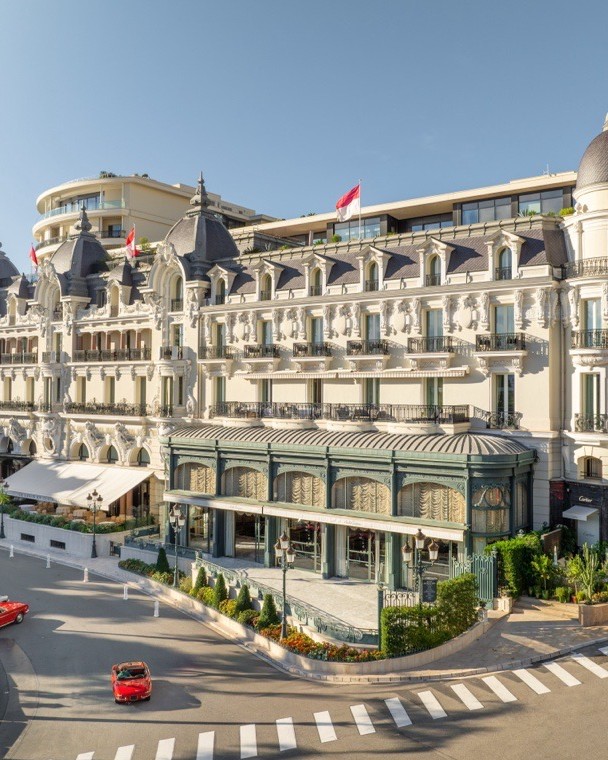
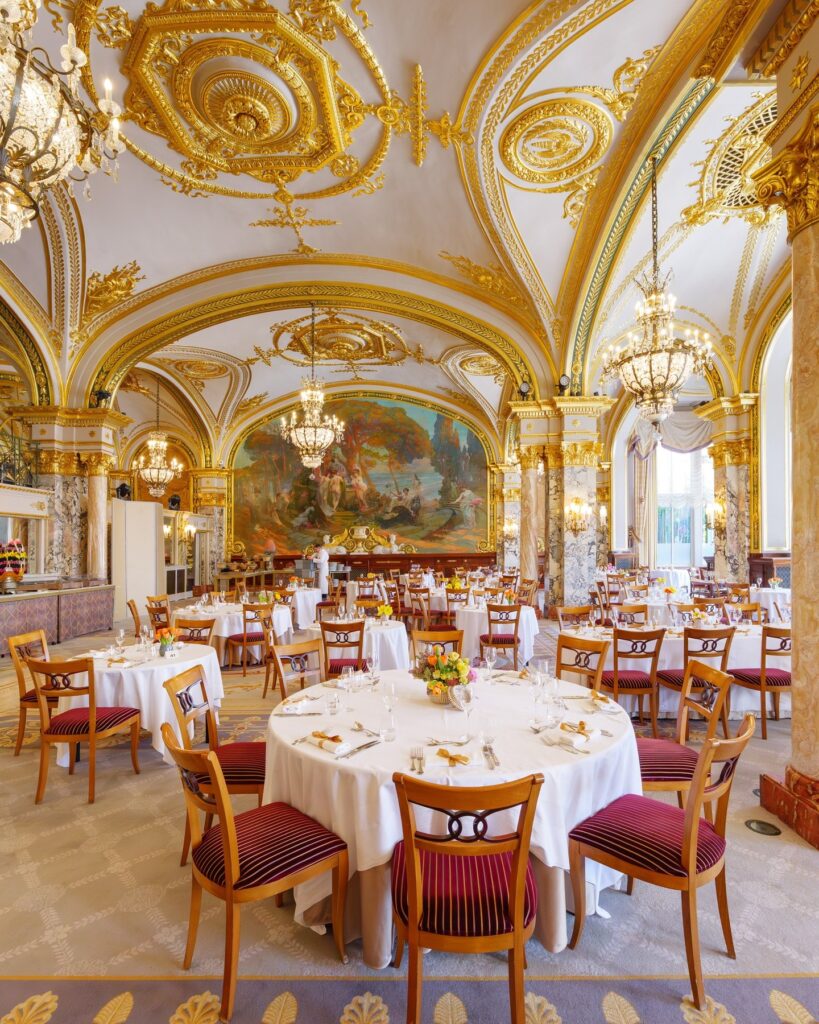
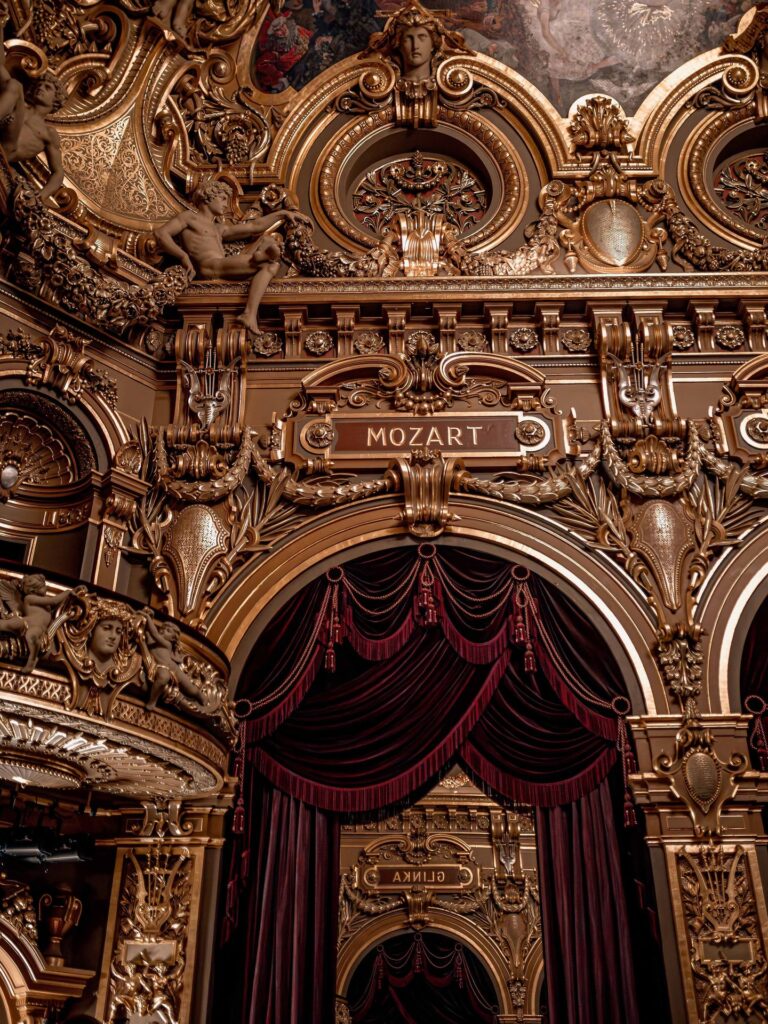
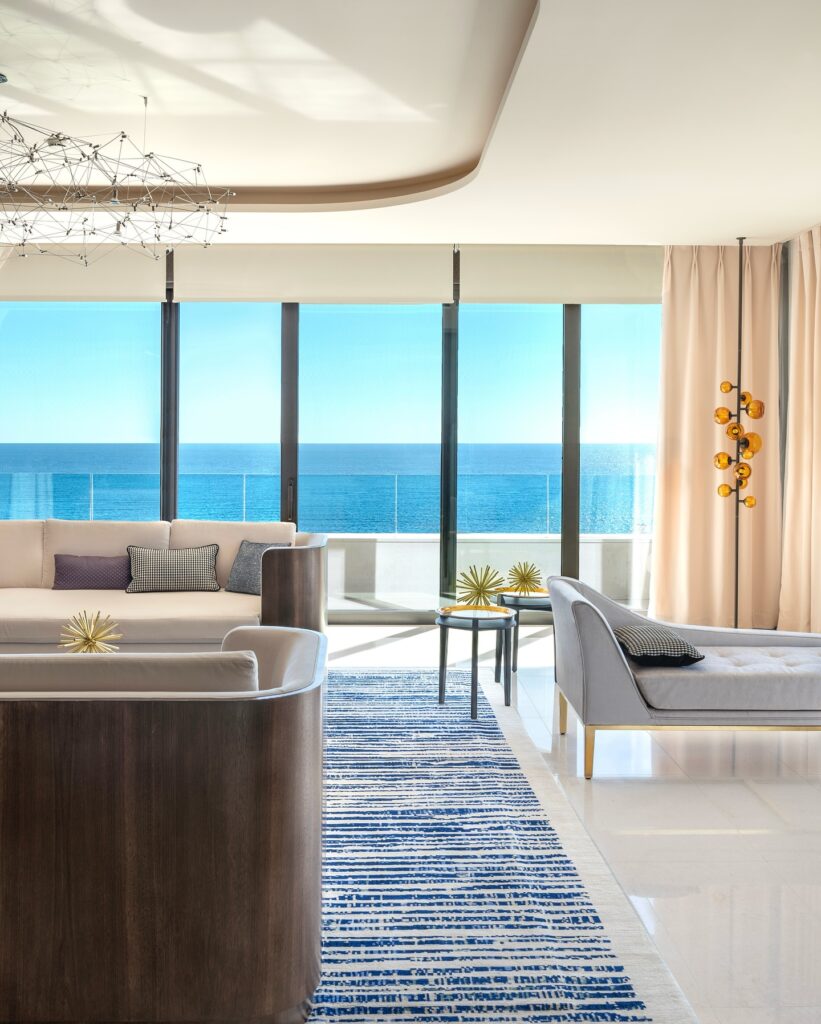
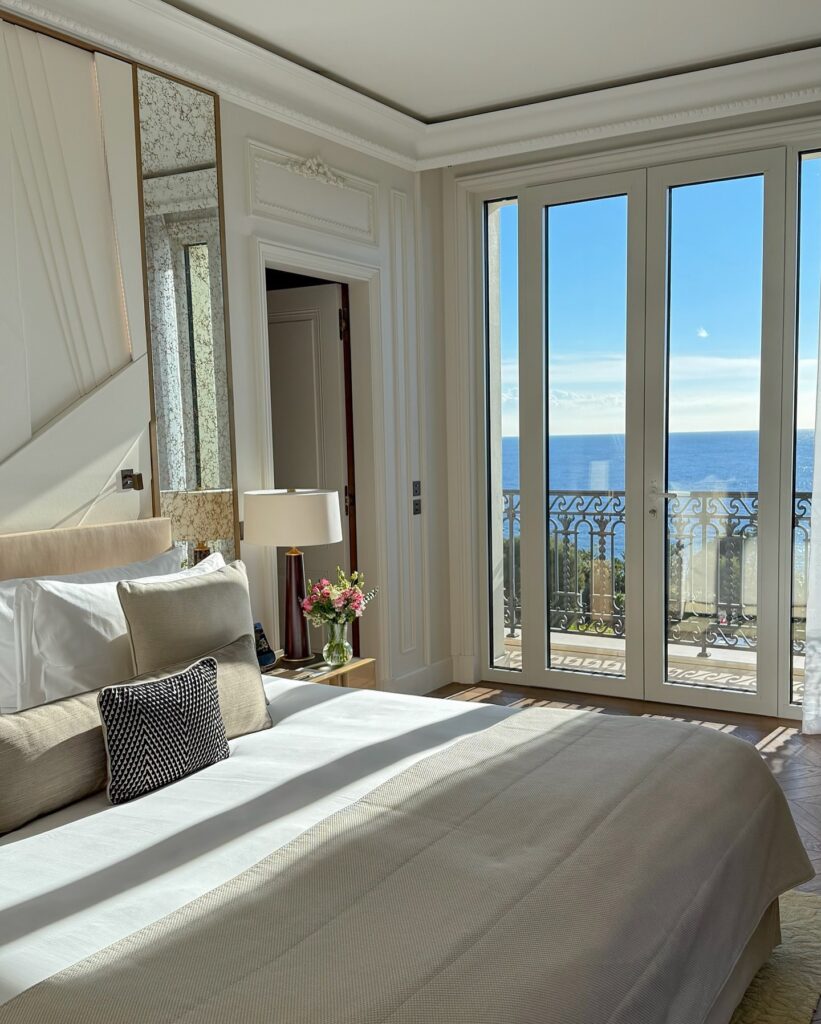
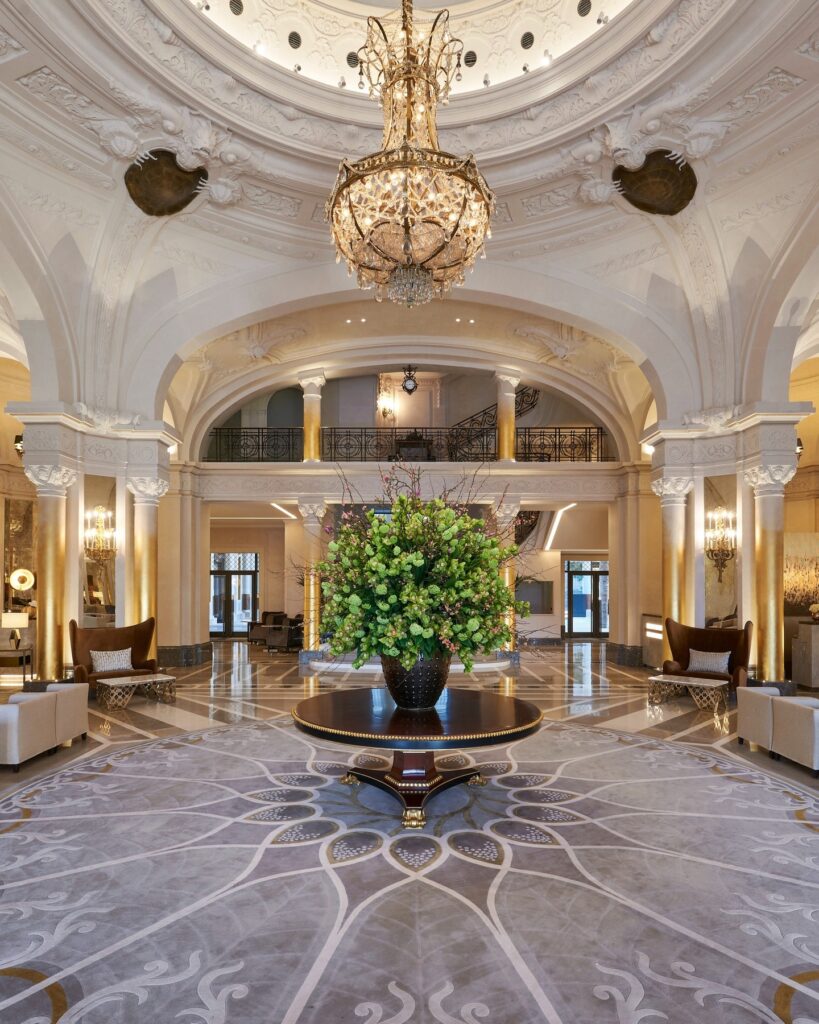
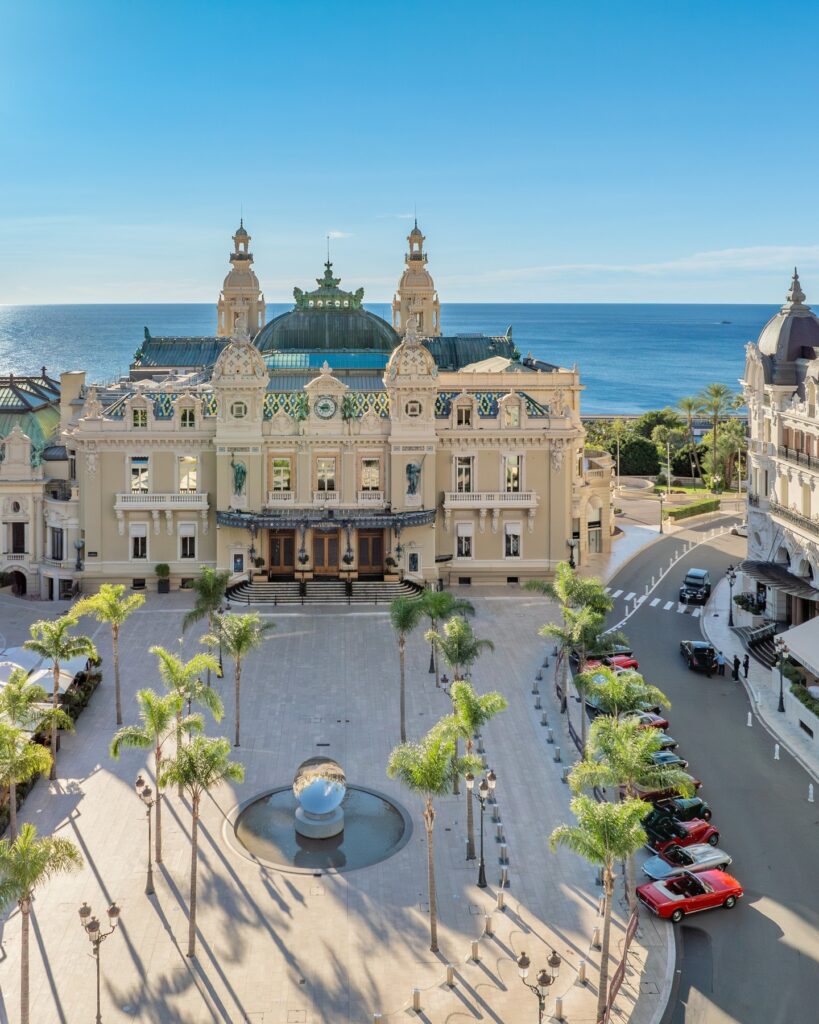
Images courtesy of Hôtel de Paris Monte-Carlo
Hôtel de Paris Monte-Carlo
Occupying the most prestigious position on the Place du Casino since 1864, Hôtel de Paris Monte-Carlo is not simply a luxury hotel—it is the epicentre of Monaco’s social and cultural history. Conceived by François Blanc as a property that would “surpass everything that has been created so far,” the hotel has spent over a century and a half defining the glamour of the French Riviera. Following an unprecedented, multi-year transformation completed in 2018, the property successfully preserved its Belle Époque soul while entirely reimagining its interior spaces for the modern era. Today, managed by Monte-Carlo Société des Bains de Mer, it remains a rare institution where Michelin-starred gastronomy, legendary wine cellars, extensive wellness facilities and absolute proximity to the Casino de Monte-Carlo converge under one roof.
Accommodation
Hôtel de Paris features 206 rooms and suites, each redesigned to maximize space and natural light while reflecting the elegance of the Riviera. The interiors blend Murano glass chandeliers, exquisite marble and custom furnishings, with many rooms offering private balconies overlooking the Mediterranean Sea, the Prince’s Palace, or the bustling Place du Casino. At the pinnacle of the hotel’s offerings are its seven ultra-exclusive Diamond Suites. Among them, the Princess Grace Suite and the Prince Rainier III Suite stand as two of the most spectacular accommodations in Europe. Spanning hundreds of square meters, these rooftop sanctuaries feature private infinity pools, expansive multi-level terraces, dedicated concierge teams, and personal artifacts belonging to the Monegasque royal family, creating a residential experience of unmatched prestige.
Dining
The culinary ecosystem at Hôtel de Paris is a destination in its own right, anchored by some of the most celebrated venues in the world. Le Louis XV – Alain Ducasse à l’Hôtel de Paris holds three Michelin stars and remains a temple of Riviera haute cuisine. Served within an awe-inspiring dining room of gilded frescoes and enormous chandeliers, the menu elevates regional Mediterranean produce to an art form. Le Grill, positioned on the eighth floor, holds one Michelin star and is famous for its panoramic views over the Principality and its sliding roof, allowing guests to dine under the stars. Em Sherif Monte-Carlo brings a vibrant, sensory journey to the hotel with refined Lebanese and Middle Eastern cuisine, served in an atmosphere of lush elegance with sea views. Cédric Grolet Monte-Carlo integrates the artistry of the world-renowned pastry chef into the hotel’s daily rhythm, offering exquisite, hyper-realistic patisseries and viennoiseries. For nightlife, Le Bar Américain remains a Monaco institution. With its 1920s-inspired leather armchairs, live jazz, and signature cocktails, it is longstanding gathering place for Monaco’s international clientele.. Quietly operating beneath the hotel are the legendary Wine Cellars of Hôtel de Paris Monte-Carlo. Excavated in 1874, this subterranean labyrinth holds approximately 350,000 bottles, including incredibly rare vintages, and can be reserved for exclusive, private tastings.
Wellness
Wellness is seamlessly integrated into the property through the Wellness Sky Club, an exclusive rooftop space featuring a sprawling swimming pool, a lounge area, and state-of-the-art fitness equipment with unparalleled views of the Mediterranean. More significantly, guests receive direct, subterranean access to Thermes Marins Monte-Carlo, a 6,600-square-meter sanctuary dedicated to holistic health, fitness, and preventive medicine. The facility includes a heated seawater pool, cryotherapy chambers, solariums, and advanced thalassotherapy treatments, making it one of the most comprehensive wellness centres in Europe.
Architecture & Design
The Belle Époque architecture of Hôtel de Paris is an iconic fixture of the Monegasque skyline. The ornate facade, characterized by its intricately carved caryatids, domed roofs, and sweeping archways, immediately communicates a sense of grandeur. During the recent four-year transformation, artisans and restoration experts meticulously dismantled, restored, and reassembled historic elements—from the lobby’s magnificent glass cupola to the equestrian statue of Louis XIV, whose horse’s raised leg is traditionally rubbed by guests for luck before entering the Casino. The redesign seamlessly integrated modern structural requirements while allowing the 19th-century craftsmanship to shine brighter than ever.
Heritage & Philosophy
The history of Hôtel de Paris is inseparable from the history of Monaco itself. When François Blanc founded the Monte-Carlo Société des Bains de Mer, he envisioned a resort that would attract the royalty, artists, and luminaries of Europe. Since 1864, the hotel has hosted everyone from Winston Churchill and Cary Grant to modern heads of state. Its philosophy is built on the preservation of this legacy, executing traditional “grand hotel” service with absolute precision. It is a place that understands its role not just as a provider of accommodation, but as a custodian of Monte-Carlo’s heritage.
Facilities & Experiences
The property’s unique position grants guests access to experiences that cannot be replicated elsewhere. During the Formula 1 Grand Prix, the hotel transforms into the ultimate viewing gallery, with suites and terraces offering unrivalled, direct views of the cars sweeping through Casino Square. Beyond motorsport, guests enjoy immediate proximity to the luxury shopping promenade of One Monte-Carlo, seasonal pop-ups, children’s experiences tailored by the concierge, and exclusive access to the Monte-Carlo Beach Club during the summer months.
Why Plan a Trip Around Hôtel de Paris Monte-Carlo?
You do not stay at Hôtel de Paris simply to visit Monaco; staying here is the Monaco experience. It is a property where you can wake up in a Diamond Suite, undergo world-class thalassotherapy, dine at a three-Michelin-star institution, and walk across the square to the Casino de Monte-Carlo without ever leaving the hotel’s immediate ecosystem. It represents the absolute pinnacle of Riviera luxury and remains a necessary pilgrimage for anyone passionate about the history of elite hospitality.
Getting There
Located directly on the Place du Casino, Hôtel de Paris Monte-Carlo is approximately 30 minutes by road from Nice Côte d’Azur Airport (NCE). For a more rapid arrival, a helicopter transfer from Nice to the Monaco heliport takes just seven minutes, followed by a brief, chauffeured drive to the hotel’s legendary entrance.
Average Nightly Rate
Superior & Deluxe Rooms: approximately €900–€1,500 per night.
Diamond & Sea View Rooms: approximately €1,200–€2,000 per night.
Junior Suites: approximately €1,700–€2,700 per night.
Diamond & Sea View Suites: approximately €2,500–€4,000 per night.
Exclusive & Prestige Suites: approximately €3,500–€6,000+ per night.
Diamond Princess Grace Suite: approximately €7,000–€12,000+ per night.
Diamond Suite & Carré d’Or Suite: approximately €8,000–€15,000+ per night, depending heavily on the date and event calendar.
Princely Suite: from approximately €20,000 per night, with peak-period pricing potentially considerably higher.
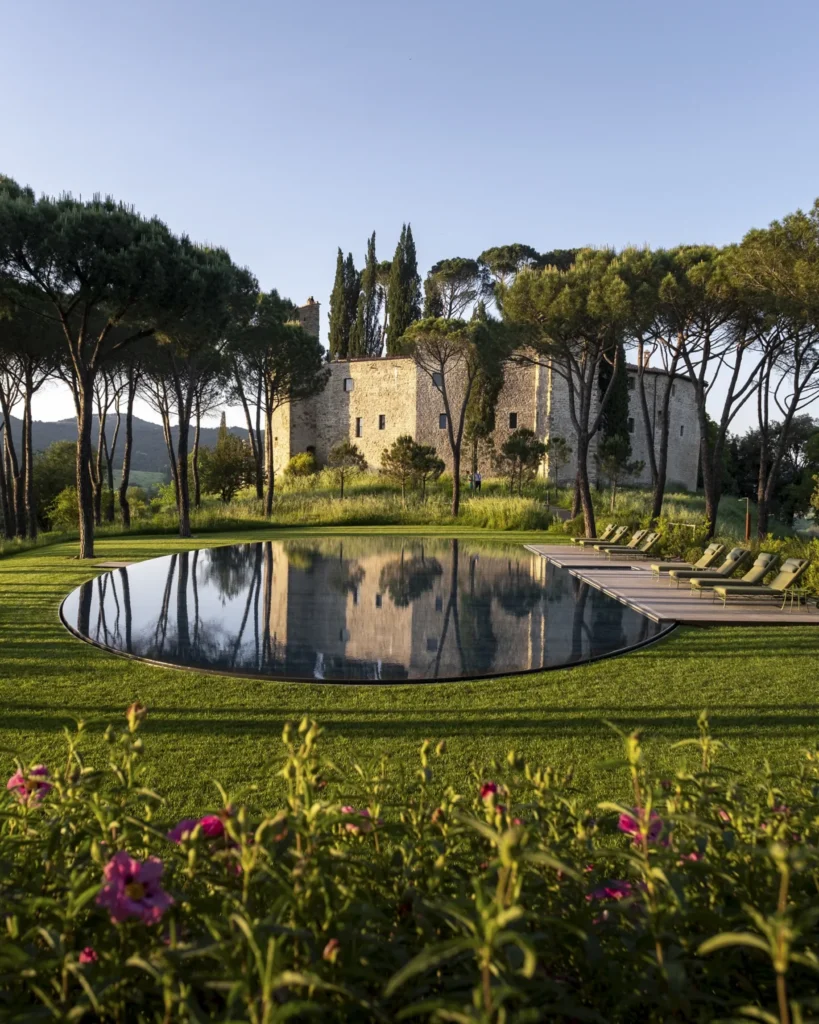
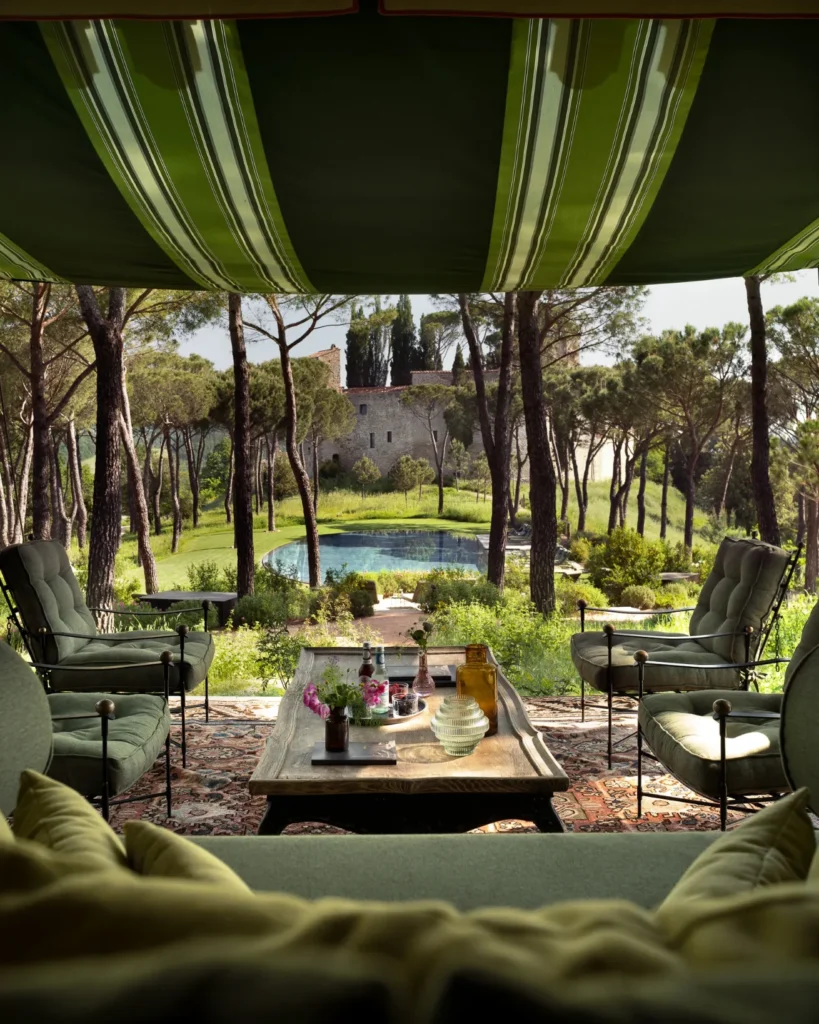
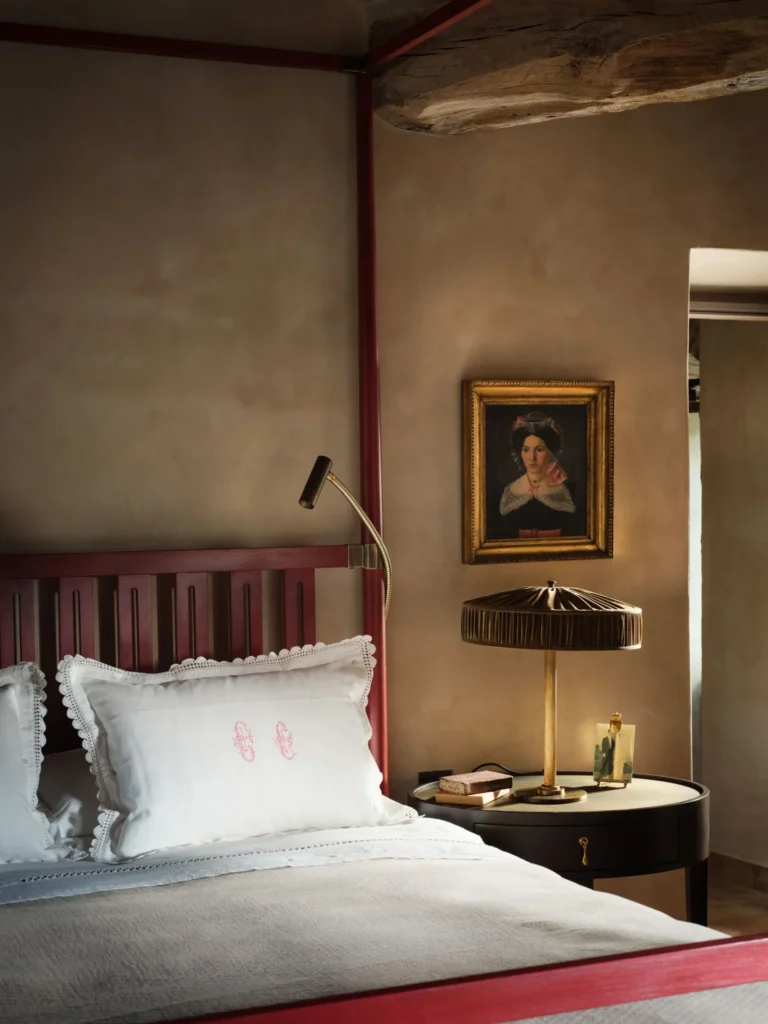
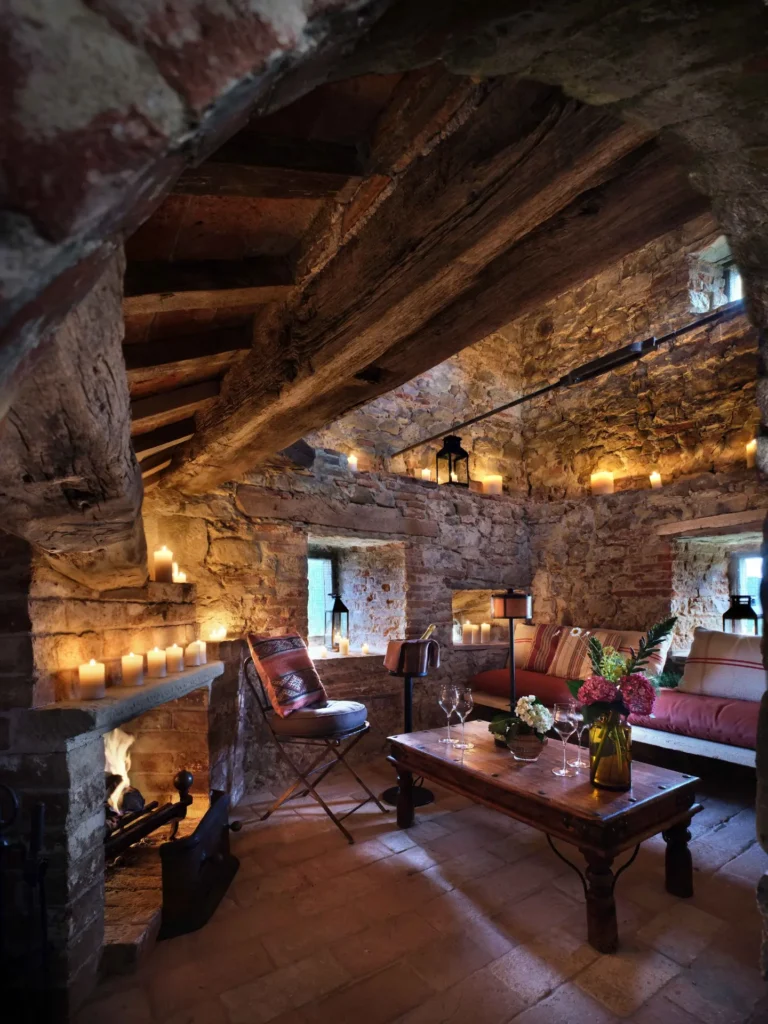
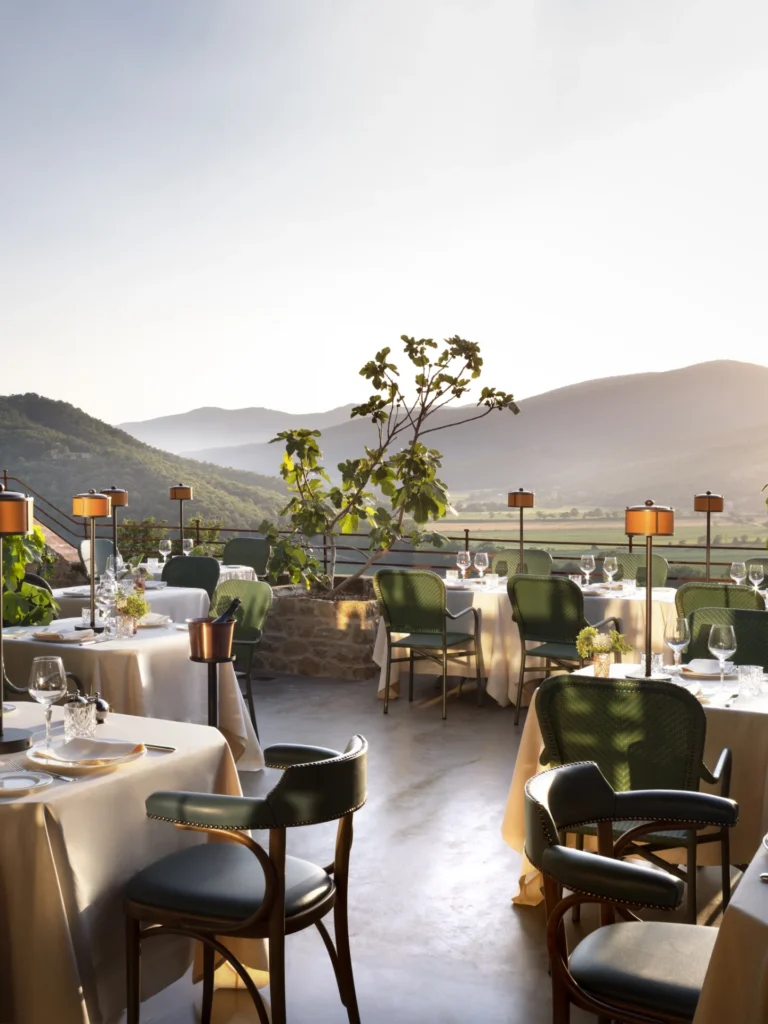
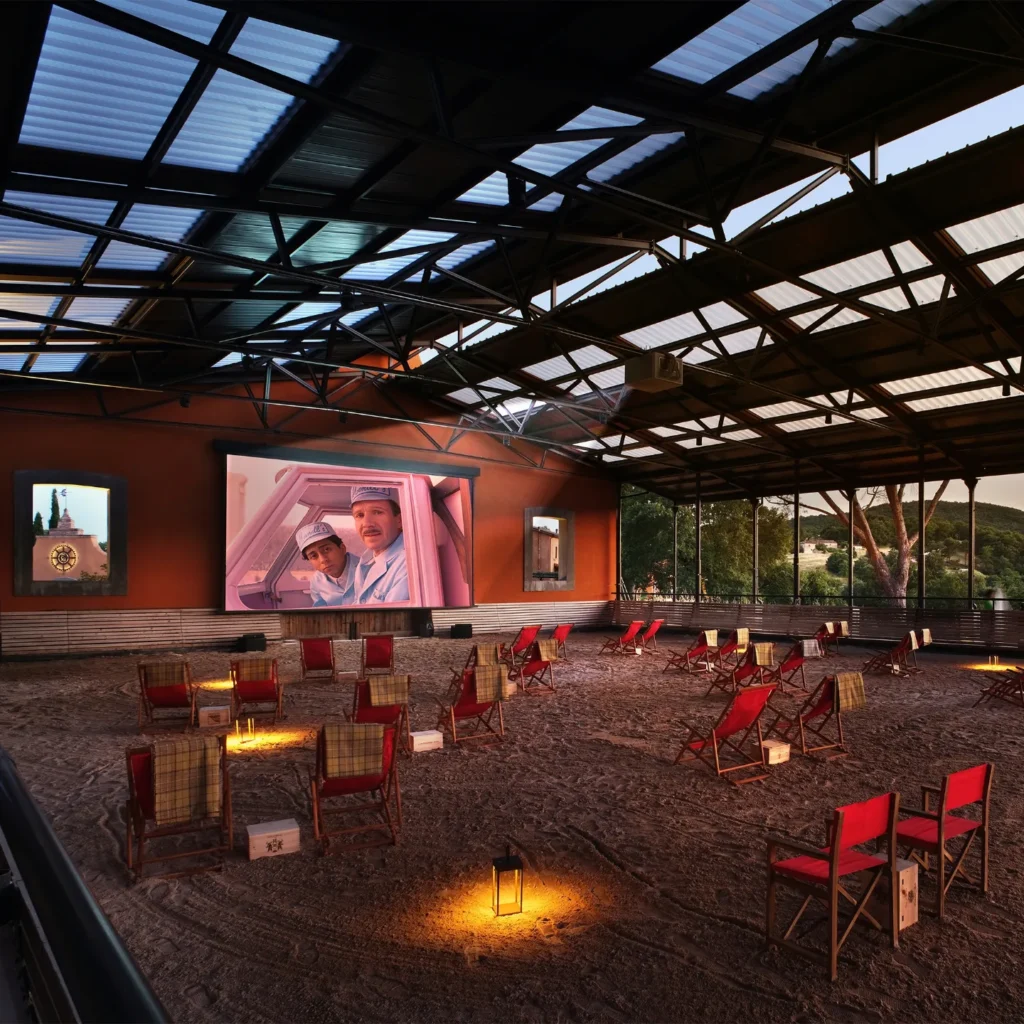
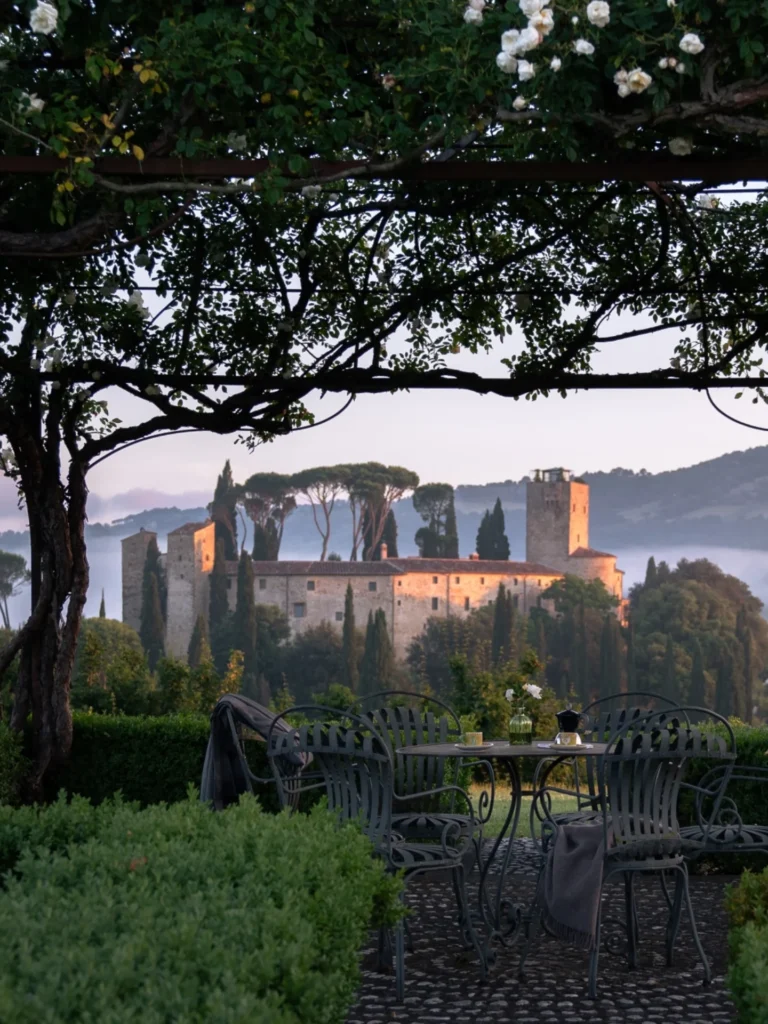
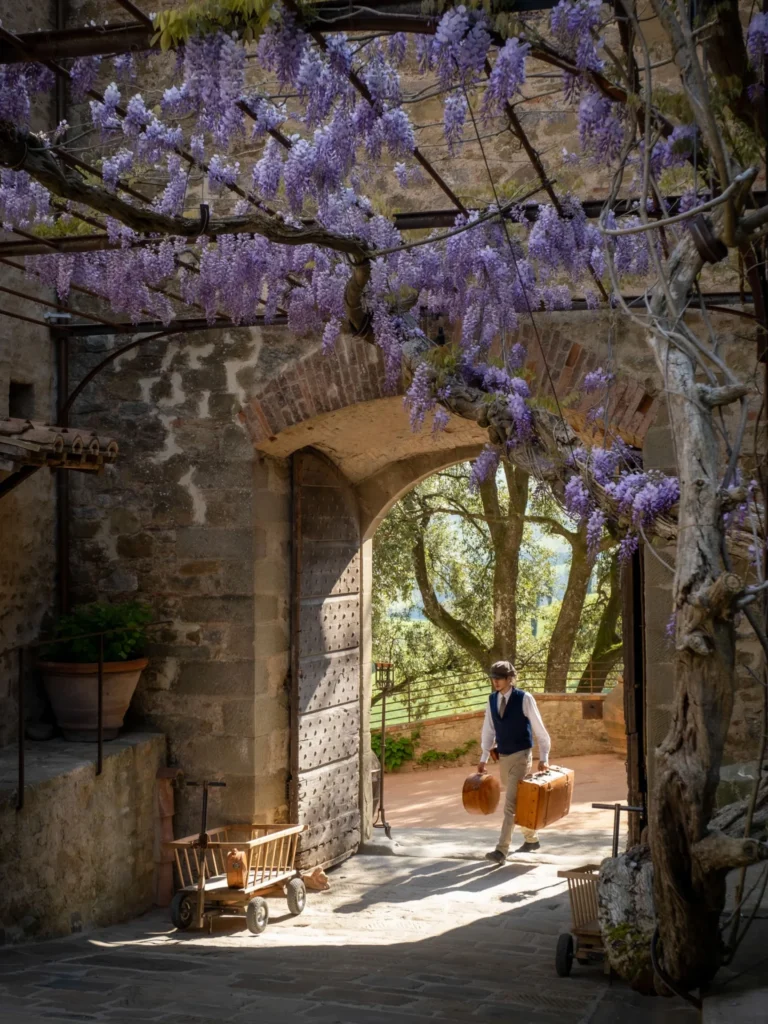
Images courtesy of Reschio via Instagram.
Castello di Reschio
Situated among the undulating, cypress-lined hills where Umbria meets Tuscany, Castello di Reschio is not simply a luxury hotel, but a multi-generational act of architectural preservation. Built in 1050, the ancient castle forms the centre of a 3,700-acre estate of woodland, meadows, wildlife and historic farmhouses. The property was acquired by Count Antonio Bolza in 1994, and over the following decades his family gradually restored the castle and surrounding buildings, with architect Count Benedikt Bolza shaping the distinctive interiors and wider architectural vision. Reborn as a hotel in 2021, Reschio feels less like a conventional hospitality development than a private country estate that has evolved organically over generations. Ancient stonework, bespoke furniture, Andalusian horses and the surrounding landscape come together in a setting where architecture and nature are treated as parts of the same story.
Accommodation
Accommodation is centred on the historic castle, with rooms and suites arranged within its ancient walls, alongside a collection of private houses scattered throughout the wider estate. The interiors reflect Count Benedikt Bolza’s architectural approach, combining custom-made BB for Reschio furniture with antiques and historic details. Four-poster Campaign beds, marble and brass washbasin stands, natural fabrics and individually considered furnishings give each room a strong residential character rather than the uniformity of a conventional hotel. For longer stays or complete privacy, the estate’s houses offer an entirely different scale of accommodation, with private gardens, pools and extensive living spaces set within the surrounding countryside. Guests staying in the houses can also arrange Bathhouse treatments, yoga, Pilates, personal training and other estate experiences directly at their residence.
Dining
The culinary identity of Reschio is closely tied to the land, with the restaurants drawing on seasonal produce, ingredients sourced locally and herbs foraged across the estate. Ristorante Al Castello occupies an intimate position within the castle walls, with a terrace overlooking the surrounding hills and sunset. The atmosphere is deliberately reminiscent of a private home, with candlelit dinners, individually designed interiors and a menu that combines classic Italian cooking with contemporary touches. For a more relaxed setting, Ristorante Alle Scuderie sits at the heart of the estate within the former stable area. Its soaring ceilings, handcrafted furnishings, shaded garden tables and sunset-facing terrace create an easygoing setting for seasonal dishes, while live music adds to the atmosphere on selected occasions. The estate’s Orto, meanwhile, supplies the kitchens with vegetables, herbs and flowers, including historic varieties whose seeds are replanted season after season. Beyond the main restaurants, Reschio also creates private dining experiences in secluded corners of the estate, from intimate dinners to candlelit gatherings in the castle’s former dovecotes.
Wellness
Wellness at Reschio is centred on the Bathhouse, set within the former wine cellars of the castle and extending into other spaces across the estate. Its design draws on ancient bathing traditions, with the Roman Bath at its heart: a warm saltwater pool beneath vaulted ceilings and candlelight. The bathing circuit continues through a cold rain shower, sauna and Ottoman steam room, creating a deliberately simple sequence of heat, water and rest. Treatments are individually tailored and guided by the Bathhouse’s practitioners, known as the Magare, with rituals ranging from lymphatic massage and reflexology to dry brushing and the Rituale del Bagno. The experience is not confined to the Bathhouse itself. Treatments can be arranged in guest rooms and villas, while yoga, Pilates and personalised training sessions can take place at the San Michele Church or elsewhere across the estate. This relationship between treatment, movement and landscape gives Reschio’s approach to wellbeing a distinctly holistic character.
Architecture & Design
Reschio is a living expression of Count Benedikt Bolza’s architectural vision and his bespoke BB for Reschio furniture collection. Rather than imposing a contemporary hotel aesthetic upon the ancient castle, the restoration works with the existing architecture, combining weathered stone, terracotta, brass, linen and handcrafted furniture with carefully selected antiques. The result is layered and distinctly residential, with each room and public space given its own character. The Palm Court, an elegant glass and wrought-iron structure, introduces a lighter architectural element within the historic setting, while the restored castle interiors retain the sense of an old Umbrian estate rather than a newly constructed resort.
Heritage & Philosophy
Reschio’s philosophy is inseparable from its relationship with the land. The Bolza family’s restoration has treated the castle, farmhouses and surrounding landscape as one interconnected estate rather than as separate hospitality assets. More than 3,700 acres of woodland, meadows and wildlife remain central to the experience, while the property continues to develop its own gardens, agricultural practices, equestrian traditions and cultural programme. The result is a form of hospitality rooted less in conventional hotel formality than in the rhythms of country life, where architecture, food, horses, art and the landscape are allowed to coexist naturally.
Facilities & Experiences
The estate’s equestrian tradition remains one of its defining experiences, with riding taking place across the surrounding countryside and dedicated equestrian facilities forming an important part of life at Reschio. Beyond the stables, guests can use the estate’s astroturf tennis courts, two gyms, e-bikes and extensive walking routes through the woodland and hills. The outdoor swimming pool sits among pine trees and private gardens, with views towards the surrounding landscape and a pool bar for relaxed afternoons. The estate also offers opportunities to explore its natural environment through guided walks, seasonal activities and experiences centred on the land. For a quieter day, guests can retreat to one of Reschio’s secluded spaces around the estate or spend time beside the lake, while the concierge can arrange activities ranging from riding and cycling to Bathhouse rituals and private experiences.
Why Plan a Trip Around Castello di Reschio?
Reschio is a property where the estate itself becomes the journey. Rather than using the hotel simply as a base for exploring Umbria, guests can spend their days moving between the castle, woodland, stables, gardens, Bathhouse and surrounding countryside. A morning ride through the hills can lead into an afternoon in the Roman Bath, followed by dinner within the castle walls or beneath the trees at Alle Scuderie. The appeal lies in that continuity: architecture, landscape, food, horses and wellbeing are all woven into the same experience. It is a compelling interpretation of the Italian country estate, shaped as much by the land and the Bolza family’s long restoration as by the hotel itself.
Getting There
Castello di Reschio is located near Lisciano Niccone in Umbria, close to the border with Tuscany. The estate is approximately a 45-minute drive from Perugia San Francesco d’Assisi Airport, while Florence and Rome are considerably farther by road. Private chauffeur transfers can be arranged for arriving guests, with the final approach winding through the Umbrian countryside before reaching the secluded estate.
Average Nightly Rate
Rooms: approximately €1,100–€1,500 per night.
Grand Rooms: approximately €1,500–€2,000 per night.
Castello Suites: approximately €1,900–€2,800 per night.
Grand Suites: approximately €2,500–€3,500+ per night.
One- & Two-Bedroom Private Villas: approximately €3,500–€5,500+ per night.
Four- & Six-Bedroom Private Villas: approximately €6,000–€10,000+ per night.
Largest Private Estates: approximately €10,000–€15,000+ per night during peak summer.
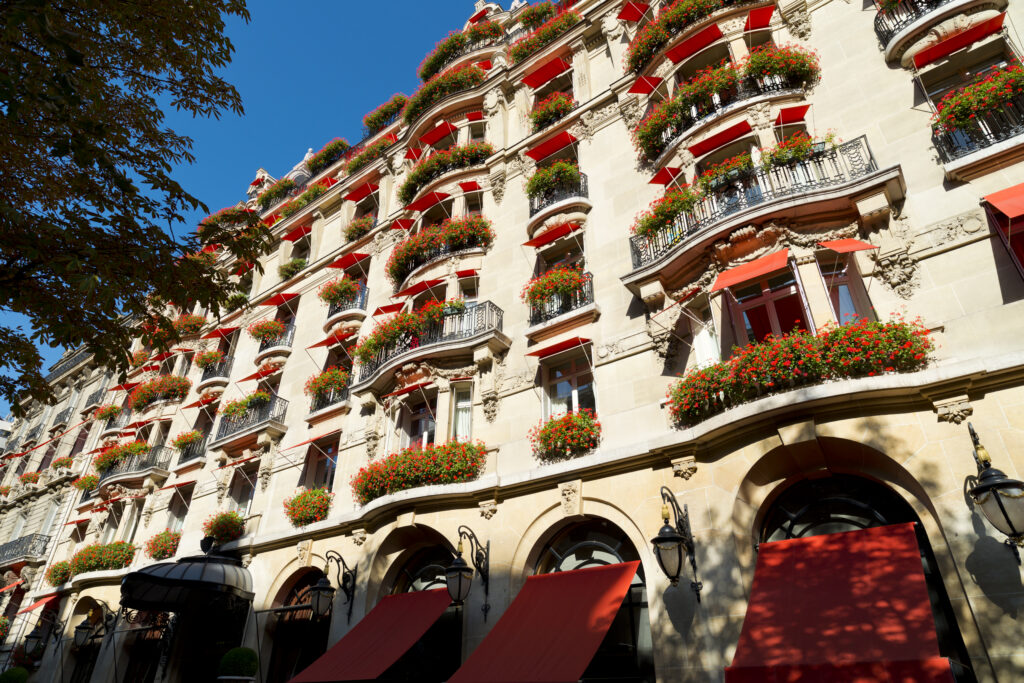
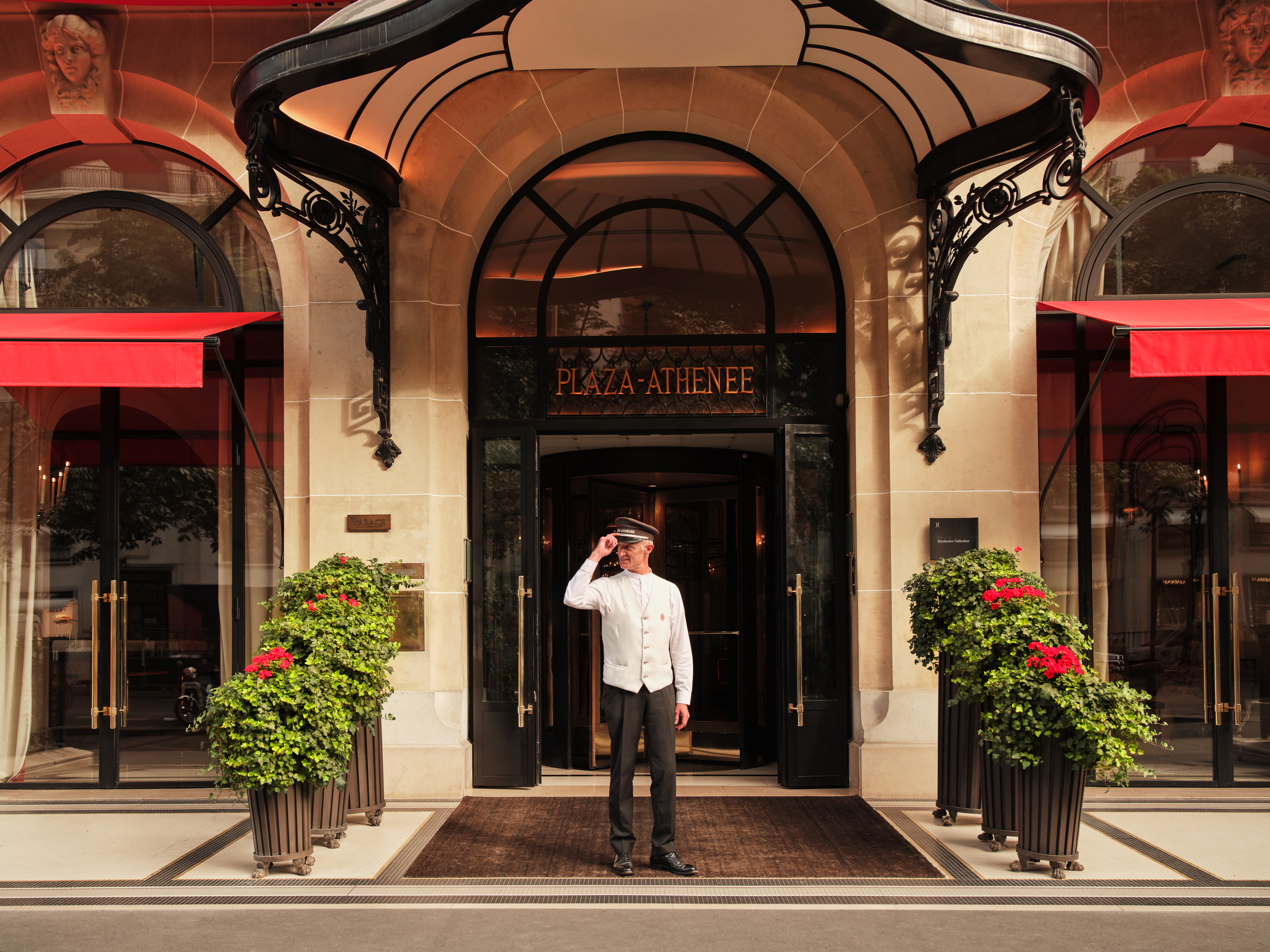
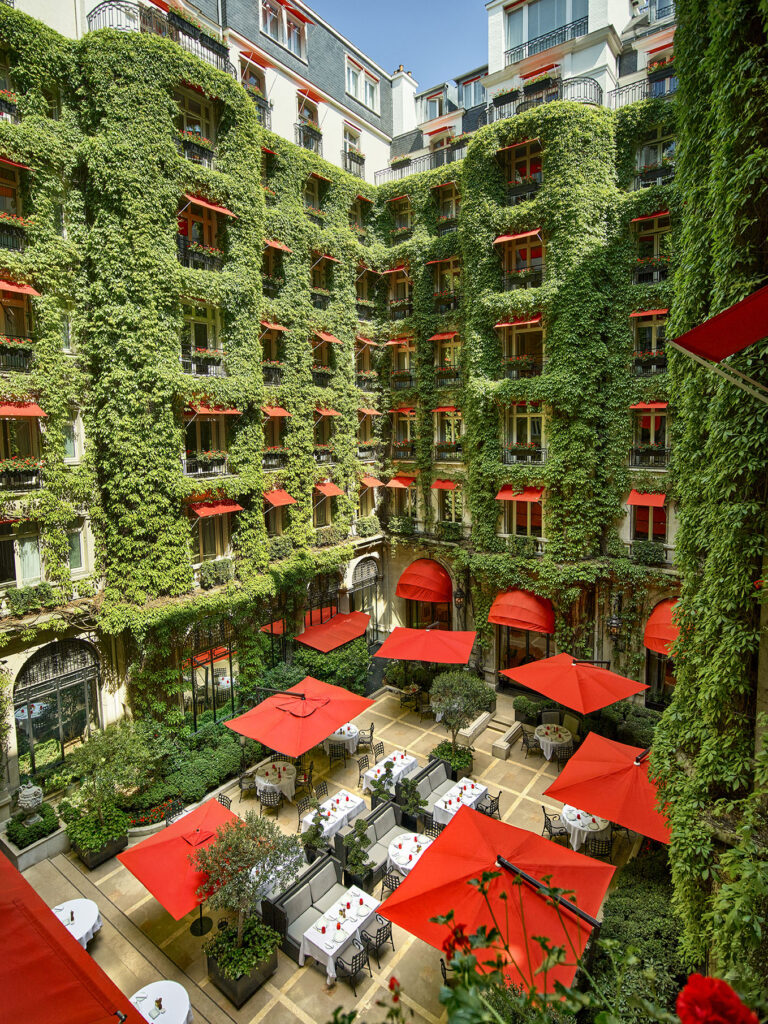
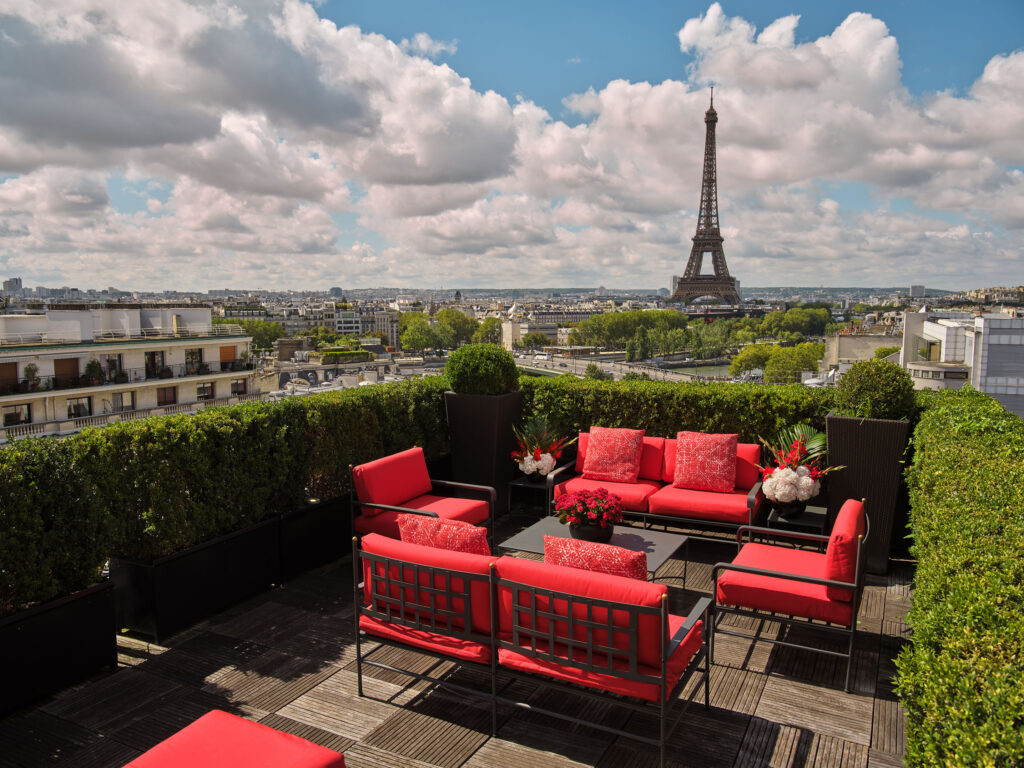
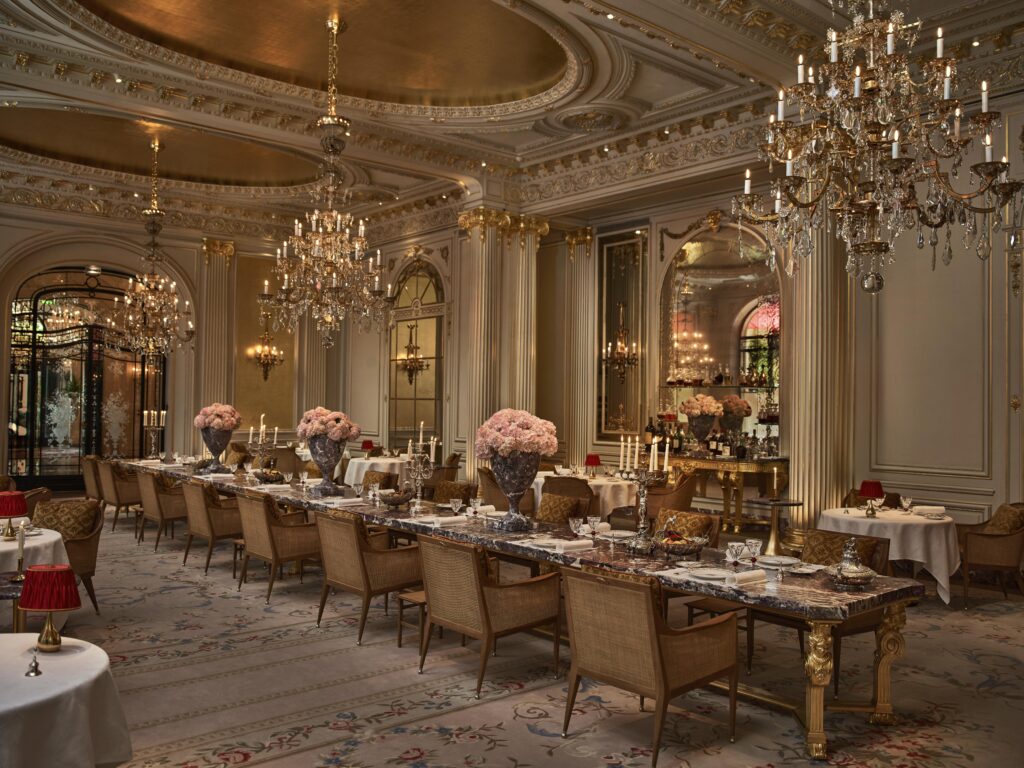
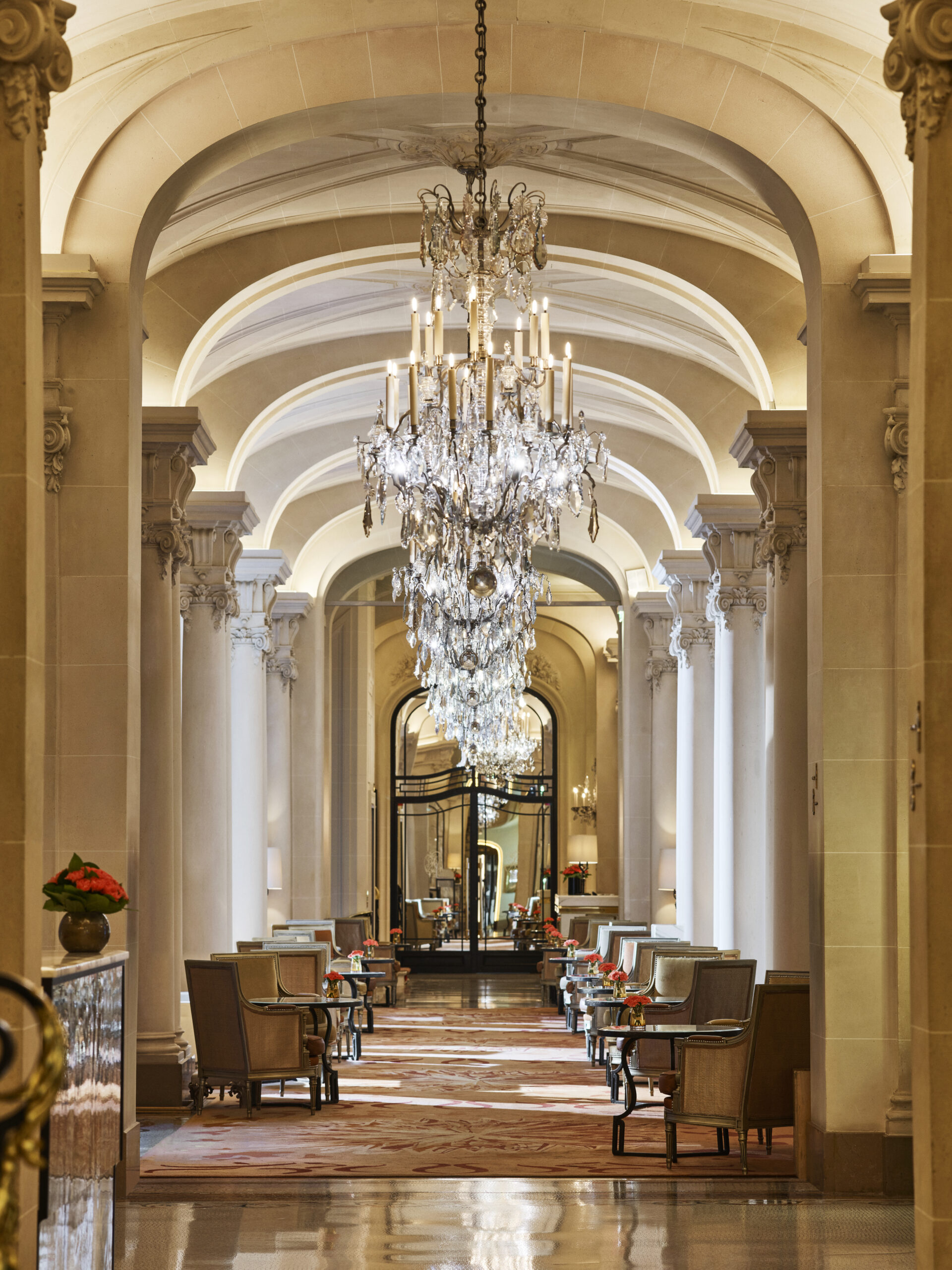
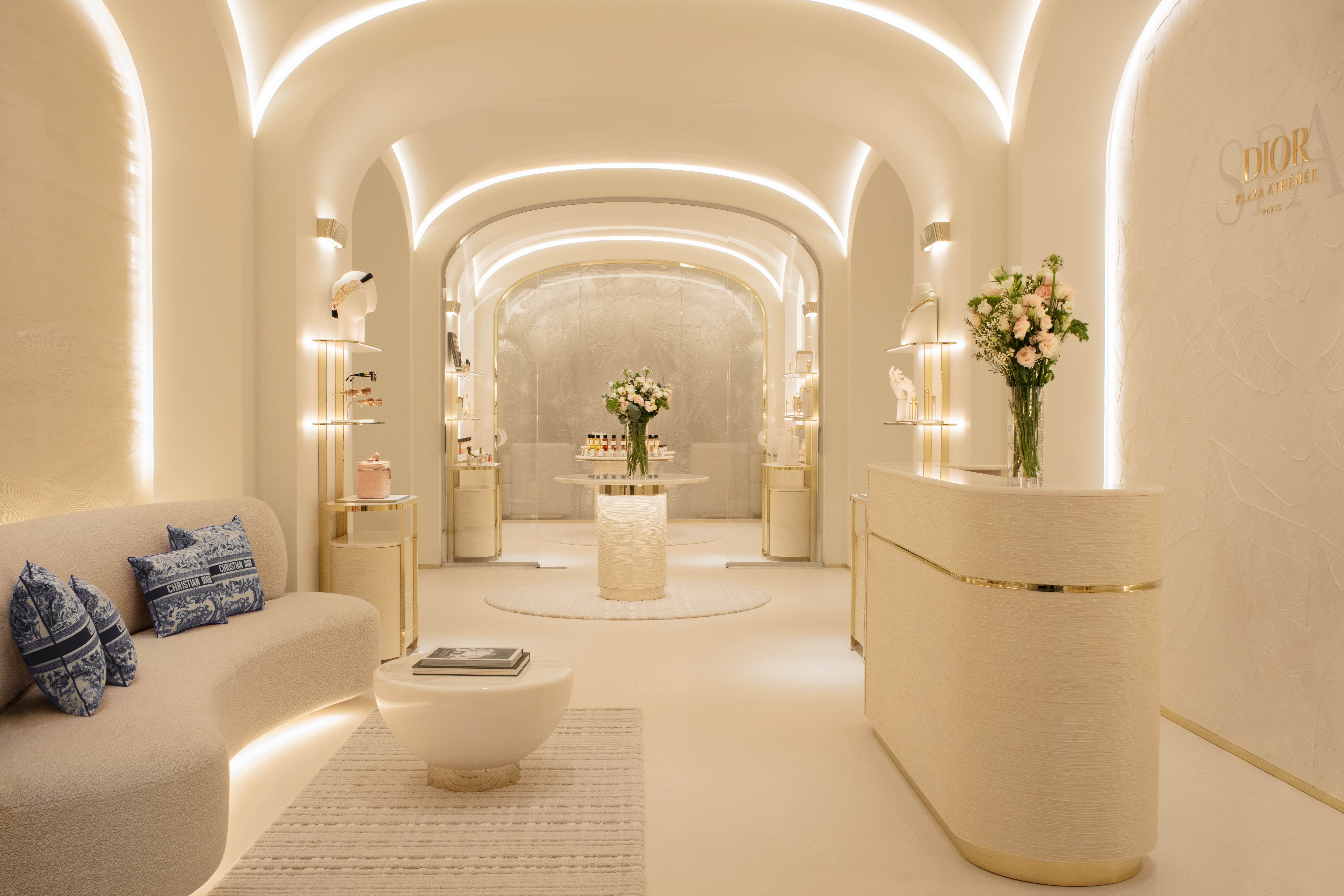
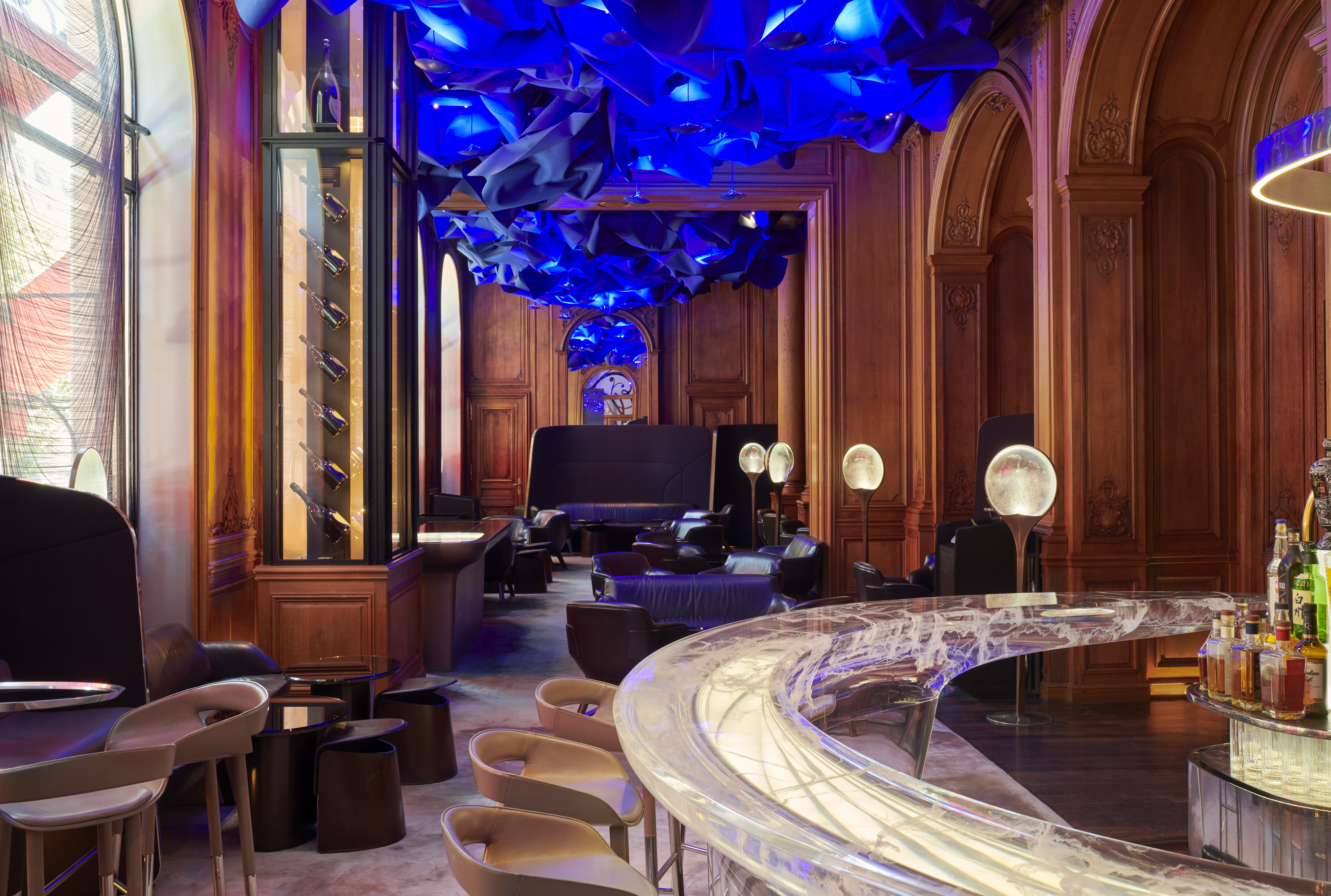
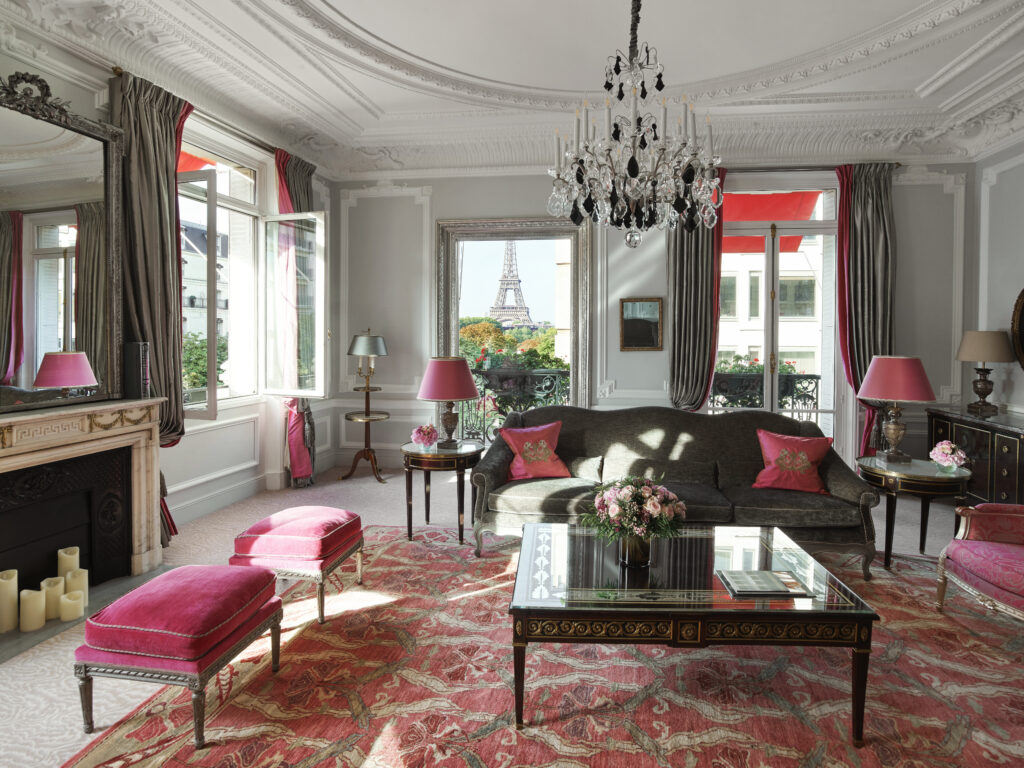
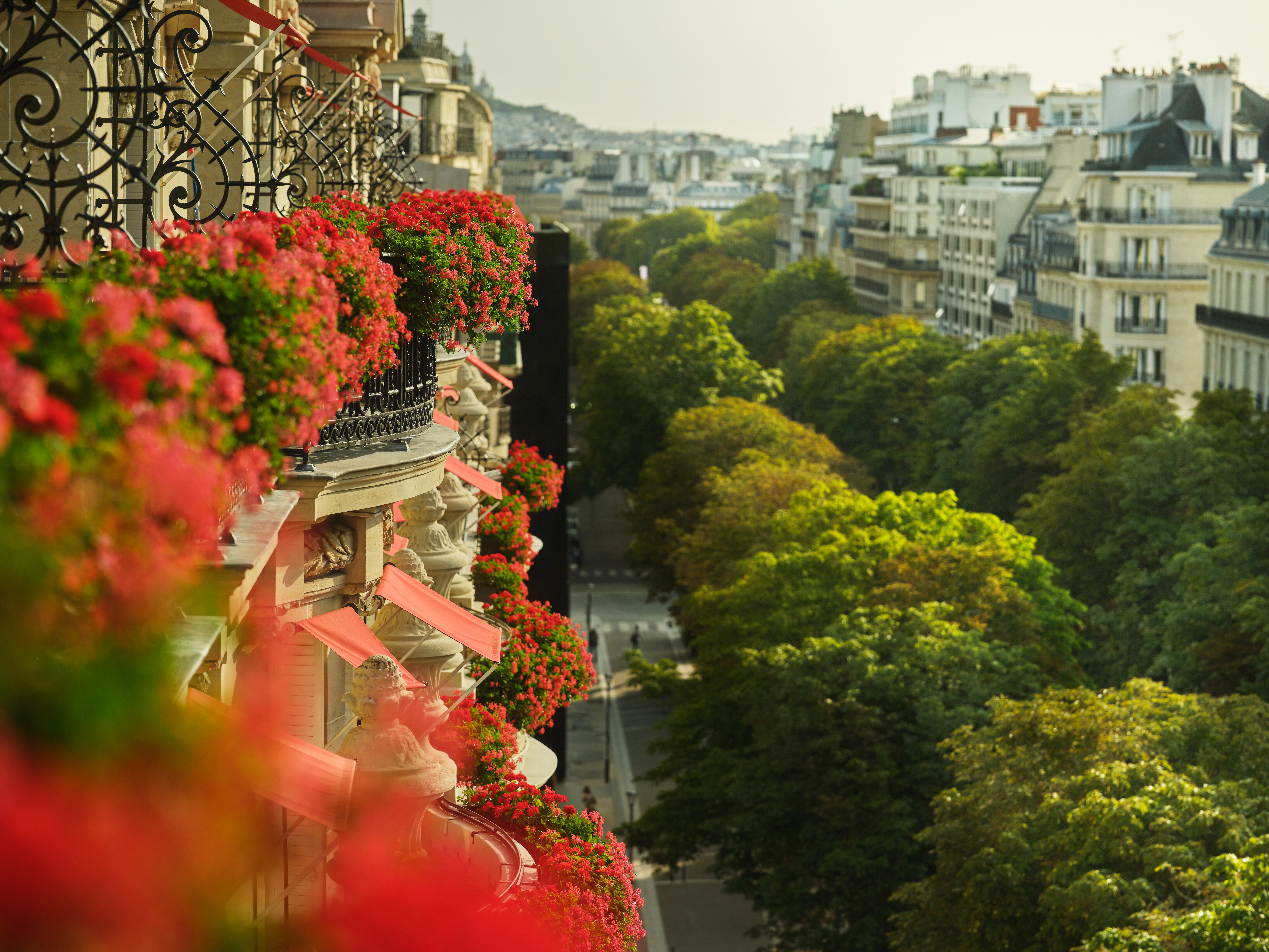
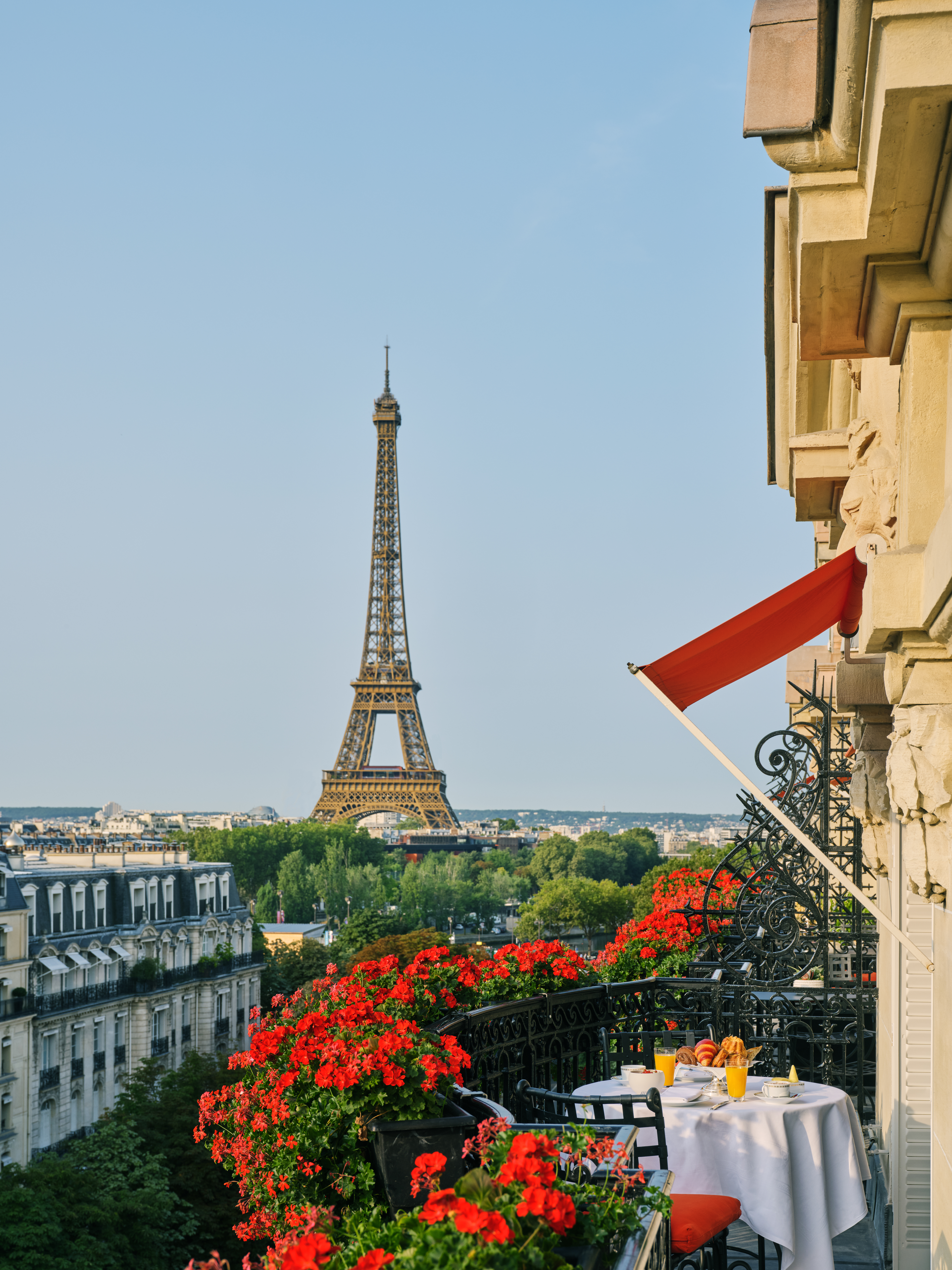
© Hôtel Plaza Athénée.
Hôtel Plaza Athénée
Occupying the most coveted address on Avenue Montaigne the Golden Triangle’s legendary avenue of haute couture Hôtel Plaza Athénée is not simply a Paris palace hotel; it is the runway of the French capital. Instantly recognizable by its Haussmannian facade draped in iconic red awnings and 1,900 cascading red geraniums, the hotel has been the glamorous epicenter of Parisian high society since its opening in 1913. Today, meticulously managed by the Dorchester Collection, it represents the cinematic ideal of Paris. From its Michelin-starred dining and world-renowned Dior Spa to its unmatched views of the Eiffel Tower, Plaza Athénée operates as a flawlessly tailored, living monument to French fashion, gastronomy, and the art of living beautifully.
Accommodation
The property features 208 rooms and suites, divided across two distinct design languages, which offer a brilliant architectural duality. The lower six floors are a masterclass in classical French Louis XVI elegance, featuring intricate moldings, silk damask curtains, and antique furnishings. The top two floors, however, pivot into striking, geometric Art Deco design, providing a completely different aesthetic experience for returning guests. For the ultimate Parisian fantasy, the Signature Suites (Eiffel) are internationally renowned. These corner sanctuaries feature vast, silver-framed windows and wrought-iron balconies that perfectly frame the sparkling Eiffel Tower. At the absolute pinnacle of luxury is the Royal Suite, one of the largest in Paris, stretching over 4,800 square feet. Designed with the grandeur of an 18th-century Parisian apartment, it features a private office, two drawing rooms, a dining room, and an expansive balcony wrapping around the avenue. The Haute Couture Suite, meanwhile, pays direct homage to the hotel’s fashion legacy with bespoke, fashion-forward interiors.
Dining
The culinary offering at Hôtel Plaza Athénée combines French gastronomic tradition with the theatrical elegance that defines the palace. The centrepiece is the Michelin-starred Gastronomic Restaurant, set within an extraordinary gold-leafed dining room centred around the imposing 12-metre Royal Table, where traditional French recipes and techniques are reinterpreted through a contemporary approach. For a more relaxed atmosphere, Le Relais Plaza is an Art Deco institution dating back to 1936, serving refined French brasserie classics beneath its historic interiors. During the warmer months, La Cour Jardin becomes an atmospheric garden restaurant surrounded by Virginia creeper and the hotel’s signature red geraniums, before transforming into an ice rink during winter. Guests can also enjoy afternoon tea in La Galerie, accompanied by live harp music and pastries from world champion pastry chef Angelo Musa, while La Terrasse Montaigne provides an elegant alfresco setting directly on Avenue Montaigne.
Wellness
Wellness at the hotel is defined by one of the most significant partnerships in the luxury sphere: the Dior Spa Plaza Athénée. This relationship is built on deep historical ties. When Christian Dior founded his couture house in 1946, he intentionally opened his first boutique just down the street at 30 Avenue Montaigne to cater directly to the hotel’s affluent clientele. Today, the subterranean Dior Spa is a spectacular, hushed sanctuary of white marble and Christian Dior’s favorite shade of grey. The facility offers advanced cellular tech, cutting-edge light therapy (the Dior Light Suite), and bespoke, highly technical facial protocols. It is a clinical yet impossibly luxurious temple to beauty, unmatched by any other spa in Paris.
Architecture & Design
The exterior of the Plaza Athénée is arguably the most photographed hotel facade in Europe. The contrast of the cream Haussmannian stonework against the vibrant red awnings and the immaculately maintained window boxes of red geraniums is iconic. Inside, the design seamlessly bridges centuries. The lobby and public spaces are vast and polished, characterized by soaring columns, polished marble floors, and an abundance of fresh, towering floral arrangements. Whether you are walking through the Louis XVI corridors or the sleek Art Deco upper floors, the design always communicates a profound, unapologetic sense of wealth and high style.
Heritage & Philosophy
You cannot tell the story of the Plaza Athénée without telling the story of Parisian fashion. Beyond Christian Dior—who famously debuted his inaugural “New Look” collection here and named iconic suits after the hotel—it has been the temporary home of Marlene Dietrich, Grace Kelly, and modern fashion royalty. The philosophy of the hotel is to act as the ultimate guardian of this glamour. The service is exceptionally sharp, anticipatory, and discreet. The staff understand that guests are not simply paying for a room; they are paying to step into a beautifully curated, living Parisian fantasy.
Facilities & Experiences
The hotel’s amenities are deeply intertwined with its fashionable location. The concierge team holds legendary sway on Avenue Montaigne, able to arrange private, after-hours access to the most exclusive luxury boutiques, from Dior and Chanel to Louis Vuitton. The hotel maintains a fleet of luxury house cars, offering highly personalized chauffeur services for VIP transfers or shopping excursions across the city. During Paris Fashion Week, the entire property transforms into an exclusive hub for the industry’s elite, with the famously moody Le Bar du Plaza Athénée acting as the ultimate high-fashion gathering space for late-night bespoke cocktails.
Why Plan a Trip Around Hôtel Plaza Athénée?
If you want an avant-garde boutique hotel, Paris has plenty. But if you want the ultimate, cinematic Parisian dream—the one immortalized in Sex and the City, The Devil Wears Prada, and decades of Vogue editorials—Hôtel Plaza Athénée is the only answer. You do not stay here simply to visit Paris; you stay here to experience Paris through one of its most storied addresses. Waking up to an unobstructed view of the Eiffel Tower, spending the afternoon in the Dior Spa, and dining at a Michelin-starred Royal Table before stepping directly out onto Avenue Montaigne is the one of Paris’s most distinctive expressions of contemporary French luxury.
Getting There
Positioned in the 8th Arrondissement, the hotel is highly accessible for international arrivals. It is approximately a 40-minute drive from Paris Charles de Gaulle Airport (CDG) and 30 minutes from Paris Orly Airport (ORY). The hotel’s concierge expertly coordinates VIP runway meet-and-greets and private limousine transfers, ensuring that the luxury experience begins the moment guests touch down in France.
Average Nightly Rate
Classic & Superior Rooms: approximately €1,000–€1,500 per night.
Deluxe Rooms & Avenue Montaigne Rooms: approximately €1,300–€2,000 per night.
Junior Suites: approximately €1,800–€2,800 per night.
Deluxe & Prestige Junior Suites: approximately €2,500–€4,000 per night.
Superior & Deluxe Suites: approximately €3,000–€5,500 per night.
Prestige & Eiffel Suites: approximately €4,500–€8,000+ per night.
Signature Suites & L’Appartement: approximately €7,000–€15,000+ per night, depending heavily on the date and suite.
Royal Suite: typically from approximately €20,000 per night, with peak-period pricing potentially considerably higher.
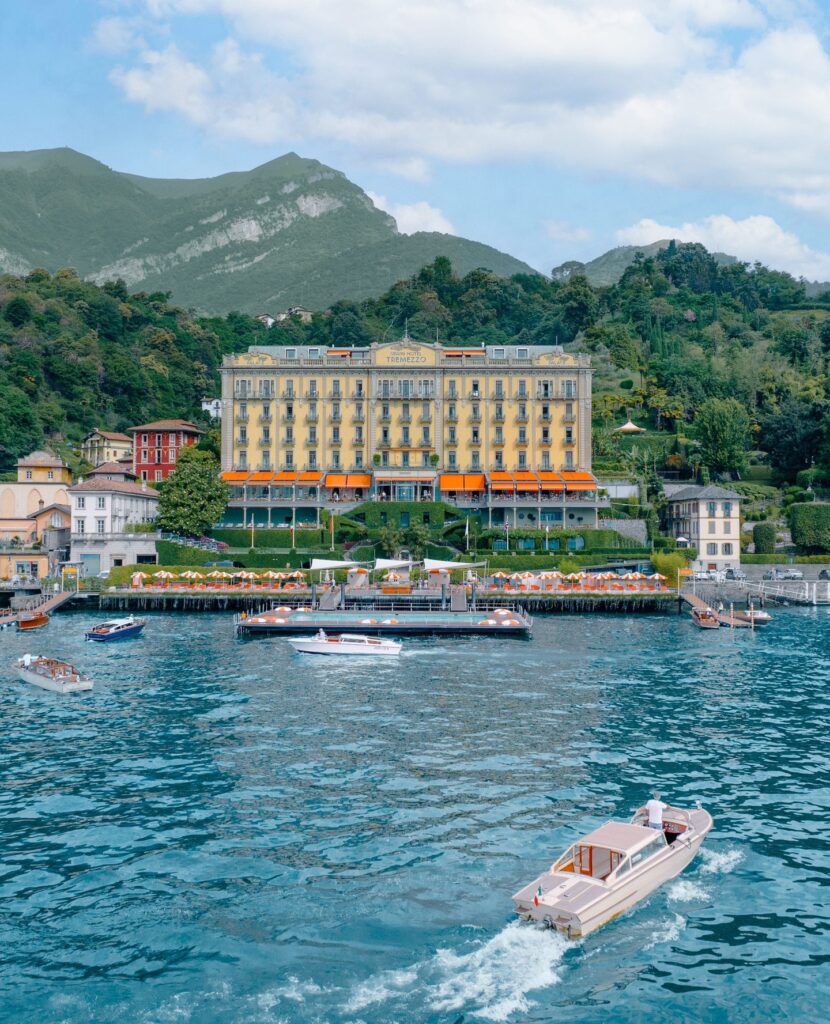
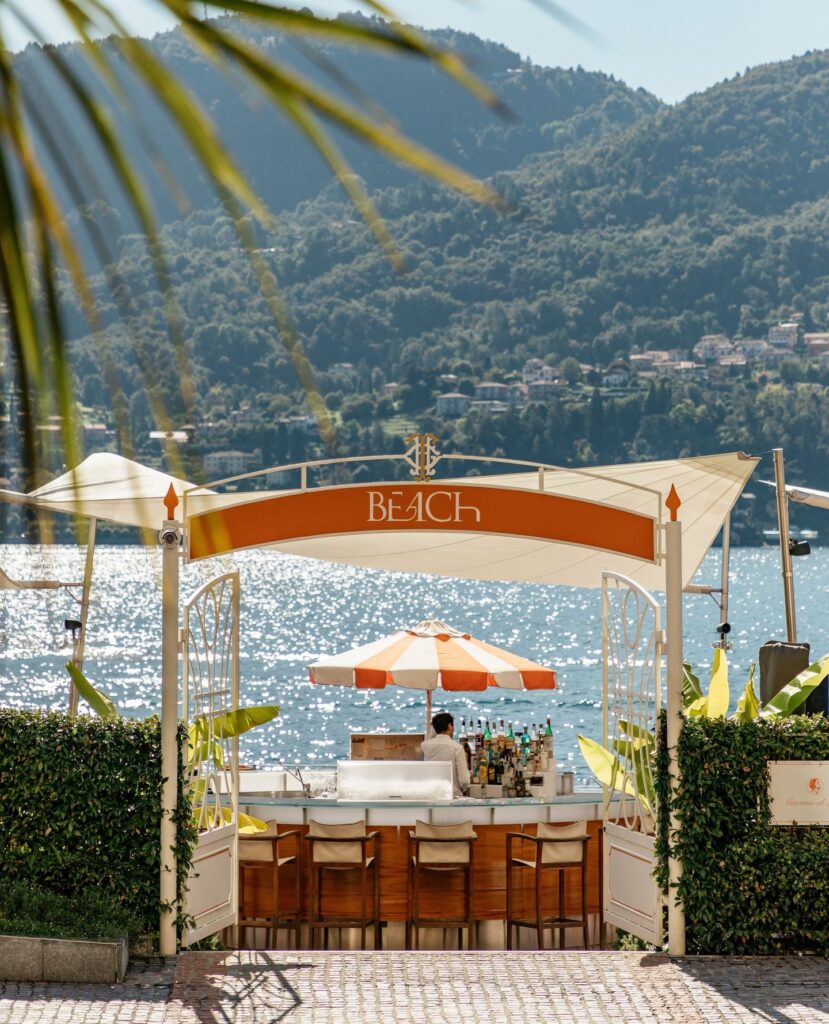
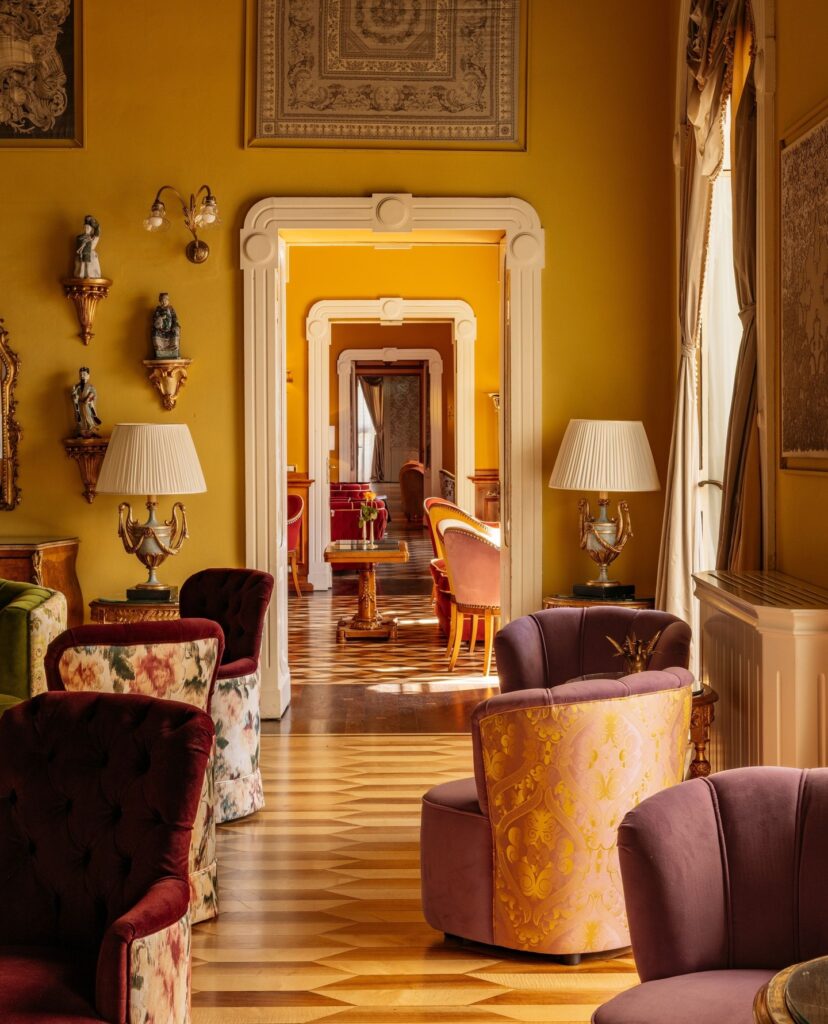
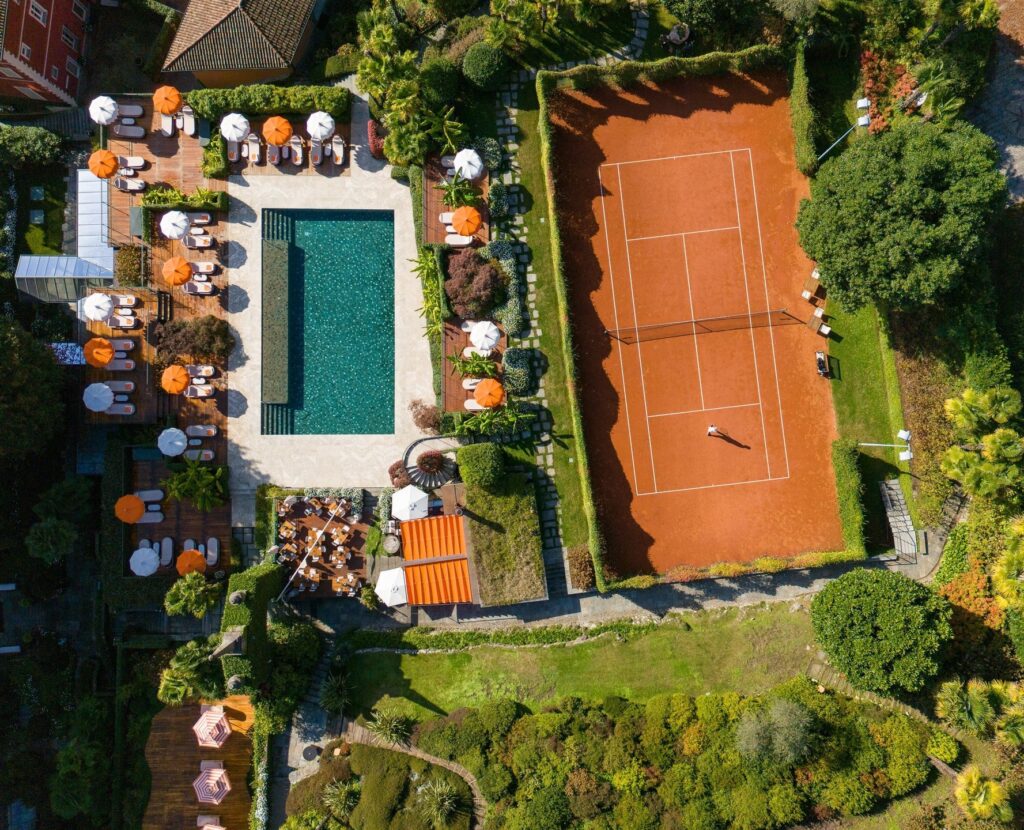
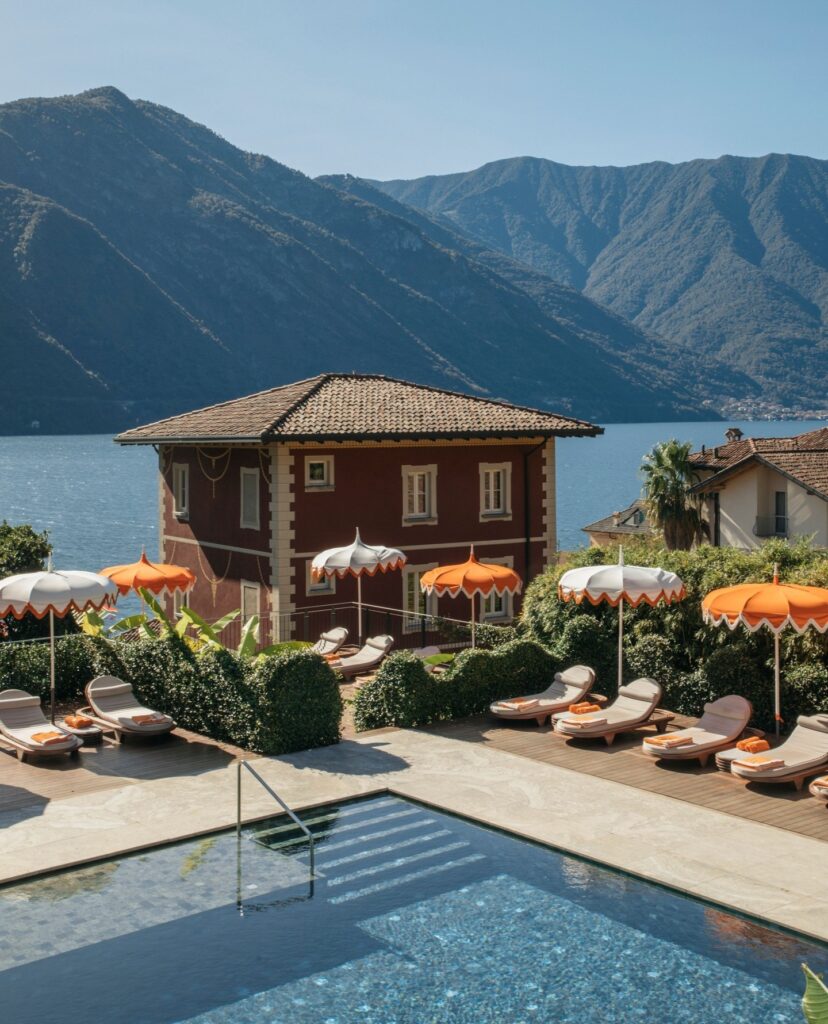
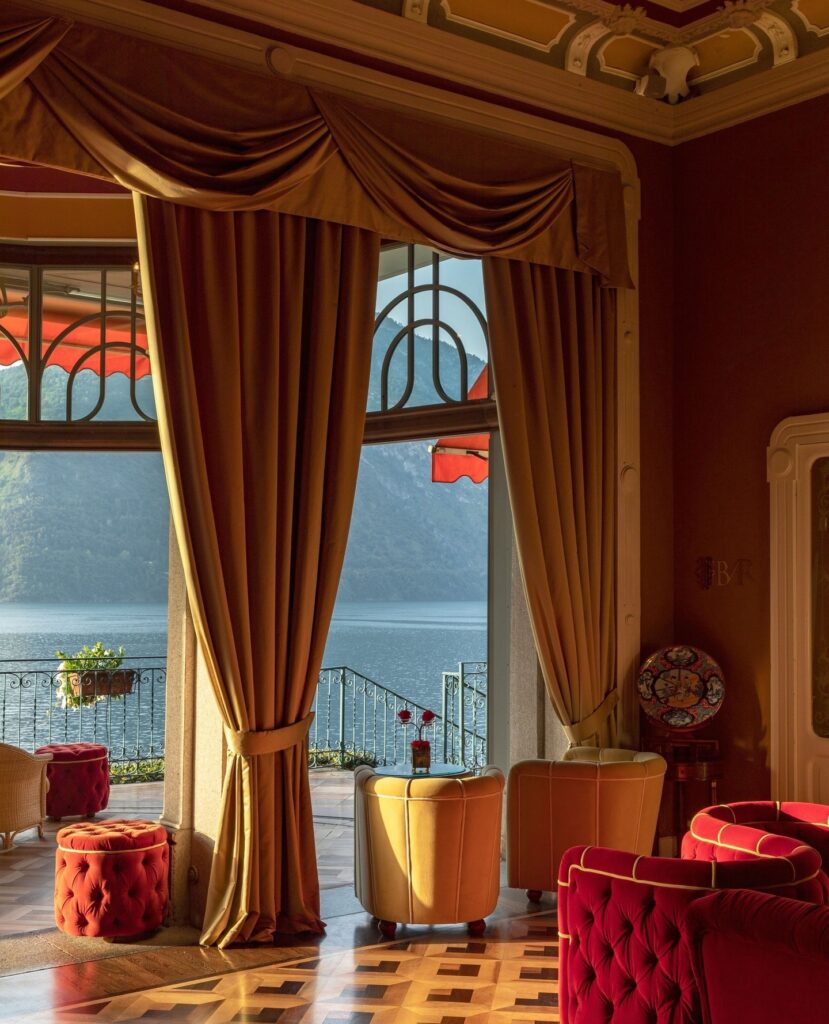
Images courtesy of Grand Hotel Tremezzo via Instagram.
Grand Hotel Tremezzo
Standing proudly on the western shores of Lake Como since 1910, Grand Hotel Tremezzo is a masterclass in the lost art of villeggiatura—the traditional Italian concept of retreating to the countryside for an extended, leisurely holiday. Unlike many of Europe’s grand palace hotels, which have been absorbed by global conglomerates, this iconic Art Nouveau property remains fiercely independent, stewarded by the De Santis family. With its vibrant saffron-yellow facade, unparalleled views of the Grigne mountains and the town of Bellagio, and an atmosphere of unapologetic joy, the hotel is a celebration of classic Italian hospitality. It balances the grandeur of the Belle Époque with a profound sense of warmth, offering a lakeside escape that feels both historically significant and entirely alive.
Accommodation
The property’s rooms and suites are a riot of color, texture, and romance, combining rich silks, antique furnishings, and floor-to-ceiling windows to maximize light and perspective. The Lake View Prestige and Deluxe Rooms offer balconies suspended over the water, while the Rooftop Suites (Corner, Grand, and Front) feature private terraces equipped with Jacuzzi mini-pools overlooking the lake. The hotel’s heritage is immortalized in its signature accommodations, notably Suite Greta and Suite Emilia. However, the pinnacle of accommodation lies just down the road at Villa Sola Cabiati. Available as an exclusive-use buyout, this 16th-century Neoclassical masterpiece serves as the hotel’s private aristocratic residence. Staffed by a dedicated butler and private chef, the six-suite villa is a living museum featuring exquisite terrazzo floors, original frescoes by the school of Tiepolo, and the bed in which Napoleon and Joséphine Bonaparte slept, originally from the Palazzo Serbelloni in Milan.
Dining
The culinary program at Grand Hotel Tremezzo is deeply rooted in Italian excellence, headlined by a venue of immense gastronomic importance. La Terrazza Gualtiero Marchesi is the only restaurant in the world offering Marchesi’s most famous dishes, the founding father of modern Italian haute cuisine. Under the guidance of Executive Chef Osvaldo Presazzi, guests dine on an impossibly romantic, candlelit terrace while experiencing masterpieces like the iconic Riso, oro e zafferano (saffron risotto with gold leaf) and the Dripping di pesce. For a vibrant, al fresco experience, Da Giacomo al Lago brings the spirit of the beloved Milanese seafood institution to the shores of Lake Como. Serving peerless fresh crudi, perfectly crisped calamari, and whole baked seabass, it is the absolute epicenter of daytime lakeside glamour. The culinary ecosystem is rounded out by the atmospheric L’Escale Trattoria & Wine Bar, the relaxed garden setting of T Pizza, and the timeless T Bar for sunset aperitivos.
Wellness
Wellness at the property is housed within the 18th-century Villa Emilia, a structure that once served as a private library. Today, the T Spa is a sanctuary of restoration featuring original floor mosaics and stunning frescoes. The spa partners exclusively with the historic Florentine pharmacy Santa Maria Novella for its botanical therapies and treatments. Facilities include a dazzling Italian Hammam clad entirely in white Lasa marble, offering couples’ baths, a heated plinth, and a private steam room. For absolute seclusion, guests can reserve the Private SPA Suite hidden in the lush gardens, complete with its own whirlpool tub, sauna, and steam bath.
Architecture & Design
The hotel is a love letter to the Belle Époque era, opening its doors in 1910 when the European elite began flocking to Lake Como. Rather than leaning into the muted, minimalist tones of modern luxury, the interior design embraces unapologetic Italian flamboyance. Sweeping grand staircases, heavy velvet drapery, vividly upholstered period furniture, and walls adorned with historic prints create a sensory experience that is rich, theatrical, and deeply romantic. The architecture seamlessly integrates the dramatic topography of the region, building upward into the hills and outward onto the water.
Heritage & Philosophy
Grand Hotel Tremezzo is defined by a century of continuous family ownership, a rarity in modern luxury hospitality. This unbroken lineage ensures that the hotel never feels like a corporate asset; instead, it operates with the soul of a grand private home. The philosophy of Italianità—the essence of being wonderfully, completely Italian—permeates every interaction. The staff do not merely provide service; they play the role of gracious hosts welcoming guests into their cherished lakeside estate, intent on forging memories that connect visitors to the shared past of Lake Como.
Facilities & Experiences
The hotel’s amenities are unmatched on Lake Como, beginning with its famous triad of swimming pools. The Water-on-the-Water (WOW) Pool is a glamorous, floating oasis suspended directly over the lake itself; the Flowers Pool is tucked away in the lush, aromatic greenery of the centuries-old botanical park; and the Infinity Pool at the T Spa offers an indoor-outdoor circuit with a striking edge that appears to cascade into the lake. Beyond the property grounds, the concierge orchestrates private explorations of the lake via classic wooden water limousines. Guests can depart directly from the hotel’s private marina to explore hidden villas, botanical gardens, and the winding, cobbled streets of nearby villages, returning in time for a Hugo Spritz by the water.
Why Plan a Trip Around Grand Hotel Tremezzo?
Many properties in the region act purely as a base from which to explore the surrounding towns. Grand Hotel Tremezzo, however, is the destination. With three distinct pools, an exclusive 16th-century villa, unparalleled private gardens, and the only kitchen in the world serving Marchesi’s historic haute cuisine, the hotel offers a complete, self-contained world. It captures the glamorous, cinematic ideal of an Italian summer better than almost any other property in Europe, making it the definitive reason to travel to Lake Como.
Getting There
Located on the western shore of Lake Como in the town of Tremezzina, the hotel faces the picturesque town of Bellagio across the water. It is approximately a one-hour drive from Milan Malpensa Airport (MXP), and around 90 minutes from the center of Milan. The hotel can arrange private chauffeur services or, for a more dramatic arrival, a seaplane transfer directly onto the lake.
Average Nightly Rate
Classic & Superior Rooms: approximately €800–€1,300 per night.
Deluxe & Lake View Rooms: approximately €1,100–€1,800 per night.
Junior Suites: approximately €1,500–€2,300 per night.
Deluxe & Lake View Suites: approximately €2,000–€3,500 per night.
Signature Suites: approximately €3,000–€5,000+ per night.
Tremezzo & Rooftop Suites: approximately €4,000–€7,000+ per night during peak summer.
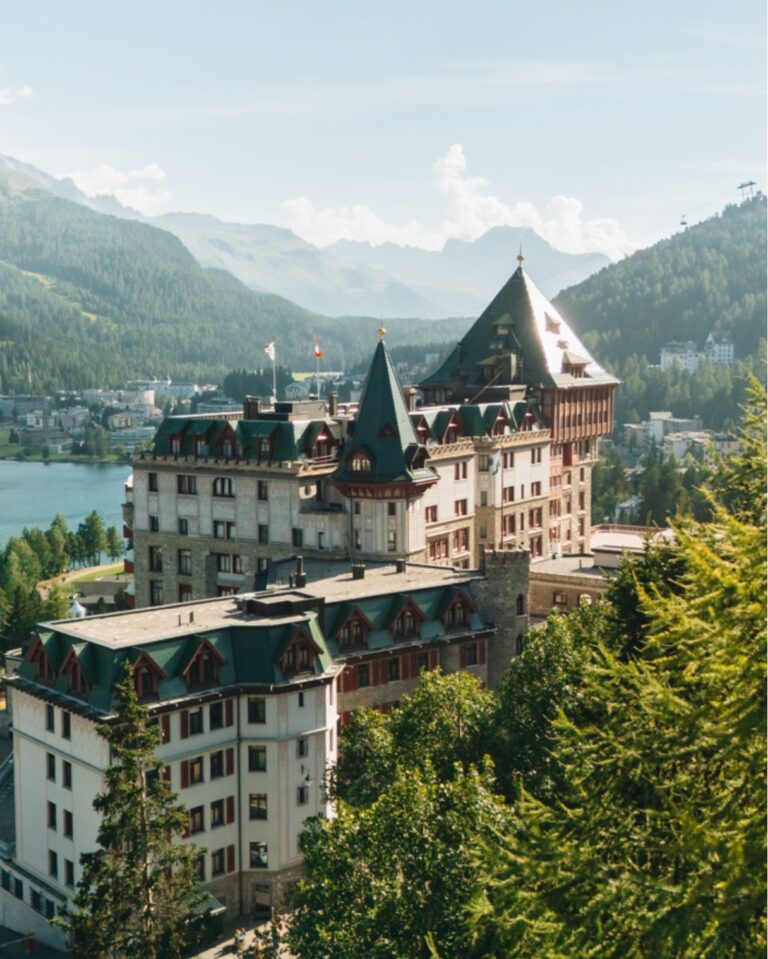
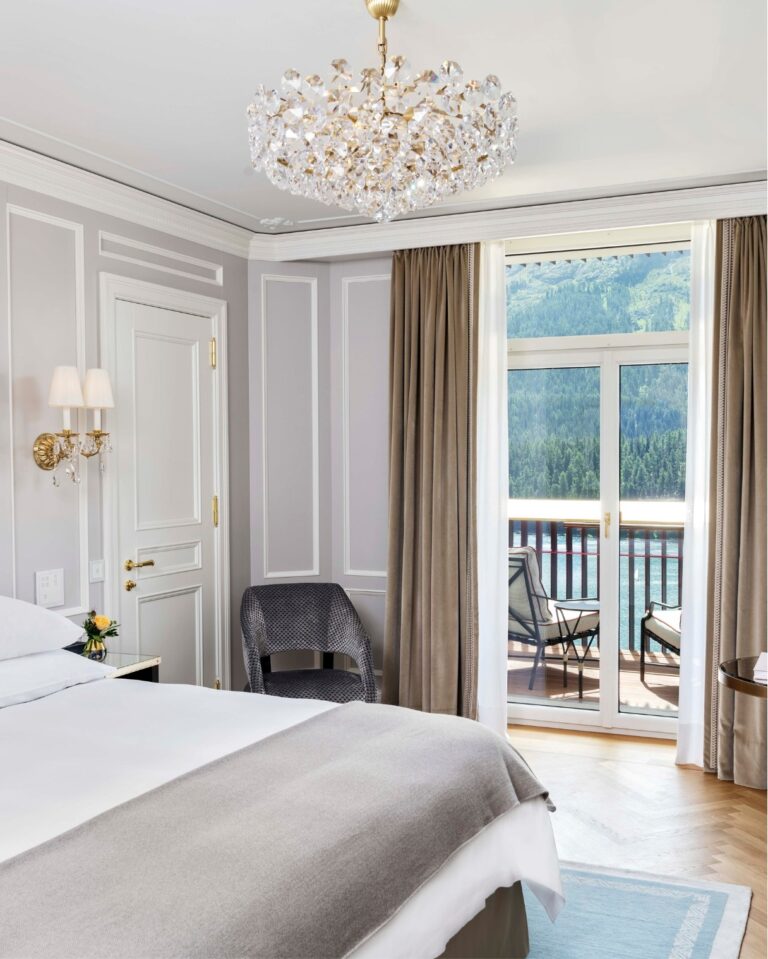
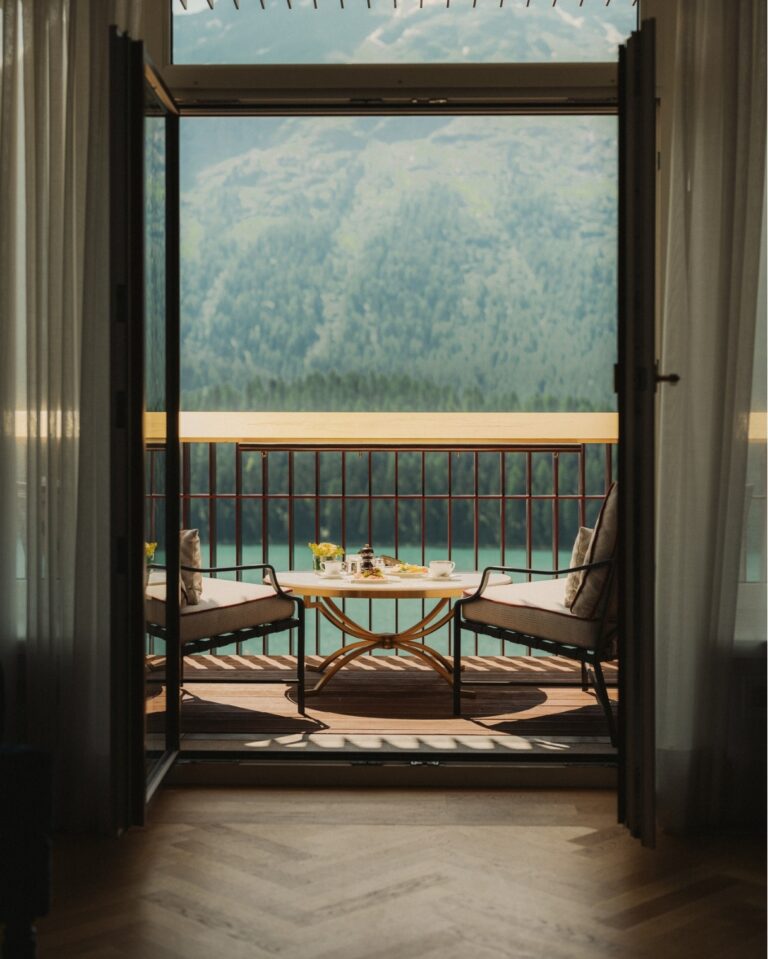
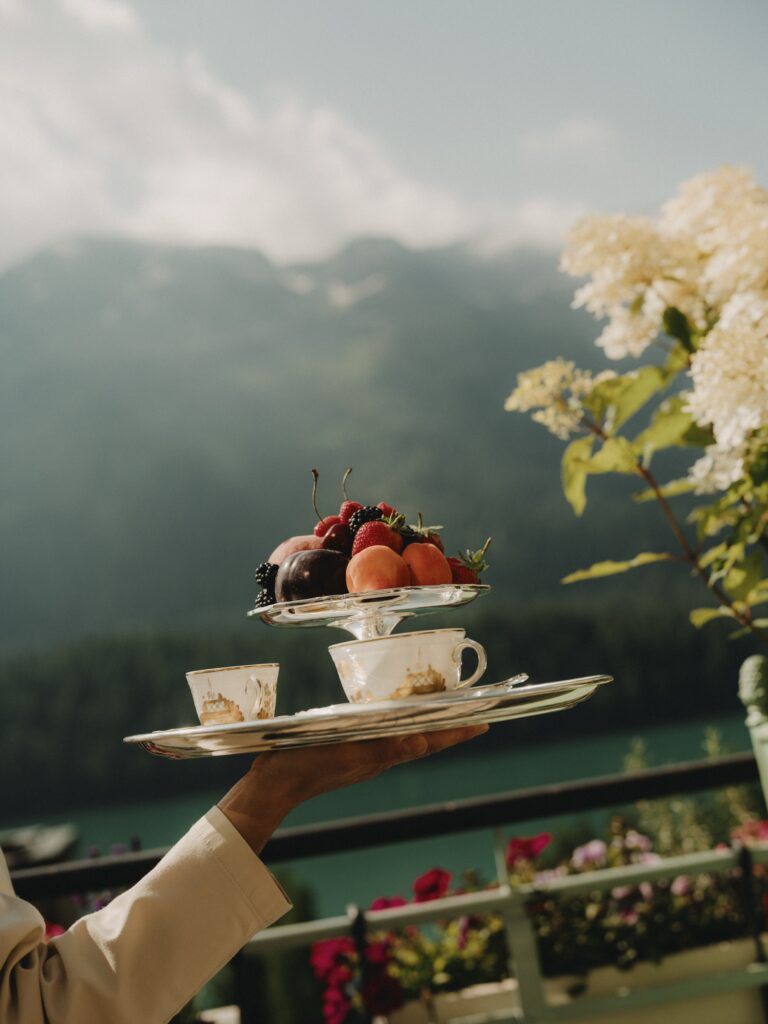
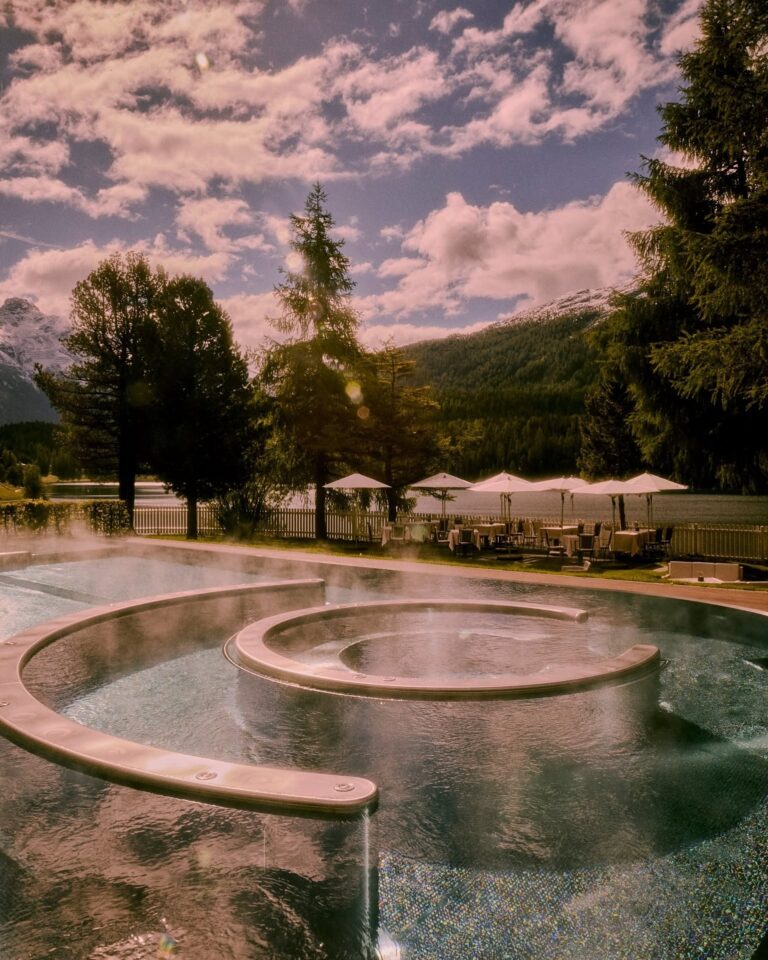
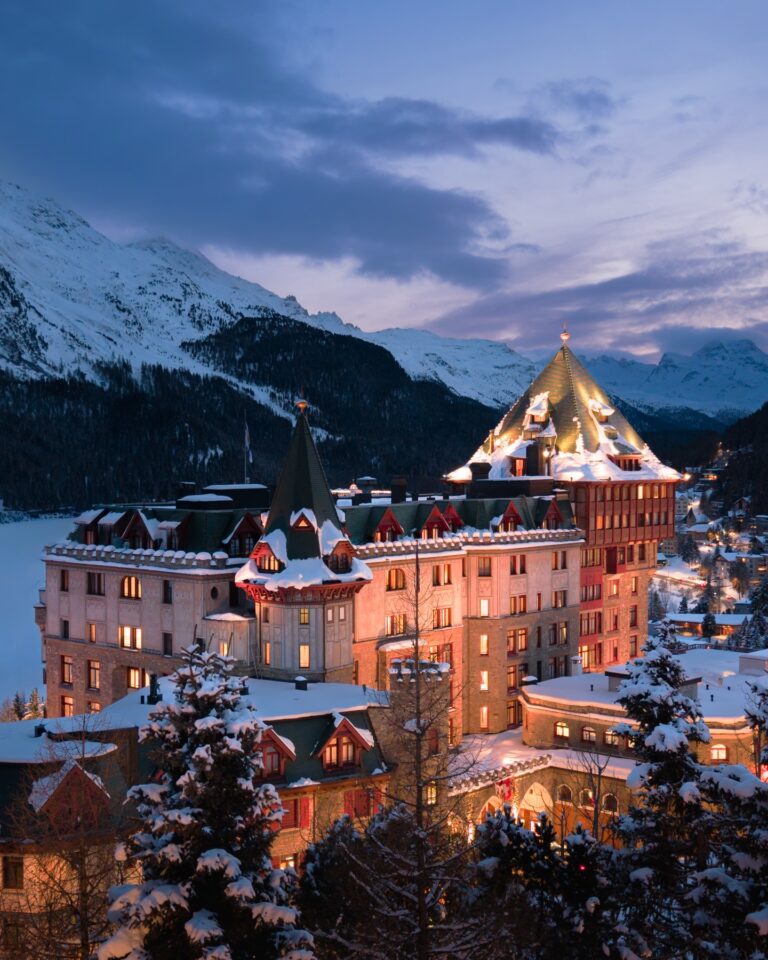
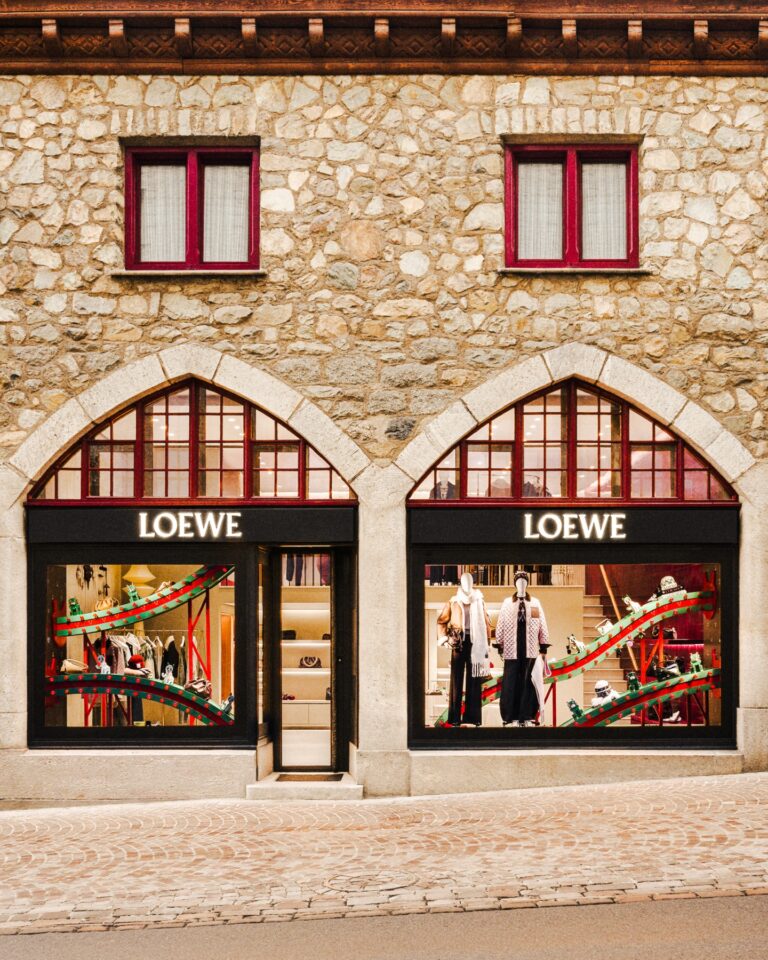
Images courtesy of Badrutt’s Palace Hotel via Instagram.
Badrutt’s Palace Hotel
Towering like a fairy-tale castle over the frozen expanse of Lake St. Moritz, Badrutt’s Palace Hotel is the undisputed monarch of the Swiss Alps. Opened in 1896 by Caspar Badrutt, this legendary property did not simply capitalise on the invention of Alpine winter tourism; it defined it. For over a century, its turreted roofline has served as a beacon for international royalty, Hollywood legends, and European high society. Today, remaining fiercely independent and meticulously managed, Badrutt’s Palace balances unashamed old-world glamour with cutting-edge gastronomy and wellness, representing the absolute pinnacle of high-altitude luxury.
Accommodation
The Palace offers 155 rooms and suites, including the newly introduced Serlas Wing, each presenting a refined blend of Engadin heritage and contemporary alpine sophistication. The classic rooms feature intricate woodwork, heavy silks, and expansive windows framing the dramatic peaks of the valley or the charming village side. The Signature Suites hold remarkable historical pedigree. The Hitchcock Suite is famously named after the legendary film director Alfred Hitchcock, a devoted regular who spent his honeymoon here and returned for decades. For ultimate grandeur, the Hans Badrutt Suite and Helen Badrutt Suite feature palatial living spaces, private libraries, and marble bathrooms, complete with dedicated butler service. The absolute zenith of residential privacy is The Tower Penthouse Apartment, sprawling across four bedrooms over three floors and boasting sweeping lake views. Furthermore, the newly unveiled Serlas Wing, designed by renowned architects Antonio Citterio and Patricia Viel, introduces an ultra-contemporary aesthetic using Dorato Valmalenco stone and bespoke Loro Piana fabrics.
Dining
The culinary landscape at Badrutt’s Palace is extraordinarily diverse, boasting up to eleven restaurants and bars during the winter peak. The gastronomic crown jewel is IGNIV by Andreas Caminada, holding a Michelin star and serving an exceptional fine-dining sharing concept. La Coupole-Matsuhisa—housed brilliantly within what was once Europe’s first indoor tennis hall—offers spectacular Japanese-Peruvian fusion by Chef Nobu Matsuhisa. A short stroll from the main building is Chesa Veglia, a historic 1658 farmhouse transformed in the 1930s into a rustic, atmospheric dining institution serving authentic Italian and Swiss classics, including legendary truffle pizzas. High on the mountain slopes, the hotel also operates Paradiso, the most exclusive mountain club in St. Moritz, offering vintage champagne, a collection of over 500 wines, and alpine comfort food at an altitude of 2,181 metres. Evenings conclude at Le Grand Hall, famously dubbed the ‘living room of St. Moritz’, or deep within the hotel at King’s Social House, Switzerland’s oldest and most glamorous nightclub.
Wellness
Nestled within the alpine rock, Palace Wellness is a subterranean sanctuary designed for high-altitude recovery and rejuvenation. The spa features an indoor infinity pool that seemingly merges with the mountains, alongside a spectacular newly redesigned outdoor pool—the largest in St. Moritz—heated sustainably using water directly from the lake. The wellness centre encompasses an extensive array of treatment rooms offering bespoke therapies, state-of-the-art fitness facilities, salt rooms, and steam baths, ensuring guests are meticulously restored after a day on the Engadin slopes.
Architecture & Design
The architecture is a magnificent expression of the late 19th-century grand hotel style, distinguished by its iconic green-roofed tower, which was faithfully rebuilt following a fire in 1967. The interiors are a theatrical display of wealth and heritage, featuring intricately carved wooden ceilings, vast crystal chandeliers, and grand corridors lined with priceless antiques and contemporary art. It is a space designed to see and be seen, where the soaring ceilings and panoramic windows of Le Grand Hall provide the perfect stage for the hotel’s famously elegant clientele.
Heritage & Philosophy
Badrutt’s Palace is a monument to a pioneering hospitality dynasty. The Badrutt family vision essentially transformed St. Moritz from a sleepy summer spa town into the birthplace of luxury winter sports. The hotel’s guestbook is a roll call of 20th-century titans, from Coco Chanel and Audrey Hepburn to Charlie Chaplin and Marlene Dietrich. The philosophy of the Palace is rooted in the theatricality of luxury; the service is formal, highly anticipatory, and delivered with white-gloved precision. It operates on the understanding that guests do not just want a flawless stay; they expect an extraordinary social event.
Facilities & Experiences
Seasonal exclusivity defines the Palace experience. The hotel operates on a strict twin-season model, opening exclusively for the winter ski season and the vibrant summer alpine season. In winter, the concierge arranges private ski instructors, horse-drawn sleigh rides across the frozen lake, and VIP access to the legendary Cresta Run. The property also sits directly above the Palace Galerie on Via Serlas, offering private, elevator-to-boutique access to the world’s most prestigious luxury brands, including Cartier, Dior, and Yves Saint Laurent.
Why Plan a Trip Around Badrutt’s Palace?
To stay at Badrutt’s Palace is to participate in one of the most storied traditions in luxury travel. It is not merely a base for skiing; it is the absolute epicentre of the St. Moritz experience. From dining at Chesa Veglia and swimming in the steaming outdoor pool amidst falling snow, to descending the grand staircase for a black-tie New Year’s Eve gala, a stay here is an immersion into a rarefied world of alpine aristocracy that remains beautifully untouched by time.
Getting There
St. Moritz is situated in the breathtaking Engadin valley in the Swiss canton of Graubünden. The hotel is approximately a 2.5-to-3-hour drive from Zurich Airport (ZRH) or Milan Malpensa Airport (MXP). However, for the ultimate arrival, guests can take the spectacular Glacier Express railway directly into St. Moritz, or utilise the nearby Samedan Airport (SMV)—Europe’s highest-altitude private jet runway, located just 5 minutes from the hotel, where the Palace’s fleet of Rolls-Royces wait on the tarmac to whisk guests to the entrance.
Average Nightly Rate
Superior & Deluxe Rooms: approximately CHF 800–CHF 1,400
Signature Double Rooms & Junior Suites: approximately CHF 1,800–CHF 2,800
Classic Suites (Hitchcock, Palace, St. Moritz): approximately CHF 3,500–CHF 6,500
Signature Suites & Penthouses (Helen Badrutt, Tower Penthouse): from CHF 10,000, scaling to well over CHF 25,000 per night during the peak winter festive season.
Le Sirenuse
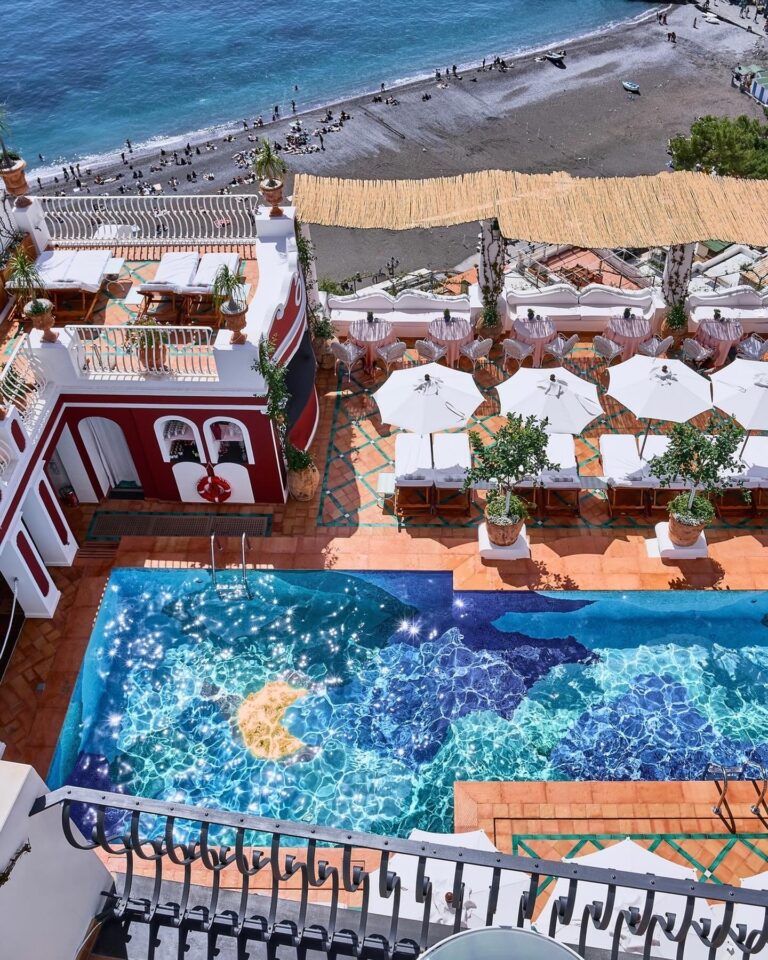
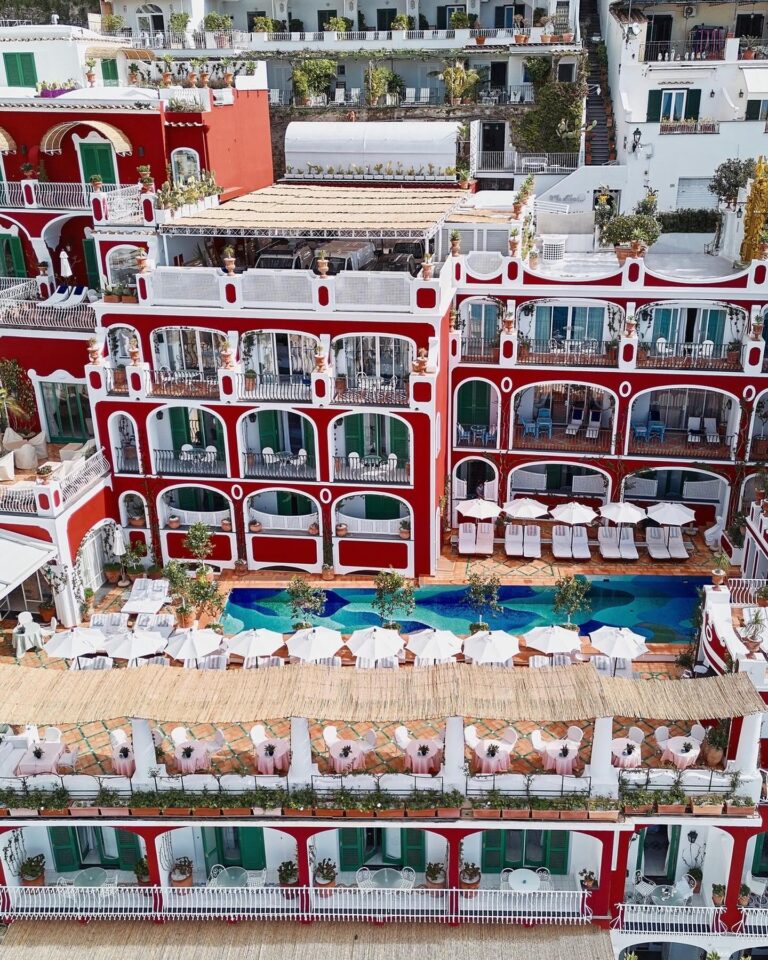
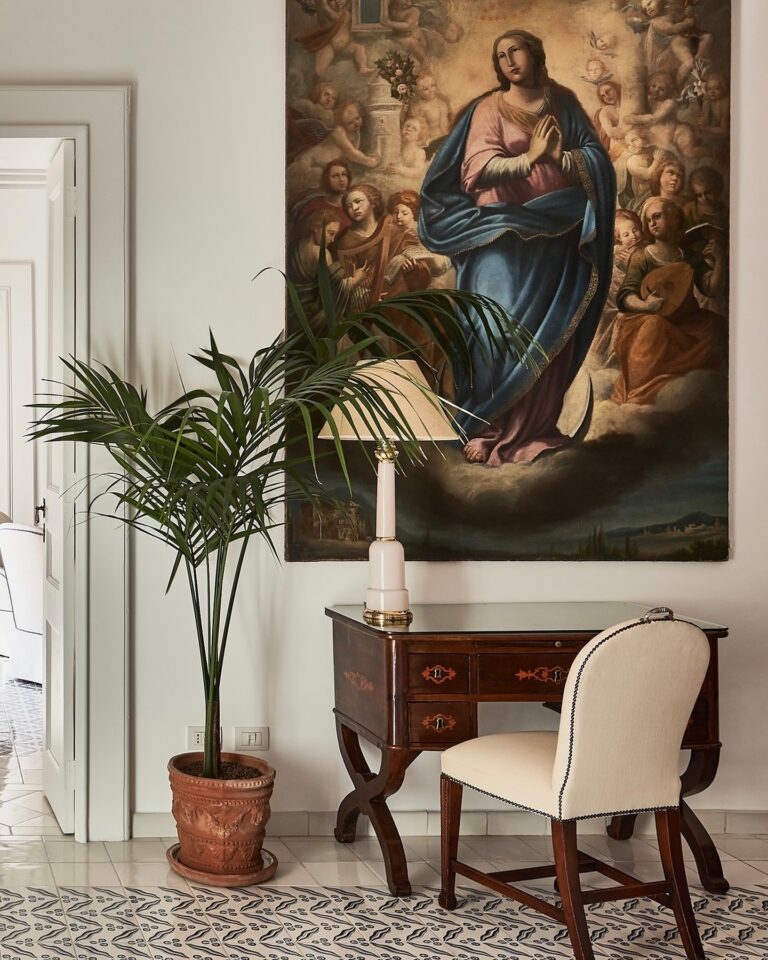
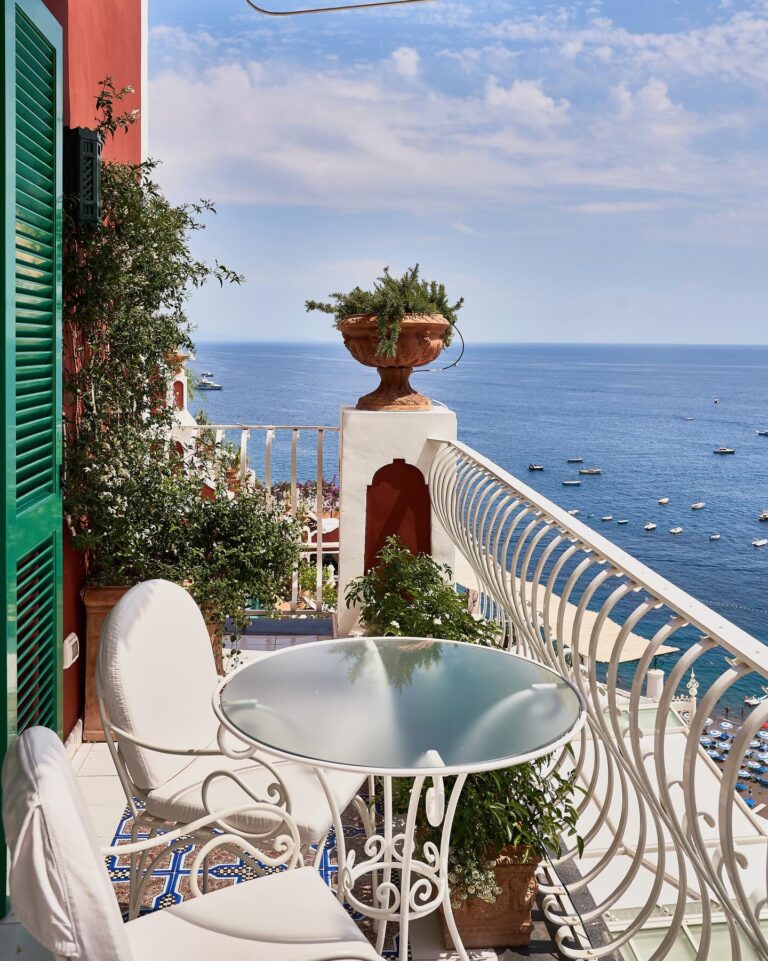
Clinging to the sheer cliffs of the Amalfi Coast, rising above the pastel-coloured cascade of Positano, Le Sirenuse is a triumph of family-run hospitality. Opened in 1951 when the aristocratic Sersale family transformed their private summer residence into a boutique sanctuary, it remains under their meticulous stewardship today. The defining ethos of the property was famously captured in 1953 when the American author John Steinbeck visited and wrote in Harper’s Bazaar: “Positano bites deep. It is a dream place that isn’t quite real when you are there and becomes beckoning real after you have gone.” With its iconic Pompeian red facade, museum-quality antique collections, and sweeping views over the Tyrrhenian Sea, Le Sirenuse is the undisputed, romantic soul of southern Italy.
Accommodation
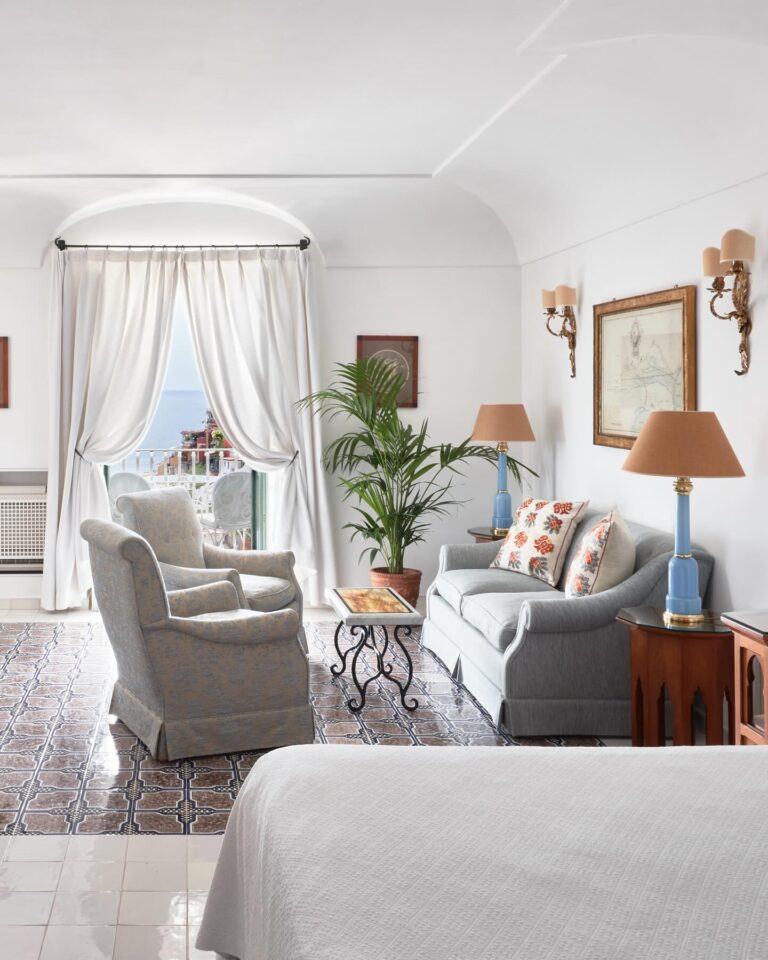
The hotel offers 58 uniquely configured rooms and suites, each reflecting the architecture of a patrician Neapolitan home rather than a traditional hotel. Whitewashed walls, vaulted ceilings, and handmade Vietri majolica floor tiles create an atmosphere of cool, coastal elegance. Virtually every room boasts a private balcony or terrace offering unobstructed, vertiginous views over the bay of Positano and the majolica-tiled dome of the Church of Santa Maria Assunta. The furnishings are a highly curated mix of the family’s personal antiques, contemporary art, and bespoke pieces. The absolute pinnacle of the property is the Two-Bedroom Suite, which offers expansive, private residential living, complete with antique writing desks, vast marble bathrooms, and dual balconies to savour the Mediterranean sunset.
Dining
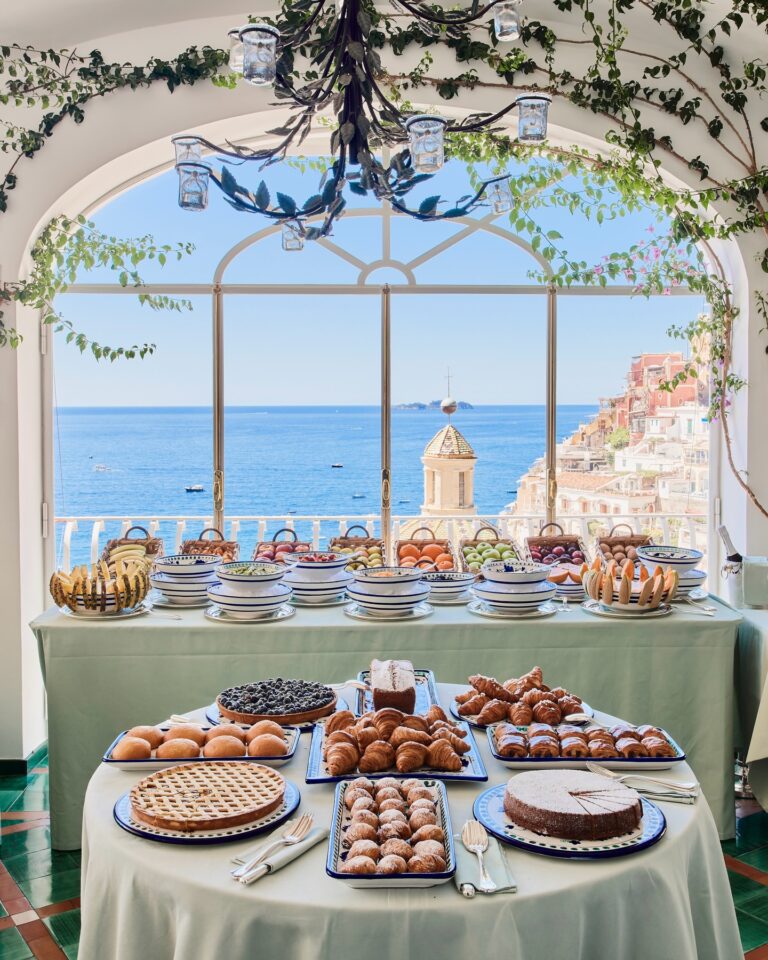
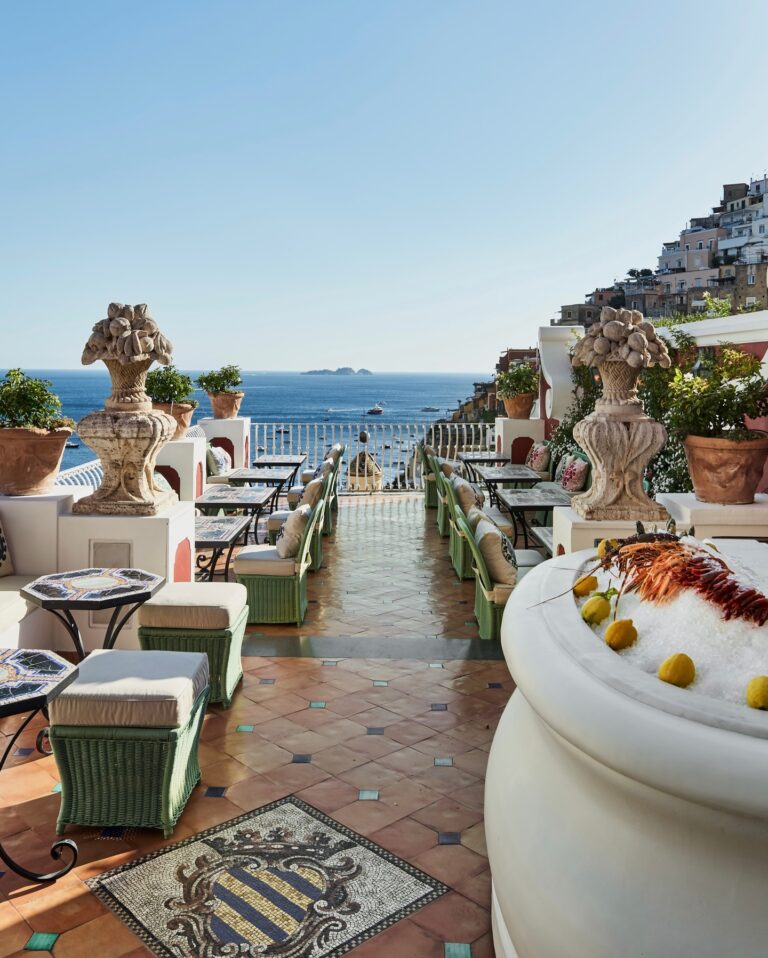
Dining at Le Sirenuse is deeply romantic and internationally acclaimed, directed by Executive Chef Gennaro Russo, who champions the bright, seasonal flavours of Campania. The culinary centrepiece is La Sponda, one of the most famously atmospheric dining rooms in Europe. Each evening, the restaurant is illuminated by exactly four hundred hand-lit candles. Set to the gentle melodies of a resident mandolin and guitar duo, guests enjoy refined Mediterranean gastronomy amidst climbing vines and soaring Moorish arches. For an unparalleled aperitif, Franco’s Bar is a vibrant, al fresco terrace suspended over the sea. Conceived as an homage to the late Franco Sersale, it features a striking neo-Baroque fountain and a strict ‘no reservations’ policy, making it the most coveted sunset spot on the coastline. Alternatively, Aldo’s Cocktail Bar & Seafood Grill offers a more relaxed, Moroccan-inspired setting for oysters, crudo, and masterfully crafted cocktails also Don’t Worry Bar is an addition that Can’t be not mentioned.
Wellness
Designed by the renowned Italian architect Gae Aulenti, the Le Sirenuse Spa is a sleek, subterranean sanctuary of teak, white marble, and volcanic granite. It contrasts beautifully with the historic opulence of the hotel above. The spa offers an extensive programme of bespoke treatments, massages, and advanced skincare therapies, alongside a state-of-the-art fitness centre and a traditional bio-sauna.
Architecture & Design
The aesthetic of Le Sirenuse is entirely distinct from the sprawling, manicured resorts of the French Riviera; it is intimate, vertical, and intensely personal. The Pompeian red exterior is offset by brilliant white Moorish arches and terraces shaded by lemon trees. Inside, the hotel serves as a living gallery. The Sersale family has filled the public spaces with museum-worthy antique furniture, 18th-century Neapolitan paintings, Suzani textiles, and an impressive collection of contemporary art commissions that harmonise flawlessly with the historic surroundings.
Heritage & Philosophy
The philosophy of Le Sirenuse is rooted in the art of the Italian villeggiatura—the traditional, unhurried summer retreat. The Sersale family (currently Antonio and Carla Sersale) remain deeply involved in daily operations, ensuring the hotel retains the warmth and character of a private aristocratic home. The staff, many of whom have been with the hotel for decades, provide service that is highly intuitive, effortlessly warm, and deeply personal, devoid of corporate stiffness.
Facilities & Experiences
The beating heart of the hotel’s daytime culture is the legendary swimming pool terrace, framed by potted lemon trees and offering sweeping views of the coastline. To explore the coastline, the hotel maintains the Sant’Antonio, a beautifully restored vintage wooden boat. During the summer months, the hotel offers guests complimentary daily excursions along the dramatic Amalfi Coast, allowing them to swim in hidden coves and view the towering cliffs of Positano from the water. The hotel also curates exclusive cultural experiences, from private tours of local limoncello producers to bespoke ceramic workshops in nearby Vietri sul Mare. also in 2026 , Le Sirenuse opened Le Sirenuse Mare in Nerano, a separate beach club, restaurant and boutique on the Bay of Nerano. a private jetty , seaside terraces, restaurant, 32 sunbeds, 5 cabanas, boat transfers from Positano for hotel guests with confirmed bookings.
Why Plan a Trip Around Le Sirenuse?
If you are seeking the ultimate, unabashedly romantic Italian escape, Le Sirenuse is without equal. It is a property that engages all the senses: the scent of Eau d’Italie (the hotel’s bespoke fragrance) lingering in the corridors, the sight of the sun setting over the Tyrrhenian Sea from a private balcony, and the taste of flawless Neapolitan cuisine by candlelight. Staying here is not merely about visiting the Amalfi Coast; it is about stepping into the most elegant, cinematic version of the Italian dolce vita ever created.
Getting There
Positano is located on the Amalfi Coast in the Campania region. The nearest major hub is Naples International Airport (NAP), located approximately a 90-minute drive away. The concierge can arrange private chauffeured transfers winding along the iconic coastal road. Alternatively, during the summer, guests often choose to arrive by private water taxi or ferry into the Positano harbour, where porters are waiting to transfer luggage up the cliffside to the hotel.
Average Nightly Rate
Classic & Superior Rooms: approximately €1,000–€1,600 per night.
Deluxe Rooms: approximately €1,400–€2,200 per night.
Junior Suites: approximately €2,000–€3,000 per night.
Deluxe & Sea View Suites: approximately €2,800–€4,500 per night.
Signature Suites: approximately €4,000–€7,000+ per night.
The Sirenuse Suite: approximately €7,000–€10,000+ per night during the height of summer.
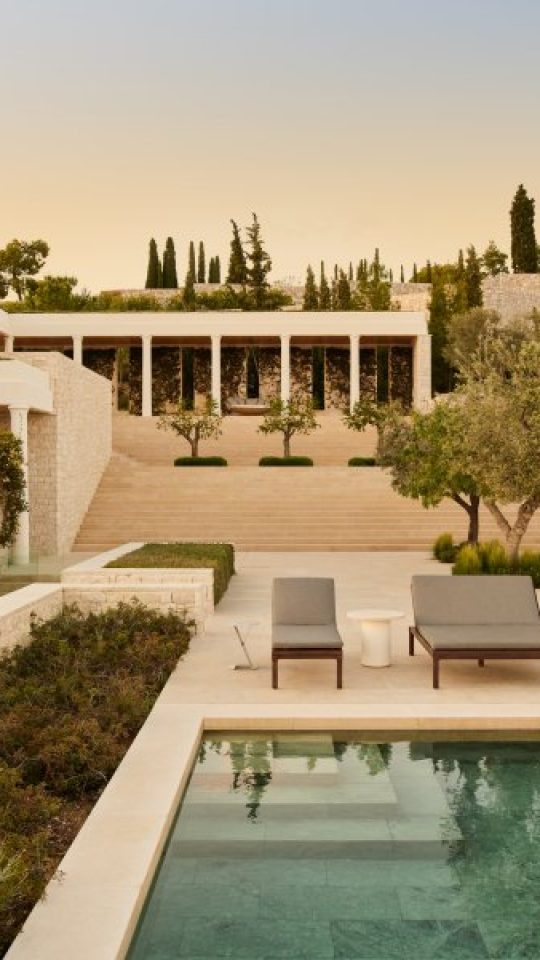
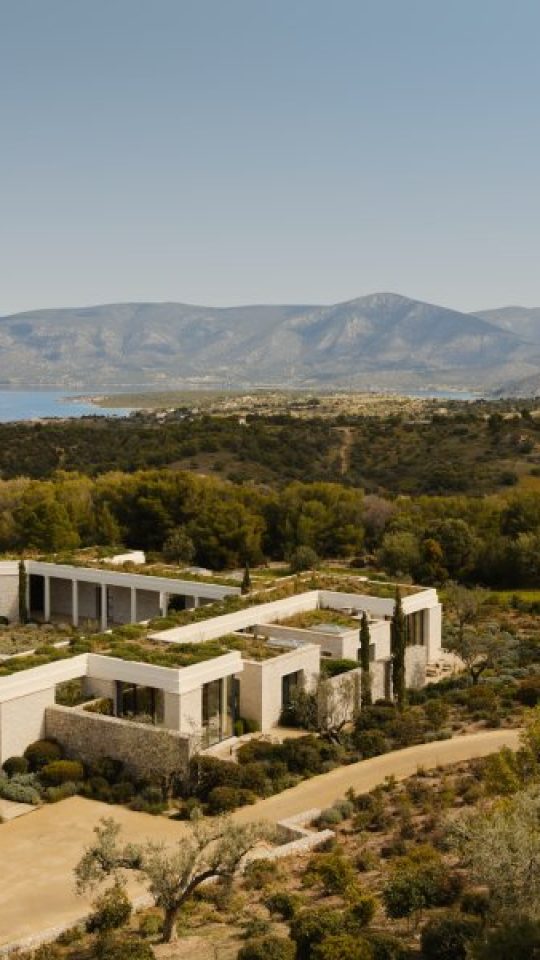
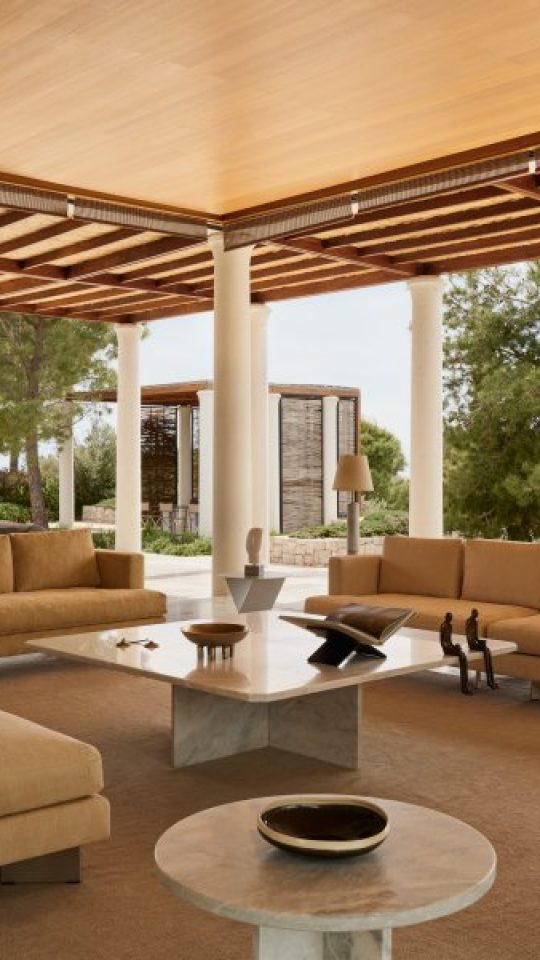
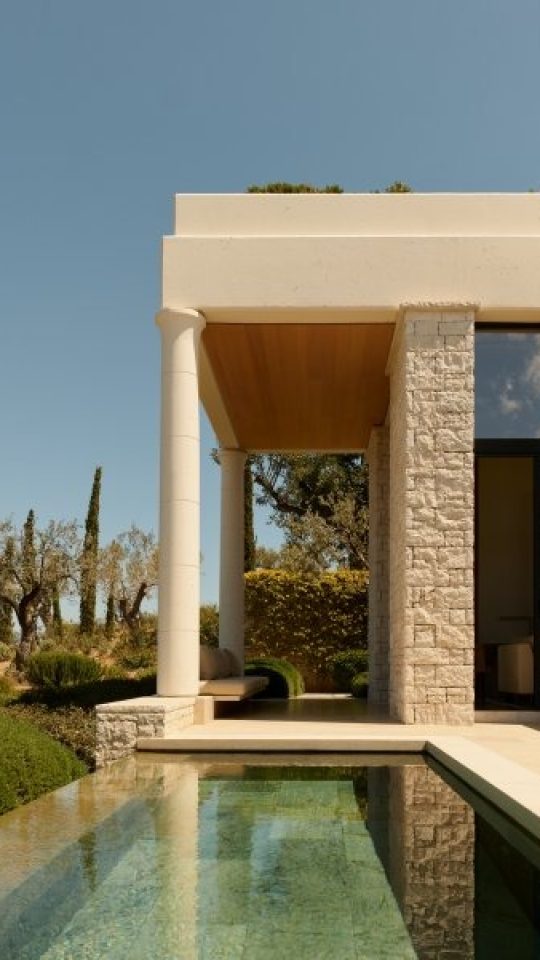
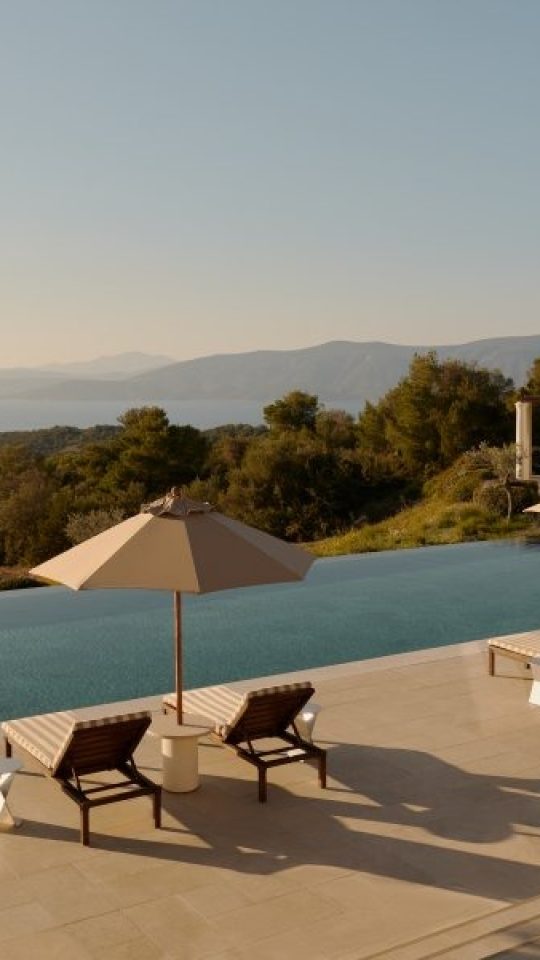
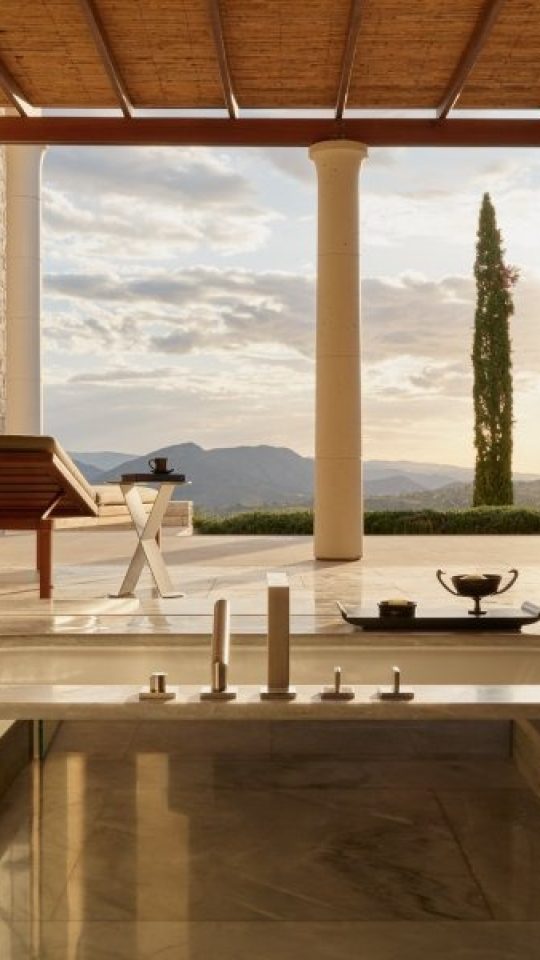
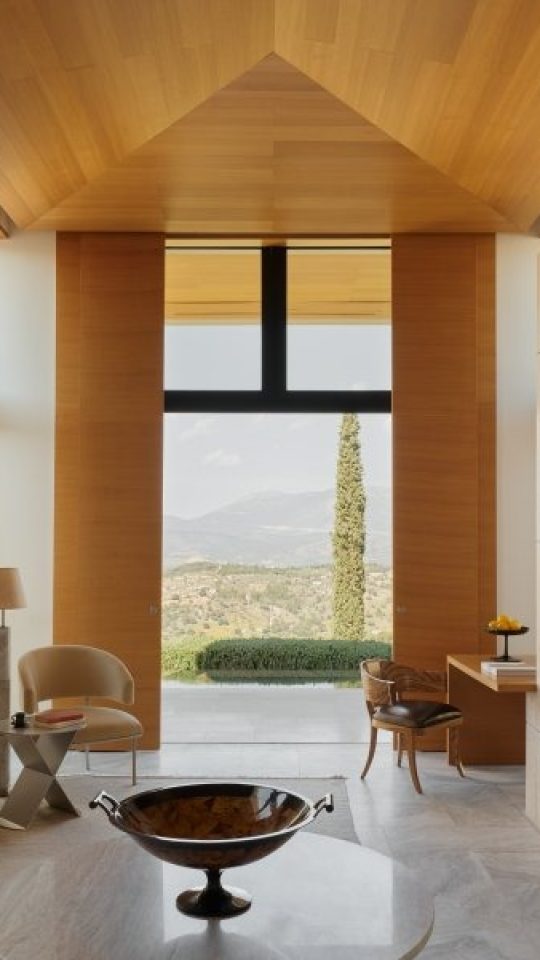
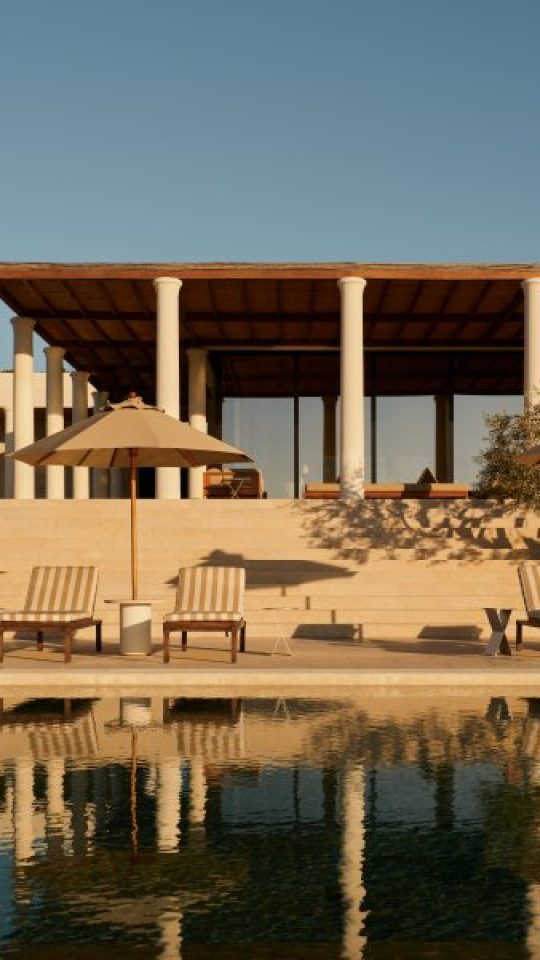
Images courtesy of Aman.
Amanzoe
Perched like a modern Acropolis atop a tranquil hill on the east coast of the Peloponnese, Amanzoe is a monumental sanctuary where ancient Grecian mythology meets uncompromising contemporary luxury. Surrounded by undulating olive groves and fragrant cypress trees, the property commands 360-degree panoramic views over the shimmering Argolic Gulf and the rugged mountainous landscape. Since its opening, Amanzoe has entirely redefined Greek hospitality. Trading the bustling energy of the islands for supreme space, architectural grandeur, and total seclusion, it operates as a sprawling, private Hellenistic kingdom that stands as one of the undisputed jewels in the Aman portfolio.
Accommodation
The resort is composed of 38 freestanding Pavilions and a collection of magnificent private Villas, all designed to maximise privacy and seamlessly integrate with the landscape. Drawing inspiration from classical Greek temples, the Pavilions are accessed via striking stone-walled courtyards and feature flat roofs adorned with fragrant lavender and rosemary. Inside, the aesthetic is one of calm, neutral minimalism—characterised by high ceilings, cool marble floors, and sliding glass walls that blur the line between indoor and outdoor living. Every single Pavilion features an expansive private terrace shaded by a pergola, alongside a private heated plunge pool (ranging from 6 to 12 metres) offering mesmerising views of either the Aegean Sea or the Peloponnese countryside. For those seeking absolute residential grandeur, the Amanzoe Villas are spectacular. Ranging from one to nine bedrooms, they are vast private estates with dedicated staff and private chefs. The crown jewel, Villa 20, Villa 20 is arranged across six levels, with nine bedrooms, 11 swimming pools, multiple dining spaces and its own private spa.
Dining
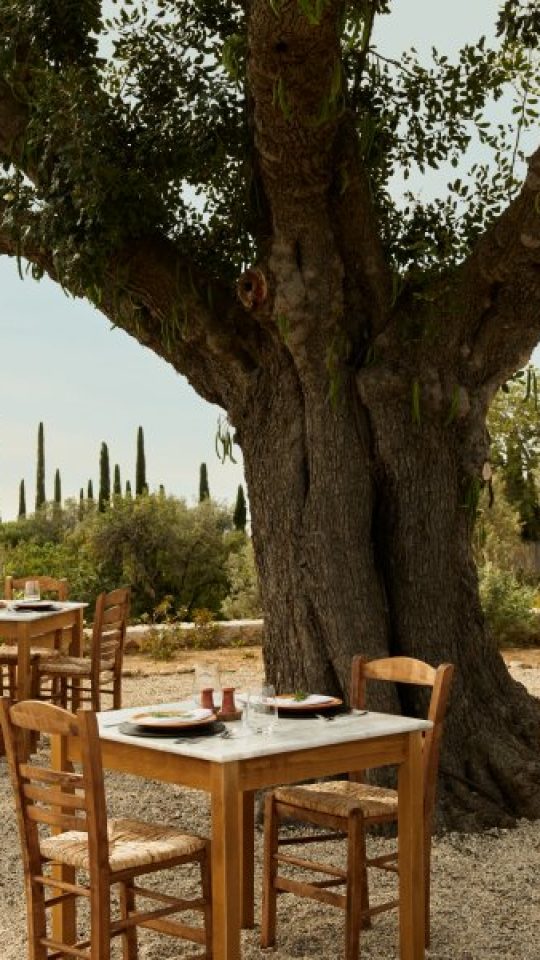
Dining at Amanzoe is deeply connected to the flavours, produce, and traditions of the Peloponnese, while giving guests a surprisingly broad choice of culinary styles across the resort. The Restaurant remains the gastronomic heart of the property, serving refined Greek and Mediterranean cuisine for breakfast and dinner, with seasonal ingredients sourced through Amanzoe’s network of local farmers, fishermen and producers. Its sweeping terraces overlook the Argolic Gulf, creating an especially atmospheric setting for the evening Greek degustation menu and wine pairings. For a completely different culinary direction, Akari brings Aman’s signature Japanese dining concept to the hilltop, serving refined washoku cuisine, sushi and sashimi against almost 360-degree views of the Aegean. At the Beach Club, Nura offers a more relaxed Mediterranean experience, drawing on Greek, Spanish and Italian influences through fresh seafood, seasonal mezze, pastas, pizzettes and charcoal-grilled dishes. The Pool Restaurant provides leisurely lunches beside the main swimming pool, centred on fresh fish, seasonal Greek specialities and produce grown in Amanzoe’s own organic garden. For an experience rooted even more deeply in local provenance, Bostani transforms ingredients from the resort’s farm into a curated Greek dinner, with each dish accompanied by stories of its regional origins. Completing the dining programme is The Bar, an elegant all-day gathering place for cocktails, local wines and light snacks, with its open terraces and firepit providing an atmospheric setting for sunset drinks.
Wellness
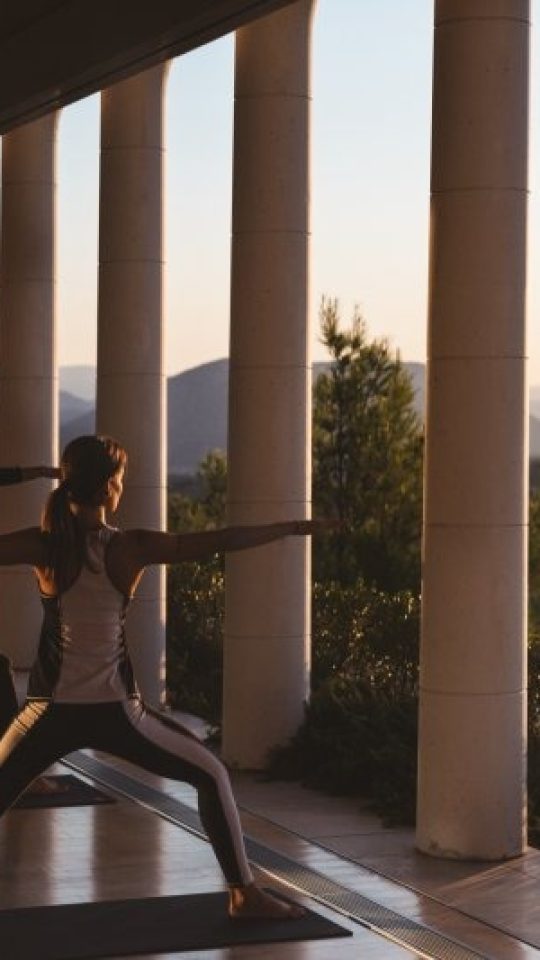
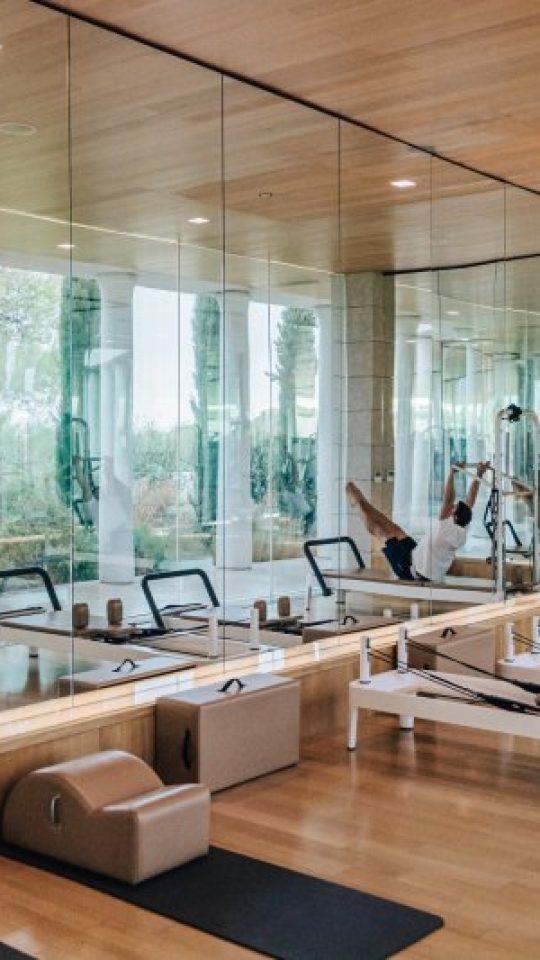
Regarded as one of the most comprehensive healing centres in Europe, the Aman Spa spans over 2,850 square metres and draws its philosophy directly from the ancient teachings of Hippocrates. The spa features an extensive hydrotherapy circuit, a Watsu pool, traditional hammams, and a spectacular outdoor Yoga Pavilion with sweeping views over the valley. Highly tailored treatment programmes incorporate local, natural ingredients such as cold-pressed olive oil, mountain herbs, and mineral-rich clay. Complementing the holistic therapies are a state-of-the-art fitness centre and a dedicated Pilates studio, ensuring a flawless balance of spiritual restoration and physical wellbeing.
Architecture & Design
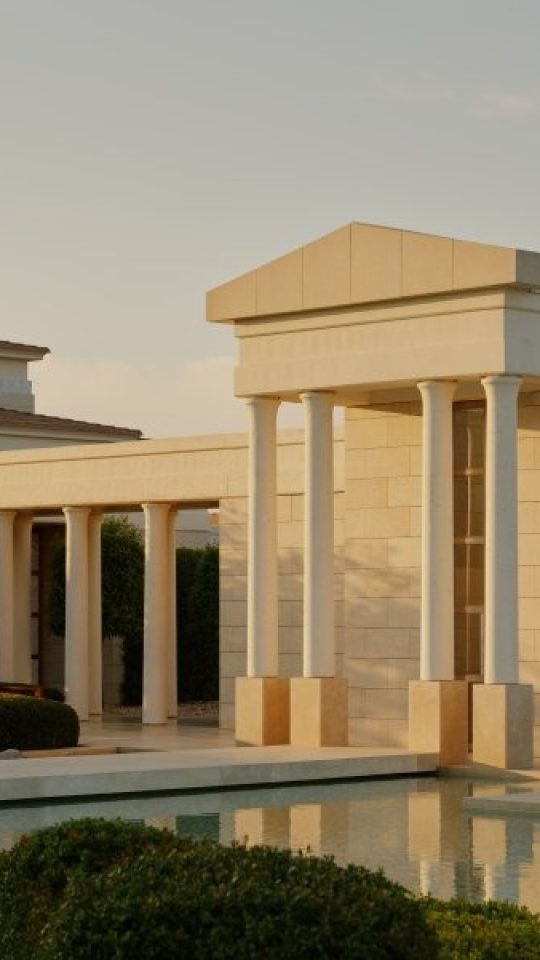
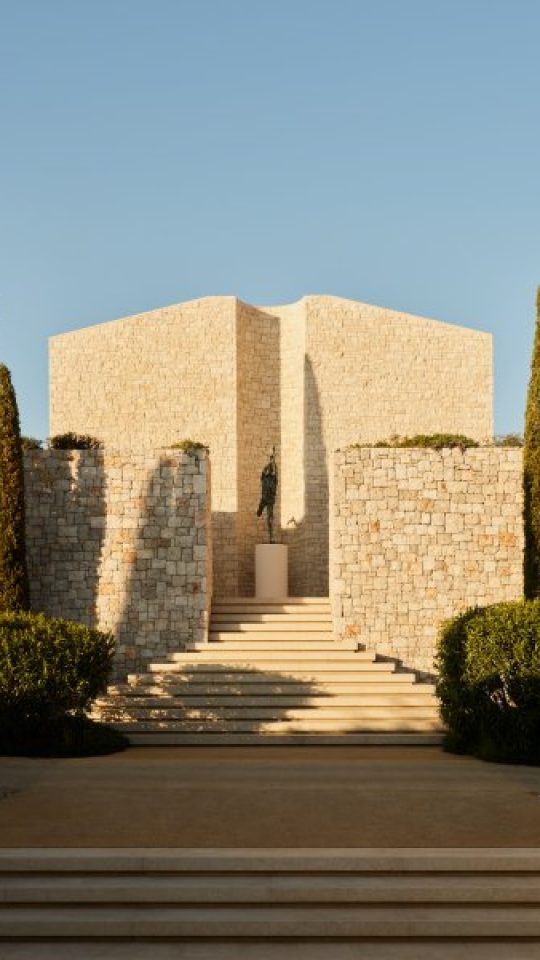
Amanzoe is widely considered one of the late architect Ed Tuttle’s finest masterpieces. The design is an unapologetic homage to ancient Greek architecture, reimagined through Aman’s lens of pared-back, contemporary minimalism. The layout of the resort is amphitheatrical, ensuring that the staggering views remain the focal point from every angle. Towering colonnades, monumental marble reflection pools, and perfectly symmetrical sightlines create a sense of awe from the moment guests step into the open-air arrival pavilion. Yet, despite its colossal scale, the use of warm local stone and endless olive trees grounds the property perfectly in its Mediterranean setting.
Heritage & Philosophy
While the physical structure borrows from antiquity, the philosophy of Amanzoe is distinctly Aman: it is about the ultimate luxury of space, silence, and frictionless service. The staff-to-guest ratio is exceptionally high, yet the service remains almost invisible—anticipatory, warm, and highly discrete. The property also serves as a gateway to Greece’s most significant cultural heritage. It lies within a short drive of UNESCO World Heritage sites, including the remarkably preserved ancient theatre of Epidaurus and the legendary citadel of Mycenae, allowing guests to effortlessly blend ultimate relaxation with profound historical discovery.
Facilities & Experiences
Though perched high on a hill, Amanzoe offers a phenomenal coastal experience via its Private Beach Club. Located a short, ten-minute chauffeured drive down a winding, pine-scented road, the club is set within a secluded, sheltered bay. two 25-metre lap pools, a teenage pool and a children’s pool, expansive lounging decks, and complimentary non-motorised water sports on the crystal-clear Aegean. Guests can also reserve private beach cabanas for the day. From the Beach Club, the resort’s fleet of private high-speed watercraft stands ready to whisk guests away on bespoke island-hopping excursions. The chic, car-free islands of Hydra and Spetses are just a short boat ride away, offering picturesque harbours, historic sea-captains’ mansions, and vibrant coastal tavernas.
Why Plan a Trip Around Amanzoe?
To stay at Amanzoe is to experience Greece at its absolute, most elevated pinnacle. There is simply no island resort that can match the sheer architectural scale, the immense privacy of the Pavilions, and the flawless execution of service found here. Whether waking up to watch the sunrise over the Aegean from your private terrace, experiencing a Watsu therapy session, or returning by private speedboat from an afternoon in Spetses, Amanzoe delivers a mythic, unforgettable standard of Mediterranean luxury.
Getting There
Amanzoe is situated in Porto Heli on the eastern coast of the Peloponnese. For international arrivals, it is approximately a two-and-a-half-hour scenic drive from Athens International Airport (ATH). For the ultimate arrival experience, the resort maintains its own private helipad; a helicopter transfer from Athens reduces the journey to a spectacular 25-minute flight over the Saronic Gulf.
Average Nightly Rate
Pool Pavilions: approximately €1,500–€2,500 per night.
Pool Pavilions with Sea Views: approximately €1,800–€3,000 per night.
Deluxe Pool Pavilions: approximately €1,800–€3,200 per night.
Deluxe Pool Pavilions with Sea Views: approximately €2,000–€3,500 per night.
Beach Pavilions: approximately €2,000–€3,500 per night during the main season.
One- & Two-Bedroom Villas: approximately €4,500–€7,000+ per night.
Four- & Five-Bedroom Villas: approximately €6,000–€10,000+ per night.
Six-Bedroom Villas: approximately €8,000–€14,000+ per night.
Villa 20: from approximately €15,000 per night, with peak-season pricing potentially considerably higher depending on the dates and booking requirements.
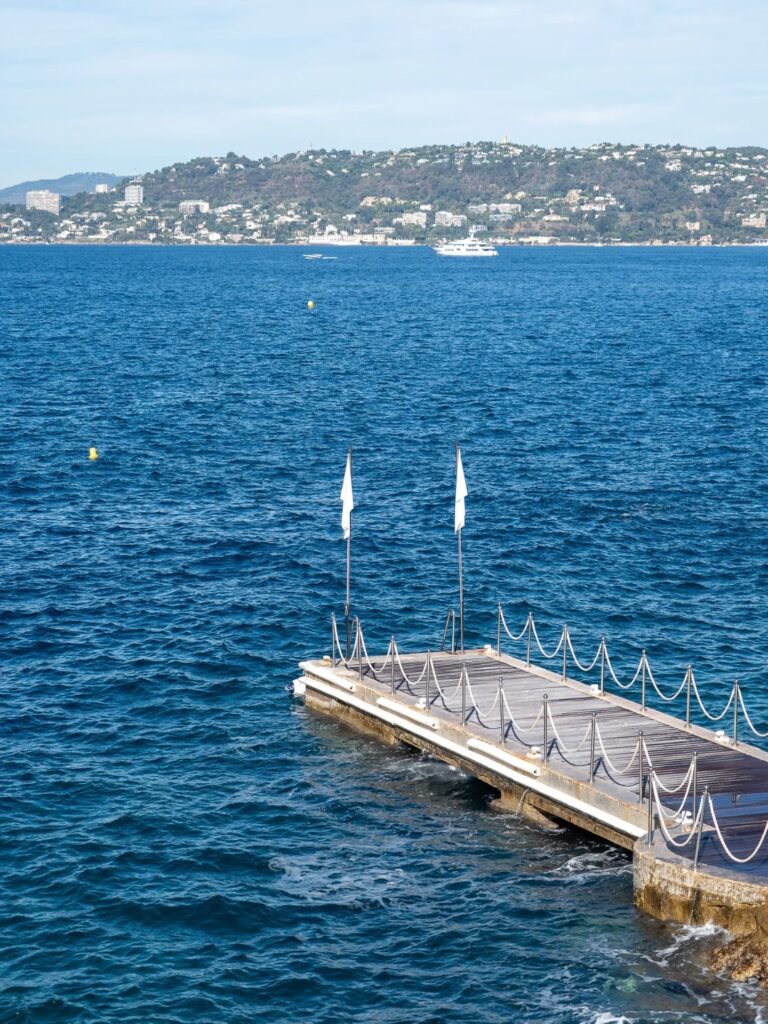
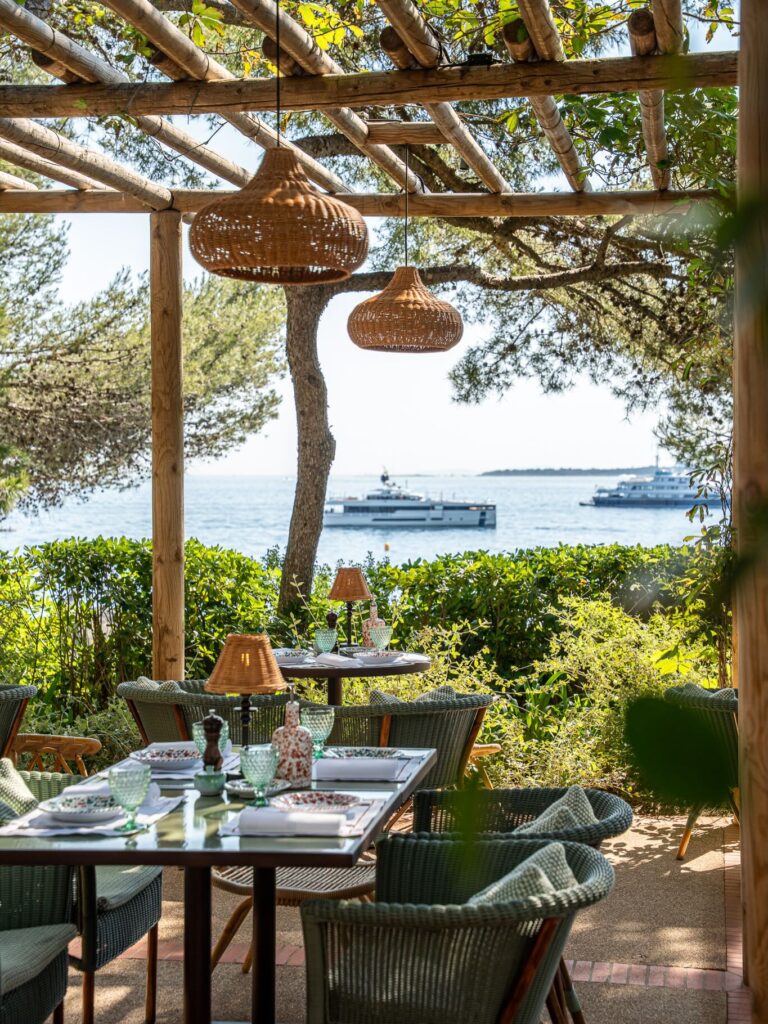
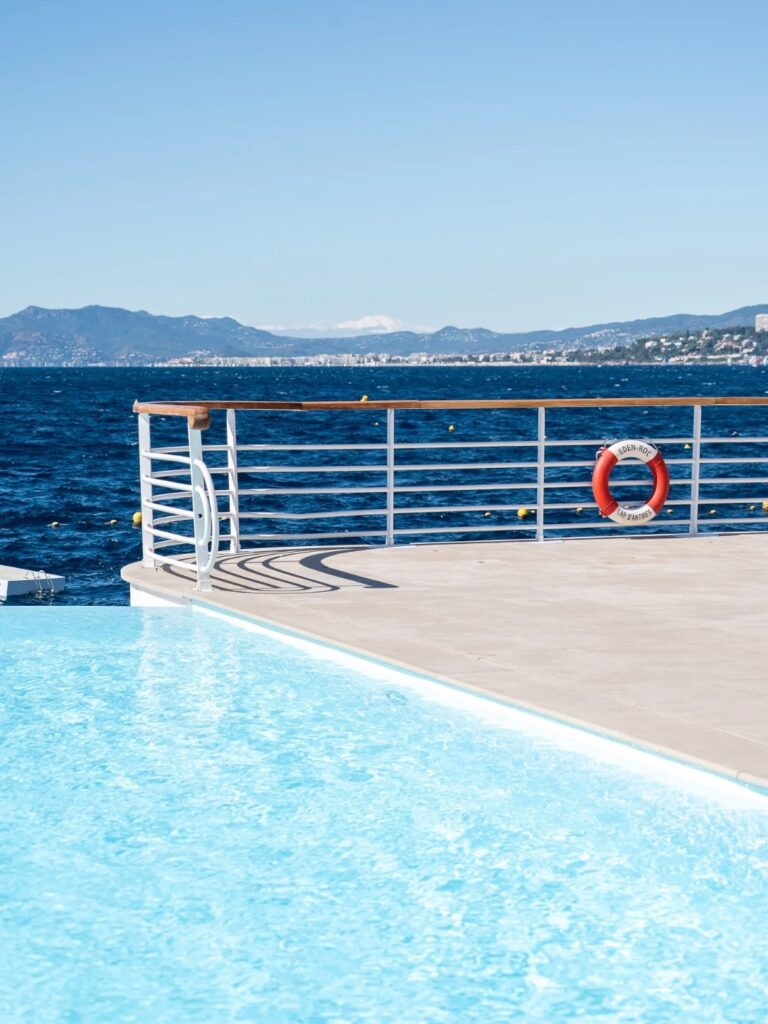
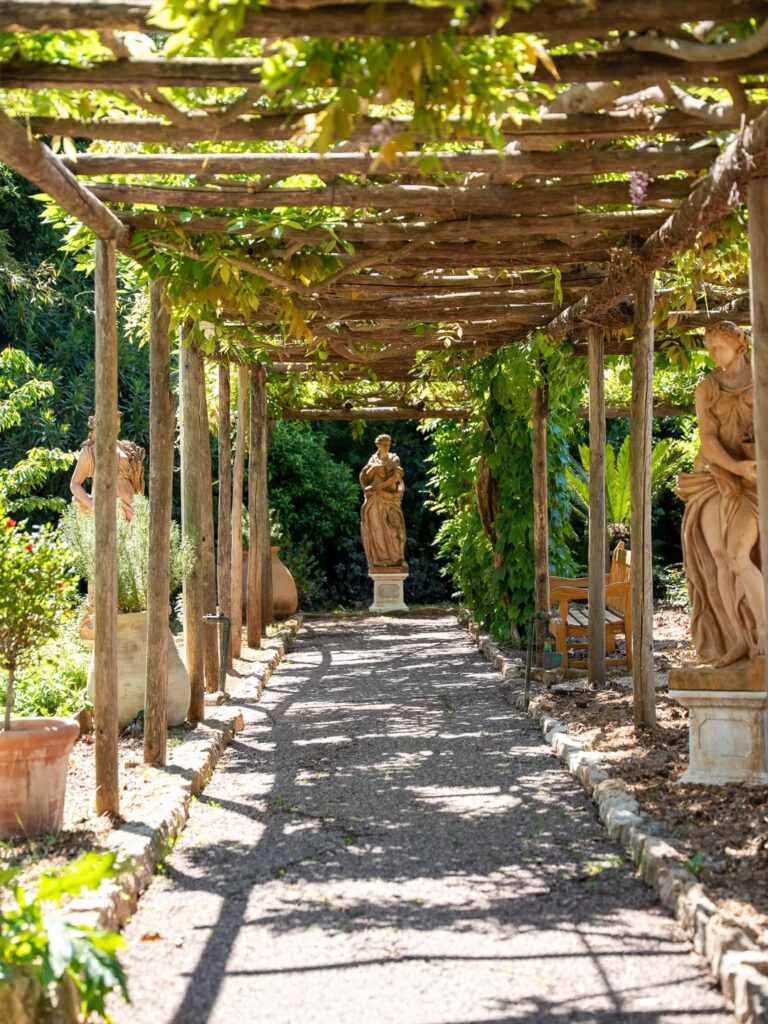
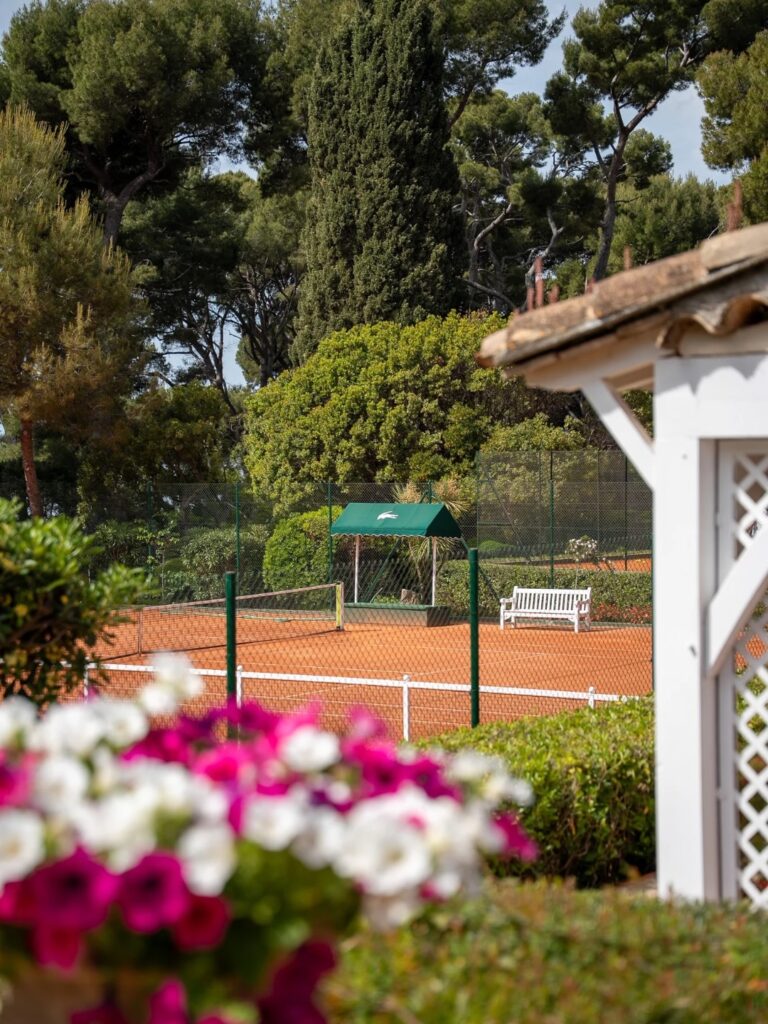
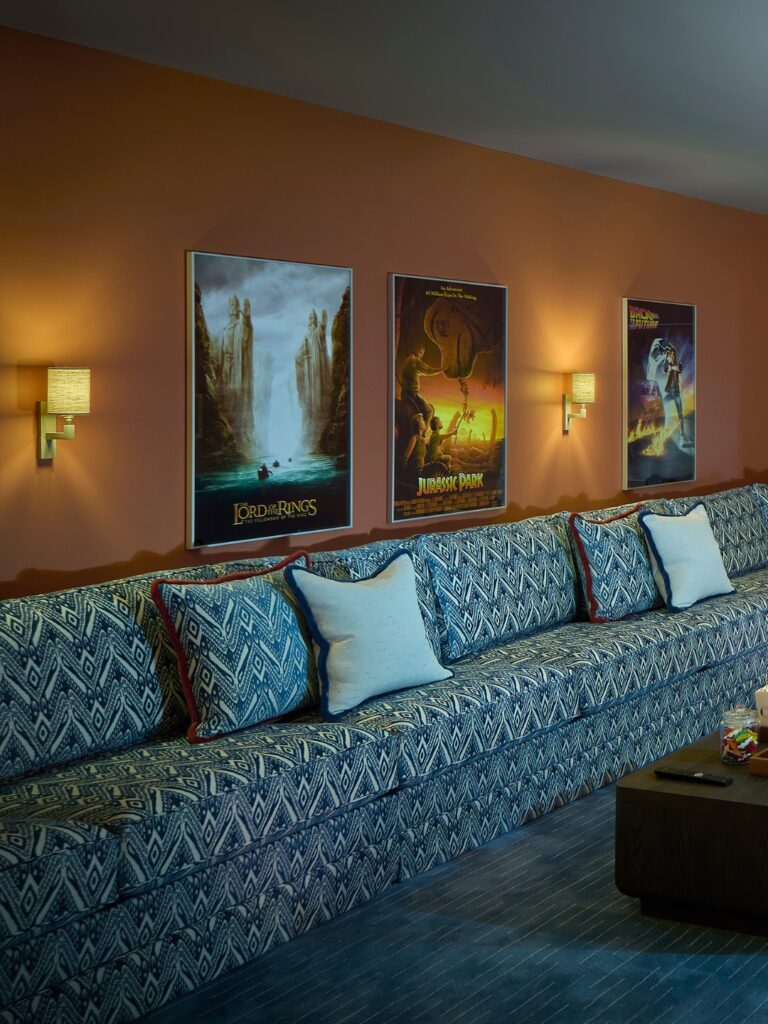
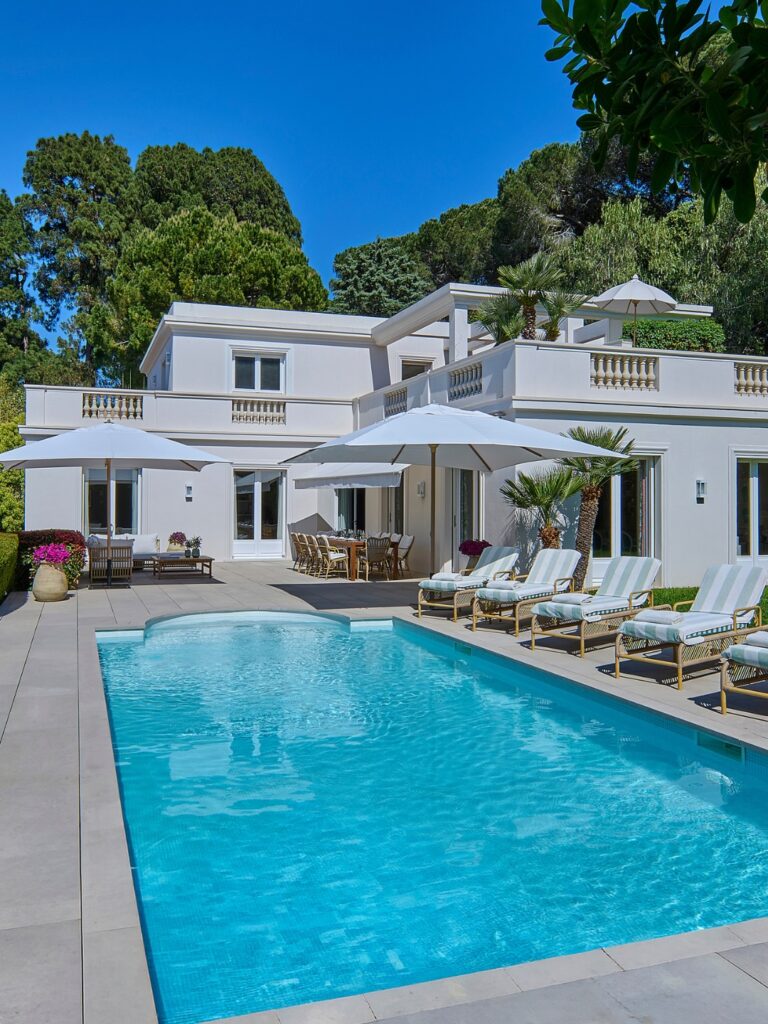
Images courtesy of Hôtel du Cap-Eden-Roc Via instagram.
Hôtel du Cap-Eden-Roc
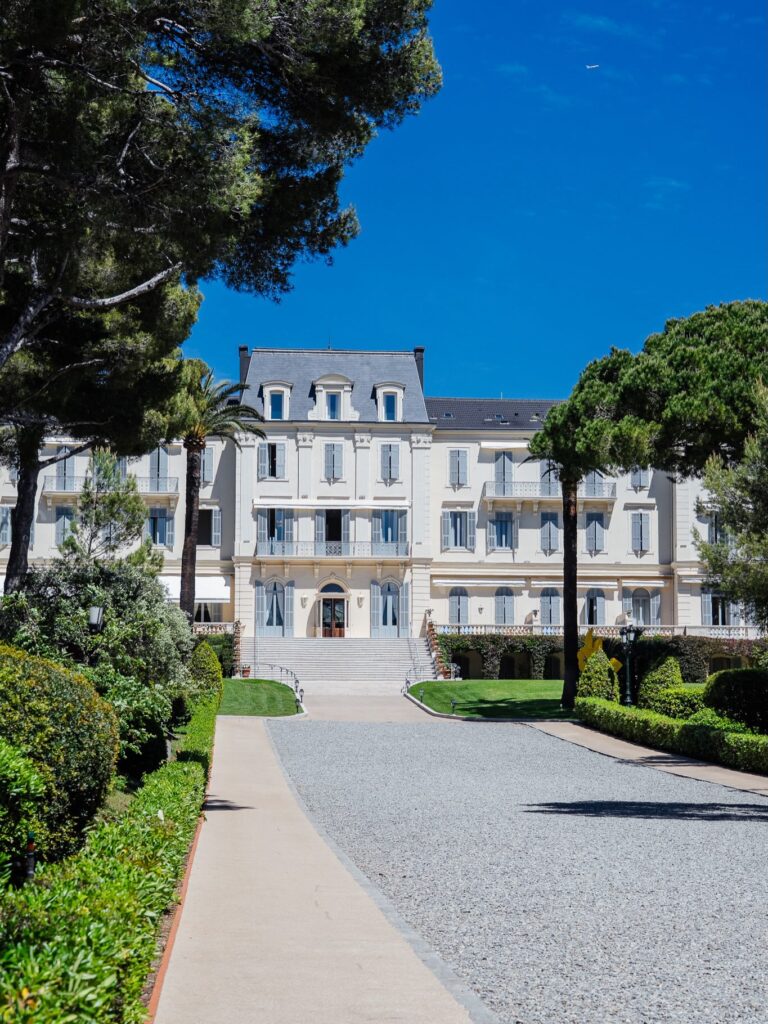
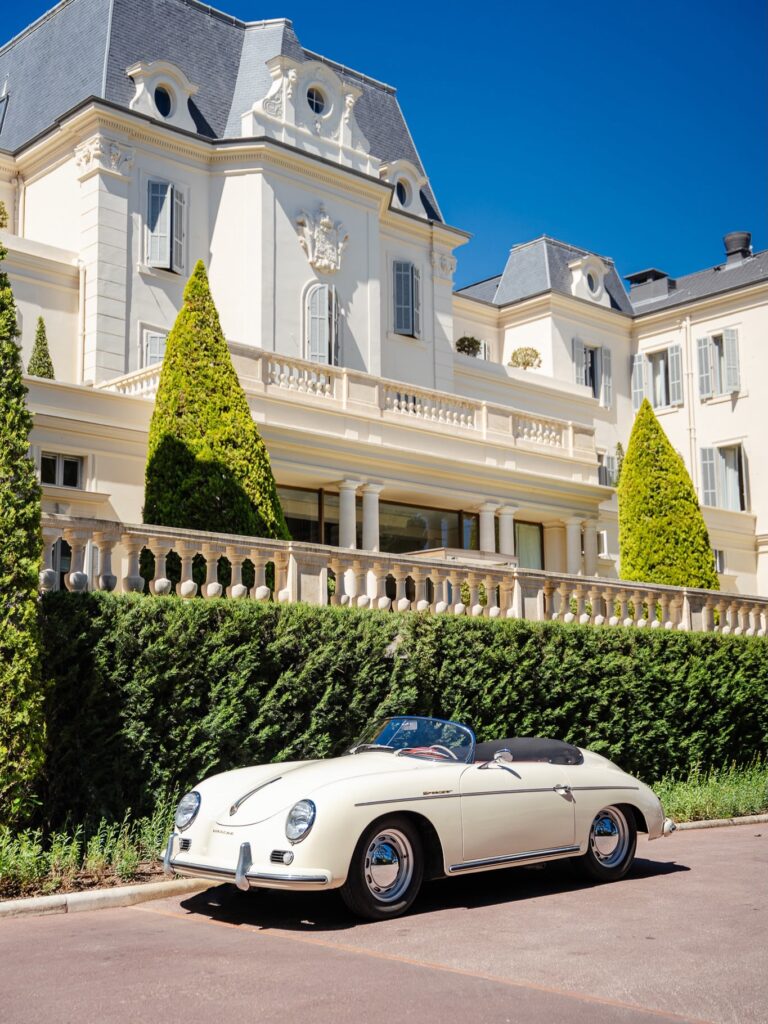
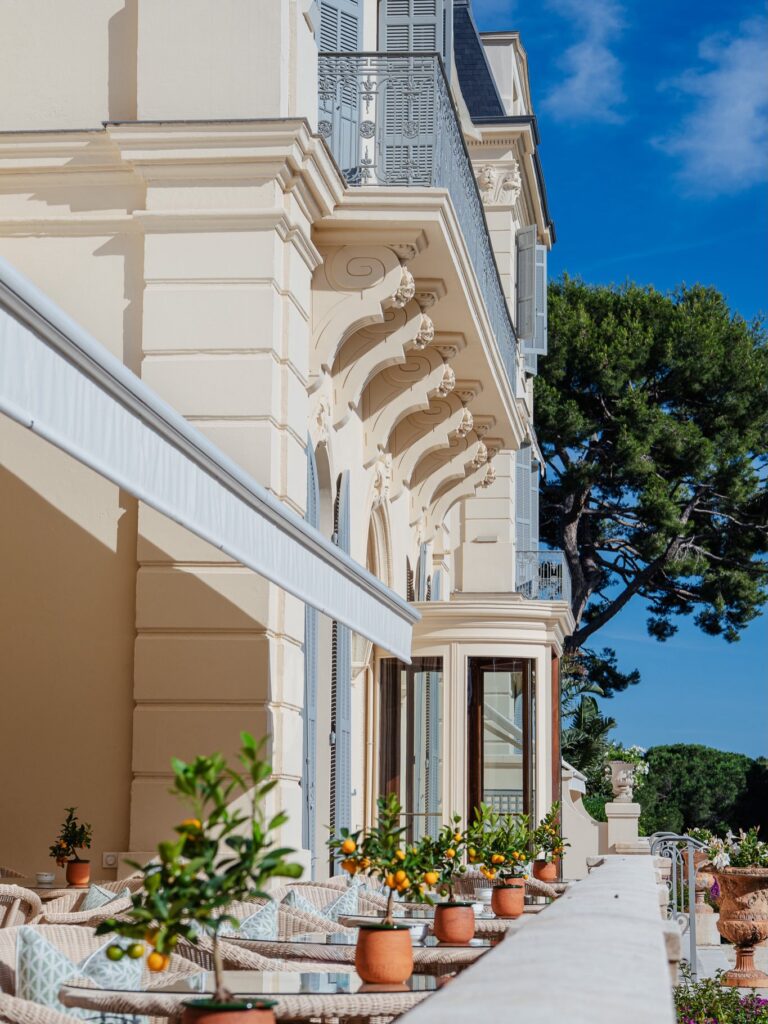
Perched on the southernmost tip of Cap d’Antibes amidst nine hectares of landscaped gardens and Aleppo pines, Hôtel du Cap-Eden-Roc is widely regarded as the spiritual home of French Riviera glamour. Originally conceived in 1868 by Hippolyte de Villemessant (founder of Le Figaro) as Villa Soleil—a sanctuary for writers and artists—the property opened as a grand hotel in 1870. Transformed under the legendary stewardship of the Sella family and later acquired by the Oetker Collection, it has spent over 150 years hosting royalty, Hollywood icons, and literary titans. From F. Scott Fitzgerald, who immortalised it as ‘Hôtel des Étrangers’ in Tender Is the Night, to Pablo Picasso, Ernest Hemingway, and Elizabeth Taylor, this estate remains an unchallenged benchmark of private, aristocratic luxury on the Mediterranean.
Accommodation
The property offers 111 rooms and suites distributed across three distinct structures: the historic Villa Soleil, the seaside Eden-Roc Pavilion, and the discreet Les Deux Fontaines residence. Redesigned with understated Riviera elegance by interior architects Bergit Gräfin Douglas and Patricia Anastassiadis, the accommodations blend subtle floral chintzes, pastel silks, custom brass accents, and expansive marble bathrooms. For those desiring absolute residential seclusion, the hotel boasts a collection of private luxury villas hidden within the pine forest. Villa Eleana offers three bedrooms, a private swimming pool, and a dedicated butler team, while Villa Sainte-Anne and Villa Les Cèdres provide sprawling private grounds, private spa facilities, and unmatched views across the Lérins Islands.
Dining
The culinary programme at Hôtel du Cap-Eden-Roc has entered a new chapter under Executive Chef Sébastien Broda, whose contemporary approach to Mediterranean and Provençal cuisine places the region firmly at the centre of the dining experience. The gastronomic centrepiece is Louroc Restaurant, awarded one Michelin star and open exclusively for dinner. Set within the Eden-Roc Pavilion, the restaurant combines exceptional regional produce with refined, contemporary cooking, creating an elegant expression of the Côte d’Azur through carefully sourced ingredients and an atmosphere of understated sophistication. For breakfast and lunch, Eden-Roc Restaurant occupies a spectacular seaside setting overlooking the Mediterranean, offering a more relaxed interpretation of Riviera dining throughout the day. Eden-Roc Grill provides the quintessential summer experience, with its expansive terrace facing the sea and a menu built around Mediterranean flavours, fresh seafood, grilled specialities and international classics in a convivial, sun-drenched setting. Completing the current programme, Giovanni’s introduces a more contemporary Italian influence to the estate, broadening the culinary offering while maintaining the hotel’s connection to the Mediterranean. Together, the four restaurants reflect the property’s renewed gastronomic identity: distinctly French Riviera in spirit, rooted in exceptional local produce, yet broad enough to encompass the relaxed, international character of a legendary summer palace.
Wellness
Wellness at the hotel is anchored by the Dior Spa Eden-Roc, a harmonious partnership uniting two historic French institutions. Situated within the scented gardens, the spa features four indoor treatment rooms alongside bespoke outdoor treatment cabanas set beneath a canopy of Aleppo pines. Treatments blend Dior’s high-performance skincare science with holistic therapies inspired by the Mediterranean landscape. Facilities include a traditional sauna, steam bath, sensory showers, and a state-of-the-art fitness centre. For sports enthusiasts, the hotel maintains five immaculate red-clay tennis courts nestled within the pine grove, staffed by resident professionals.
Architecture & Design
The architectural narrative of Hôtel du Cap-Eden-Roc is a celebration of 19th-century Napoleon III elegance seamlessly integrated into wild coastal topography. The pristine white facade of Villa Soleil stands proudly at the head of the Grand Allée—a wide, gravelled boulevard lined with towering pine trees that rolls dramatically down towards the water. The Eden-Roc Pavilion, perched directly over the waves, embraces a lighter, maritime aesthetic with wrought-iron balconies and wide sun terraces. The defining design landmark, however, is the legendary seawater infinity pool, carved directly into the rugged basalt rockface in 1914a engineering feat that forever changed coastal resort architecture.
Heritage & Philosophy
The philosophy of Hôtel du Cap-Eden-Roc revolves around the preservation of timeless privacy and unscripted discretion. It is a house of traditions: for decades, the hotel accepted payment only in cash or cheques to maintain an ultra-exclusive, private club atmosphere, and to this day, it remains fiercely protective of its guests’ anonymity. The hotel’s history is inextricably bound to modern cultural mythology. It was here that Slim Aarons captured his iconic photographs of high society lounging by the diving board, where Chagall painted in his suite, and where the Cannes Film Festival’s most legendary private dinners take place every spring. The service operates with old-world reverence, ensuring every guest feels part of an unbroken 150-year legacy.
Facilities & Experiences
The property’s facilities are unmatched along the Côte d’Azur. The heartbeat of summer life is found in the 33 Private Sea Cabanas, carved into the rocks and tucked among the pines along the cliffside. Having hosted everyone from Winston Churchill to the Kennedy family, these cabanas serve as private day retreats with personal waiter service, sun loungers, and direct sea access. For water enthusiasts, the hotel features famous rustic wooden diving boards and a trapeze suspended directly over the Mediterranean, allowing guests to leap into the crystalline waters below. The hotel’s private pontoon accommodates deep-water yacht dockings, private water-skiing sessions, and bespoke boat transfers to Cannes, Saint-Tropez, or the Lérins Islands.
Why Plan a Trip Around Hôtel du Cap-Eden-Roc?
Hôtel du Cap-Eden-Roc is not merely a place to stay while visiting the French Riviera; it is the physical embodiment of the Riviera itself. There is no other estate in Europe that possesses such an extraordinary concentration of literary history, Hollywood glamour, and natural grandeur. To walk down the Grand Allée, spend the afternoon in a private cliffside cabana, dive from the historic wooden boards into the sea, and dine under the stars at Louroc is to experience the single most iconic summer ritual in global luxury hospitality.
Getting There
Located on the tip of Cap d’Antibes between Cannes and Nice, the hotel is approximately a 30-minute drive from Nice Côte d’Azur Airport (NCE) and a 20-minute drive from Cannes Mandelieu Airport (CEQ) for private aviation. The concierge can coordinate private chauffeured transfers or direct helicopter landings at nearby helipads, followed by a private marine transfer directly to the hotel’s pontoon.
Average Nightly Rate
Classic & Superior Rooms: approximately €1,500–€2,300 per night.
Deluxe Rooms & Sea View Rooms: approximately €2,000–€3,200 per night.
Junior Suites: approximately €3,000–€4,500 per night.
Signature Suites & Residences: approximately €7,000–€15,000+ per night.
Private Villas: approximately €20,000–€40,000+ per night during peak summer periods.
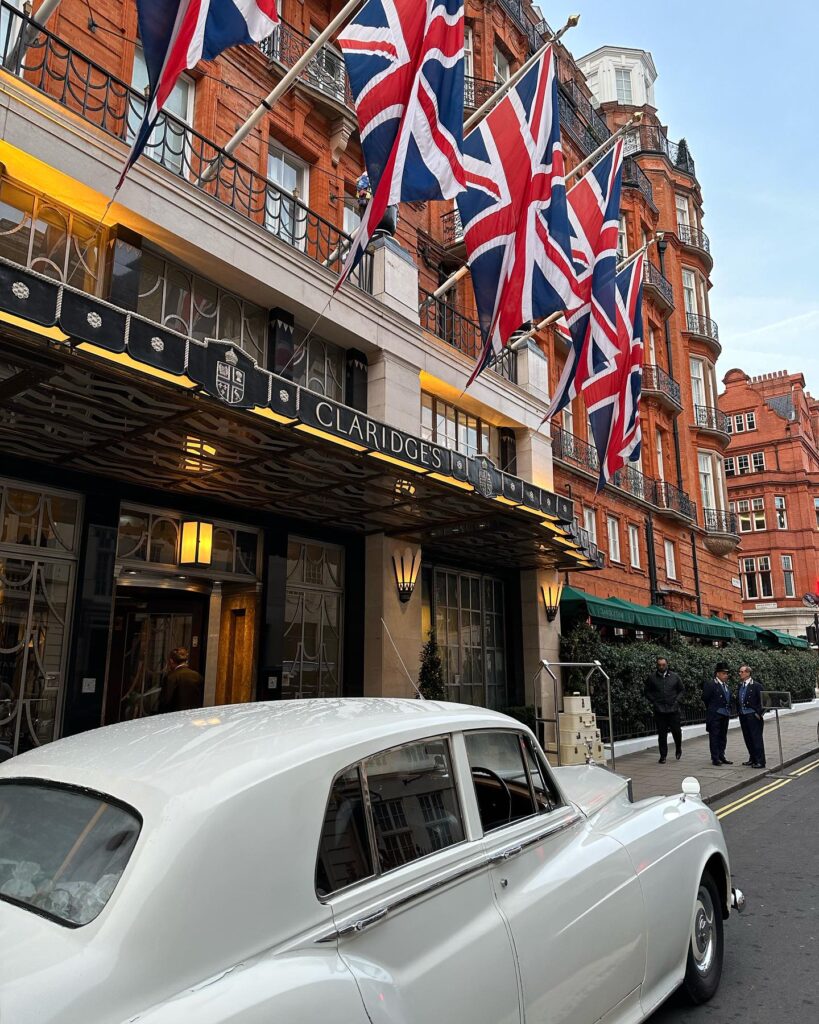
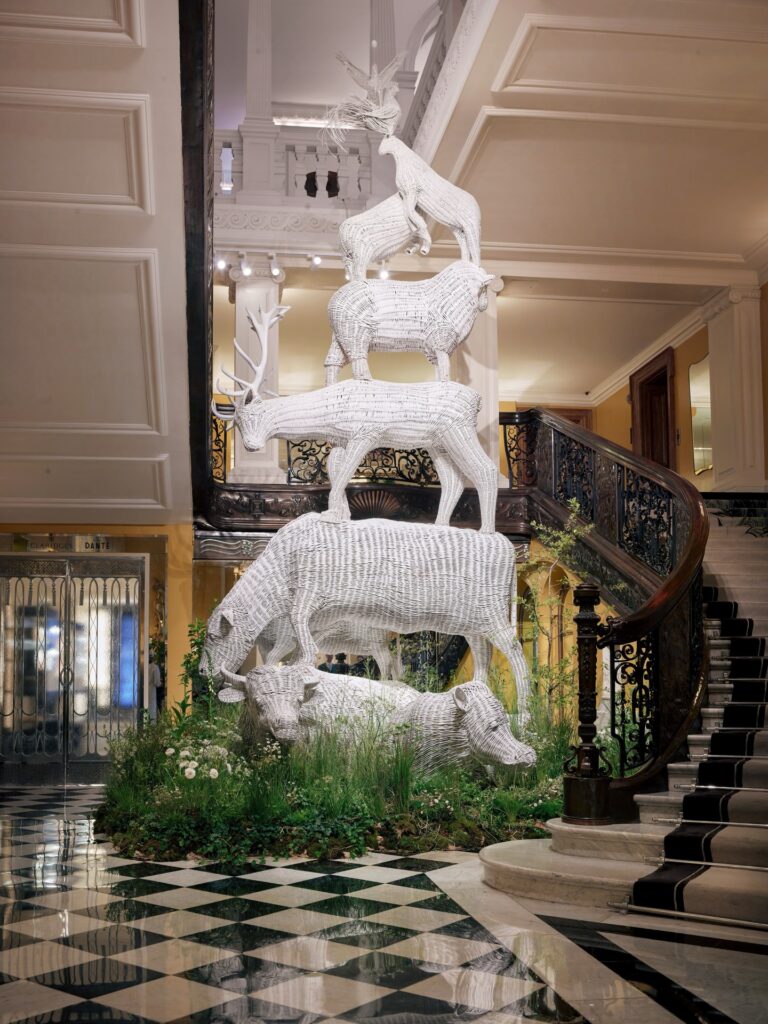
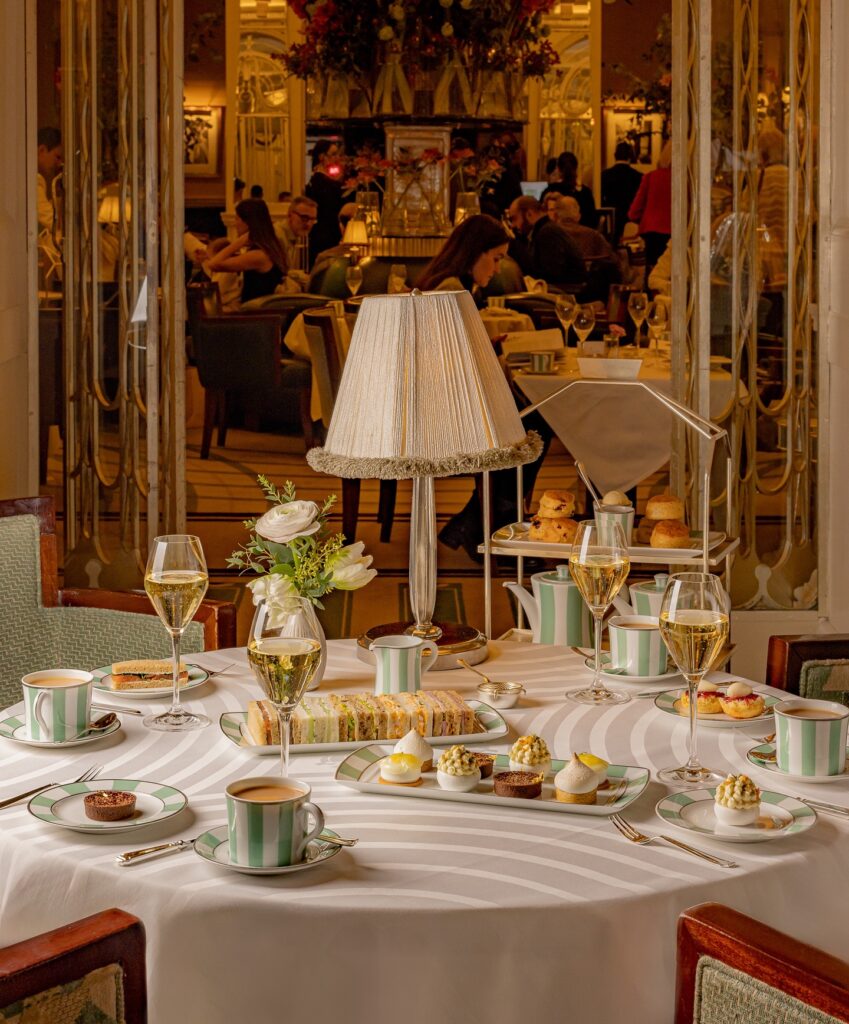
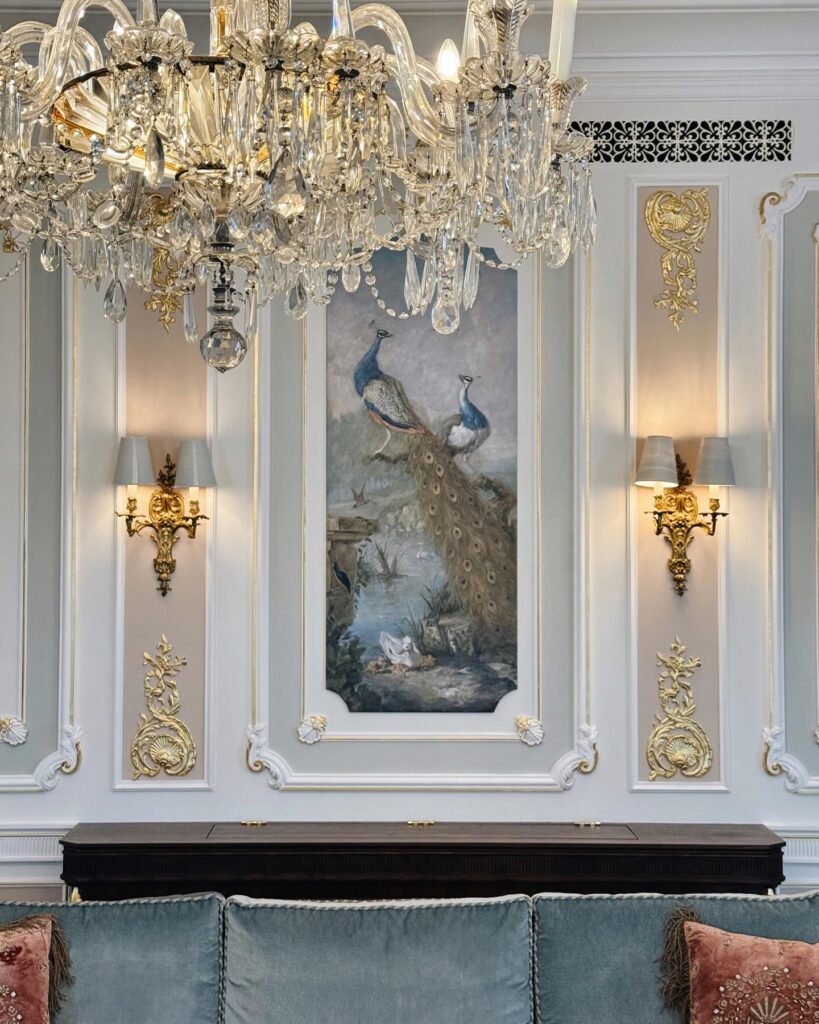
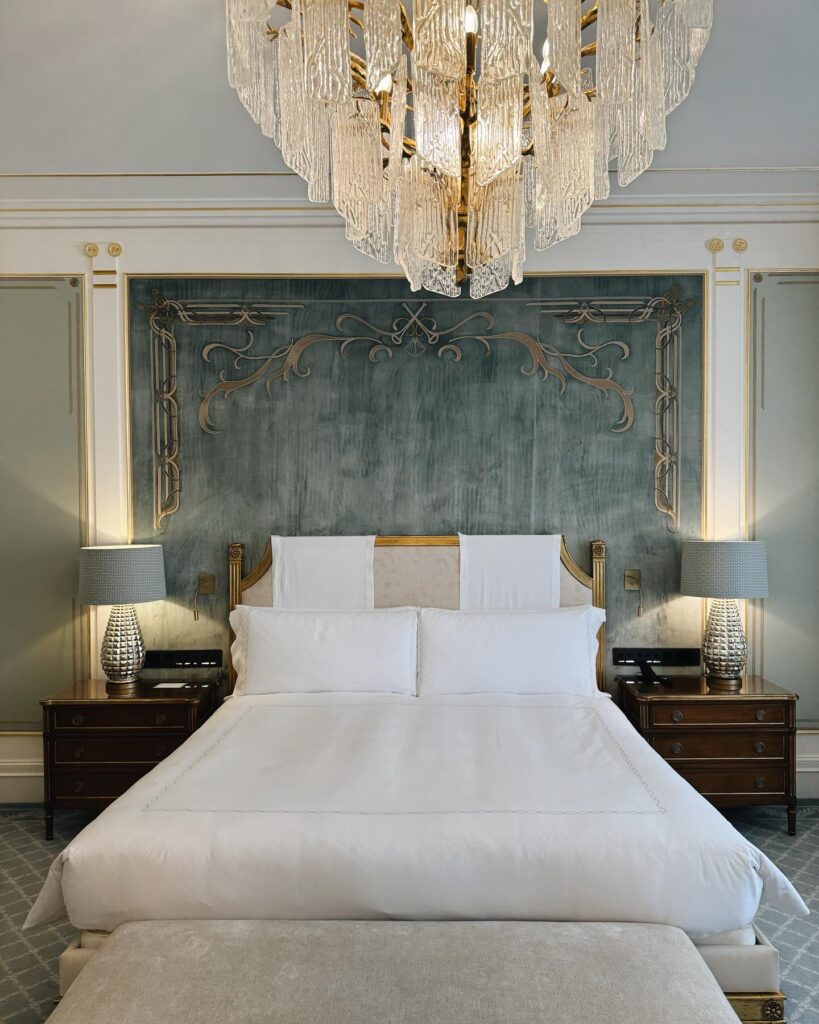
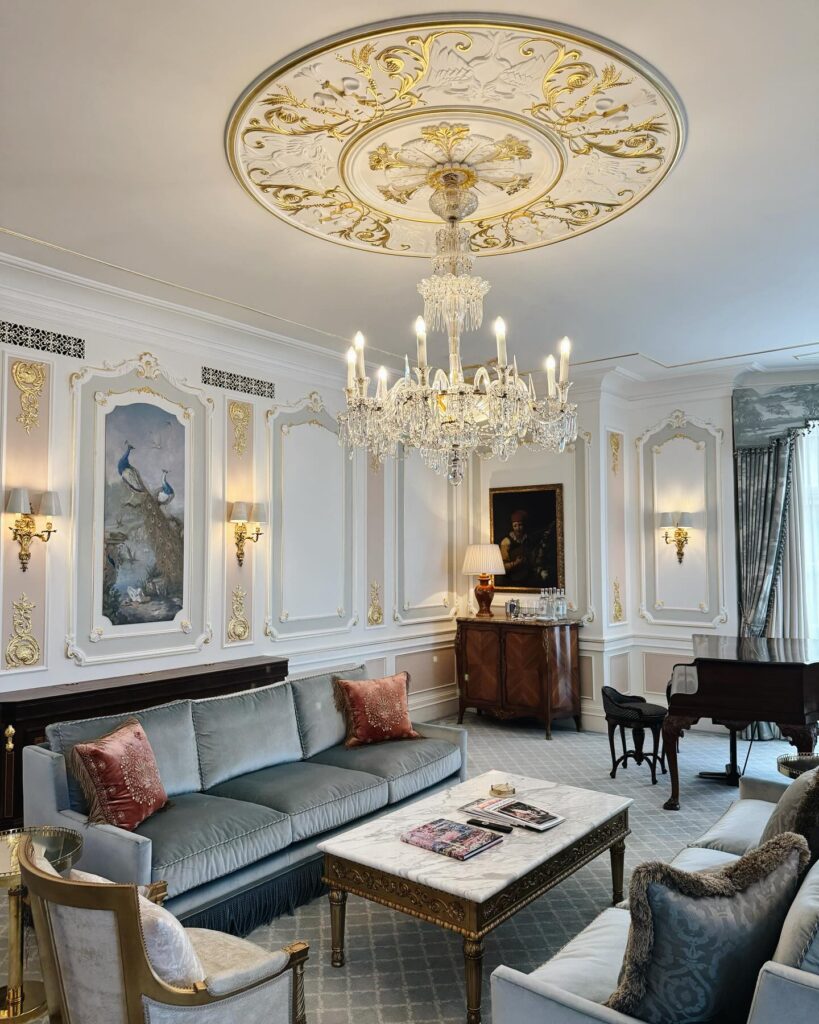
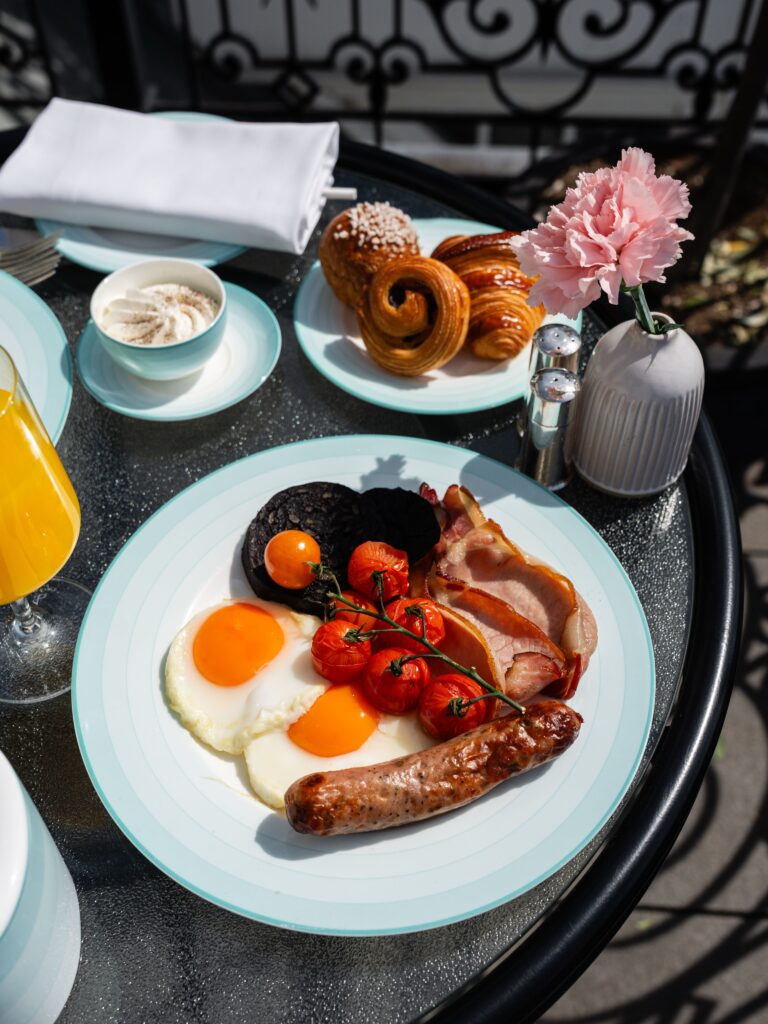
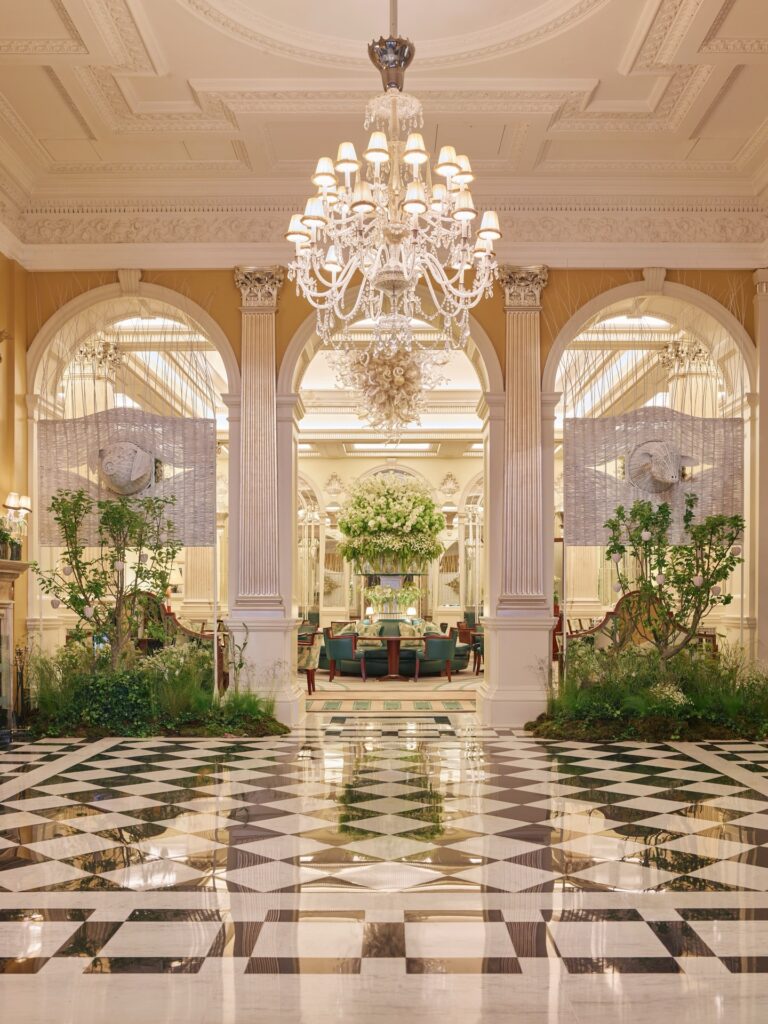
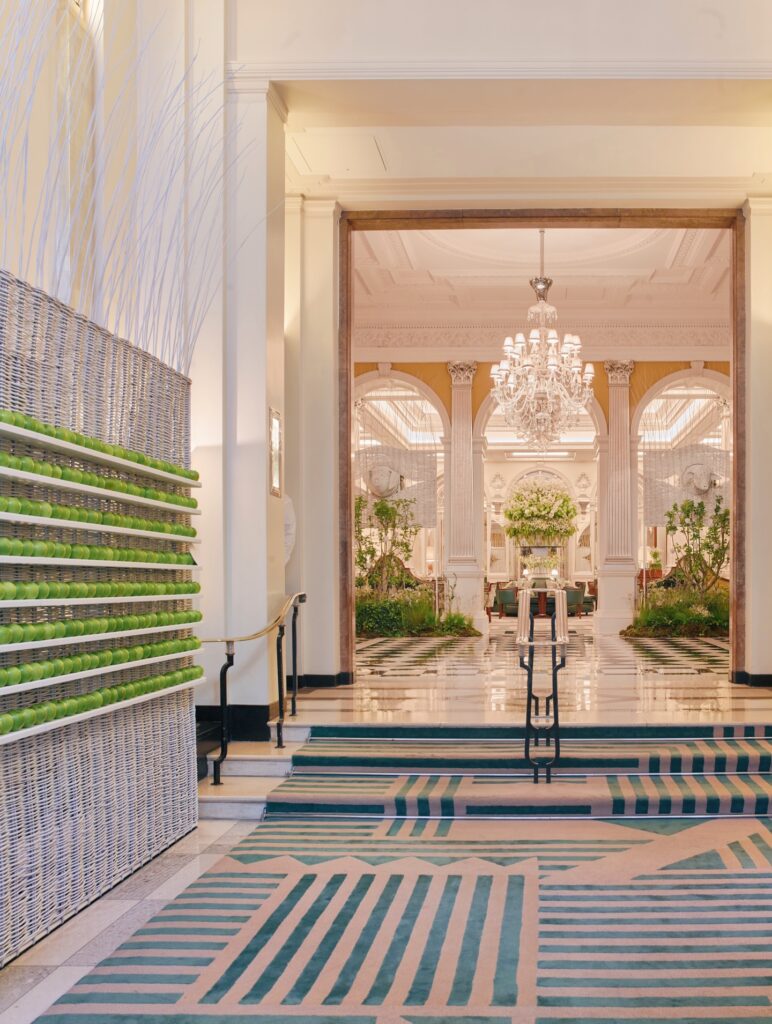
Images courtesy of Claridge’s via Instagram.
Claridge’s
Positioned on the corner of Brook Street and Davies Street in the heart of Mayfair, Claridge’s is not simply a five-star hotel; it is an enduring institution of British high society. Known affectionately for generations as the ‘annex to Buckingham Palace’, the hotel has seamlessly blended grand Victorian opulence with striking Art Deco glamour since the 19th century. Managed by the Maybourne Hotel Group, Claridge’s remains the undisputed epicentre of London luxury. From its famously discrete, unflappable service to its legendary afternoon tea and newly unveiled subterranean spa, this property represents the absolute zenith of grand English style and timeless elegance.
Accommodation
The 190 rooms and suites at Claridge’s are a masterclass in bespoke craftsmanship, with each key offering a distinct expression of either traditional Victorian heritage or sleek 1920s Art Deco geometry. To maintain its exacting standards, the hotel regularly collaborates with world-renowned designers—including Guy Oliver, Viscount Linley, and Diane von Furstenberg—to individually curate its spaces. For the ultimate Mayfair residence, the Signature Suites are globally renowned. The Royal Suite is a celebration of classic English grandeur, draped in rich silks, classical motifs, and antique furnishings, echoing the aesthetic of an aristocratic townhouse. Conversely, the Art Deco Suites feature sweeping, mirrored lines, polished chrome, and original 1920s features. At the very pinnacle of the property is The Penthouse, a spectacularly expansive pavilion featuring a private rooftop garden, a glass pavilion, and an exquisite baby grand piano, offering complete residential privacy above the London skyline.
Dining
The culinary venues at Claridge’s are woven into the very fabric of London’s social scene, serving as places where tradition meets contemporary discovery. The visual and social heart of the hotel is The Foyer & Reading Room, defined by its shimmering Art Deco mirrors and a spectacular Dale Chihuly glass sculpture hanging like a chandelier. It is here that the iconic Claridge’s Afternoon Tea is served to the delicate melodies of a resident pianist, an experience that remains an essential rite of passage for visiting dignitaries and luxury travellers alike. For formal dining, Claridge’s Restaurant serves classically inspired, elevated British dishes in a stunningly reimagined dining room. At L’Epicerie, guests can book an exclusive chef’s table set directly within the hotel’s bustling kitchens, offering an immersive theatre of fine dining. The hotel’s bar culture is equally legendary. Claridge’s Bar is a stylish haven for rare champagnes and expertly crafted cocktails. For those seeking absolute intimacy, The Fumoir—a jewel-box, 1920s-era hideaway tucked discreetly behind a secret door—has been the preferred spot for quiet drinks since 1929. A recent addition is The Painter’s Room, a striking, art-filled enclave offering cocktails that capture the shifting flavours of southern Europe. Adding a dash of New York soul, Dante Mayfair a collaboration, including a January 2026 winter menu. within the hotel, whilst the vibrant ArtSpace Café provides exquisite coffee and delicate pastries over the hotel’s renowned gallery.
Wellness
A project seven years in the making, the Claridge’s Spa is a breathtaking subterranean sanctuary that completely redefines wellness in London. Designed by Hong Kong architect André Fu, the space is an epicentre of tranquility that balances contemporary luxury with strong Asian-inspired serenity. Guests descend three floors beneath Mayfair into a calming world scented with custom fragrances of cedarwood and clary sage, where treatments begin with a traditional foot ceremony using enzyme-rich Koji water and end with the gentle ring of a bell. The facilities include a beautifully illuminated 9-metre, salt-treated relaxation pool flanked by private cabanas, alongside state-of-the-art steam rooms and saunas. The spa also hosts a rotating roster of highly acclaimed Wellness Masters, offering high-performance bio-innovation treatments—from transformative facials by Teresa Tarmey and Dr. Barbara Sturm to acupuncture by Ross J. Barr and a dedicated hair salon by colour expert Josh Wood.
Architecture & Design
Walking through the revolving doors of Claridge’s is to step into one of the most perfectly preserved Art Deco spaces in Europe. The black-and-white checkered marble floors of the lobby, the sweeping central staircase, and the polished Lalique glasswork collectively create an atmosphere of cinematic glamour. A beloved feature is the original cage lift, complete with a velvet-upholstered seat and operated by a dedicated, white-gloved lift attendant—a rare nod to old-world hospitality that the hotel steadfastly preserves.
Heritage & Philosophy
Claridge’s possesses a royal pedigree that no other hotel can claim. During the Second World War, it famously served as a haven for exiled European royalty. In 1945, at the request of Winston Churchill, Suite 212 was briefly declared Yugoslavian territory so that Crown Prince Alexander II could be born on his own country’s soil. The hotel’s philosophy is rooted in intuitive, highly tailored British service. The staff operate with a warmth and discretion that turns high-profile guests into lifelong patrons. It is an environment where every preference is remembered, and where luxury is delivered without pretense or hesitation.
Facilities & Experiences
Beyond the traditional hotel amenities, Claridge’s caters to a modern cultural elite with Claridge’s ArtSpace, an expansive, subterranean gallery hosting rotating exhibitions by world-renowned contemporary artists. The concierge desk is considered one of the most connected in Europe, capable of securing private viewings at Mayfair’s exclusive jewellers, last-minute West End theatre tickets, or tables at London’s most sought-after private clubs. The hotel also maintains a fleet of Maybourne house cars, ensuring guests travel through the capital in the utmost style.
Why Plan a Trip Around Claridge’s?
To stay at Claridge’s is to experience London at its most civilised, glamorous, and historic. It is not just a base from which to explore the city; the hotel is the destination. From the theatrical arrival in the Art Deco lobby to the hushed serenity of the subterranean spa and the timeless ritual of afternoon tea in the Foyer, Claridge’s offers a living connection to a golden age of travel. It is an unapologetic celebration of British heritage, designed for those who appreciate that true luxury lies in faultless craftsmanship and unhurried service.
Getting There
Located on Brook Street in the exclusive neighbourhood of Mayfair, Claridge’s is exceptionally well-placed for both business and leisure. It is approximately a 45-to-60-minute drive from London Heathrow Airport (LHR), depending on traffic, and the concierge can arrange bespoke VIP kerbside greetings and private chauffeur transfers directly to the hotel’s famous entrance.
Average Nightly Rate
Superior & Mayfair Rooms: approximately £1,000–£1,600 per night.
Mayfair Balcony & Claridge’s Balcony Rooms: approximately £1,400–£2,000 per night.
Claridge’s Studios: approximately £1,700–£2,300 per night.
Deluxe Junior Suites: approximately £2,200–£3,000 per night.
Mayfair & Claridge’s Suites: approximately £2,900–£4,000 per night.
Terrace & Corner Suites: approximately £3,500–£6,000+ per night.
Signature Suites & Penthouse: approximately £6,000–£15,000+ per night, depending heavily on the date and suite.
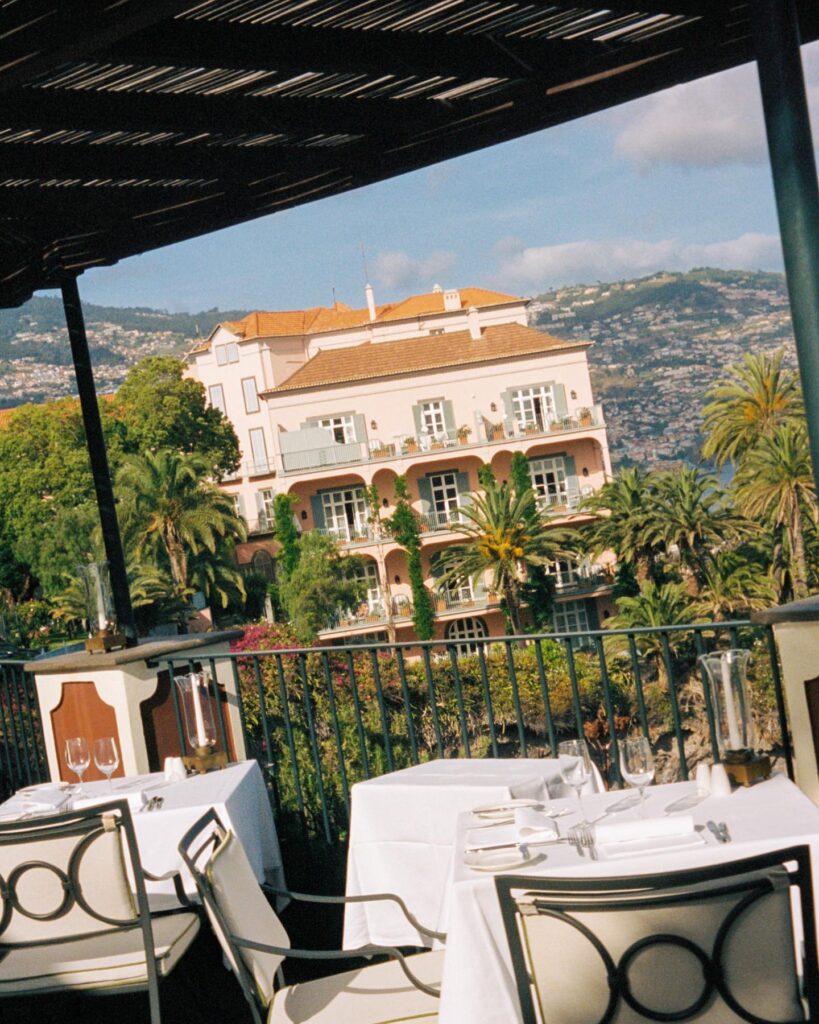
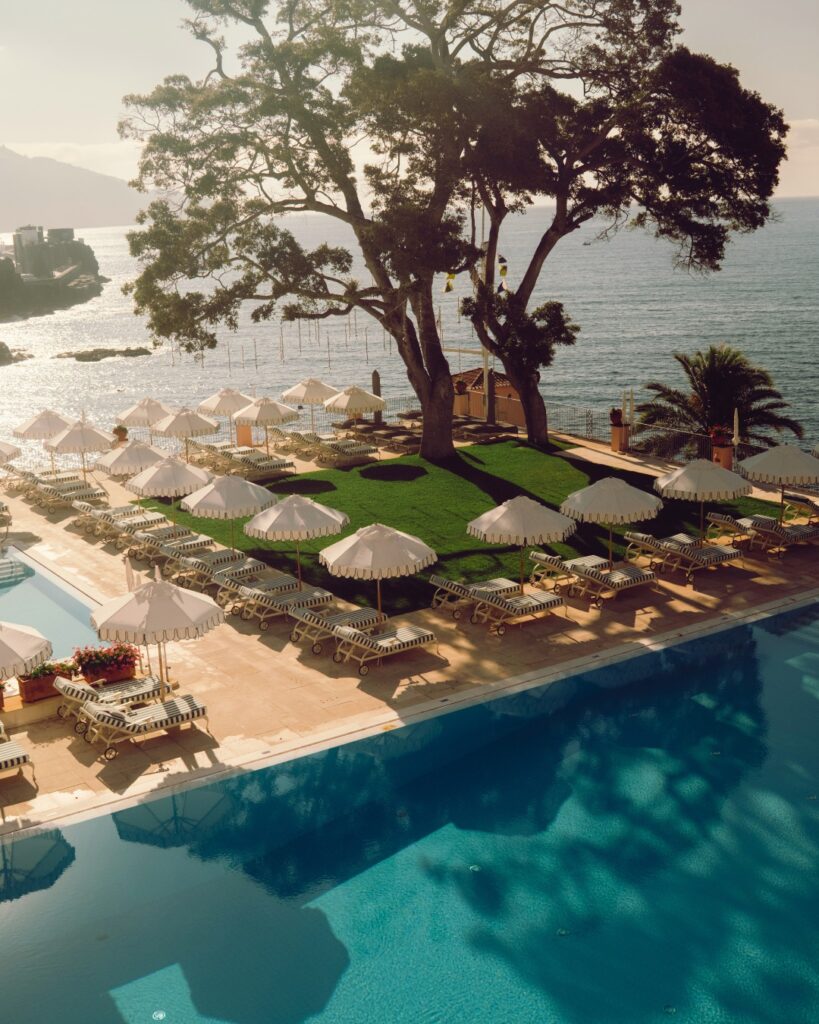
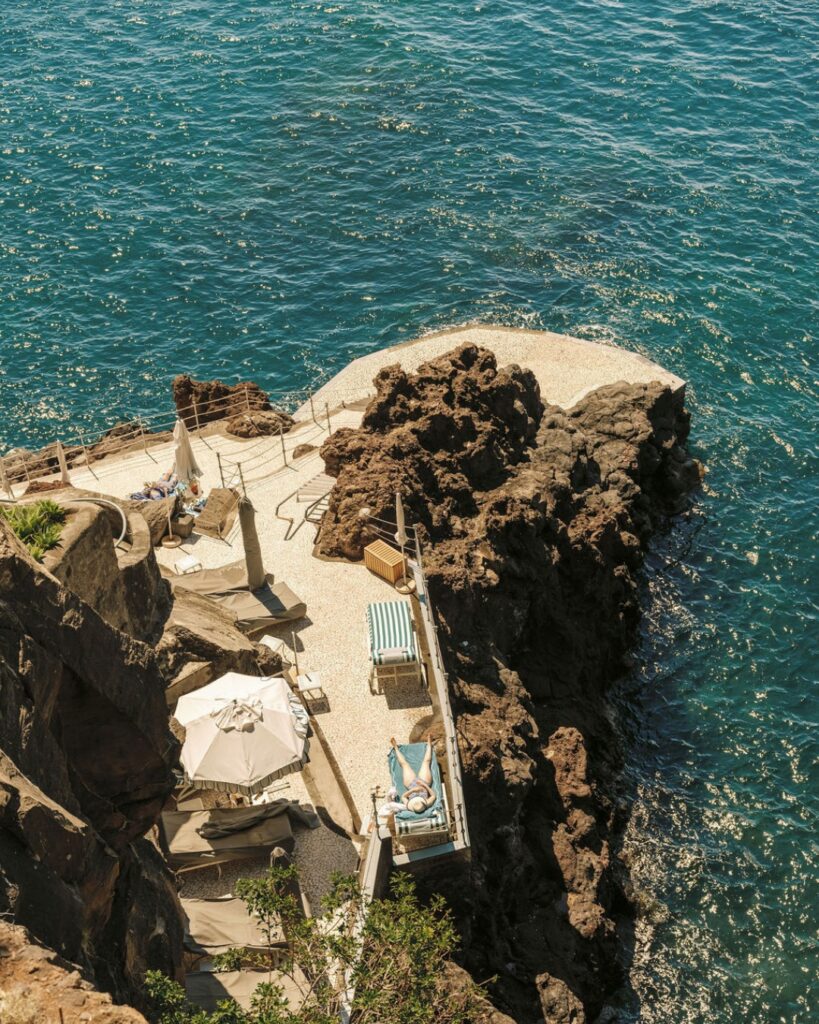
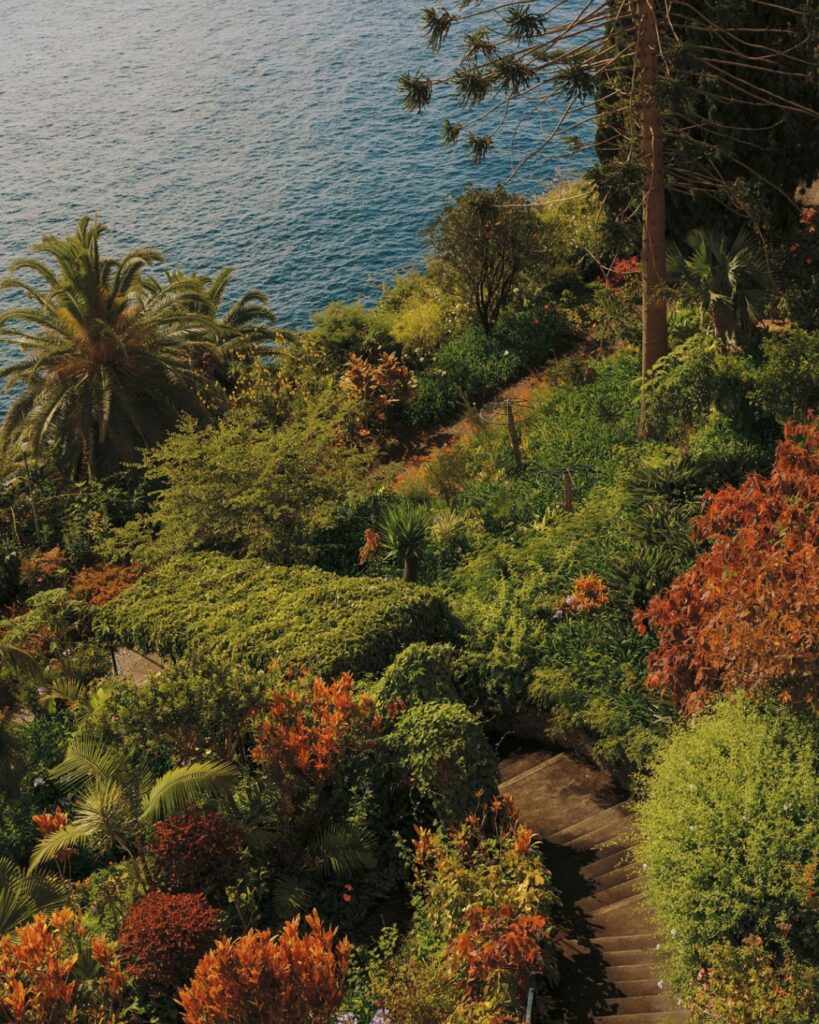
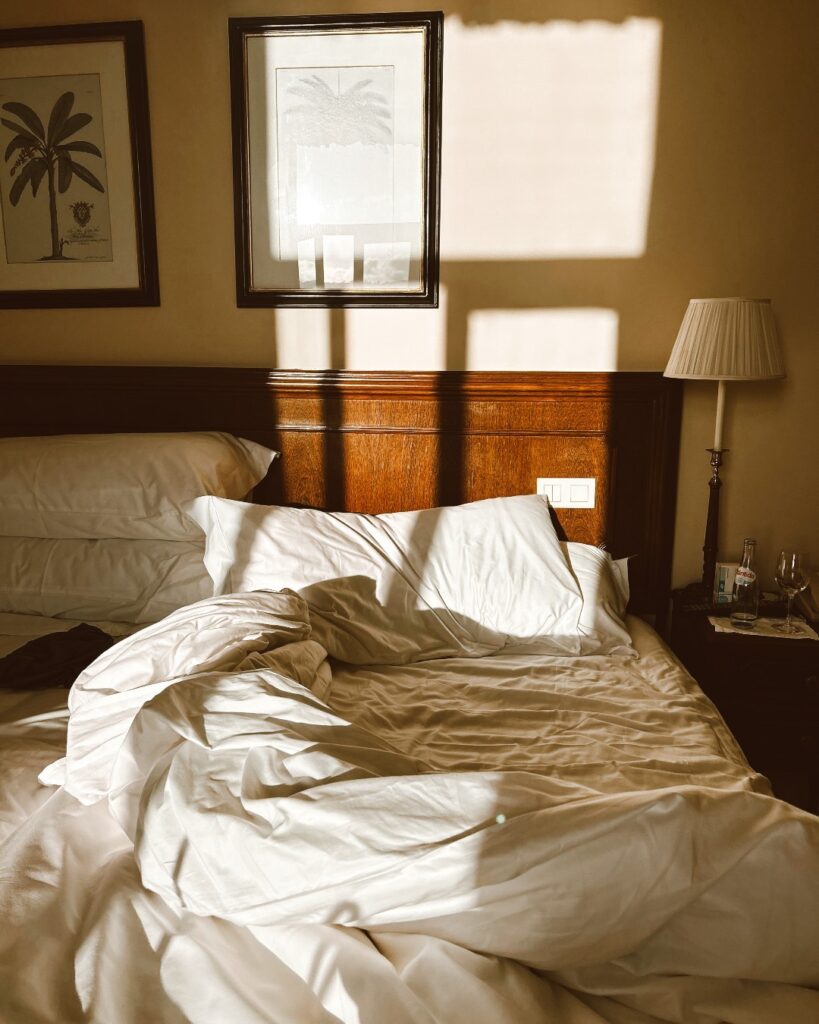
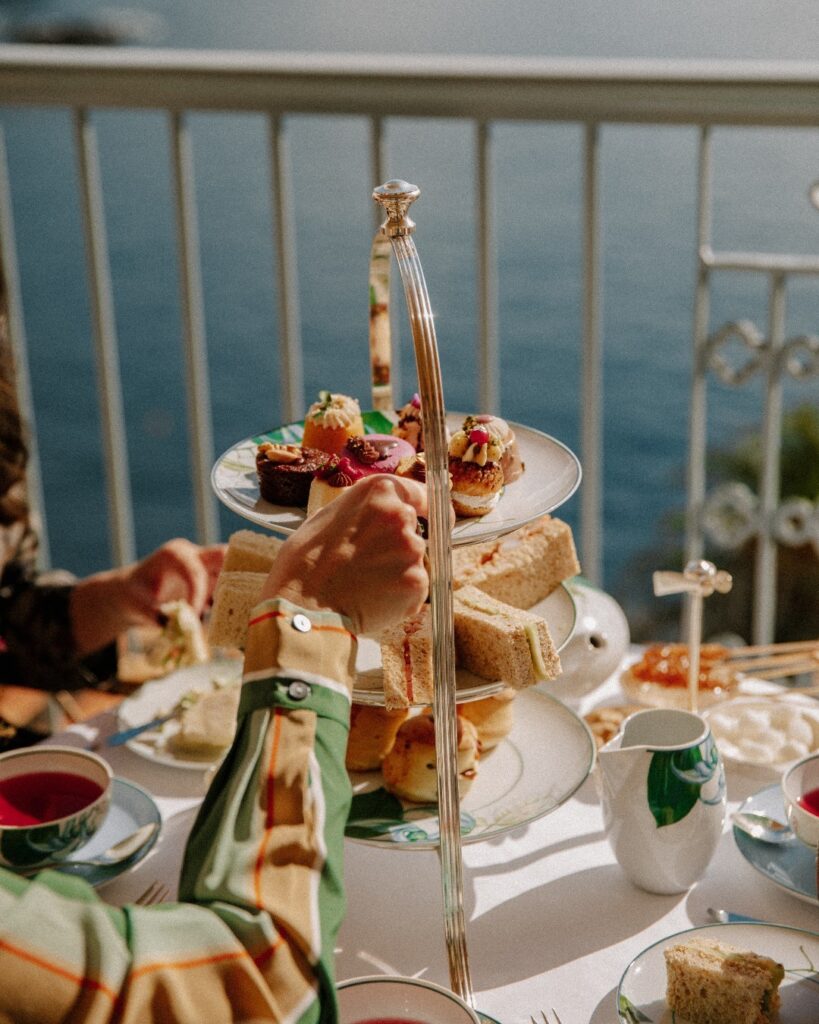
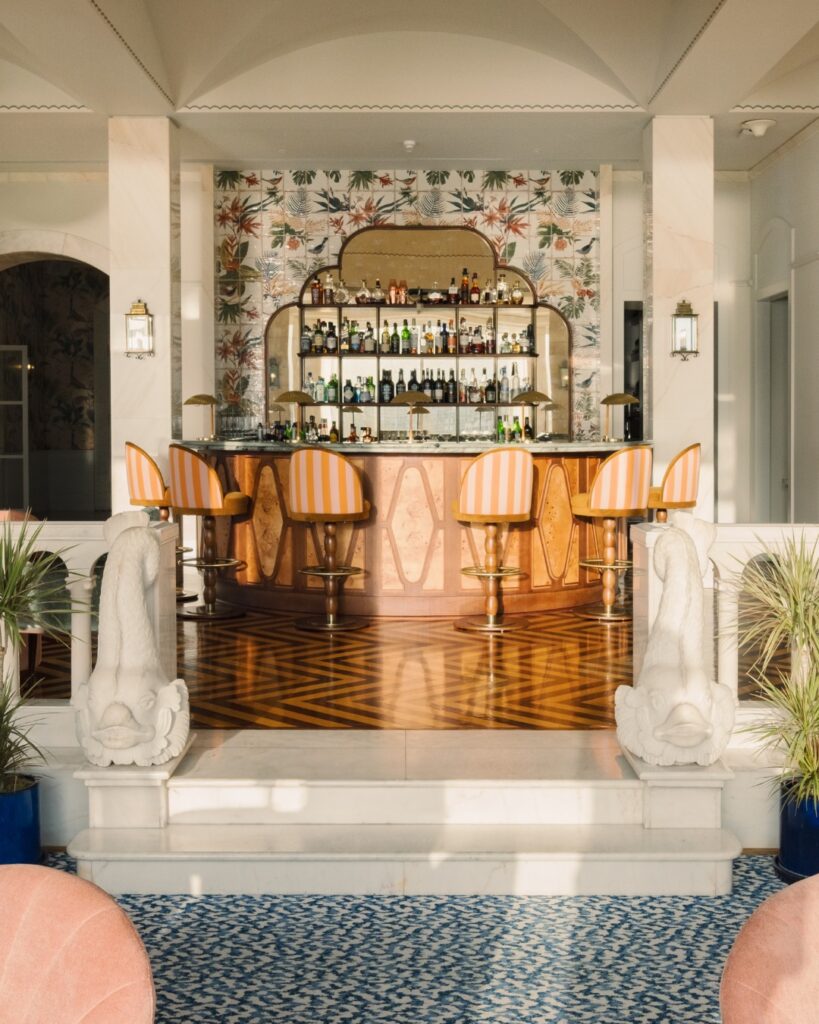
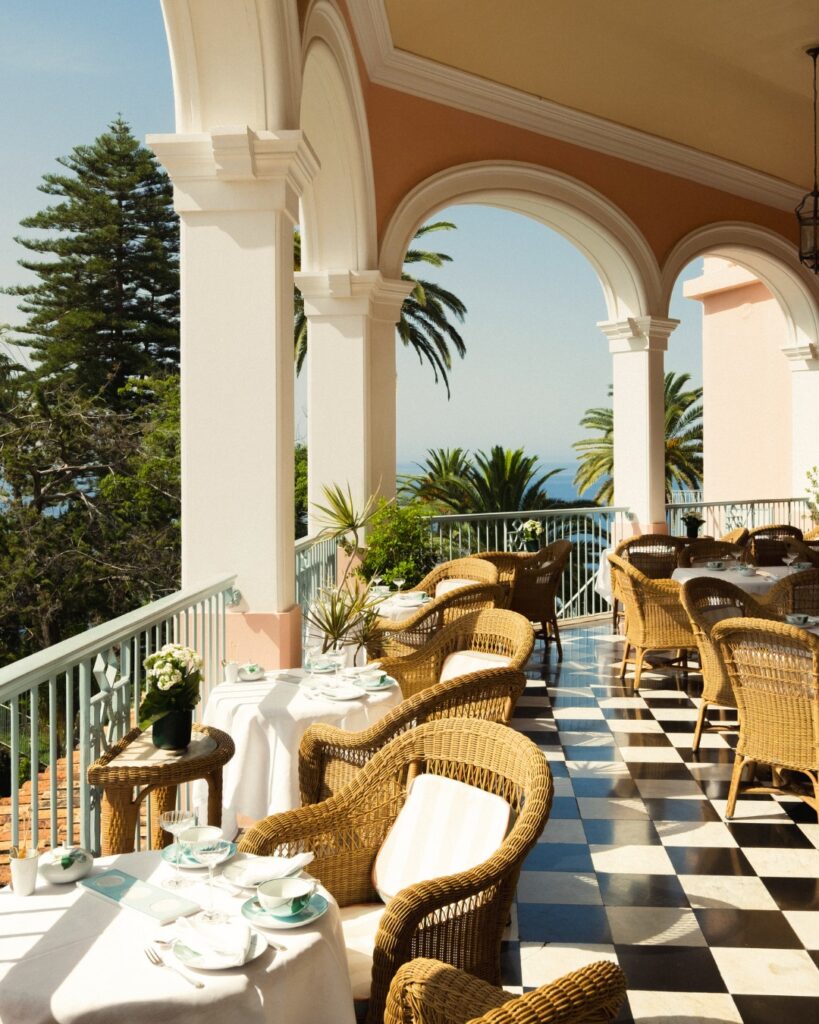
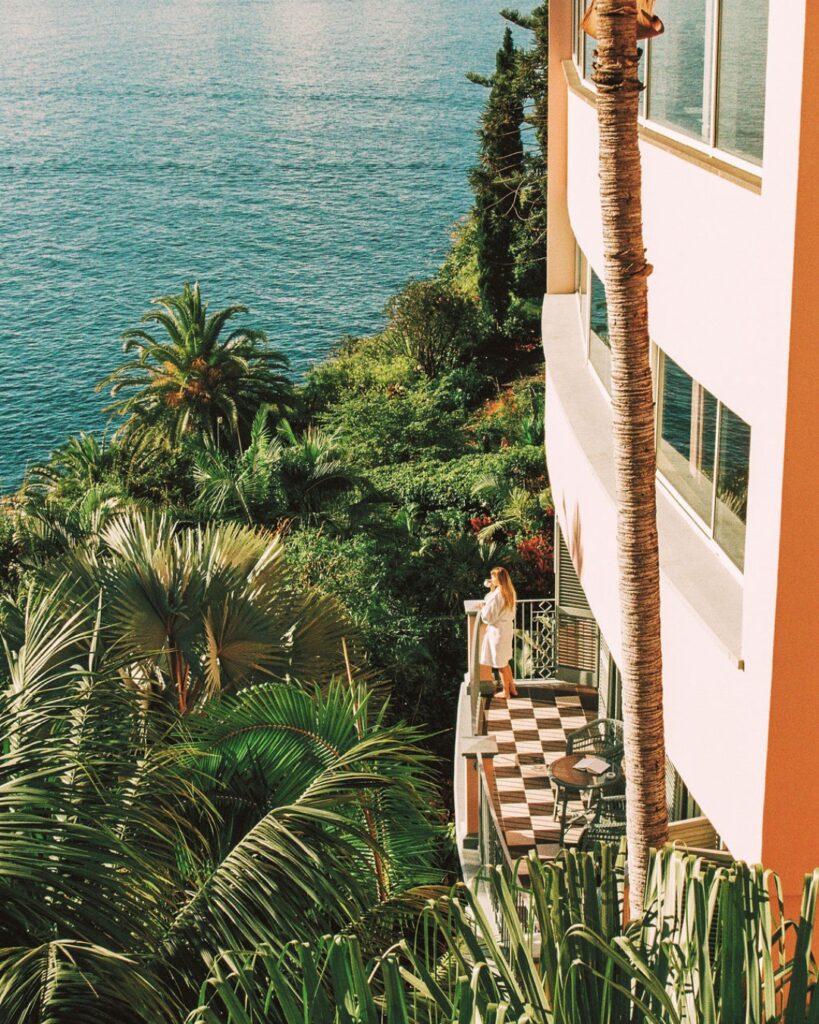
Images courtesy of Reid’s Palace, A Belmond Hotel, Madeira via Instagram.
Reid’s Palace, A Belmond Hotel
Perched dramatically on a rocky promontory overlooking the sweeping Bay of Funchal and the boundless Atlantic Ocean, Reid’s Palace is the undisputed grand dame of Madeira. Opened in 1891 by the enterprising Scotsman William Reid, this pastel-pink sanctuary was conceived as a refuge for European aristocracy seeking the island’s restorative winter sun. Today, meticulously preserved and operated by Belmond, it remains an enduring symbol of old-world glamour. Surrounded by ten acres of spectacularly lush, subtropical gardens and featuring a legendary sea-level pool carved directly into the volcanic rock, Reid’s Palace offers a timeless immersion into traditional elegance and the gentle rhythms of island life.
Accommodation
The property offers 126 rooms and suites, all designed to honour the hotel’s 19th-century origins while incorporating the highest standards of contemporary comfort. The aesthetic is one of classic coastal elegance—characterised by floral chintzes, high ceilings, dark wood antiques, and marble bathrooms. Almost every room features a private balcony or terrace offering unobstructed views of either the vast Atlantic Ocean or the meticulously manicured botanical gardens. For the ultimate historical experience, the Presidential Suites—famously named the Churchill Suite and the George Bernard Shaw Suite—are a testament to the hotel’s illustrious guestbook. These sprawling, palatial residences offer vast drawing rooms, bespoke antique furnishings, Chinese hand-painted wallpapers, and expansive wrap-around balconies that provide the finest panoramic views of the Funchal coastline.
Dining
The culinary programme at Reid’s Palace combines Madeira’s extraordinary produce with a dining culture shaped by more than a century of British and European tradition. The gastronomic centrepiece is William Restaurant, the hotel’s Michelin-starred destination, where Executive Chef Luís Pestana transforms seasonal ingredients from the island and the hotel’s own gardens into contemporary interpretations of Madeiran cuisine. Two tasting menus balance nostalgia with innovation, drawing on traditional recipes and ingredients ranging from Atlantic seafood to locally sourced produce, with the panoramic dining room overlooking Funchal and the ocean. For a more relaxed Mediterranean experience, Ristorante Villa Cipriani occupies a spectacular cliffside setting and serves Italian classics, handmade pasta and seafood beneath the Madeiran sky. Brisa Do Mar offers an al fresco evening experience centred on fresh local seafood and seasonal produce, designed for sharing in a relaxed setting beside the Atlantic. During the day, the Pool Terrace provides a more casual setting for breakfast and lunch, while the legendary Afternoon Tea remains one of Reid’s Palace’s defining rituals, served on the terrace with delicate sandwiches, freshly baked scones, homemade pastries and a selection of 38 teas. The programme is complemented by the Tea Library, 1891 Bar, and Gelateria San Giorgio, the celebrated Italian gelateria’s second outpost following its original home in Portofino. Together, these venues give Reid’s Palace a culinary identity that moves effortlessly from formal Michelin-starred dining to leisurely poolside lunches, sunset drinks and one of Madeira’s most enduring afternoon traditions.
Wellness
Wellness at Reid’s Palace draws directly from Madeira’s exceptional climate, Atlantic setting and subtropical landscape. The Spa at Reid’s Palace is an intimate retreat overlooking the ocean, with five treatment rooms, including a dedicated couple’s suite, where personalised treatments incorporate island-inspired ingredients such as local aloe vera alongside established wellness rituals and products from Natura Bissé. The spa’s regional treatments use botanical ingredients and Madeiran influences to create experiences closely connected to the island, while the wider wellness programme extends beyond traditional spa treatments. Guests can train in the state-of-the-art fitness centre, relax in the solarium and enjoy the hotel’s swimming facilities, including its heated outdoor pools, tidal pool and direct access to the Atlantic. The property’s clifftop tennis courts, surrounded by the subtropical gardens, are operated in partnership with LUX Tennis, offering private coaching from professional instructors as well as dedicated clinics for younger guests. Reid’s Palace also embraces Madeira itself as part of its wellness philosophy, with opportunities for coastal hikes, mountain walks, surfing and other outdoor pursuits that make use of the island’s dramatic terrain and temperate climate. The result is a wellness experience that extends naturally from the treatment room into the gardens, across the courts and out into the landscapes surrounding the hotel.
Architecture & Design
The architecture of Reid’s Palace is an exercise in majestic 19th-century resort design. The striking pastel-pink facade—a colour that has become synonymous with Madeiran luxury—stands in brilliant contrast to the deep greens of the surrounding gardens and the brilliant blue of the ocean. Inside, the public spaces retain a cinematic sense of history, with checkerboard marble floors, soaring columns, and crystal chandeliers that evoke the golden age of grand ocean liners. The estate’s botanical gardens are a masterpiece in their own right. Cultivated for over a century, they house a globally significant collection of rare subtropical flora, creating a labyrinth of shaded walkways, blooming orchids, and towering palms that cascade down the cliff face.
Heritage & Philosophy
The history of Reid’s Palace is woven into the very fabric of Madeira. It was here, in 1950, that Winston Churchill spent his days painting the nearby fishing village of Câmara de Lobos and writing his memoirs. The guestbook is a chronicle of 20th-century history, featuring everyone from Empress Elisabeth of Austria to modern European royalty. The philosophy of the hotel is rooted in the preservation of this extraordinary legacy. The service is fiercely traditional, formal yet exceptionally warm. It operates on the understanding that guests come to Reid’s not for fleeting modern trends, but to participate in a storied tradition of refined, slow-paced elegance that has been perfected over 130 years.
Facilities & Experiences
The property’s unique geography affords it an amenity rarely found in cliffside hotels: direct sea access. A private elevator descends through the rock face to a sea-level platform, where guests can dive directly into the Atlantic, paddleboard along the dramatic coastline, or simply lounge on sunbeds carved into the volcanic stone. The hotel also offers guided botanical tours of its historic gardens with a resident horticulturist, ensuring guests can fully appreciate the immense biodiversity of the estate. For those looking to explore further afield, the concierge can arrange bespoke levada walks through Madeira’s ancient Laurisilva forests or private wine tastings at the island’s most historic Madeira wine lodges.
Why Plan a Trip Around Reid’s Palace?
Reid’s Palace is the very definition of a destination hotel. It is entirely possible to check in and spend an entire week without ever leaving the estate, completely absorbed by the rhythms of the property. From waking up to the sound of the Atlantic and taking a morning swim in the sea-level pool, to dressing for an exquisite Michelin-starred dinner under the stars, staying here is an invitation to step back in time. It is a flawlessly preserved enclave of civility, history, and subtropical beauty that captures the timeless romance of the Portuguese island.
Getting There
Located in the capital city of Funchal on the island of Madeira, the hotel is highly accessible. It is approximately a 20-to-25-minute drive from Funchal Cristiano Ronaldo International Airport (FNC). The hotel’s concierge can effortlessly arrange private, chauffeured transfers, ensuring a seamless and elegant arrival as guests ascend the grand driveway to the main entrance.
Average Nightly Rate
Classic & Superior Rooms: approximately €600–€950 per night.
Deluxe Rooms & Sea View Rooms: approximately €900–€1,400 per night.
Junior Suites: approximately €1,300–€2,000 per night.
Deluxe & Superior Suites: approximately €1,800–€3,000 per night.
Signature Suites: approximately €2,800–€4,500+ per night.
Presidential Suites: approximately €4,500–€7,000+ per night, depending heavily on the season and booking dates.
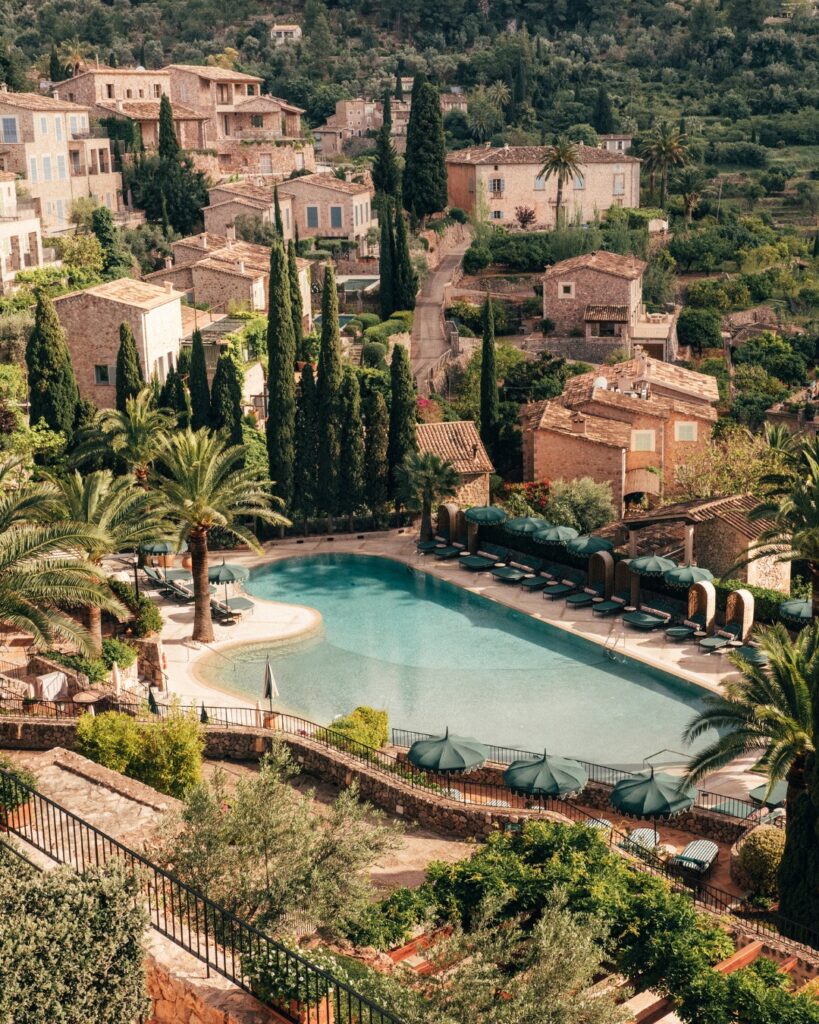
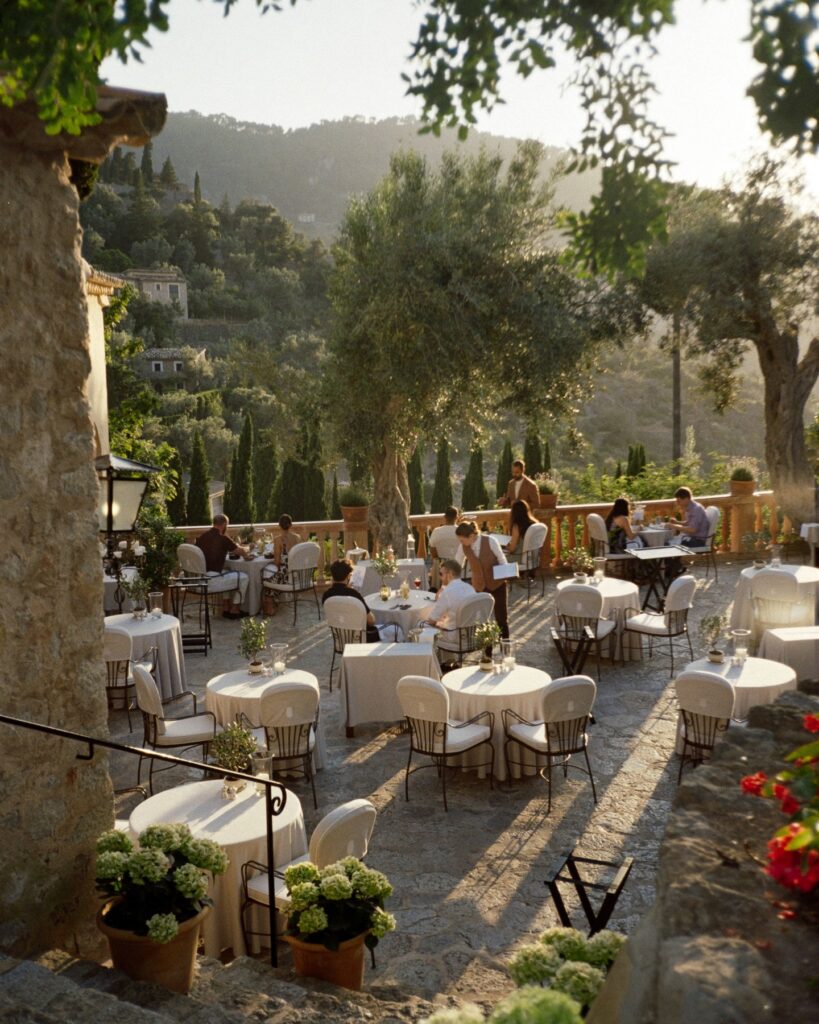
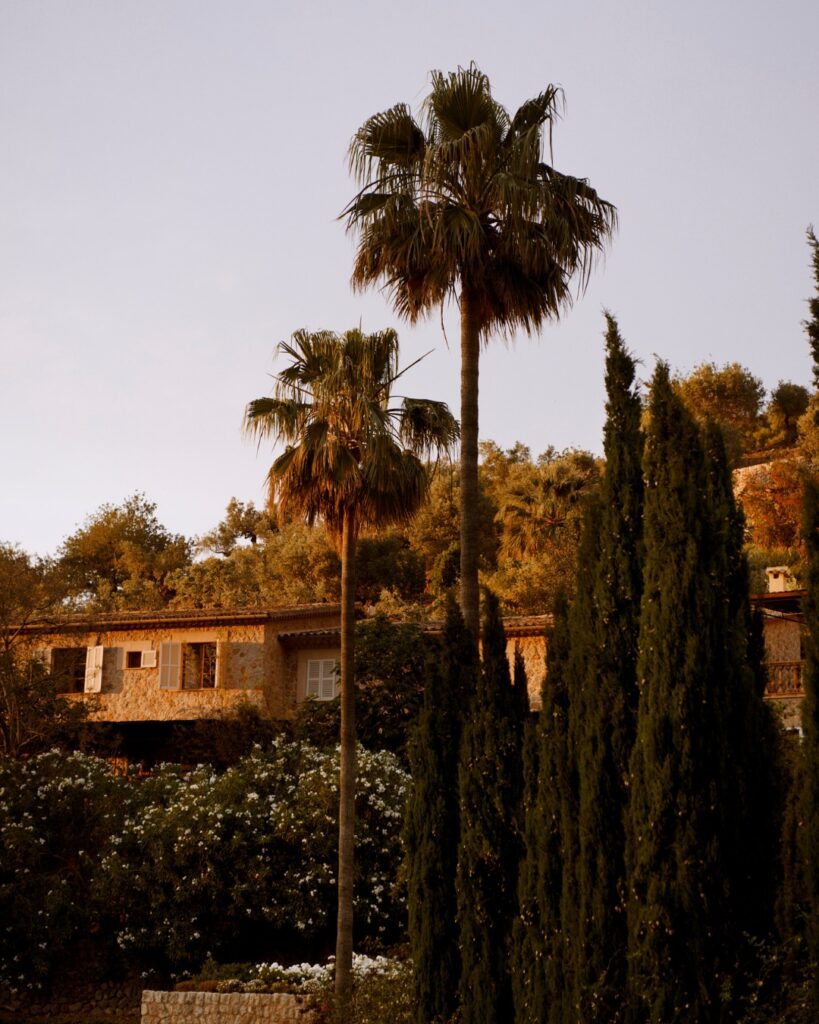
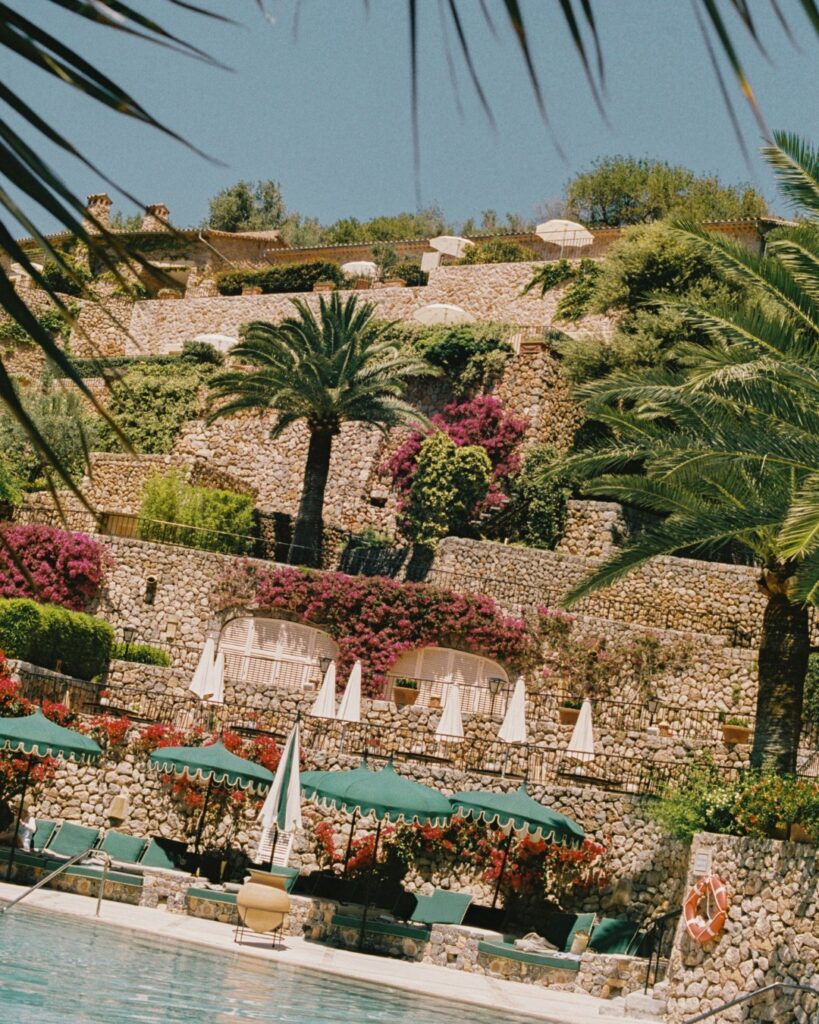
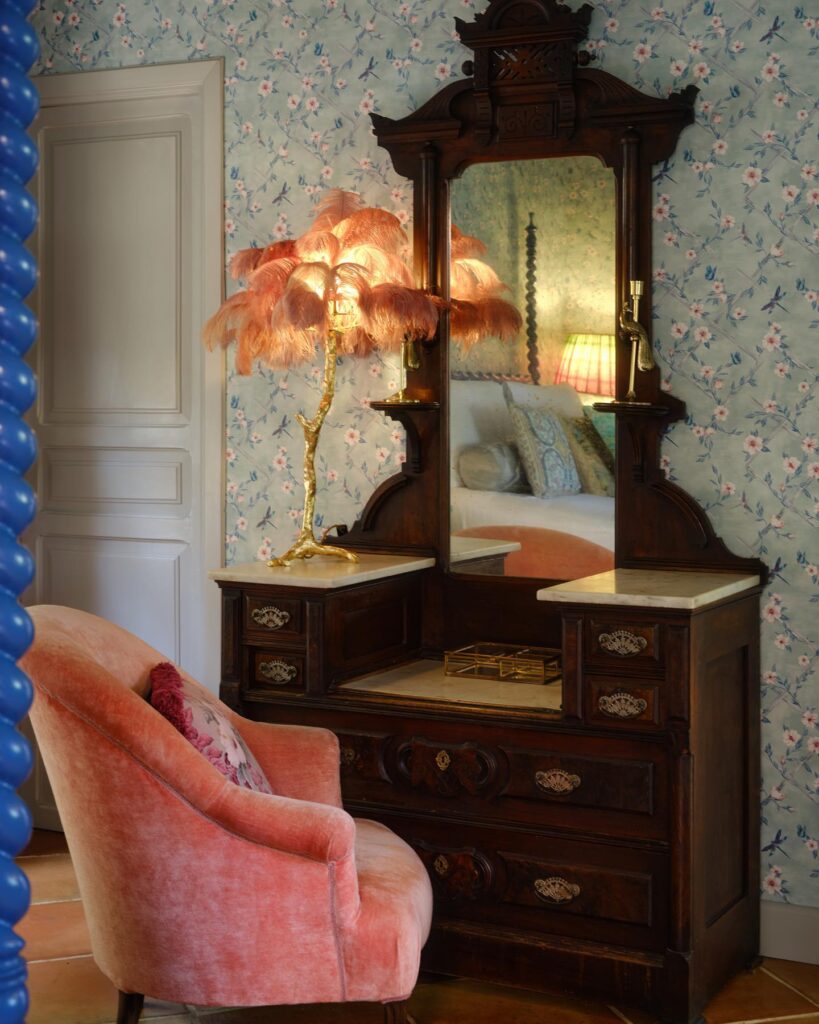
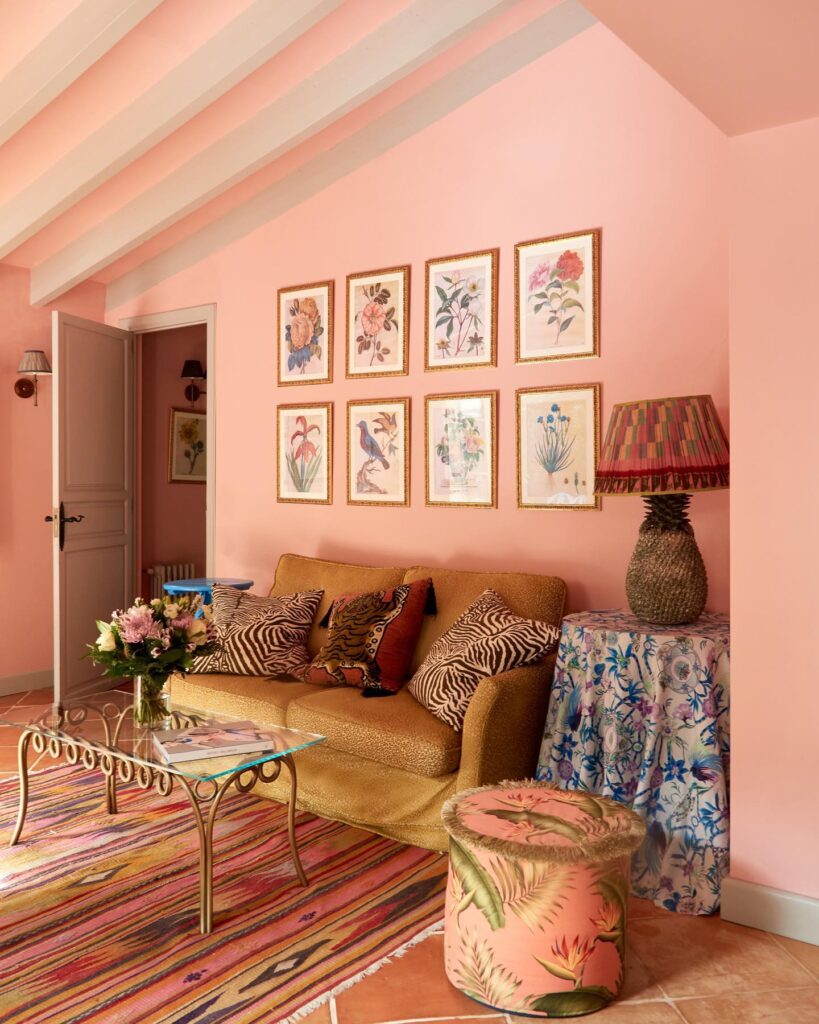
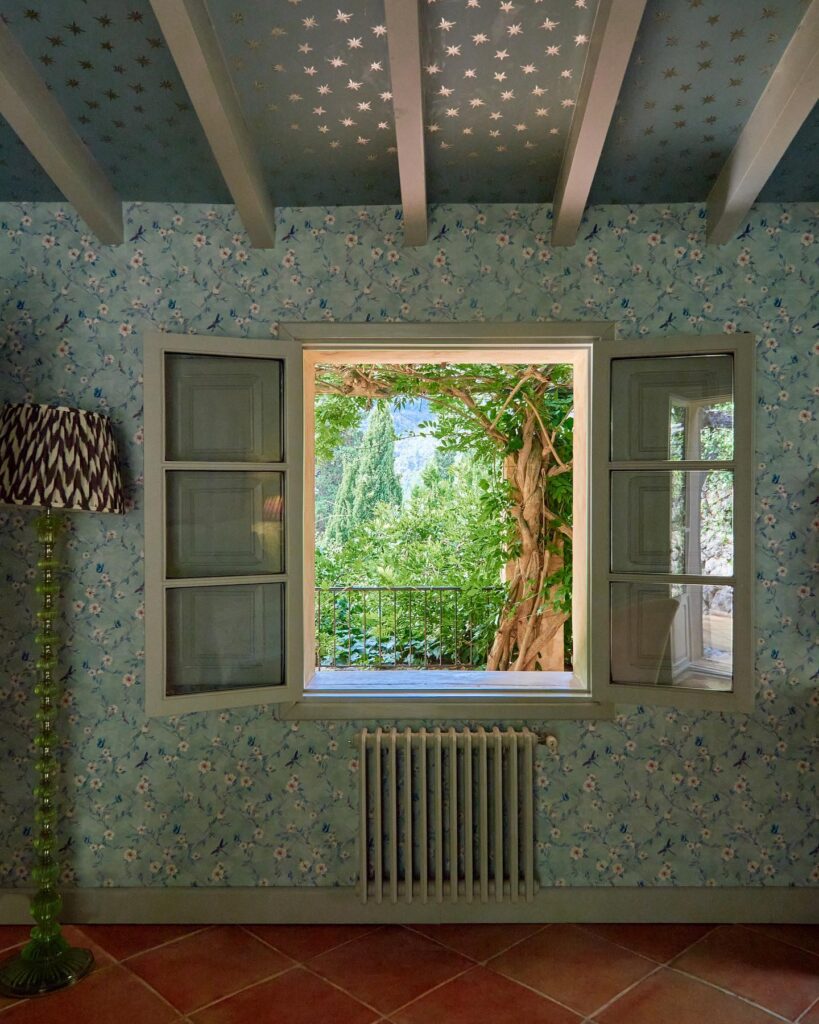
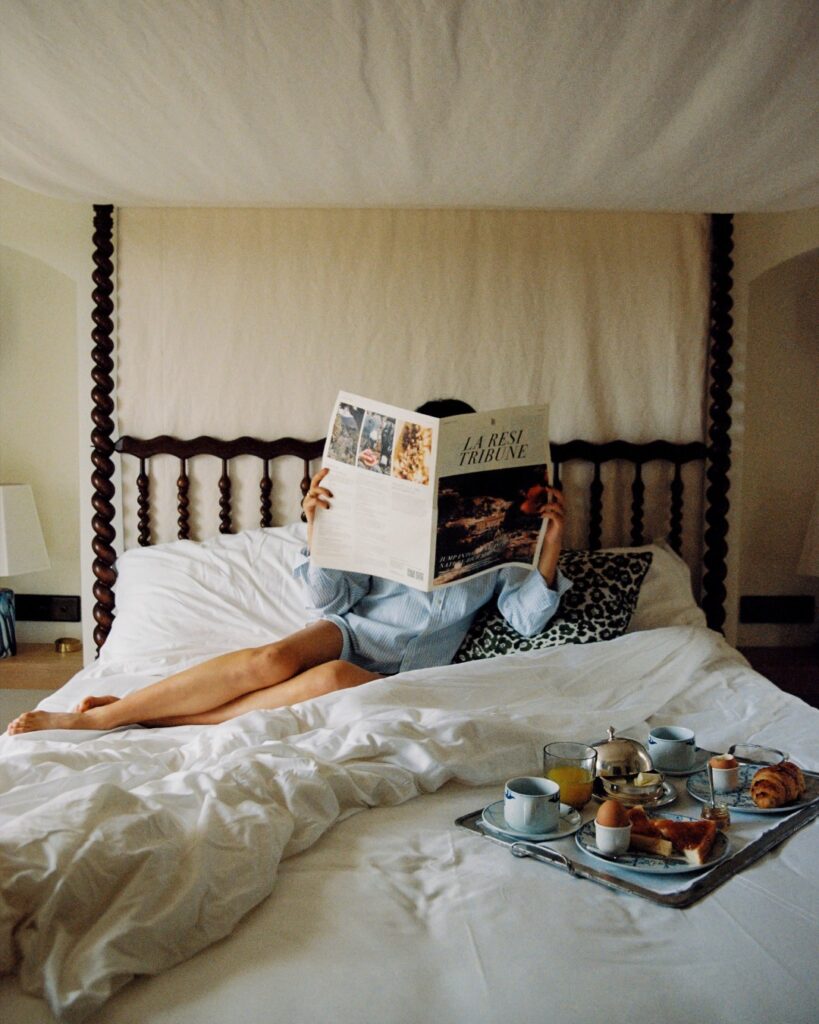
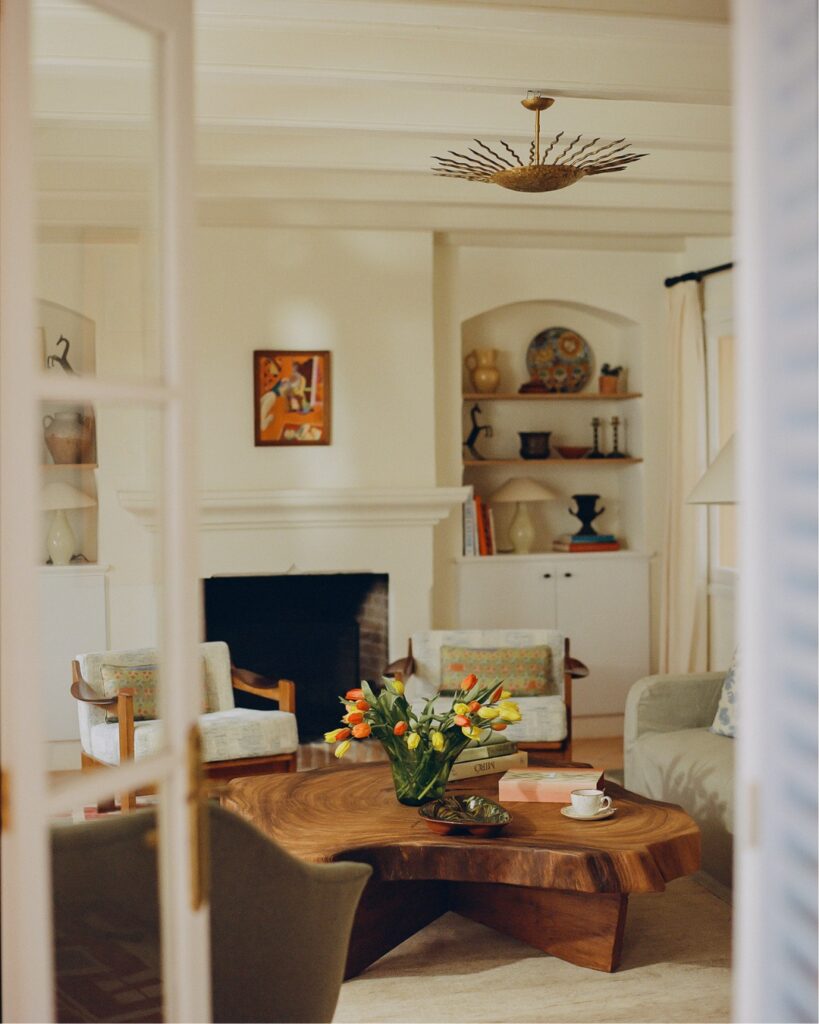
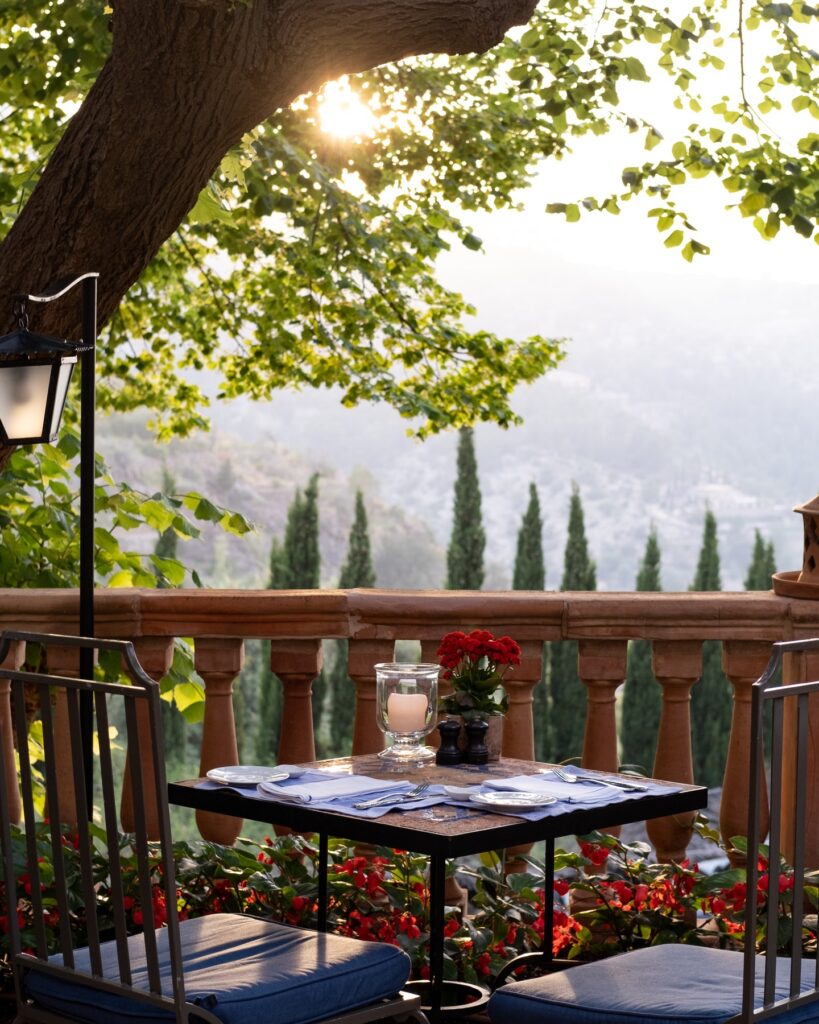
Images courtesy of La Residencia, A Belmond Hotel, Mallorca via Instagram.
La Residencia, A Belmond Hotel, Mallorca
Cradled by the UNESCO-protected Tramuntana Mountains and looking out towards the Mediterranean Sea, La Residencia is the artistic soul of Mallorca. Nestled in the picturesque village of Deià—long a haven for writers, painters, and musicians, including poet Robert Graves—the property beautifully bridges its bohemian heritage with world-class, understated luxury. Set across two historic manor houses that blend seamlessly into the lush, terraced landscape of olive groves and citrus trees, this Belmond hotel is not merely a retreat; it is an immersion into the authentic, slow-paced charm of the Balearics.
Accommodation
The property offers 66 rooms and suites, and 1 exclusive villa , each uniquely designed to reflect traditional Mallorcan aesthetics. The interiors feature terracotta floors, rough-plastered walls, exposed wooden beams, and exquisite fine linens. The decor is deeply personal, heavily featuring local antiques and original artwork by regional artists. Many suites feature expansive private terraces offering sweeping views of the village or the soaring mountains. For guests seeking complete seclusion, La Residencia offers an exceptional collection of suites featuring their own private plunge pools or full-size private pools. A standout highlight is the exclusive Designer Suite by Matthew Williamson, a vibrant, eclectic space that brings the acclaimed British designer’s signature botanical flair to the rustic Mallorcan setting.
Dining
The culinary programme at La Residencia celebrates the flavours of Mallorca through a collection of distinctly different settings, from sophisticated tasting menus to relaxed poolside dining. The gastronomic centrepiece is El Olivo, housed within a beautifully restored medieval olive mill and led by Executive Chef Pablo Aranda. The restaurant’s seasonal cuisine draws heavily on locally sourced Mallorcan produce, presented through refined Mediterranean cooking and paired with an extensive wine selection. For a more informal experience, Restaurante Miró takes its name from the hotel’s extraordinary collection of 33 original Joan Miró works, surrounding guests with art while serving Mediterranean-inspired dishes, tapas and drinks in an atmospheric setting. Tramuntana Grill, beside the pool, offers a relaxed daytime menu of fresh salads, pizzas and seasonal favourites accompanied by crisp wines and classic cocktails. Breakfast is served at Son Fony, where a generous buffet is enjoyed overlooking the swimming pool and Tramuntana Mountains. For something more private, The Mirador sits among ancient olive trees at one of the estate’s most secluded viewpoints and can be arranged for intimate dining experiences surrounded by the landscape. Together, these venues give La Residencia a dining identity that feels inseparable from Deià itself: produce from the island, historic settings, Mediterranean flavours and an atmosphere designed around the unhurried rhythm of the Tramuntana.
Wellness
Wellness at La Residencia is closely intertwined with the natural landscape of the Tramuntana Mountains, combining an award-winning spa with outdoor activities designed around the surrounding countryside. The Spa at La Residencia features six treatment rooms, three with private terraces, where personalised therapies incorporate locally inspired ingredients and botanical elements. Signature experiences include the Citrus Siesta, beginning with an olive-oil exfoliation before moving into a relaxing essential-oil massage, alongside specialised facial and holistic treatments. The facilities include a heated indoor pool, sauna, steam room, outdoor Jacuzzi, ice fountain, invigorating ice bath and fully equipped gym, creating a comprehensive setting for both restoration and active wellbeing. Beyond the spa, La Residencia makes the landscape itself part of its wellness programme. Guests can join guided hikes and cycling excursions through the Tramuntana, take part in private first-light walks, or practise yoga and meditation in the hotel’s tranquil gardens. Two tennis courts offer panoramic mountain views and access to professional coaching through LUX Tennis, while the estate’s two outdoor swimming pools provide quieter spaces for swimming and relaxation. The result is a distinctly Mallorcan approach to wellbeing, where treatments, movement, fresh mountain air and the surrounding landscape become part of the same slow, restorative experience.
Art & Culture
La Residencia’s connection to the art world is what truly sets it apart. The hotel operates as a living gallery and cultural hub. Guests can wander the Poet’s Walk, a scenic mountain pathway curated by the resident sculptor Juan Waelder. The trail features impressive bronze, terracotta, and steel sculptures, alongside plinths dedicated to historical literary figures connected to the region. The hotel actively encourages guests to tap into their own creativity, offering masterclasses with resident painters and sculptors. It is a place where the artistic spirit of Deià is not just observed, but actively lived.
Heritage & Philosophy
Originally part of an estate owned by Richard Branson before joining the Belmond collection in 2002, the hotel’s philosophy is rooted in authenticity and unpretentious luxury. The service is highly personalised and attentive, anticipating guest needs while allowing them the space to completely unwind.
Facilities & Experiences
The property offers an exceptional array of curated experiences. The hotel’s resident donkeys are a beloved feature, and guests can enjoy guided treks through the olive terraces, concluding with a rustic Mallorcan picnic in a shepherd’s hut. During the summer months, guests can partake in complimentary two-hour boat excursions along the dramatic northern coastline, allowing them to swim in hidden coves. For families, the Smile Club provides engaging, supervised activities for children, from pottery workshops to cooking classes, ensuring younger guests experience the magic of the island.
Why Plan a Trip Around La Residencia?
La Residencia is the antidote to the bustling beach resorts typical of the Balearics. It is a sanctuary for those who appreciate art, spectacular mountain scenery, and phenomenal Mediterranean cuisine. To wake up to the scent of citrus trees, spend the morning painting with a resident artist, and dine under the stars at El Olivo is to experience the very best of Mallorca. It is an inspiring, deeply romantic hideaway that captures the true, enduring soul of Deià.
Getting There
Located on Mallorca’s northwest coast in the village of Deià, the hotel is approximately a 45-minute drive from Palma de Mallorca Airport (PMI). The journey winds through the spectacular Tramuntana Mountains, offering breathtaking views before arriving at the serene estate.
Average Nightly Rate
Classic & Double Rooms: approximately €750–€1,000 per night.
Superior & Deluxe Rooms: approximately €900–€1,400 per night.
Junior Suites: approximately €1,400–€2,200 per night.
Executive & Deluxe Suites: approximately €1,900–€3,000 per night.
Speciality Suites with Private Pools: approximately €3,000–€4,500+ per night.
Private Villa: approximately €4,500–€7,000+ per night during peak summer.
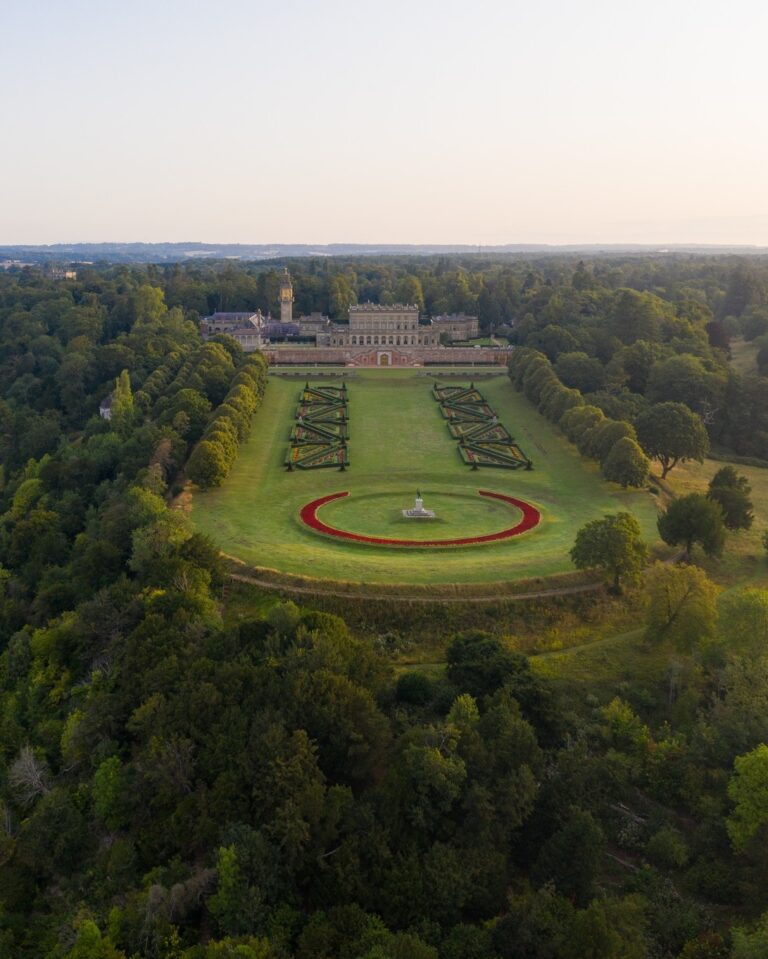
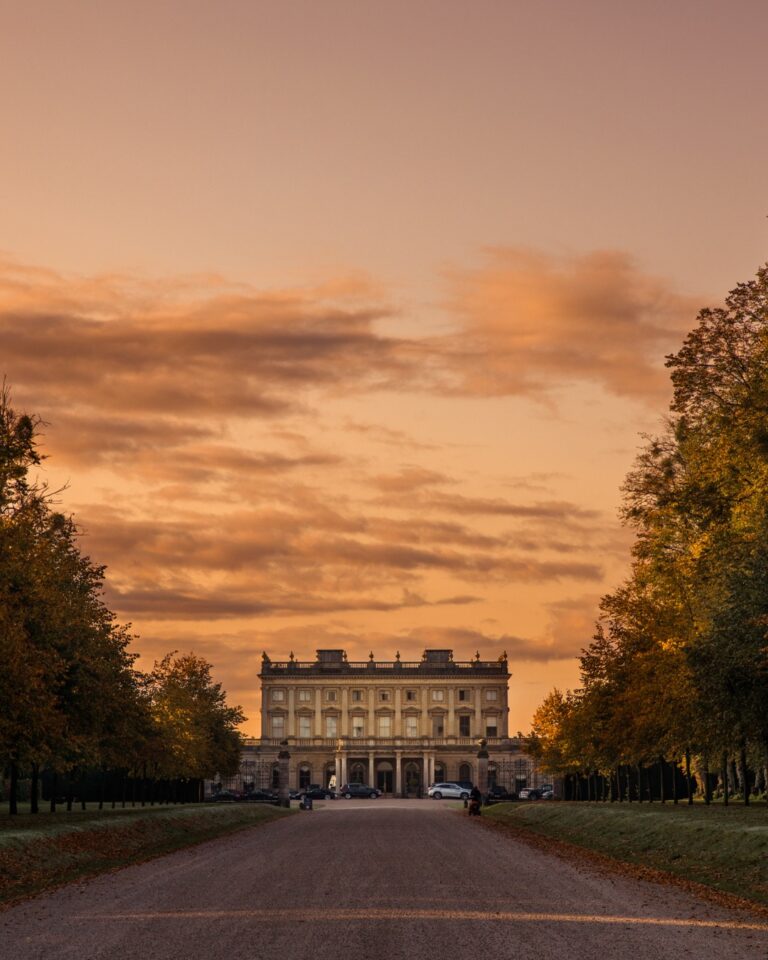
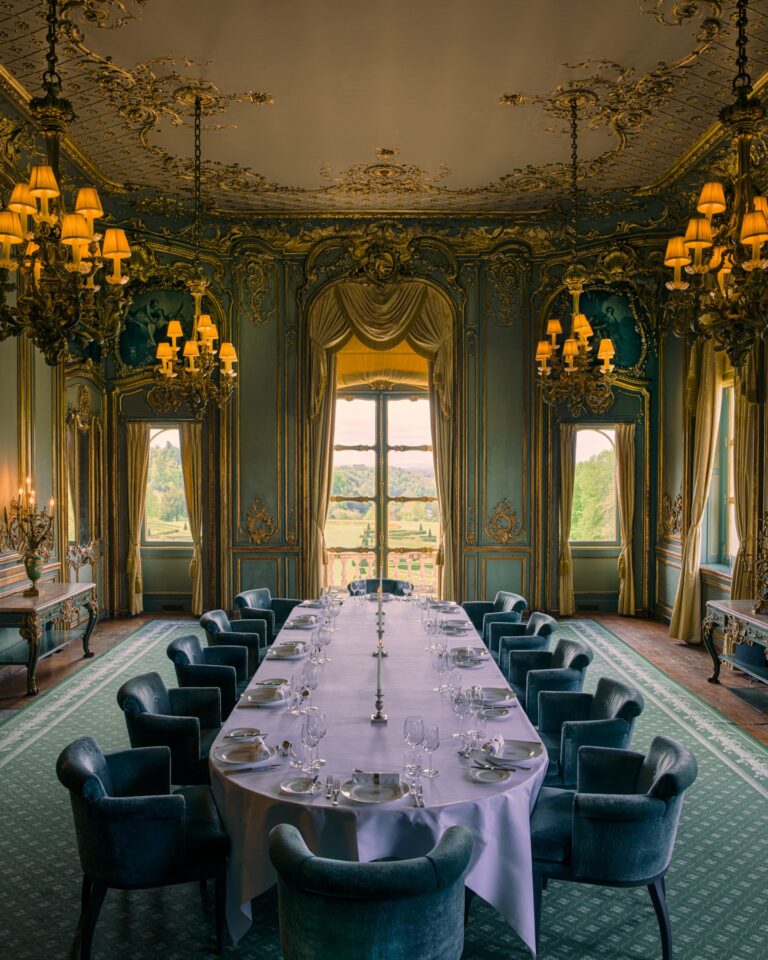
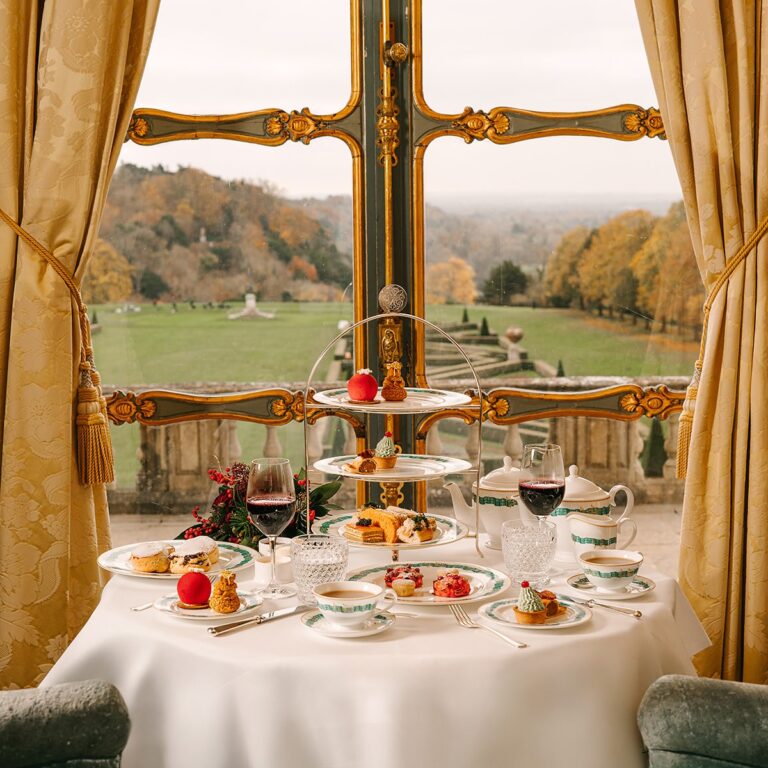
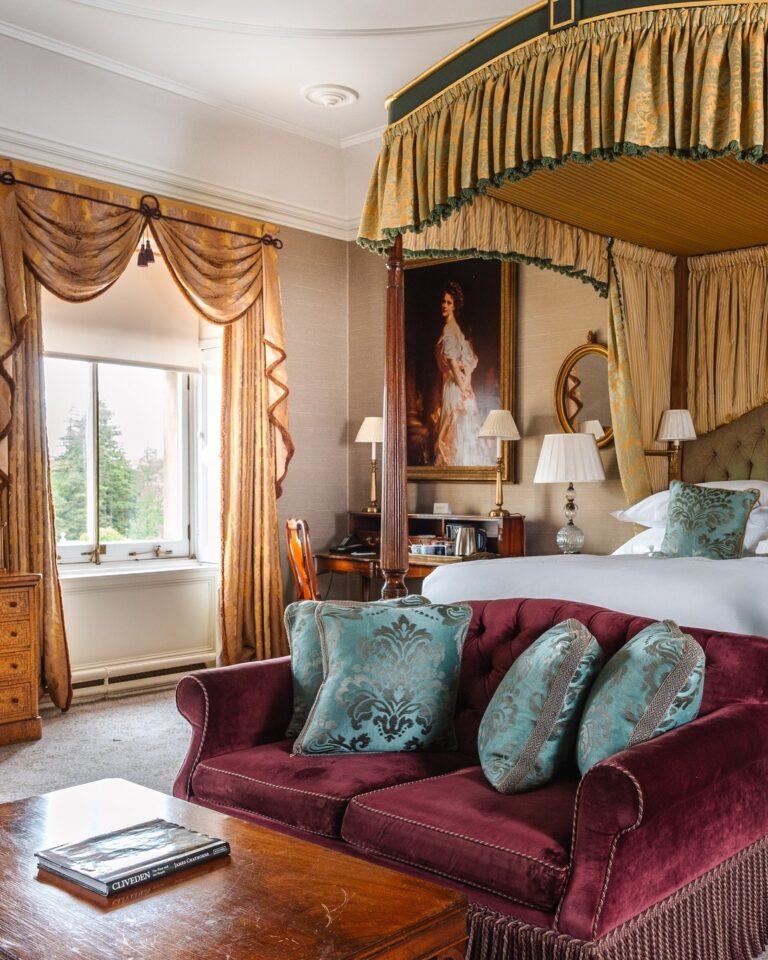
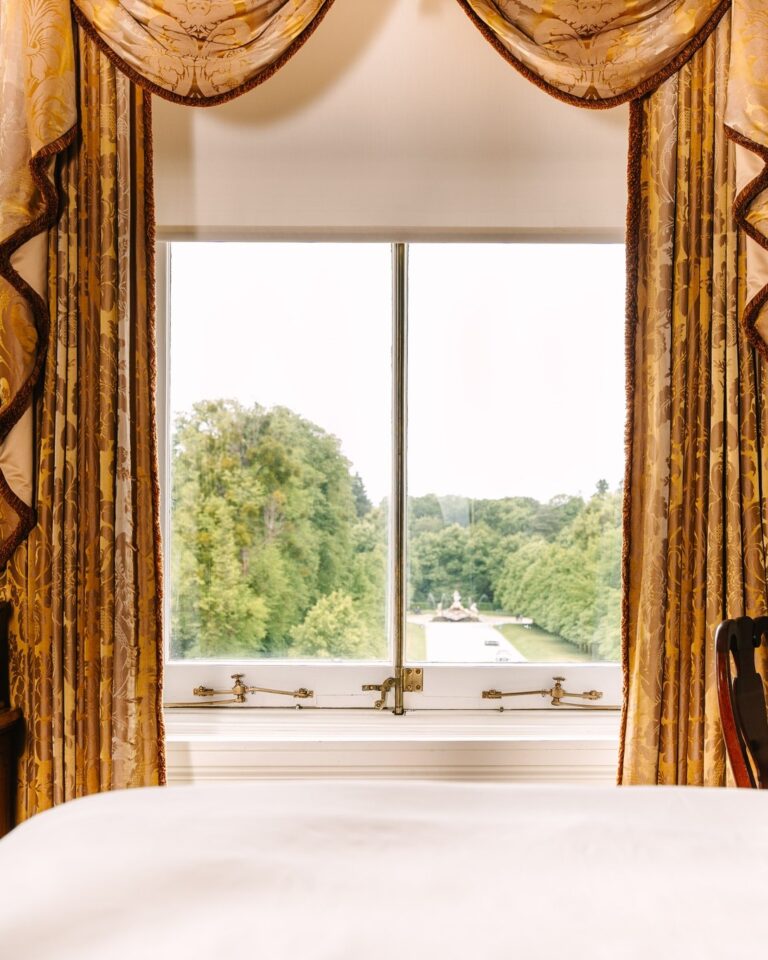
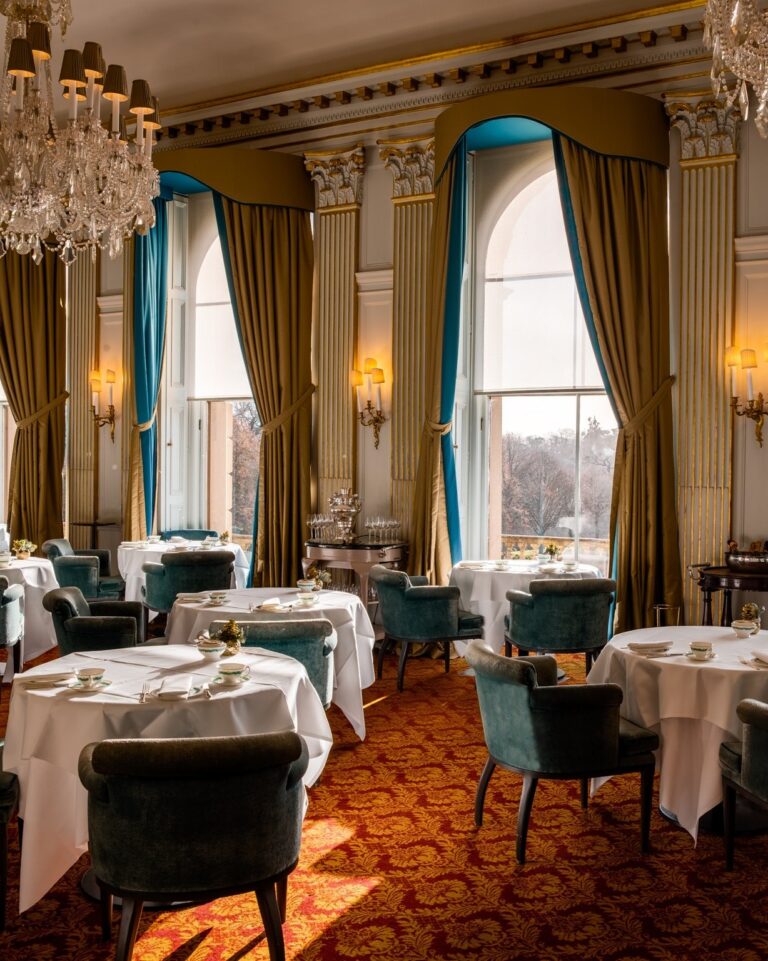
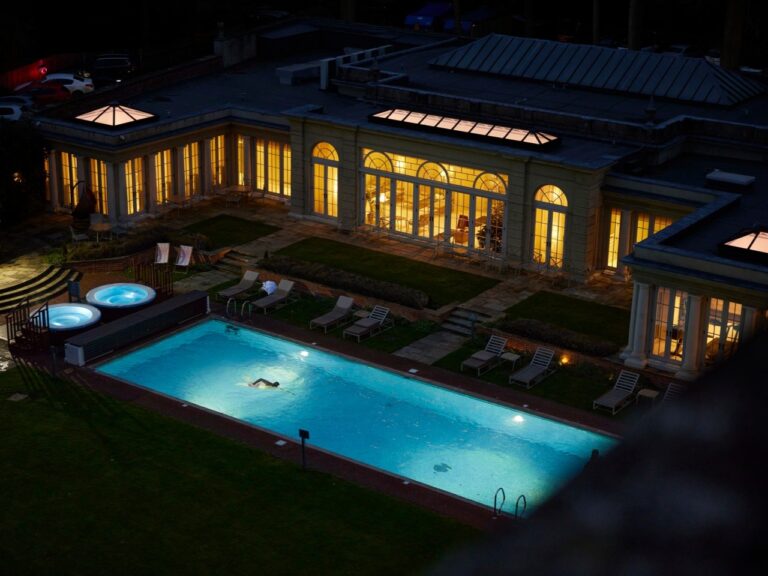
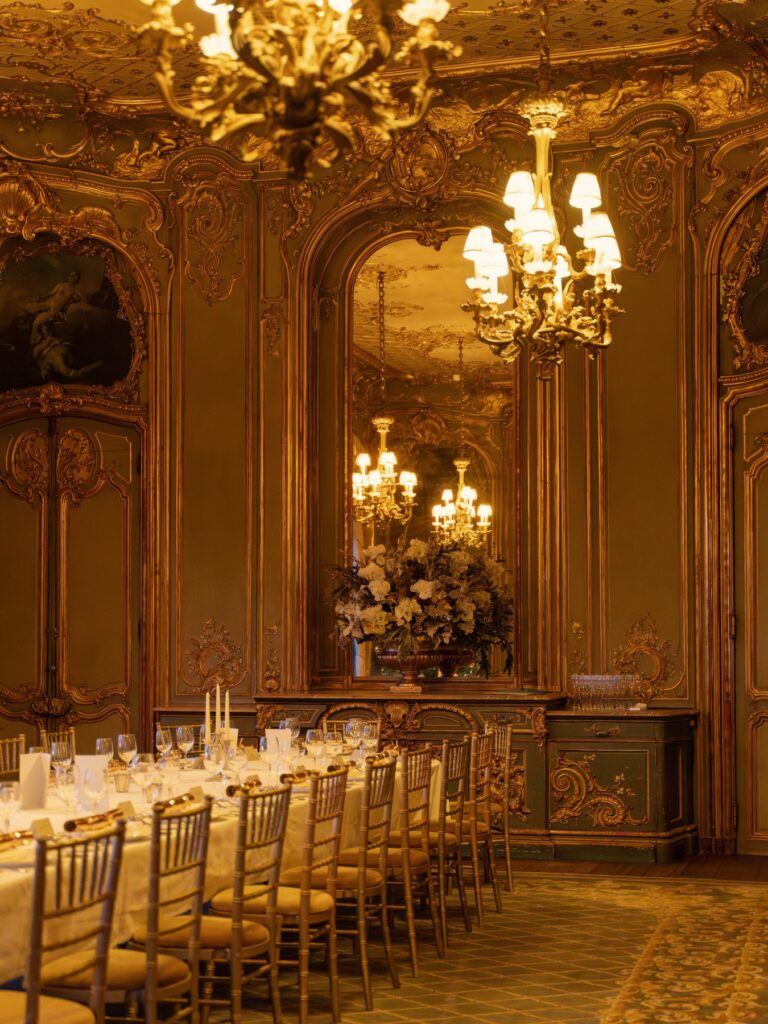
Images courtesy of Cliveden House via Instagram.
Cliveden House
Set upon a chalk ridge high above the River Thames and surrounded by 376 acres of formal National Trust gardens, Cliveden House represents a defining chapter of British aristocratic hospitality. Originally established in 1666 by the 2nd Duke of Buckingham, the estate has twice been destroyed by fire; the Italianate mansion standing today was designed by Sir Charles Barry and completed in 1851, this Grade I-listed Italianate mansion has hosted every British monarch since King George I, alongside a long lineage of politicians and literary figures. Operating today as a five-star luxury hotel, Cliveden allows guests to step directly into an authentic historical narrative. Combining grand 19th-century architecture with exceptional modern service, the estate provides a profound immersion into English countryside leisure, offering an experience that is deeply rooted in political history and high-society culture.
Accommodation
The estate features 47 individually designed rooms and suites situated within the main mansion and its immediate grounds, alongside the highly exclusive Spring Cottage. Rather than carrying room numbers, each space bears the name of a notable historical figure associated with the property, including Winston Churchill, Lady Astor, and Charlie Chaplin. The interiors respect the classical architecture of the building, featuring handmade king-size beds, antique furnishings, heavy silk drapes, and beautifully restored period bathrooms. The magnificent Parterre Suites provide soaring ceilings, original marble fireplaces, and tall sash windows commanding unhindered views over the formal gardens down toward the river. For complete privacy, Spring Cottage offers a separate three-bedroom residence situated directly on the banks of the Thames. This distinct summerhouse features private gardens, a dedicated country kitchen, and spacious living areas, making it an exceptional choice for families seeking seclusion within the estate.
Dining
The culinary programme at Cliveden House centres heavily on seasonal British produce and classical techniques, operating across distinctly atmospheric venues: The Cliveden Dining Room: The formal heart of the property, situated in the mansion’s original drawing room. Featuring south-facing windows overlooking the nineteenth-century parterre, this elegant space focuses on innovative modern British cuisine and elaborate tasting menus, completing the experience with traditional tableside preparations of crêpes Suzette. The Astor Grill: Positioned within the historic stable yard, this venue adopts a relaxed, equestrian-inspired aesthetic. The menu centres on prime grilled meats, fresh seafood, and refined brasserie classics, providing a casual dining option on the estate. The Great Hall: An imposing room defined by its sixteenth-century stone fireplace and antique suits of armour. It serves as the daily setting for one of the country’s most celebrated afternoon tea services, featuring delicate pastries and curated loose-leaf teas.
Wellness
The Cliveden Spa sits concealed behind historic brick walls within a fragrant garden of roses and lavender. The centrepiece of this wellness facility is the famous listed outdoor swimming pool—the last remaining historically listed pool in England and the site of significant political intrigue during the 1960s. Today, it serves as an exclusive lounging area surrounded by comfortable sunbeds. Inside the spa building, guests have access to a heated indoor swimming pool, aromatic steam rooms, an infrared sauna, and outdoor hot tubs. The treatment menu focuses on thorough restoration, utilising premium British botanical skincare brands to deliver tailored facial therapies and deep-tissue body treatments. The surrounding fitness facilities include indoor studios and outdoor tennis courts, ensuring a complete approach to physical well-being.
Architecture & Design
Externally, the current mansion, designed by architect Sir Charles Barry in 1851, presents an imposing Italianate stone facade standing confidently atop a massive brick terrace. The sweeping driveway and tall clock tower establish an immediate sense of scale. Internally, the public spaces retain the vast proportions of an English noble residence. The Great Hall and drawing rooms feature soaring wood-panelled walls, antique tapestries, intricate ceiling mouldings, and oil portraits of previous owners. Despite the museum-quality artifacts and heavy classical design, the careful use of natural light and plush seating creates an atmosphere that feels exceptionally comfortable rather than overly formal.
Heritage & Philosophy
The service philosophy at Cliveden House revolves around the tradition of the aristocratic house party. Popularised during the 1920s and 30s by Viscountess Nancy Astor, who gathered leading politicians and intellectuals for lavish weekends, the estate continues to treat staying guests as personal visitors to a living manor. The staff operates with high discretion and intuitive care, discarding stiff hotel protocols in favour of warm, highly professional hospitality. This approach allows guests to feel genuine ownership of the estate during their stay, whether they are reading by the fire in the library or walking the extensive grounds.
Facilities & Experiences
The wider estate provides an exceptional environment for outdoor pursuits. Guests can engage in traditional clay pigeon shooting, archery, and lawn croquet, or explore miles of woodland trails, topiary mazes, and water gardens maintained in partnership with the National Trust. The most distinctive feature is the Thames Flotilla. The hotel maintains a fleet of fully restored vintage wooden launches, including the classic Belmont, allowing guests to book private champagne river cruises along one of the most picturesque stretches of the Thames.
Why Plan a Trip Around Cliveden House?
Cliveden House entirely defines the classic English country estate experience. It bridges the gap between historical preservation and exceptional modern hospitality, allowing you to inhabit a space that shaped British political history. Whether you are swimming in the legendary outdoor pool, dining on intricate tasting menus overlooking the parterre, or cruising the river on a vintage wooden launch, a stay here offers an unmatched window into grand estate living. It proves that a historic property can deliver uncompromising modern luxury while retaining its profound sense of character.
Getting There
Situated near Taplow in Berkshire, Cliveden House is highly accessible for both domestic and international travellers. The estate sits approximately a 45-minute drive west of central London. Guests arriving by air can reach the property in under 30 minutes by car departing London Heathrow Airport (LHR). Additionally, fast rail connections via the Elizabeth Line to Taplow or Maidenhead stations make it incredibly convenient for weekend escapes.
Average Nightly Rate
Classic & Club Rooms: approximately £545–£750 per night.
Deluxe Rooms: approximately £800–£1,150 per night.
Junior Suites: approximately £1,100–£1,700 per night.
Parterre & Mansion Suites: approximately £1,500–£2,800 per night.
Signature Suites: approximately £2,500–£4,000+ per night.
Spring Cottage: approximately £3,500–£6,000+ per night, depending heavily on the season and length of stay.
Which One to Choose?
Selecting a hotel among Europe’s premier properties is ultimately about choosing how you want to experience the destination. A lakeside palace, Mediterranean cliffside retreat, Alpine institution or English country estate can shape the character of an entire journey before you have even stepped outside the property.
But the distinction between an exceptional luxury stay and an expensive hotel goes considerably further than location. The most compelling properties combine a sense of place with privacy, exclusivity, architecture, design, craftsmanship, gastronomy, wellness and highly individualised service. They offer experiences, facilities and access that would be difficult to reproduce elsewhere, whether that means arriving at a secluded estate by private boat, dining within a historic dining room, riding through an estate’s private landscape, accessing a hidden beach or retreating to a residence with its own staff. Luxury, in this context, is not simply the quality of the bedroom. It is the quality, rarity and coherence of the entire experience.
How to Choose Your Stay
For Urban Culture & High Fashion: If your journey centres on grand avenues, cultural institutions, fashion, dining and metropolitan energy, choose Claridge’s in Mayfair or Hôtel Plaza Athénée in Paris. Both place guests within the cultural and social heart of their respective capitals, while offering two very different interpretations of European grand-hotel tradition, from historic service rituals and celebrated dining to design, art and access to the surrounding city.
For Coastal Splendour & Mediterranean Heritage: For Mediterranean sunshine, dramatic coastlines and the traditions of historic resort life, Hôtel du Cap-Eden-Roc, Le Sirenuse and Airelles Château de la Messardière offer very different interpretations of Mediterranean glamour. Their appeal extends beyond their settings, encompassing private sea access, historic architecture, exceptional dining, gardens, boats, wellness and the ability to experience the Côte d’Azur, Saint-Tropez or Amalfi Coast from an unusually privileged base.
For Countryside Serenity & Nature: For space, landscape and a slower pace, consider the classical Greek architecture of Amanzoe, the artistic character of La Residencia, or the Alpine surroundings of Badrutt’s Palace. Each places its landscape at the centre of the stay while offering experiences that are difficult to separate from the property itself, whether that means private villas, equestrian pursuits, mountain activities, gardens, wine, art, wellness or access to the surrounding countryside.
For Island & Atlantic Escapes: Reid’s Palace offers a different interpretation of resort luxury, combining grand-hotel tradition with Madeira’s subtropical landscape and Atlantic setting. Its historic gardens, sea access, dining, wellness and position above Funchal allow the property to function as both a secluded retreat and a gateway to the island.
For Classic Country House Grandeur: Cliveden House in Berkshire provides a quintessential English country-estate experience, combining aristocratic and political history with Italianate architecture, extensive gardens, formal dining, wellness and private river excursions along the Thames. Here, the appeal lies as much in inhabiting the estate as it does in visiting the surrounding region.
Why These Destinations Justify the Journey
These properties were selected because they make the hotel itself part of the destination — and because the experience they provide would be difficult to recreate elsewhere. Their appeal comes from the combination of elements rather than any single facility. Historic architecture and original craftsmanship establish a sense of identity. Interiors, furniture, gardens and art create environments that cannot simply be reproduced in another location. Restaurants and bars connect the stay to regional ingredients, culinary traditions and distinctive dining rituals. Spas and wellness programmes provide dedicated spaces for restoration, often drawing upon local materials, traditions and landscapes. Then there is the element of access. Private boats, secluded beaches, mountain routes, vineyards, gardens, equestrian facilities, cultural encounters and carefully arranged excursions can transform a hotel from a place to stay into a means of experiencing its surroundings. In the most exclusive properties, private residences, dedicated staff, butler service, private chefs, chauffeur transfers and tailored itineraries provide an additional degree of privacy and control. The result is a form of hospitality in which architecture, service, gastronomy, wellbeing, culture, nature and experience are not separate amenities. They form one coherent expression of the destination.
What Defines Luxury Hospitality?
Across the properties in this collection, luxury takes many different forms, but several qualities repeatedly distinguish the most compelling stays.
Exclusivity & Privacy: A sense of space and seclusion can be more valuable than sheer scale. Private villas, secluded estates, individual residences, private pools, dedicated staff and restricted-access experiences allow guests to experience a property on their own terms.
Service & Personalisation: Luxury hospitality increasingly depends on how intelligently a stay is tailored. The finest properties anticipate practical needs, remember preferences, coordinate complex arrangements and provide discreet assistance without making the service feel intrusive. The objective is not simply attentive staff, but a stay that feels unusually effortless and personal. Current luxury-travel research similarly places personalisation, privacy and human connection at the centre of the evolving definition of luxury.
Architecture, Design & Craftsmanship: Some properties are destinations because of the buildings themselves. Historic restoration, locally sourced materials, original artworks, bespoke furniture, gardens and interiors created by leading architects and designers can give a hotel an identity that exists nowhere else.
Gastronomy: Dining has become an increasingly important part of the luxury experience. Michelin-starred restaurants, celebrated chefs, exceptional wine collections, destination-specific cuisine, private dining and produce sourced directly from surrounding estates can make the culinary programme a reason to travel in its own right.
Wellness & Wellbeing: Modern luxury extends beyond conventional spa treatments. Thermal facilities, personalised therapies, fitness, movement, restorative programmes, longevity-focused treatments and access to natural surroundings increasingly form part of the wider hospitality experience.
Experiences & Activities: The strongest properties provide ways to engage with their surroundings that would be difficult to arrange independently. Sailing, horse riding, skiing, hiking, wine tasting, cultural visits, private museum access, cooking, art, wildlife and other destination-specific activities can become central to the stay rather than optional additions. The growth of bespoke and experience-led travel reflects this broader shift away from luxury defined purely by material excess.
Sense of Place: Perhaps most importantly, luxury should not erase the identity of its destination. The best properties express where they are through their architecture, food, landscape, materials, traditions and experiences. They provide the comfort and service expected of a luxury hotel while giving guests a deeper relationship with the place beyond its gates.
Price Analysis: The Spectrum of European Luxury
European luxury accommodation spans a broad range, shaped by seasonality, location, accommodation type and the scale of the property. The difference can be substantial between an entry-level room, a historic suite and an exclusive-use private residence.
Price, however, is not a complete measure of luxury. Two properties may command similar nightly rates while offering entirely different experiences. A larger suite does not necessarily provide greater exclusivity, just as a higher room rate does not automatically indicate stronger service, design or connection to its surroundings.
Accessible Entry Points: Cliveden House provides one of the more approachable entry points into historic English country-house hospitality, while Reid’s Palace offers access to one of Europe’s great historic grand hotels from a comparatively lower starting rate, depending on season and room category.
The Upper Tier of Luxury: At the upper end of the collection, Hôtel du Cap-Eden-Roc illustrates how far European luxury accommodation can extend. Standard rooms already command premium rates, while private villas can reach tens of thousands of euros per night during the height of summer. Elsewhere, the largest suites and private residences at properties such as Badrutt’s Palace, Amanzoe, Grand Hotel Tremezzo and Castello di Reschio demonstrate how pricing rises significantly when accommodation moves from a hotel room towards a private residential experience with greater space, privacy and dedicated services.
Seasonal Timing
Peak Summer (July & August): Ideal for experiencing the height of Mediterranean social and beach life, particularly along the Côte d’Azur, Amalfi Coast, Mallorca, Lake Como and the Greek coast. This is also when many properties reach their highest seasonal rates and when demand for private villas, yachts and sought-after dining experiences is at its strongest.
Shoulder Months (May–June & September–October): An appealing window for travellers seeking pleasant weather, active destinations and a quieter atmosphere. Tuscany, Mallorca, Greece and Lake Como remain particularly attractive, while the reduced pressure of peak summer can make it easier to experience both the properties and their surrounding regions at a more relaxed pace.
Winter & Festive Season (December–March): Best suited to contrasting European experiences: skiing and Alpine traditions at Badrutt’s Palace in St. Moritz, festive city stays at Claridge’s in London, or the comparatively mild Atlantic climate of Reid’s Palace in Madeira.
Looking Ahead: Volume I of a Continuing Series
Volume I of the Vacation Glance Luxury Collection is only the beginning. Europe contains an extraordinary depth of hospitality, from historic grand hotels and private estates to contemporary retreats shaped by their landscapes, architecture and local traditions.
Future volumes will continue to explore properties selected not simply for their price or prestige, but for the complete experience they create. The defining principle remains simple: luxury travel is not about paying more for a better room. It is about gaining access to a more considered way of experiencing a place through exceptional service, privacy, design, gastronomy, wellbeing, culture, activities and experiences that could be difficult to find anywhere else. The best luxury stays do more than provide a place to sleep. They give travellers a deeper way into the destination itself, while offering the space, comfort, discretion and sense of occasion that make the journey feel entirely their own.
