The Greek islands continue to define Mediterranean travel not through excess, but through balance landscape, culture, and pace working together in a way few destinations manage to sustain. From volcanic coastlines and Cycladic villages to quieter islands shaped by wind, stone, and sea, Greece offers an unusually wide spectrum of island experiences within a relatively small geography. In 2026, the islands that stand out most are not necessarily the loudest or most photographed, but those that retain clarity of identity. Some are shaped by dramatic natural forms, others by long-standing maritime traditions, and many by a daily rhythm that resists overdevelopment while still welcoming visitors. What connects them is not trendiness, but consistency places that continue to feel grounded, navigable, and distinctly local.
This guide focuses on Greek islands that remain relevant for modern voyages: destinations with strong coastlines, walkable settlements, meaningful sights, and beaches that define the experience rather than distract from it. Each island included offers a clear sense of place, whether through architecture, geography, or the way life unfolds beyond peak hours. Rather than covering everything, this selection prioritizes islands that reward time and attention — places where the experience feels intentional, not rushed. In a travel landscape increasingly shaped by saturation, these islands continue to offer what Greece does best: simplicity, contrast, and an enduring sense of atmosphere
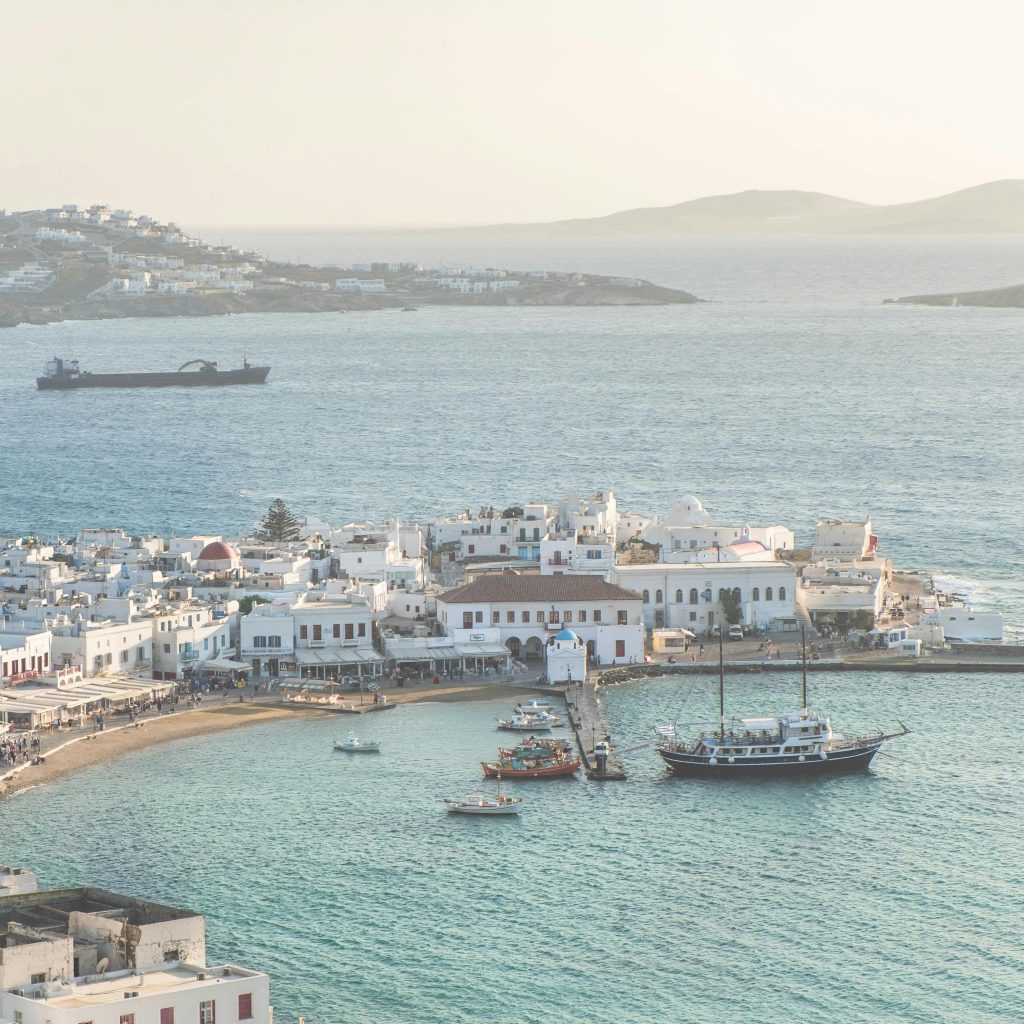
Mykonos
Mykonos occupies a unique position in the Cyclades: an island where scale, infrastructure, and global visibility intersect more clearly than anywhere else in Greece. Its reputation for nightlife is well-earned, but it is only one layer of a place shaped equally by Cycladic architecture, maritime history, and a highly developed hospitality scene. The island’s compact size concentrates energy beaches, town life, and nightlife exist within short distance of one another, creating a rhythm that shifts naturally from day to night. Mykonos Town (Chora) is the island’s anchor. Its narrow streets, whitewashed houses, and seafront paths create a dense urban fabric that supports boutiques, galleries, churches, and restaurants without feeling overbuilt. By day, the town is visual and architectural; by evening, it becomes social, with sunset walks leading seamlessly into dining and nightlife. Unlike larger islands, Mykonos does not separate “quiet” and “lively” zones — they overlap, allowing visitors to engage at their own pace. Nightlife remains a defining feature, but in 2026 it is less about excess and more about production and setting. Beach clubs, open-air venues, and curated music experiences are integrated into the island’s landscape rather than detached from it. At the same time, inland areas such as Ano Mera and the island’s northern coast preserve a slower, more local rhythm, offering contrast and relief from the intensity. This balance is what allows Mykonos to sustain both its global profile and its day-to-day life.
Key Landmarks & Cultural Highlights
1. Windmills of Mykonos
Standing above Mykonos Town, the windmills are the island’s most recognisable symbol, reflecting its agricultural past and offering elevated views over the town and sea, particularly at sunset.
2. Panagia Paraportiani
A complex of five interconnected churches formed over centuries, Panagia Paraportiani is one of the most distinctive examples of Cycladic religious architecture, known for its sculptural whitewashed form.
3. Monastery of Tourliani (Ano Mera)
Located in the island’s main inland village, this 16th-century monastery features a carved marble bell tower and offers insight into Mykonos’ religious and community history away from the coast.
4. RARITY Gallery
A contemporary art space in Mykonos Town showcasing international artists, reflecting the island’s long-standing connection to design, creativity, and global culture.
5. Armenistis Lighthouse
Situated on the northern tip of the island, this lighthouse provides expansive views of the Aegean and a sense of Mykonos’ maritime orientation and geographic scale.
6. Ano Mera Village
The island’s traditional inland settlement, Ano Mera retains a quieter pace with a central square, local tavernas, and daily life that contrasts with the coastal zones.
7. Little Venice
A waterfront area where houses are built directly over the sea, known for its balconies, sunset views, and role as a social gathering point in the early evening.
8. Archaeological Museum of Mykonos
Housing artifacts from nearby Delos and the island itself, the museum provides historical context to Mykonos’ role in ancient Aegean trade and culture.
Beaches of Mykonos
1. Platis Gialos
2. Ornos
3. Psarou
4. Megali Ammos
5. Agrari
6. Agios Ioannis
7. Super Paradise
8. Elia
9. Paraga
10. Lia
11. Fokos
12. Kalafatis
13. Panormos
14. Old Port Beach
15. Agios Stefanos
16. Kapari
17. Kalo Livadi
18. Agios Sostis
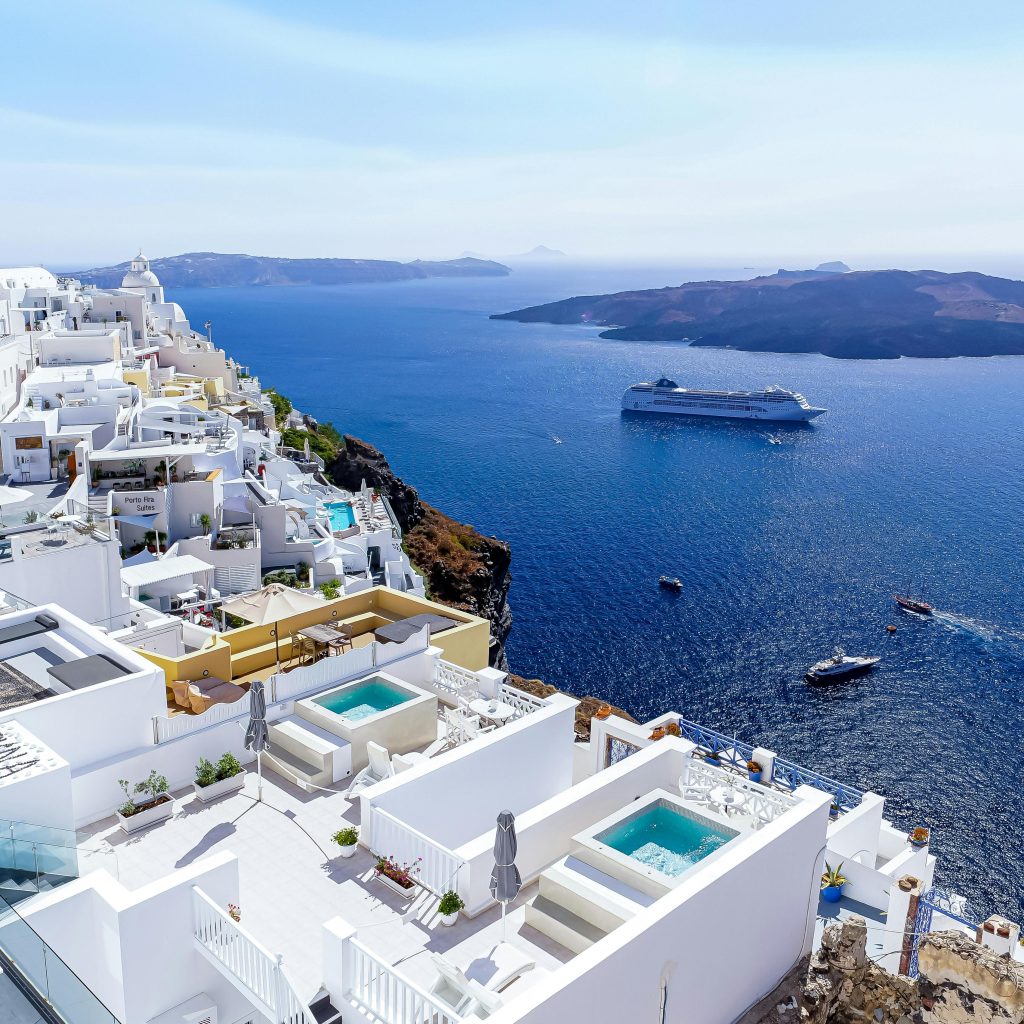
Santorini
Santorini is not experienced horizontally like most Greek islands it is experienced vertically. Its identity is shaped by elevation, volcanic rupture, and the caldera itself, which defines how the island is built, viewed, and navigated. In 2026, Santorini remains one of Greece’s most visited destinations, but its appeal lies less in novelty and more in geological and historical singularity. There is no comparable island in the Aegean that combines settlement, archaeology, and natural formation so tightly. The caldera-facing towns of Oia, Fira, and Imerovigli function as observation points rather than beach hubs. Life here is oriented toward views, light, and spatial drama rather than movement. Inland villages such as Pyrgos retain a more traditional structure, revealing how the island functioned before tourism reshaped its coastline-facing narrative. Santorini rewards intentional pacing those who shift away from peak hours and singular viewpoints experience a quieter, more dimensional version of the island. Tourism is undeniably present, but it is also highly structured. Santorini absorbs volume through zoning: cruise traffic concentrates in Fira, sunsets gather crowds in Oia, while archaeological and inland sites remain comparatively calm. This segmentation allows visitors to engage deeply without constant friction. What defines Santorini today is not romance, but precision in architecture, agriculture, and how human settlement adapts to an extreme landscape.
Key Landmarks & Cultural Highlights
1.Oia
Positioned at the northern edge of the caldera, Oia is defined by its layered architecture and uninterrupted sea views. Beyond sunsets, it offers restored captains’ houses, galleries, and a distinct village layout shaped by maritime wealth.
2. Ancient Thera
Located on Mesa Vouno, Ancient Thera reveals the island’s classical past through Hellenistic, Roman, and Byzantine remains, paired with commanding views over both sides of the island.
3. Castle of Oia
The remains of a Venetian-era fortress, now primarily a viewpoint, reflect Santorini’s medieval defensive history and its role in Aegean trade routes.
4. Akrotiri Archaeological Site
A preserved Bronze Age settlement buried by volcanic ash, Akrotiri provides rare insight into advanced urban planning and daily life in the prehistoric Aegean.
5. Museum of Prehistoric Thera
Located in Fira, this museum contextualises Akrotiri through frescoes, pottery, and artifacts, offering essential historical grounding to the island’s narrative.
6. Akrotiri Lighthouse
Situated on the island’s southwestern edge, the lighthouse offers open views of the Aegean and a quieter perspective on Santorini’s volcanic coastline.
7. Pyrgos Kallistis
Once the island’s capital, Pyrgos is a fortified village built around a hilltop castle, known for its preserved alleys, churches, and panoramic views.
8. Three Bells of Fira
One of Santorini’s most recognisable architectural compositions, representing the island’s religious and visual identity rather than functioning as a standalone site.
9. Tomato Industrial Museum
A former processing plant documenting Santorini’s agricultural history, particularly its volcanic-soil tomato cultivation.
10. D. Nomikos Conference Centre
A restored neoclassical mansion hosting exhibitions and cultural events, reflecting the island’s evolving contemporary cultural scene.
11. Moni Profiti Ilia
Located at the island’s highest point, this monastery offers expansive views and insight into Santorini’s religious and geographic orientation.
12. Santorini Wine Museum
An underground museum tracing the island’s distinctive viticulture, shaped by volcanic soil and basket-trained vines.
13. Skaros Rock
A prominent rock formation near Imerovigli, once the island’s medieval capital, offering a walkable route combining history and caldera views.
Beaches of Santorini
1. Kamari Beach
2. Perissa Beach
3. Ammoudi Bay
4. Vlychada Beach
5. Caldera Beach
6. Monolithos Beach
7. Red Beach
8. Perivolos Beach
9. White Beach
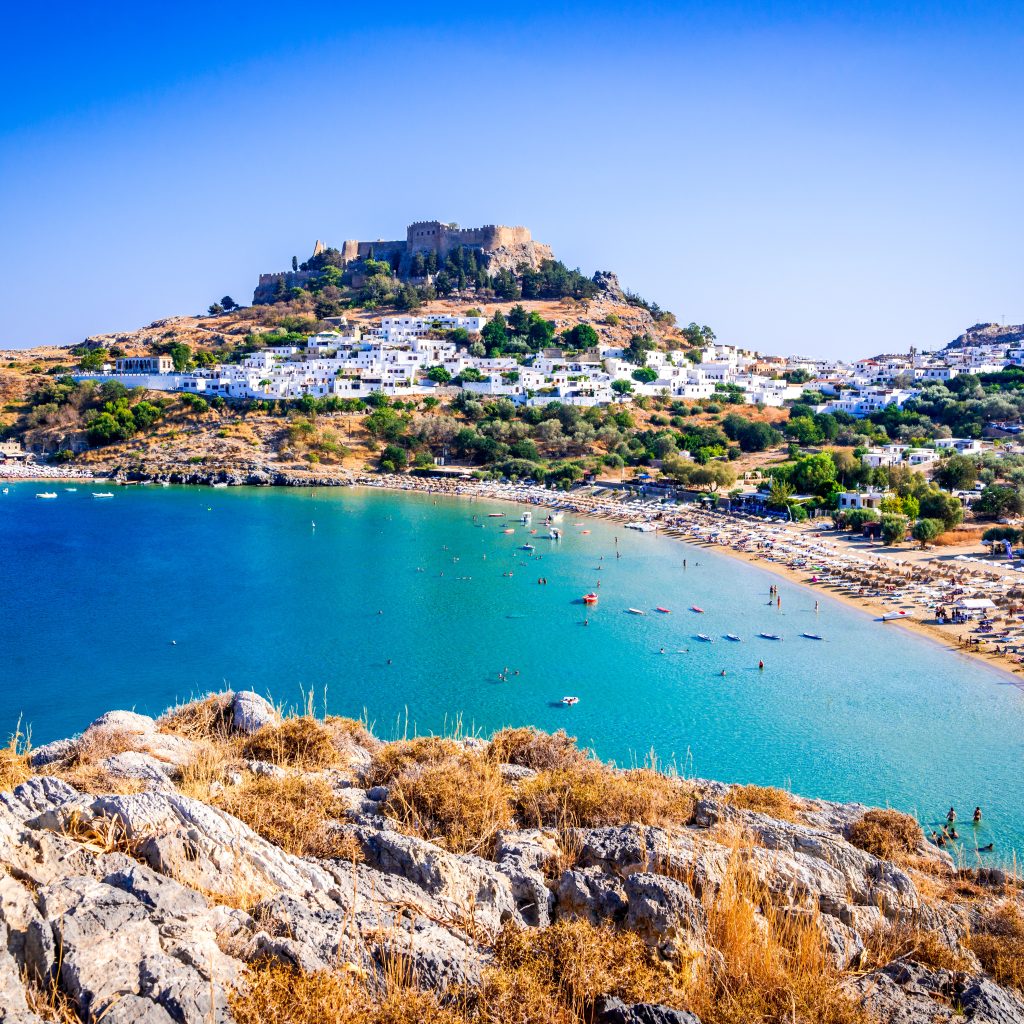
Rhodes
Rhodes operates on a different scale from most Greek islands. As the largest island in the Dodecanese, it functions less as a single destination and more as a collection of historical layers, landscapes, and settlements spread across a wide geography. In 2026, its appeal lies in this breadth: medieval fortifications, classical ruins, Ottoman and Italian-era influences, and long stretches of varied coastline that feel distinctly regional rather than uniform. The island’s identity is anchored in its medieval past. Rhodes Town, with its fortified Old City, remains one of the most intact medieval urban centres in Europe, shaping how the island is perceived and navigated. Beyond the capital, villages like Lindos and Archangelos reveal different rhythms — whitewashed Cycladic forms in the south, stone-built traditions inland, and agricultural plains connecting coast to interior. Rhodes rewards movement; staying in one area offers only a partial understanding of the island. Tourism is well established but widely dispersed. Northern beaches lean organised and urban, while the east coast balances family-friendly shores with sheltered coves. The west remains windier and less developed, appealing to those drawn to landscape and openness rather than convenience. What defines Rhodes today is continuity — an island that integrates tourism without flattening its historical depth or geographic variety.
Key Landmarks & Cultural Highlights
1. Medieval City of Rhodes (UNESCO World Heritage Site)
A fully fortified old town featuring gates, walls, and preserved streets that reflect the island’s role as a Crusader stronghold.
2. Palace of the Grand Master
A monumental medieval fortress and former seat of the Knights of St. John, now housing exhibitions that trace Rhodes’ layered history.
3. Street of the Knights
One of Europe’s best-preserved medieval streets, lined with historic inns that once housed knights from different regions.
4. Archaeological Museum of Rhodes
Located in the former Hospital of the Knights, this museum presents artifacts from ancient Rhodes through the Roman period.
5. Acropolis of Lindos
A dramatic clifftop site combining ancient temples and medieval fortifications, overlooking one of the island’s most recognisable bays.
6. Lindos Village
A traditional settlement of whitewashed houses beneath the Acropolis, known for its preserved layout and walkable scale.
7. Kallithea Springs
An Italian-era spa complex combining architectural restoration with coastal views and swimming access.
8. Mandraki Harbour
The historical port of Rhodes Town, marked by windmills and modern marina life, linking the island’s ancient and contemporary roles.
9. Acropolis of Rhodes (Monte Smith)
An archaeological site overlooking Rhodes Town, featuring the Temple of Apollo and remnants of ancient civic life.
10. Castle of Monolithos
A remote medieval ruin perched on a rock formation in the south, offering expansive coastal views and a sense of isolation.
11. Butterflies Valley (Petaloudes)
A protected natural reserve where thousands of butterflies gather seasonally, reflecting the island’s ecological diversity.
12. Filerimos Monastery
A hillside religious site near Ialyssos, known for its processional paths and panoramic views over the island’s western plains.
Beaches of Rhodes
1. Kolympia Beach
2. Kallithea Beach
3. Lindos Beach (Megali Paralia)
4. St. Paul’s Bay (Limanaki Agios Pavlos)
5. Anthony Quinn Bay
6. Akti Miaouli Beach
7. Stegna Beach
8. Ixia Beach
9. Ialissos Beach
10. Vlicha Beach
11. Pefki Beach
12. Theologos Beach
13. Lardos Beach
14. Elli Beach
15. Tsambika Beach
16. Haraki Beach
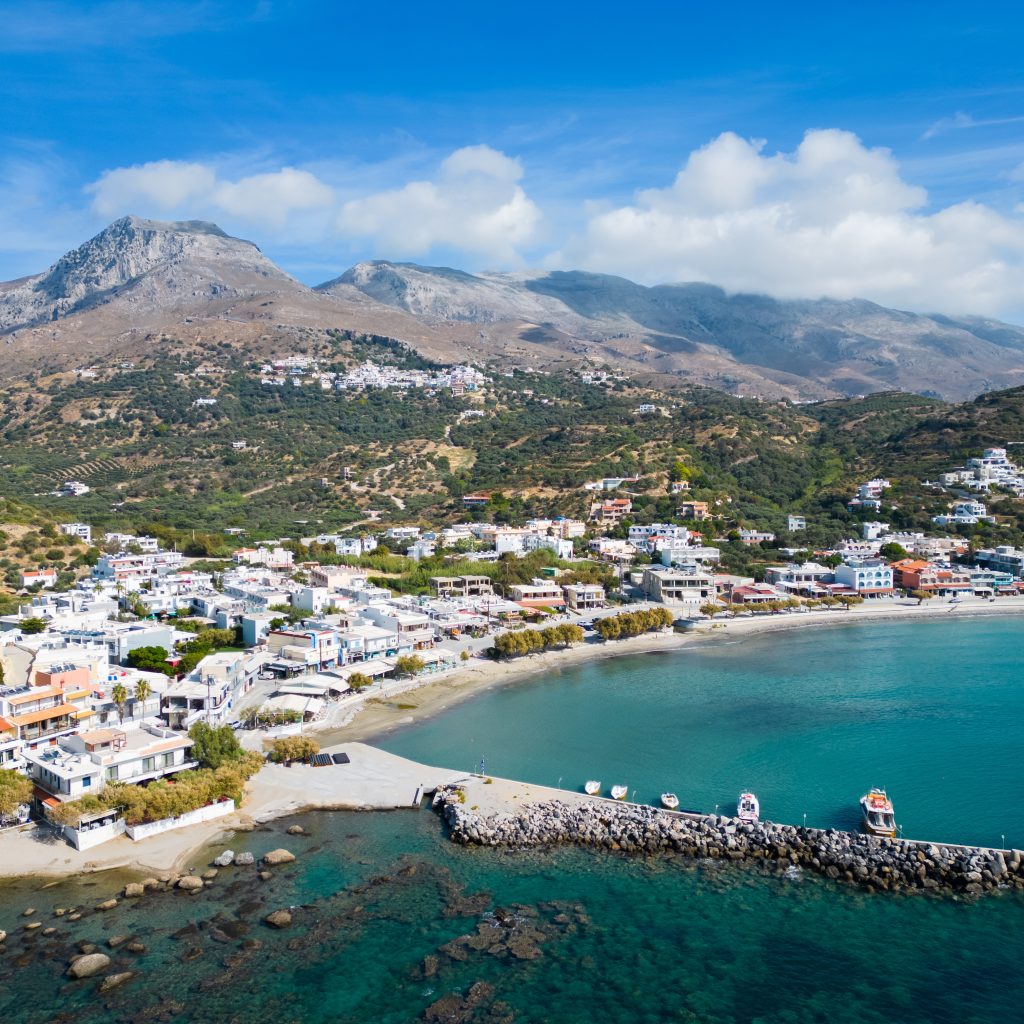
Crete
Crete is not experienced as a single destination. It is a self-contained world geographically vast, historically layered, and culturally distinct from the rest of Greece. As the largest Greek island, Crete functions more like a region than a resort, with multiple cities, mountain ranges, agricultural plains, and coastlines that differ dramatically from east to west. In 2026, its appeal lies in this scale and autonomy. The island’s historical weight is unmatched. From the Minoan civilisation Europe’s earliest advanced society to Venetian ports, Ottoman fortresses, and modern Cretan life, history is not preserved behind glass but embedded in daily routines. Cities such as Chania, Rethymno, and Heraklion each reflect different chapters of this past, while inland villages maintain traditions shaped by isolation, land, and seasonal rhythms. Crete rewards intentional travel. Distances are real, landscapes shift quickly, and experiences vary widely depending on where you base yourself. Beaches range from pink-sand lagoons to rugged southern coves; mountains cut through the island’s spine; food culture remains deeply local, grounded in produce, olive oil, and time-honoured methods. What defines Crete today is depth an island that does not adapt itself to visitors, but invites them to meet it on its own terms.
Key Landmarks & Cultural Highlights
1. Knossos Palace
The ceremonial centre of the Minoan civilisation, offering insight into Europe’s earliest complex society and its architectural sophistication.
2. Heraklion Archaeological Museum
Home to the most important collection of Minoan artefacts in the world, providing essential context to Crete’s ancient history.
3. Old Venetian Port of Chania
A preserved harbour district reflecting Venetian and Ottoman influence, now central to Chania’s social and cultural life.
4. Rethymno Old Town & Fortezza
A compact historic centre blending Venetian architecture with Ottoman details, crowned by a hilltop fortress overlooking the city.
5. Arkadi Monastery
A powerful symbol of Cretan resistance and identity, remembered for its role in the 19th-century uprising against Ottoman rule.
6. Samaria Gorge
One of Europe’s longest gorges, cutting through the White Mountains and offering a dramatic perspective on Crete’s interior landscape.
7. Cave of Diktaion Andron
Traditionally associated with the birth of Zeus, this cave links Cretan geography to ancient myth and ritual.
8. Lychnostatis Open-Air Museum
A living museum presenting traditional Cretan architecture, crafts, and rural life in a reconstructed village setting.
9. Morosini Fountain (Lions Square)
A Venetian-era fountain that remains a central meeting point in modern Heraklion.
Beaches of Crete
1. Elafonissi Beach
2. Balos Beach
3. Vai Beach
4. Falassarna Beach
5. Preveli Beach
6. Istro Beach
7. Matala Beach
8. Rodakino Beach
9. Plakias Beach
10. Tymbaki Beach
11. Makris Gialos Beach
12. Sissi Beach
13. Agia Fotia Beach
14. Loutraki Beach
15. Marathi Beach
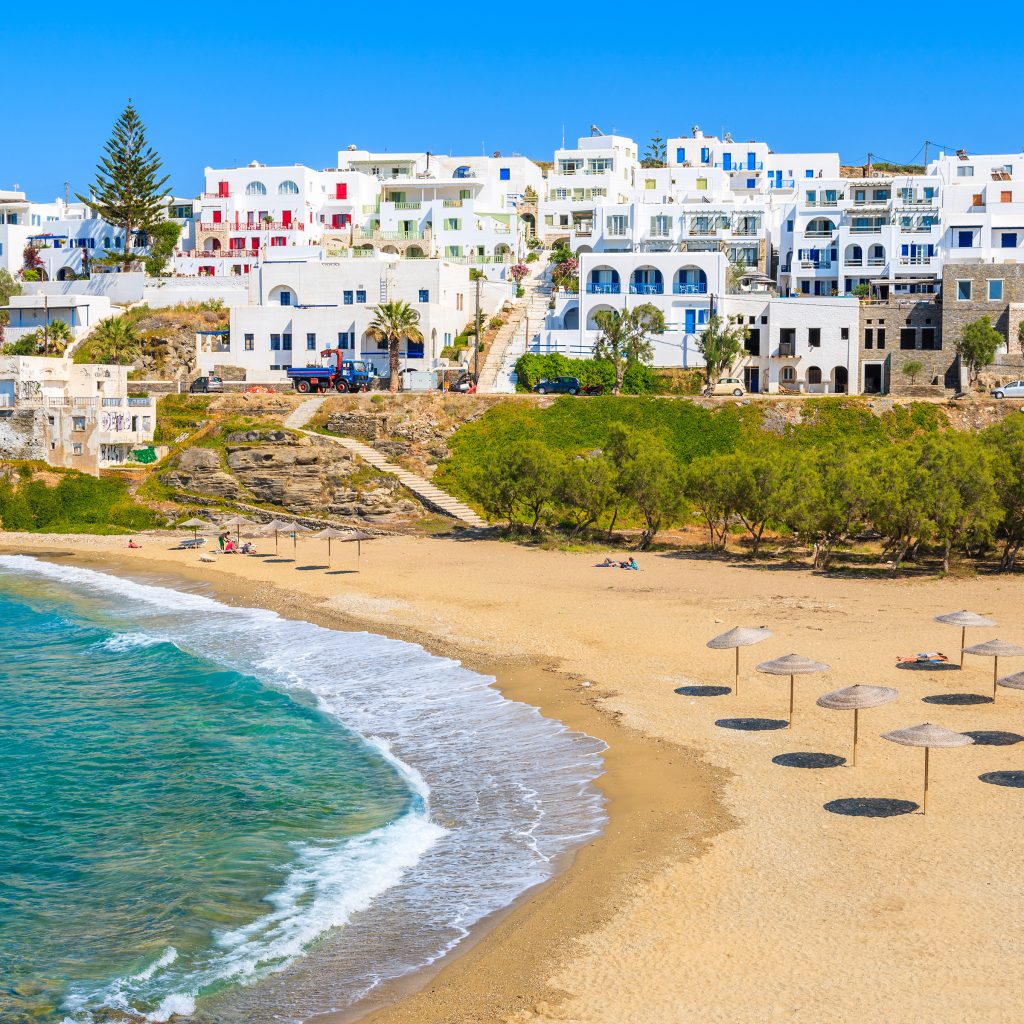
Paros
Paros occupies a rare position in the Cyclades: balanced, confident, and quietly sophisticated. In 2026, its appeal lies not in spectacle but in liveability an island that supports movement, contrast, and rhythm without demanding excess. Whitewashed towns open naturally onto agricultural interiors; lively harbours transition easily into calm villages; organised beaches coexist with low-key coves. Nothing here feels forced. The island’s structure is part of its strength. Paroikia functions as the cultural and logistical centre, grounding Paros in history and daily life, while Naoussa introduces a more contemporary, social energy through its marina, dining scene, and evening atmosphere. Inland, villages like Lefkes preserve a slower cadence, offering relief from the coast without disconnecting from it. Paros is best experienced through variation rather than focus. Days unfold across different settings town, beach, village, path without the need to choose one identity over another. What defines Paros today is clarity without rigidity: a Cycladic island that feels complete, adaptable, and increasingly refined without losing its sense of place.
Key Landmarks & Cultural Highlights
1. Paroikia (Paros Town)
2. Panagia Ekatontapyliani
One of Greece’s most important early Christian monuments, dating back to the 4th century and central to Paros’ religious and architectural heritage.
3. Frankish Castle of Paroikia
A medieval fortification built using ancient marble fragments, offering views across the town and insight into Paros’ layered history.
4. Naoussa & Venetian Castle
A former fishing village turned cultural and social hub, where the remains of a Venetian fortress overlook the harbour.
5. Paros Park
A protected coastal area featuring walking trails, open-air cultural events, and expansive views over the Aegean.
6. Lefkes Village
A preserved mountain village once serving as the island’s capital, known for its neoclassical homes and pedestrian lanes.
7. Archaeological Museum of Paros
Housing artefacts from the Archaic to Roman periods, including sculptures linked to Parian marble craftsmanship.
8. Cycladic Folklore Museum (Lefkes)
A small but informative collection documenting traditional island life, crafts, and domestic architecture.
Beaches of Paros
1. Golden Beach
2. New Golden Beach
3. Kolymbithres Beach
4. Santa Maria Beach
5. Krios Beach
6. Agia Irini Beach
7. Logaras Beach
8. Parasporos Beach
9. Monastiri Beach
10. Marchello Beach
11. Pounda Beach
12. Livadia Beach
13. Agioi Anargyri Beach
14. Agios Nikolaos Beach
15. Delfini Beach
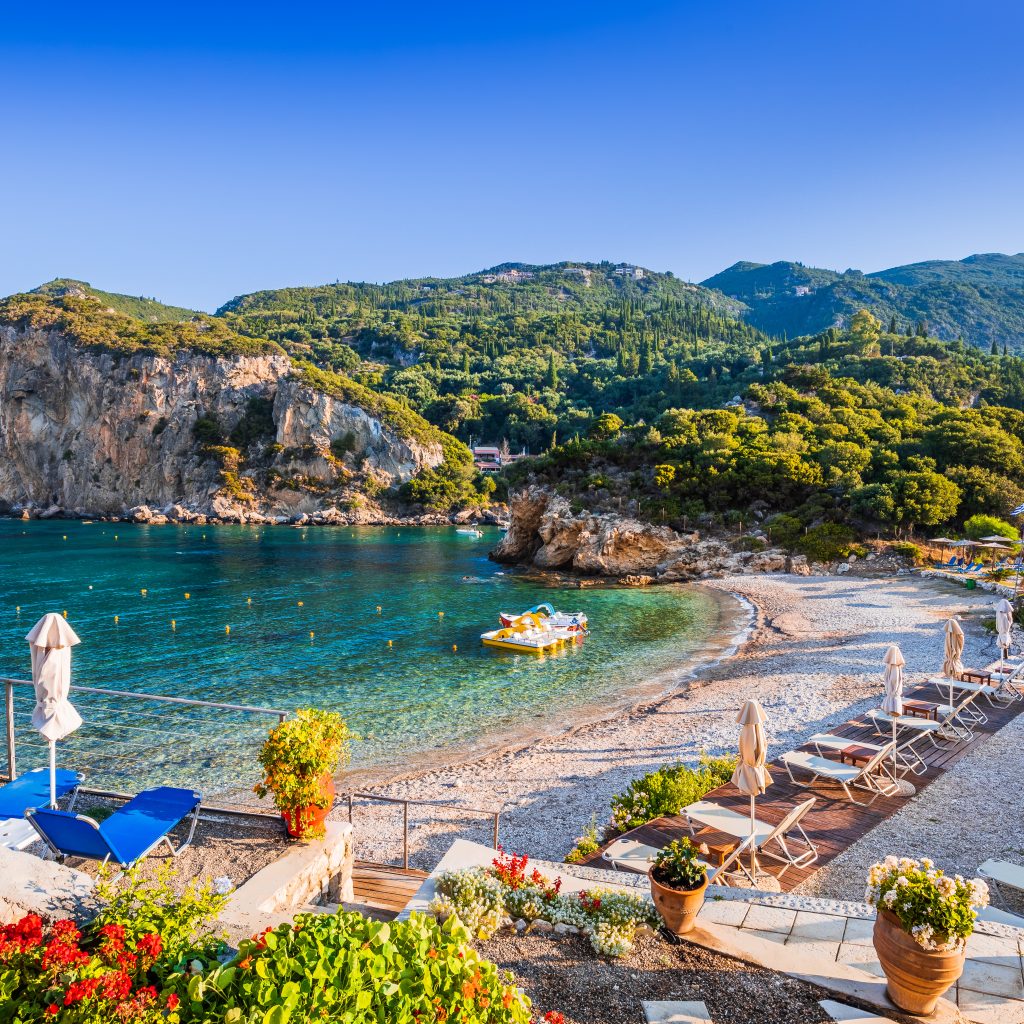
Corfu
Corfu stands apart from the Greek island narrative. Positioned in the Ionian Sea and shaped by centuries of Venetian, French, and British rule, it presents a landscape and cultural identity unlike anywhere else in Greece. In 2026, Corfu’s defining quality is layering architectural, ecological, and historical rather than uniformity.The island is notably green, structured by olive groves, low mountains, and sheltered bays rather than arid terrain. Corfu Town functions as a true urban centre, with neoclassical buildings, arcaded streets, and public squares that feel continental in rhythm. Beyond the town, the island unfolds gradually: fortified hilltops, quiet villages, and coastlines that shift from dramatic western sands to calm eastern coves. Corfu is not an island of immediacy. It rewards time, movement, and attention to detail from the formality of its historic core to the softness of daily life along its villages and beaches. What defines Corfu today is depth: an island whose identity is built through continuity rather than reinvention.
Key Landmarks & Cultural Highlights
1. Corfu Old Town (UNESCO World Heritage Site)
A preserved historic centre defined by Venetian fortifications, neoclassical buildings, and narrow lanes shaped by centuries of European rule.
2. Old Fortress
A strategic Venetian stronghold offering panoramic views over Corfu Town and the Ionian Sea.
3. New Venetian Fortress
An elevated defensive complex overlooking the harbour, illustrating Corfu’s military importance during the Venetian era.
4. Spianada Square
One of the largest public squares in Greece, bordered by historic buildings and used as a social and civic gathering space.
5. Church of Saint Spyridon
Corfu’s most significant religious site, housing the relics of the island’s patron saint.
6. Achilleion Palace
A 19th-century neoclassical palace built for Empress Elisabeth of Austria, set above the island’s southern coast.
7. Mon Repos Estate
A neoclassical estate surrounded by gardens, historically significant and associated with modern European royalty.
8. Museum of Asian Art
Housed in the Palace of St. Michael and St. George, featuring one of Europe’s notable collections of Asian works.
9. Angelokastro
A Byzantine hilltop fortress dominating Corfu’s northwest, offering insight into the island’s medieval defensive network.
10. Vlacherna Monastery & Pontikonisi
An iconic waterfront monastery connected by a narrow causeway, forming one of Corfu’s most recognisable landscapes.
Beaches of Corfu
1. Paleokastritsa
2. Agios Gordios
3. Glyfada
4. Dassia
5. Barbati
6. Nissaki
7. Avlaki
8. Bataria (Kassiopi)
9. Arillas
10. Agios Georgios Pagon
11. Canal d’Amour (Sidari)
12. Halikounas
13. Issos
14. Pelekas
15. Marathias
16. San Kerasia
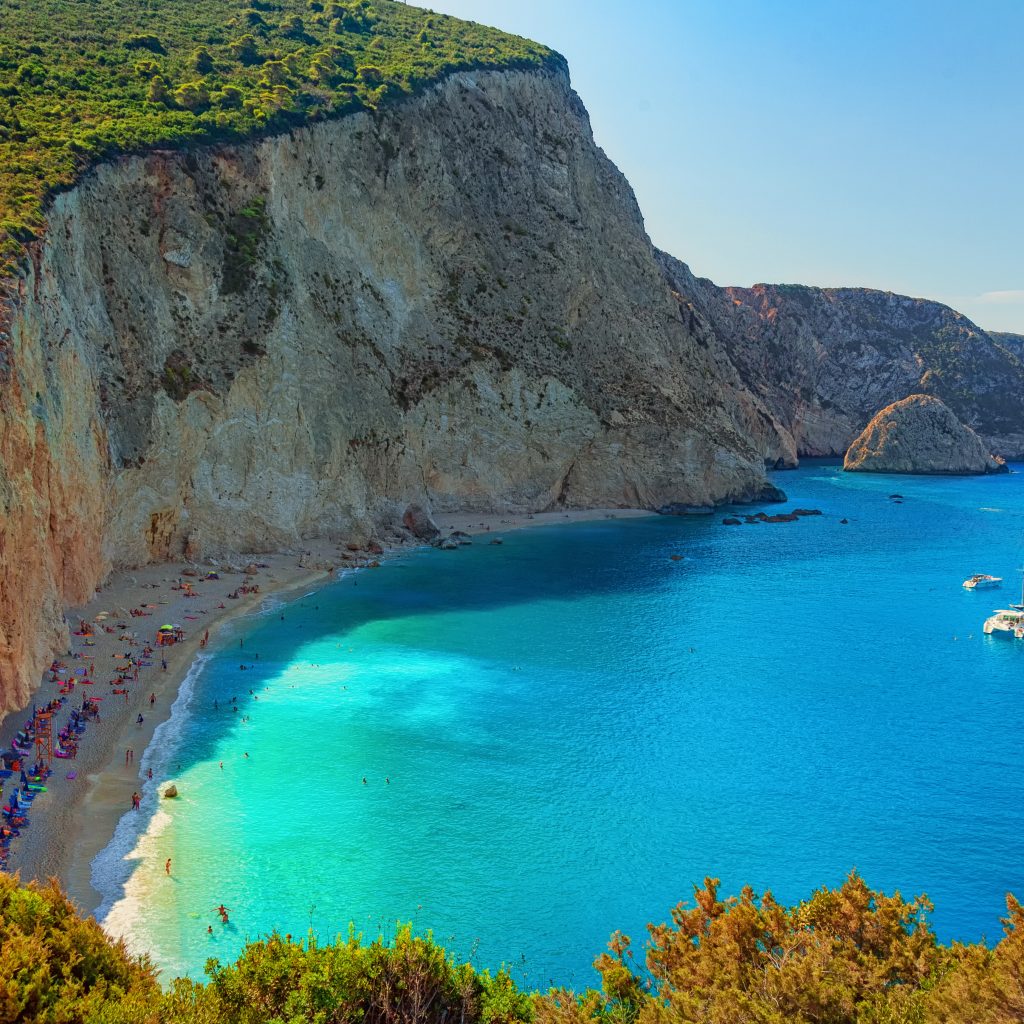
Lefkada
Lefkada occupies a singular position among the Greek islands. Physically connected to mainland Greece by a floating bridge, it feels simultaneously accessible and remote. In 2026, Lefkada’s identity is defined by contrast: steep limestone cliffs against electric Ionian blues, mountainous interiors descending abruptly into open sea, and long western coastlines shaped more by wind and geology than by human intervention.Unlike many islands shaped by dense settlements, Lefkada remains landscape-led. Villages are scattered rather than dominant, and the island’s character unfolds through elevation, movement, and coastline rather than urban rhythm. The western shore, exposed to the open Ionian, delivers some of the most dramatic beachscapes in Greece, while the eastern coast is calmer, sheltered, and structured around small harbours and natural bays. Lefkada is not ornamental. It is raw, expansive, and visual by nature an island defined by scale and perspective, where the experience is shaped as much by cliffs, wind, and light as by culture itself.
Key Landmarks & Natural Highlights
1. Faneromeni Monastery
A historic monastery overlooking Lefkada Town, offering insight into the island’s religious heritage and elevated views across the northern coastline.
2. Agia Mavra Fortress
A medieval fortification guarding the island’s entrance, reflecting Lefkada’s strategic importance through Venetian and Ottoman periods.
3.Nydri Waterfalls (Dimosari Gorge)
A natural landmark in the island’s interior, reached via shaded trails and surrounded by dense vegetation.
4. Archaeological Museum of Lefkada
A concise overview of the island’s ancient history, including prehistoric settlements and Ionian cultural influences.
5. Angelos Sikelianos Museum
Dedicated to one of modern Greece’s most influential poets, located in his former residence and focused on Lefkada’s literary legacy.
6. Cape Lefkatas (Doukato Lighthouse)
A dramatic southern headland historically linked to ancient myth, offering uninterrupted views over the open Ionian Sea.
Beaches of Lefkada
1. Porto Katsiki
2. Egremni
3. Kathisma
4. Mylos
5. Pefkoulia
6. Kalamitsi
7. Avali
8. Megali Petra
9. Gaidaros
10. Ammoussa
11. Agiofili
12. Mikros Gialos (Poros)
13. Desimi
14. Vlicho
15. Nidri
16. Agios Nikitas
17. Agios Ioannis
18. Vassiliki
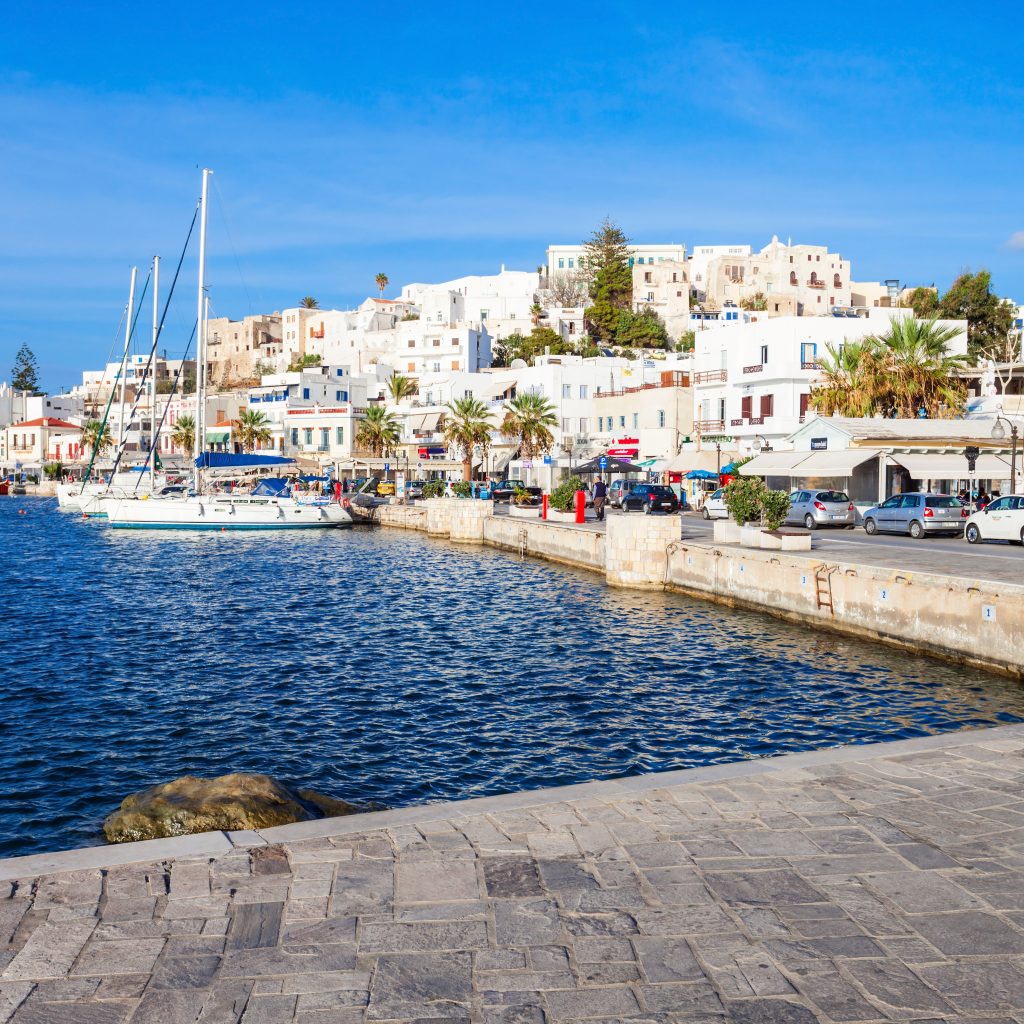
Naxos
Naxos is the geographic and cultural anchor of the Cyclades. Larger, greener, and more topographically varied than its neighbours, it presents an island defined by interior depth as much as coastline. In 2026, Naxos stands apart for its balance: long, open beaches on the western shore, fertile valleys at its core, and mountain villages that remain actively lived in rather than preserved.The island’s identity is rooted in continuity. Ancient sanctuaries, medieval towers, and Byzantine churches sit within a landscape still shaped by agriculture, marble quarrying, and local production. Unlike smaller Cycladic islands where life clusters around ports, Naxos extends inward — its character unfolding through elevation, movement, and seasonal rhythm. Naxos Town functions as a working capital rather than a spectacle, while villages like Filoti and Apeiranthos preserve a slower, interior pulse. The result is an island that feels complete: expansive without being overwhelming, traditional without feeling static, and naturally suited to long stays rather than short impressions.
Key Landmarks & Cultural Highlights
1. Temple of Apollo (Portara)
A monumental marble gateway overlooking Naxos Town, standing as the unfinished entrance to an ancient sanctuary and the island’s most recognisable landmark.
2. Temple of Demeter
A restored classical temple set within fertile countryside, reflecting Naxos’ historic role as an agricultural centre of the Cyclades.
3. Panagia Drosiani Church
One of the oldest Christian churches in Greece, known for its early Byzantine frescoes and secluded village setting.
4. Filoti Village
A traditional mountain settlement at the foot of Mount Zas, offering insight into Naxian daily life, local cuisine, and interior architecture.
5. Apeiranthos Village
A marble-paved village with a distinct cultural identity, home to small museums, stone houses, and strong local traditions.
6. Apollonas Kouros
An unfinished archaic statue resting near an ancient quarry, illustrating Naxos’ historical importance in marble craftsmanship.
7. Mount Zas (Oros Zevs)
The highest peak in the Cyclades, associated with ancient myth and offering panoramic views across the island.
8. Kitron Naxou – Vallindras Distillery
A historic distillery preserving the production of Kitron, the island’s signature citrus-based spirit.
9. Old Market Street (Naxos Town)
A central pedestrian route through the historic quarter, linking daily commerce with long-standing artisan activity.
Beaches of Naxos
1. Plaka
2. Agios Prokopios
3. Agia Anna
4. Agios Georgios (St. orge)
5. Mikri Vigla (Parthena)
6. Mikri Vigla (Sahara)
7. Orkos
8. Maragas
9. Aliko (Hawaii & Kedros)
10. Pyrgaki
11. Panormos
12. Stelida (Kleftonisia)
13. Glyfada
14. Kedros (Agia Anna)
15. Little Paradise
Milos
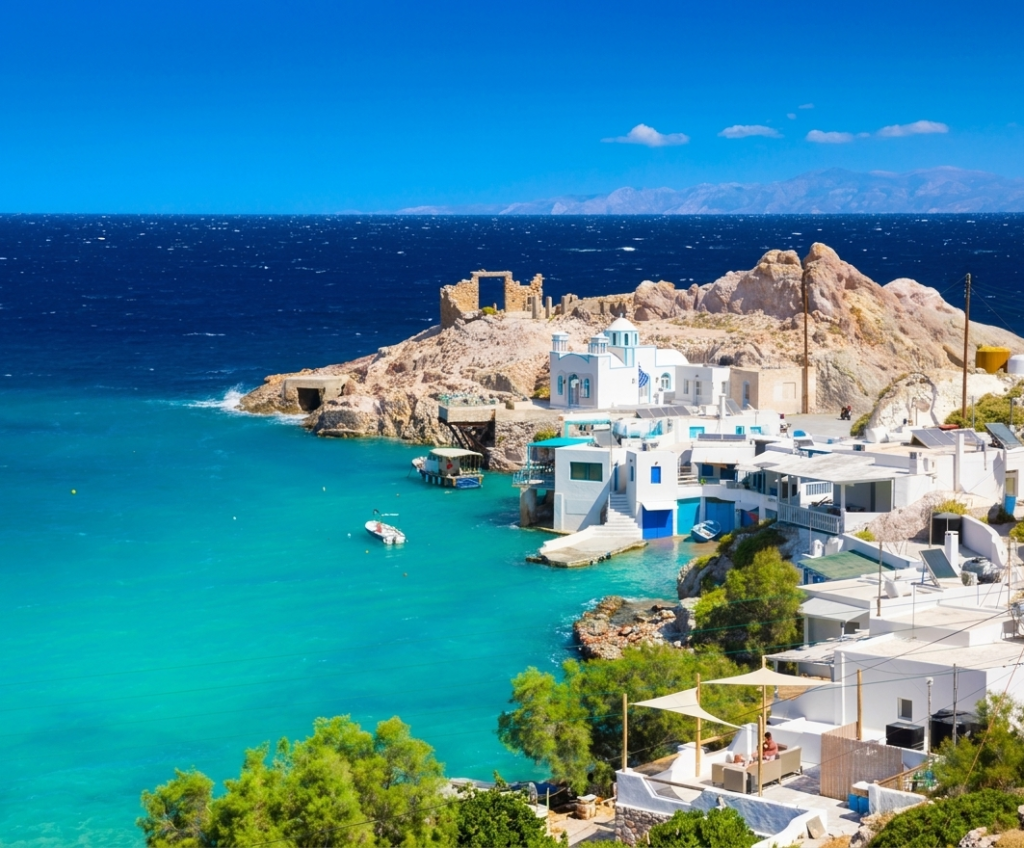
Milos is defined by formation rather than ornament. Shaped by volcanic activity and erosion, the island presents one of the most varied coastlines in the Aegean, where rock colour, texture, and scale shift continuously. In 2026, Milos stands out not through size or density, but through geological contrast coves carved into pale stone, collapsed sea caves, mineral-rich cliffs, and harbours shaped by natural amphitheatres.Historically, the island’s importance predates its modern reputation. From obsidian trade routes to classical settlements and early Christian catacombs, Milos has long operated as a crossroads rather than a retreat. That history remains visible today in its villages, port towns, and elevated capital, all arranged around the island’s natural harbour. Life on Milos unfolds laterally, following the coastline rather than concentrating inland. Fishing settlements, boat-access beaches, and compact towns maintain a strong relationship with the sea, while places like Plaka and Pollonia offer continuity without spectacle. Milos is best understood as an island experienced through movement by water, by road, and by shifting light where the landscape itself is the primary constant.
Key Landmarks & Cultural Highlights
1. Plaka (Chora)
2. Venetian Castle of Milos (Kastro)
A fortified settlement above Plaka offering panoramic views across the bay, particularly at sunset.
3. Adamantas (Adamas)
The main port and commercial centre, built around one of the largest natural harbours in the Mediterranean.
4. Pollonia
A low-key coastal village known for its harbourfront, ferry links to Kimolos, and balanced daily rhythm.
5. Mandrakia
A traditional fishing settlement recognised for its carved boat shelters (syrmata) and compact waterfront.
6. Firopotamos
A small coastal village with whitewashed houses, clear shallows, and preserved fishing architecture.
7. Catacombs of Milos
One of the most significant early Christian burial sites in Greece, carved into volcanic rock near Trypiti.
8. Ancient City of Melos
Ruins of the classical settlement overlooking the bay, reflecting the island’s strategic and commercial past.
9. Milos Mining Museum
A focused exhibition detailing the island’s long relationship with minerals, obsidian, and volcanic geology.
10. Sikia Cave
A collapsed sea cave accessible by boat, where light enters through an open roof and illuminates the interior.
Beaches of Milos
1. Sarakiniko
2. Kleftiko
3. Tsigrado
4. Firiplaka
5. Firopotamos
6. Paleochori
7. Papafragas
8. Agia Kiriaki
9. Provatas
10. Plathiena
11. Achivadolimni
12. Gerakas
13. Papakinou
14. Ammoudaraki
15. Adamas
Zakynthos
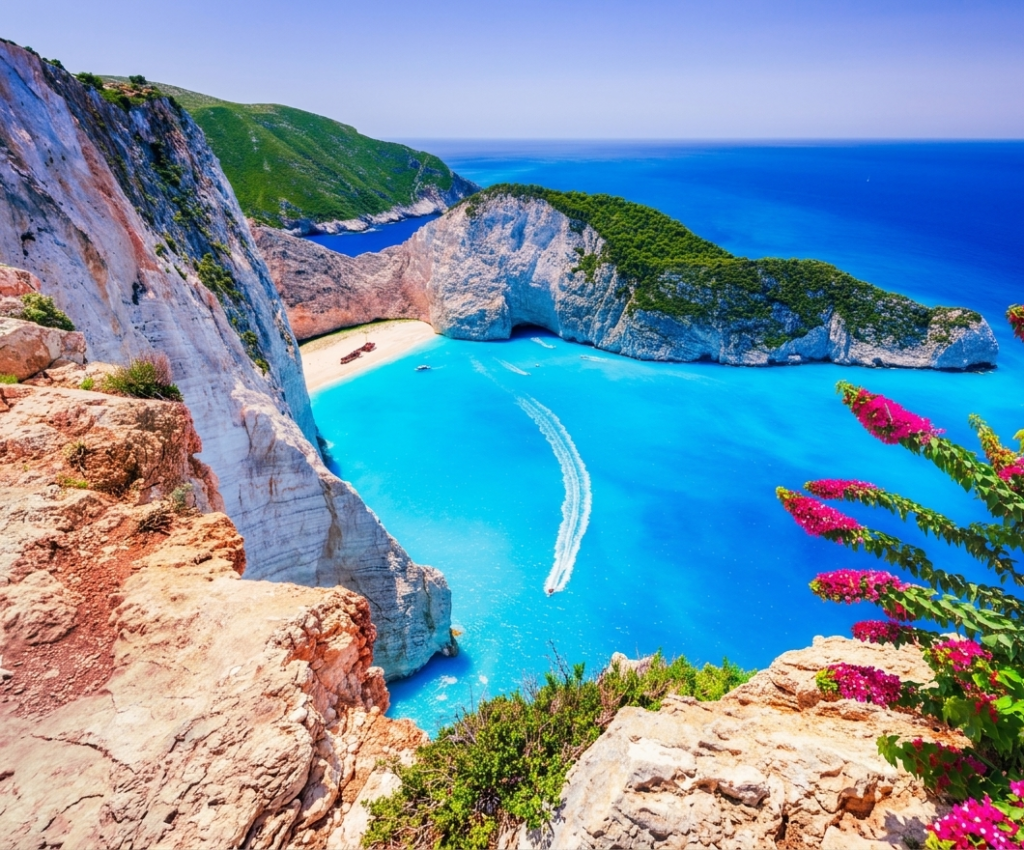
Zakynthos is an island shaped by exposure. Its western edge rises abruptly from the Ionian Sea in limestone cliffs and fractured headlands, while the south opens into broad, sandy bays protected by shallow waters and marine reserves. In 2026, Zakynthos remains one of Greece’s most visually striking islands, not because of density, but because of scale towering coastal formations offset by calm interior valleys and agricultural lowlands.The island’s identity is inseparable from its marine environment. Laganas Bay functions as both economic centre and ecological boundary, protected under the National Marine Park of Zakynthos to safeguard the nesting grounds of the loggerhead sea turtle (Caretta caretta). This dual role leisure destination and conservation zone defines much of the island’s modern rhythm, where access, timing, and movement matter. Zakynthos offers contrast rather than continuity. Quiet inland villages, cliffside monasteries, and viewpoints coexist with one of the most active nightlife scenes in the Ionian. Days are oriented toward the sea boat routes, coves, and visibility from above while nights concentrate energy in specific coastal zones. The island rewards those who move between its extremes rather than remain within one.
Key Landmarks & Cultural Highlights
1. Navagio (Shipwreck) Beach
A collapsed cove enclosed by vertical limestone cliffs, accessible only by boat, and home to the wreck of the MV Panagiotis.
2. Navagio Viewpoint (Anafonitria Lookout)
A clifftop vantage point offering a full aerial view of Navagio Beach, emphasizing the scale and isolation of the cove below.
3. Blue Caves
A series of sea caves along the northern coast where light reflection creates intense blue coloration within the water and rock.
4. Keri Cliffs
Sheer western-facing cliffs near Keri village, known for expansive sea views and sunset visibility.
5. Keri Lighthouse
A coastal landmark positioned above the cliffs, often used as a sunset viewpoint overlooking the open Ionian.
6. Marathonisi (Turtle Island)
An uninhabited island in Laganas Bay, shaped like a turtle, used as a nesting area by loggerhead sea turtles.
7. National Marine Park of Zakynthos
A protected marine zone covering Laganas Bay, regulating access and preserving key nesting and feeding habitats.
8. Zakynthos Town (Zante Town)
The island’s capital and cultural centre, rebuilt after the 1953 earthquake, combining neoclassical planning with waterfront promenades.
9. Solomos Square
The main civic square of Zakynthos Town, named after poet Dionysios Solomos and surrounded by museums and public buildings.
10. Church of St. Dionysios
A prominent church near the port housing the relics of Zakynthos’ patron saint.
11. Anafonitria Monastery
A historic monastery in the island’s northwest, associated with St. Dionysios and set within a rural landscape.
12. Bochali Hill
An elevated viewpoint above Zakynthos Town offering panoramic views over the harbor and coastline.
13. Askos Stone Park
A preserved natural area showcasing local flora, fauna, and traditional stone enclosures.
14. Traditional Villages (Keri, Volimes, Exo Chora)
Inland settlements maintaining agricultural traditions, stone architecture, and slower daily rhythms.
