
London is not a city that needs exaggeration. Its influence is visible in its institutions, its streets, and the way history continues to shape everyday life. For travellers willing to look beyond first impressions, London offers depth, contrast, and a sense of continuity few global cities can match.
This guide is written to help you experience the city with clarity and confidence — focusing on places that matter, and why they matter now
Big Ben
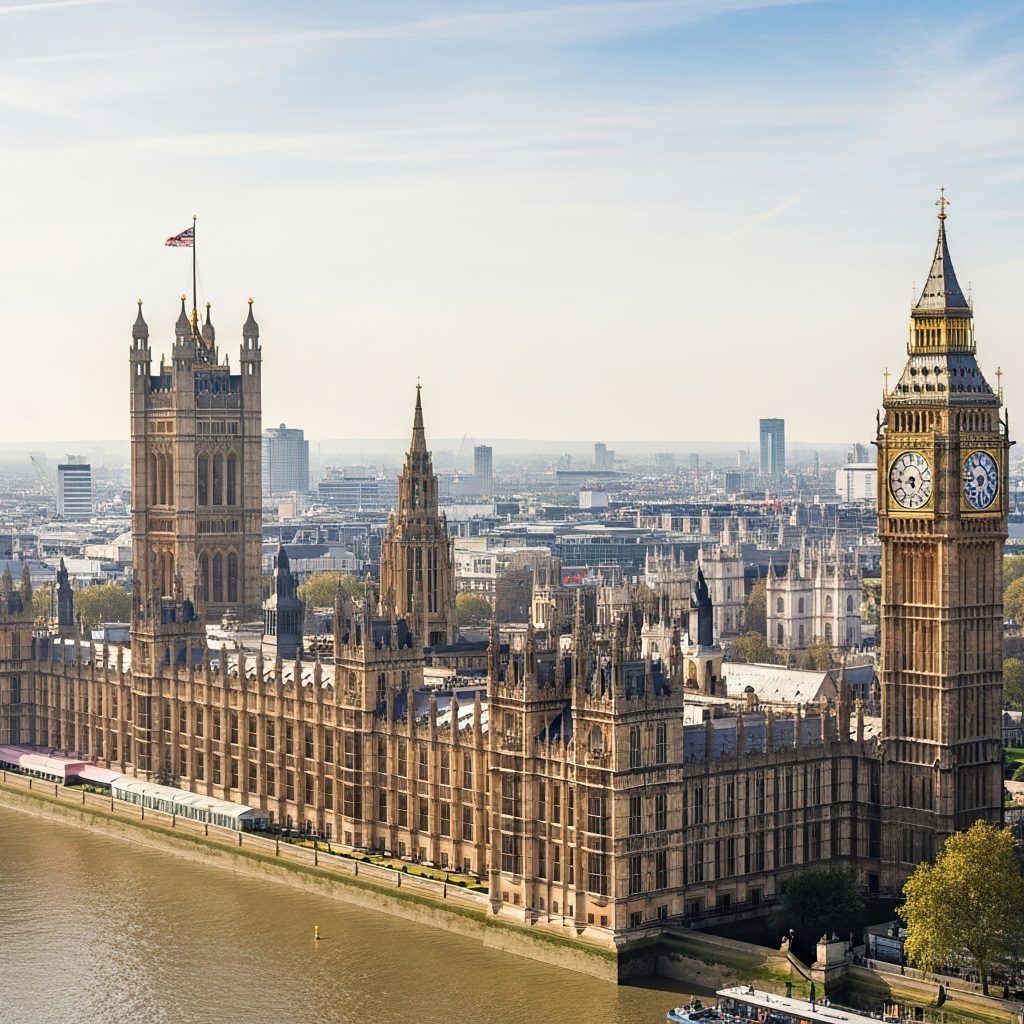
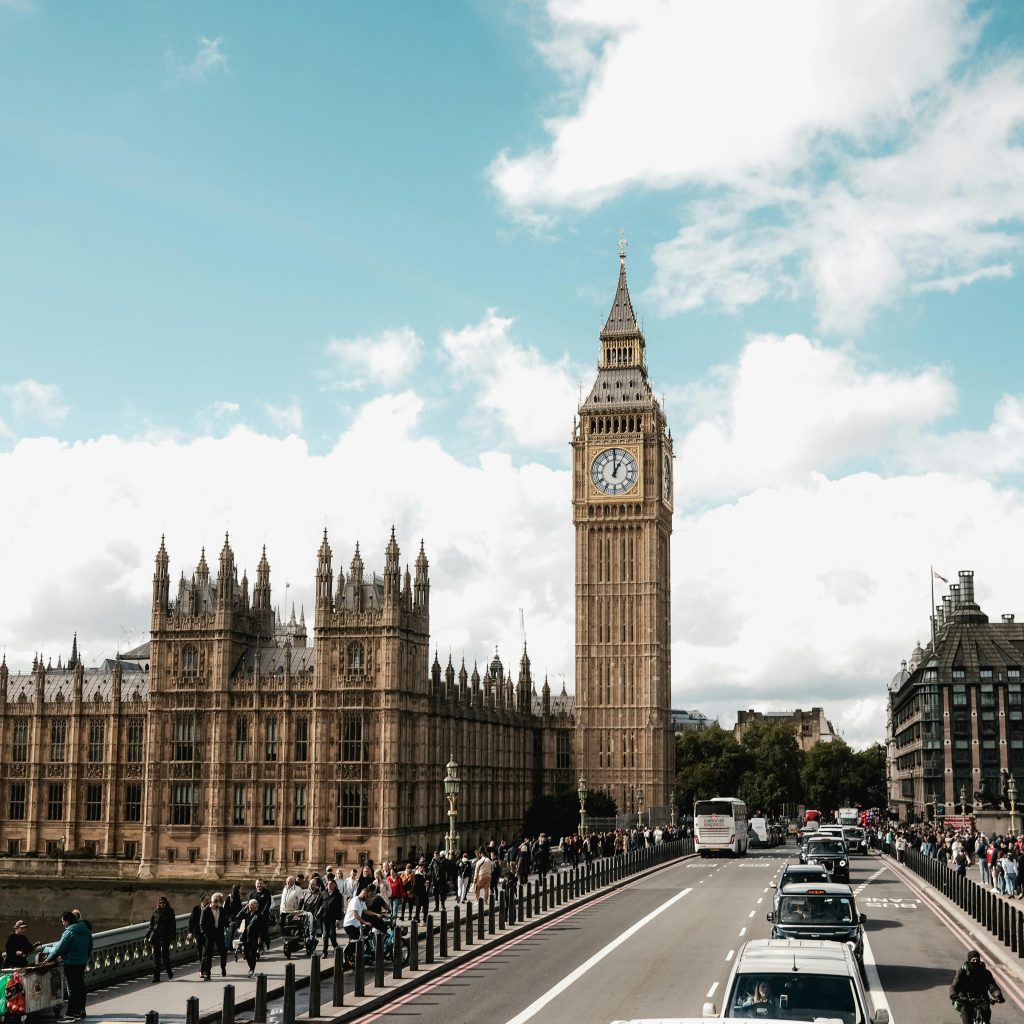
Big Ben remains one of London’s most recognisable landmarks, but its significance extends well beyond its silhouette. Officially, the name refers to the Great Bell housed within the Elizabeth Tower, part of the Palace of Westminster. Together, they form a working centre of government — not a static monument.
Following its multi-year restoration, the tower is now fully operational, with cleaned stonework, restored clock dials, and improved structural integrity that ensures its presence for decades to come. By 2026, the restoration has settled into its legacy phase: the tower is no longer “newly reopened,” but fully reintegrated into daily London life — chiming regularly, visible across the Thames, and once again part of the city’s rhythm.
What makes Big Ben particularly relevant today is its contrast with modern London. While the city continues to evolve rapidly — architecturally, culturally, and technologically — this area remains a constant. Standing here offers a rare sense of stability in a capital defined by change.
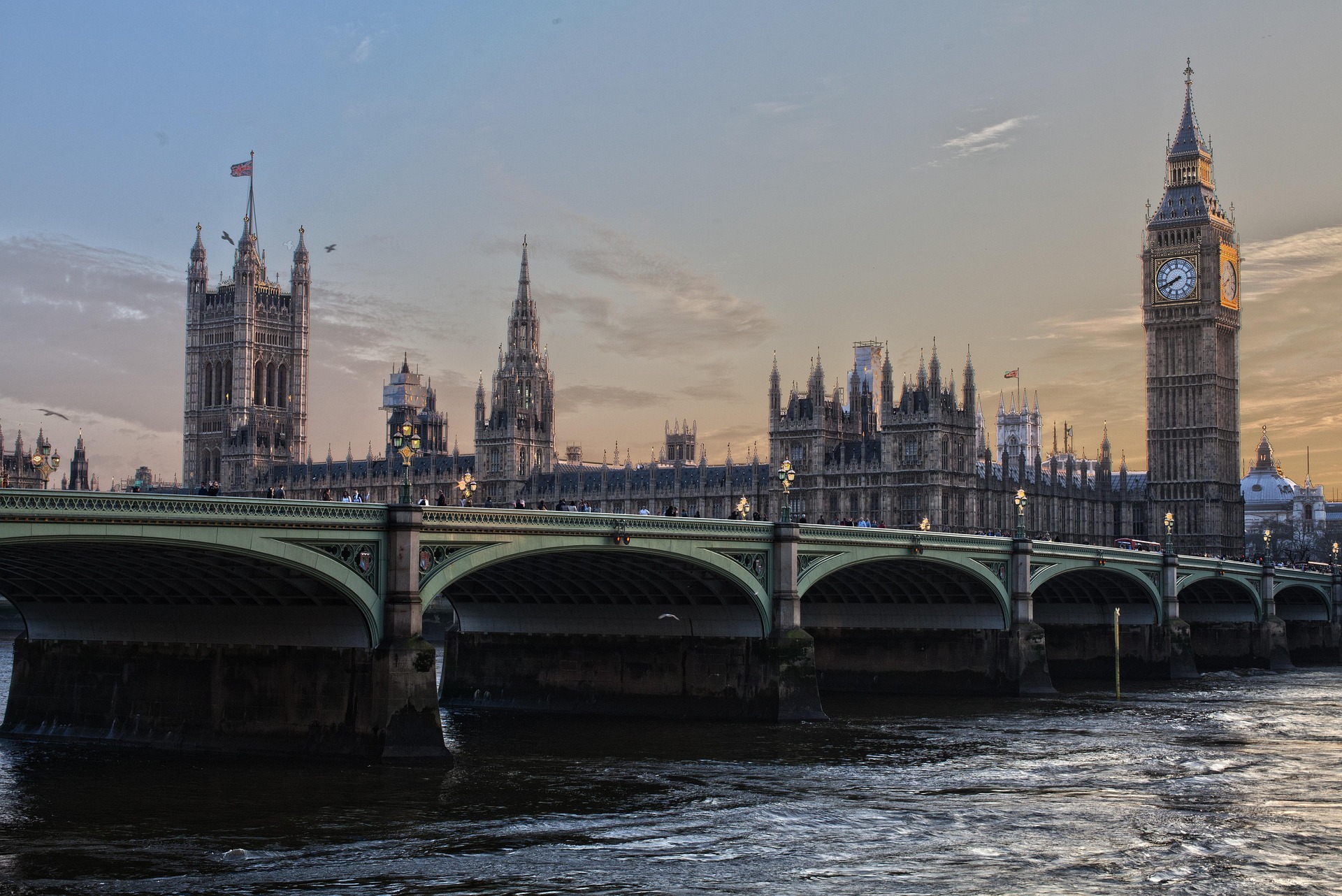
For visitors, the experience is as much about location as the structure itself. Westminster Bridge provides one of the clearest vantage points, especially in the early morning when the city feels quieter and more deliberate. The river, the Houses of Parliament, and the tower together frame a view that explains London more effectively than any description.
Big Ben is not a place to rush through. It works best as an anchor — the starting point from which the city’s layers begin to make sense.
Hyde Park
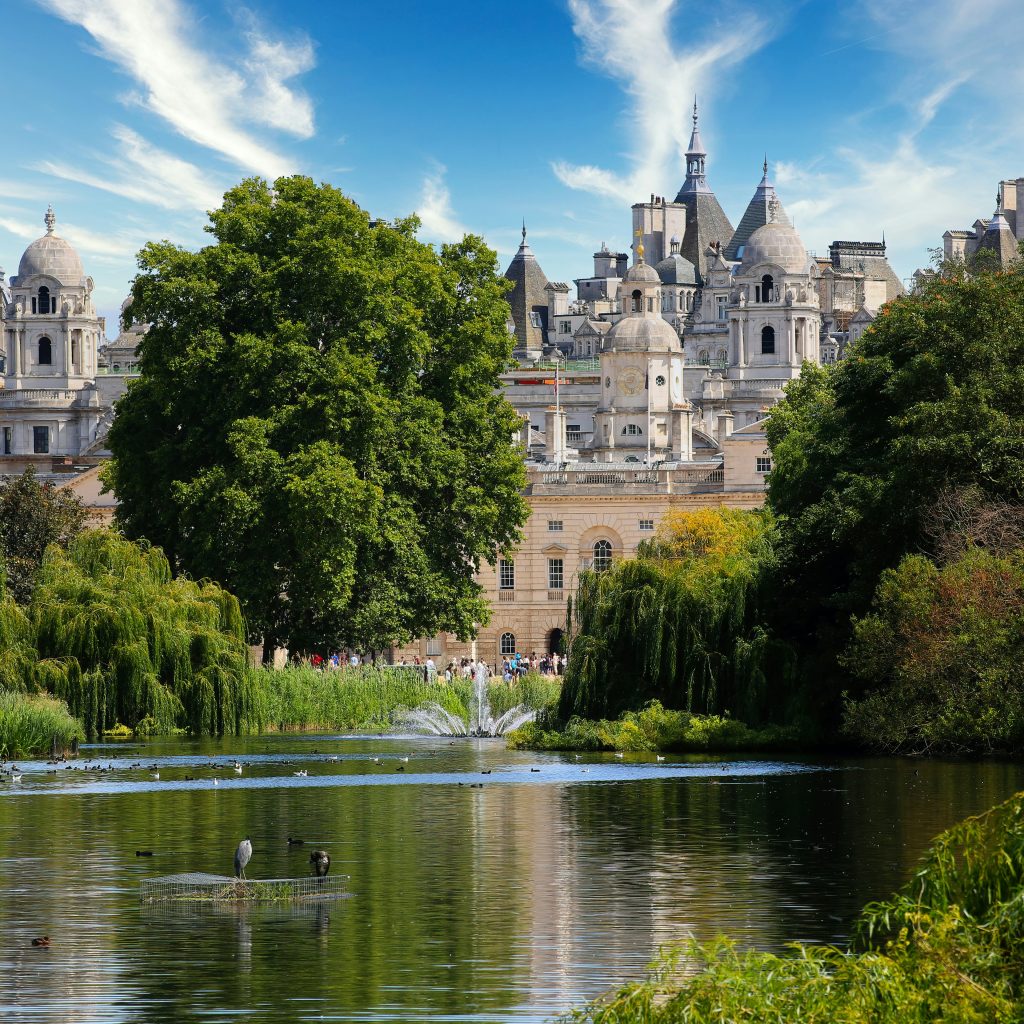
Hyde Park is one of London’s most defining contrasts: a vast, open landscape set within one of the world’s most densely layered capitals. Covering 350 acres, it functions less as a landmark and more as shared ground — a place where the city exhales.
What makes Hyde Park especially relevant today is how it reflects modern London life. By 2026, the park continues to balance heritage with daily use: early-morning runners, lunchtime walkers, families, and visitors all occupy the same space without ceremony. It is not curated for tourists — and that is precisely its value.
The park’s design encourages exploration rather than direction. Serpentine Lake divides the space naturally, offering quieter paths on one side and more social energy on the other. Whether walking along the water, sitting beneath mature plane trees, or passing through Speaker’s Corner, the experience feels unforced and distinctly local.
Hyde Park also provides perspective. From within it, the surrounding city recedes. You are close to Mayfair, Kensington, and Westminster, yet momentarily removed from their intensity. This contrast is essential to understanding London — a city that has always made room for pause alongside power.
For visitors, Hyde Park works best without agenda. It is not something to “complete,” but something to pass through slowly. In doing so, it offers a clearer sense of how London lives, not just how it presents itself.
Westminster Abbey
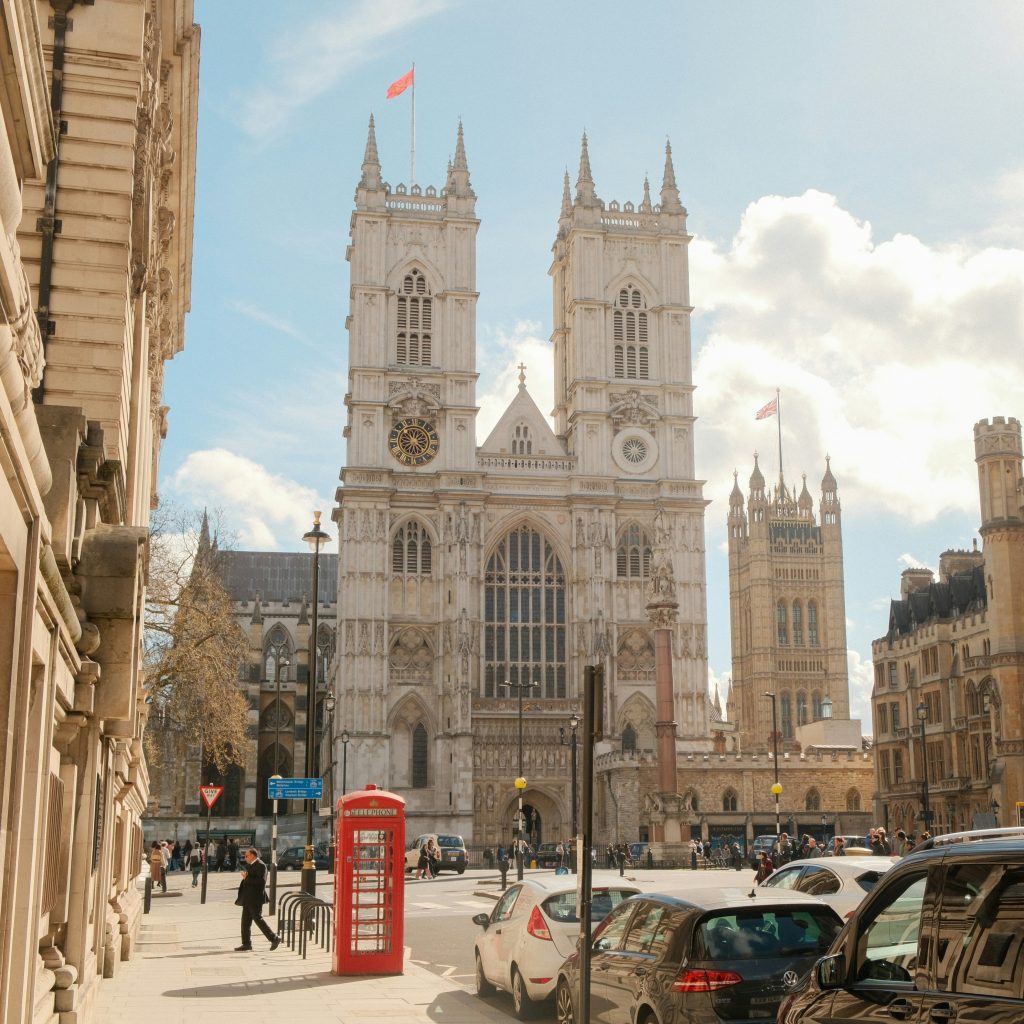
Westminster Abbey is not simply a historic church; it is the ceremonial heart of Britain. For nearly a thousand years, it has hosted coronations, royal weddings, and state funerals, embedding itself into the country’s political and cultural identity in a way few buildings ever achieve.
By 2026, the Abbey remains an active place of worship while continuing to function as a living archive. What distinguishes it from other historic sites is not scale, but continuity — events that shape modern Britain still unfold within the same walls that have witnessed centuries of transition.
Architecturally, the Abbey is a study in vertical ambition and restraint. Its Gothic structure draws the eye upward without overwhelming, while the interior rewards slower observation. The Poets’ Corner, in particular, offers a quieter form of monumentality — recognition through legacy rather than spectacle.
Visiting Westminster Abbey requires intention. It is not a space designed for haste or casual browsing. The experience is most meaningful when approached with patience, allowing time for its layered narratives to surface. In doing so, the Abbey provides context not only for Britain’s past, but for how tradition continues to shape the present.
Buckingham Palace
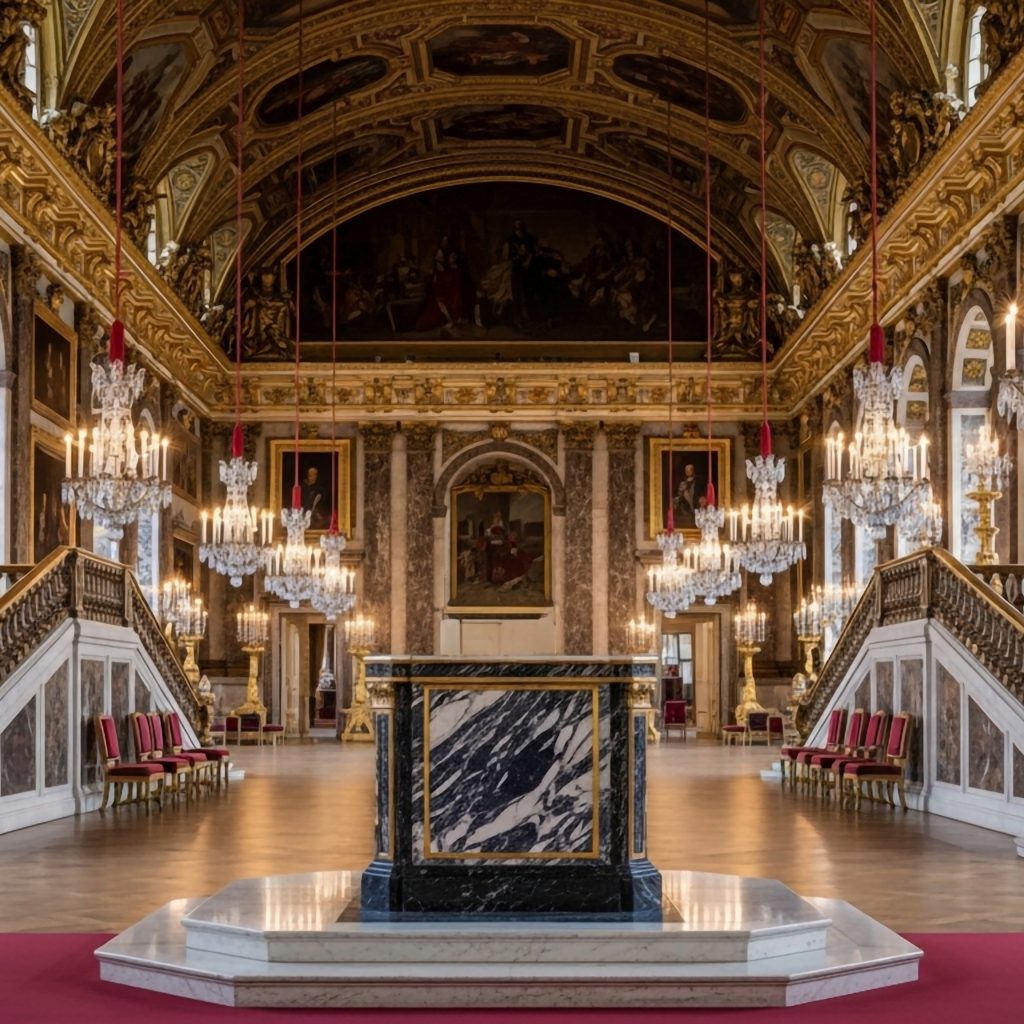
Buckingham Palace represents a different kind of authority — visible, symbolic, and deliberately measured. As the official London residence of the British monarch, it stands less as a personal home and more as an interface between institution and public life.
What often surprises first-time visitors is its restraint. Despite its status, the Palace does not seek grandeur through excess. Its scale is impressive, but its façade remains intentionally reserved, reinforcing the idea that power here is expressed through continuity rather than display.
By 2026, the Palace’s role continues to evolve. While ceremonial events such as the Changing of the Guard remain central, public access during select periods offers insight into how tradition adapts to contemporary expectations. These openings are not about spectacle, but transparency — allowing the public a structured glimpse into an otherwise distant world.
The surrounding setting matters. Viewed from St James’s Park, the Palace feels composed and balanced; from The Mall, it becomes more formal and processional. Both perspectives contribute to understanding its function — not as a destination to rush through, but as a symbol best observed, not consumed.
Buckingham Palace is less about what you see and more about what it represents. In that sense, it complements Westminster Abbey perfectly: one grounded in ritual and memory, the other in visibility and state presence.
Tower Bridge
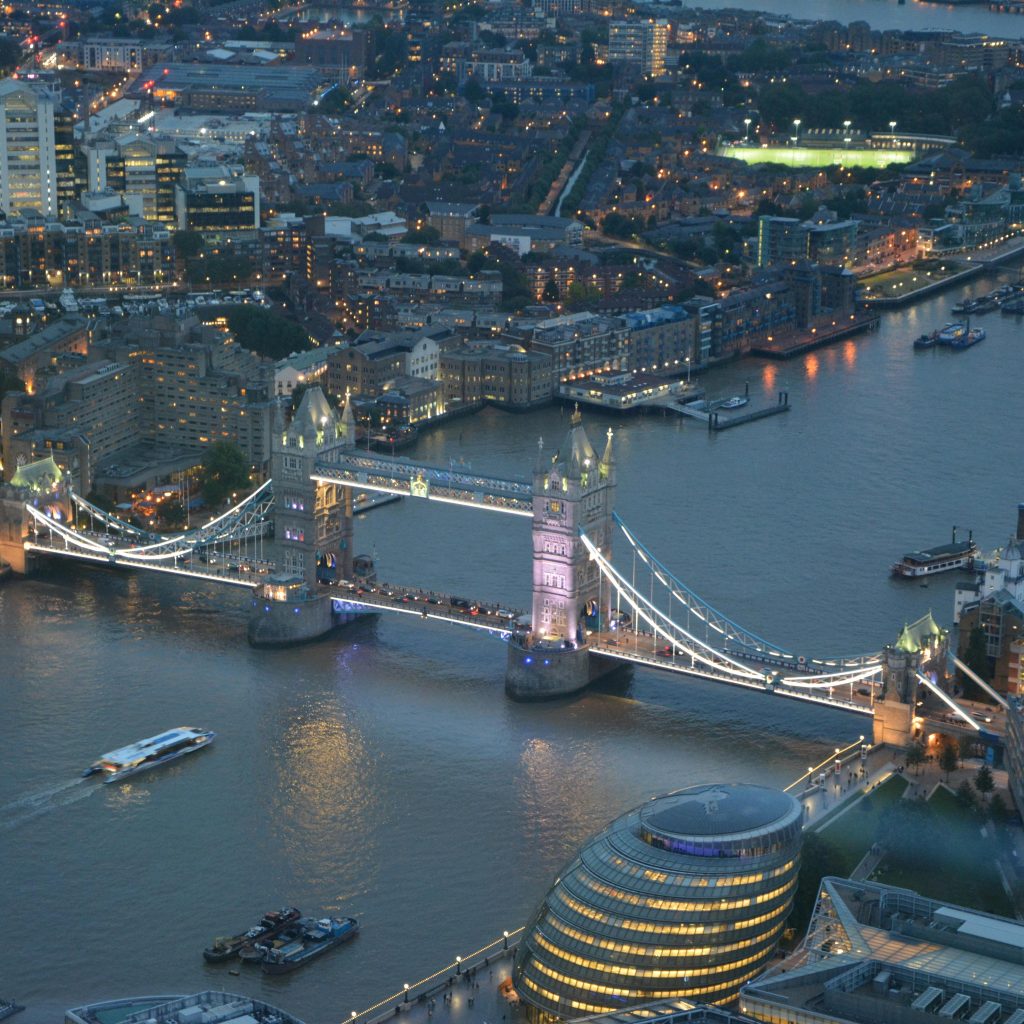
Tower Bridge is often mistaken for a relic of medieval London, yet it is, in fact, a product of the city’s industrial confidence. Completed in 1894, it reflects a moment when London chose to solve modern problems — traffic, trade, expansion — with ambition rather than subtlety.
What distinguishes Tower Bridge is not just its recognisable silhouette, but its function. Still operational today, the bridge opens regularly to allow river traffic through, reinforcing the idea that London’s landmarks are not static monuments but working elements of the city.
By 2026, the high-level walkways and glass floor experience continue to offer one of the most revealing perspectives over the Thames. From above, London’s layers become visible at once — historic docks, contemporary towers, and the river that continues to dictate the city’s rhythm.
Tower Bridge rewards understanding. Once seen as overly ornate, it now reads as confident rather than decorative — an example of Victorian engineering that chose visibility over invisibility. It is a reminder that infrastructure, when treated seriously, can become identity.
Tower of London
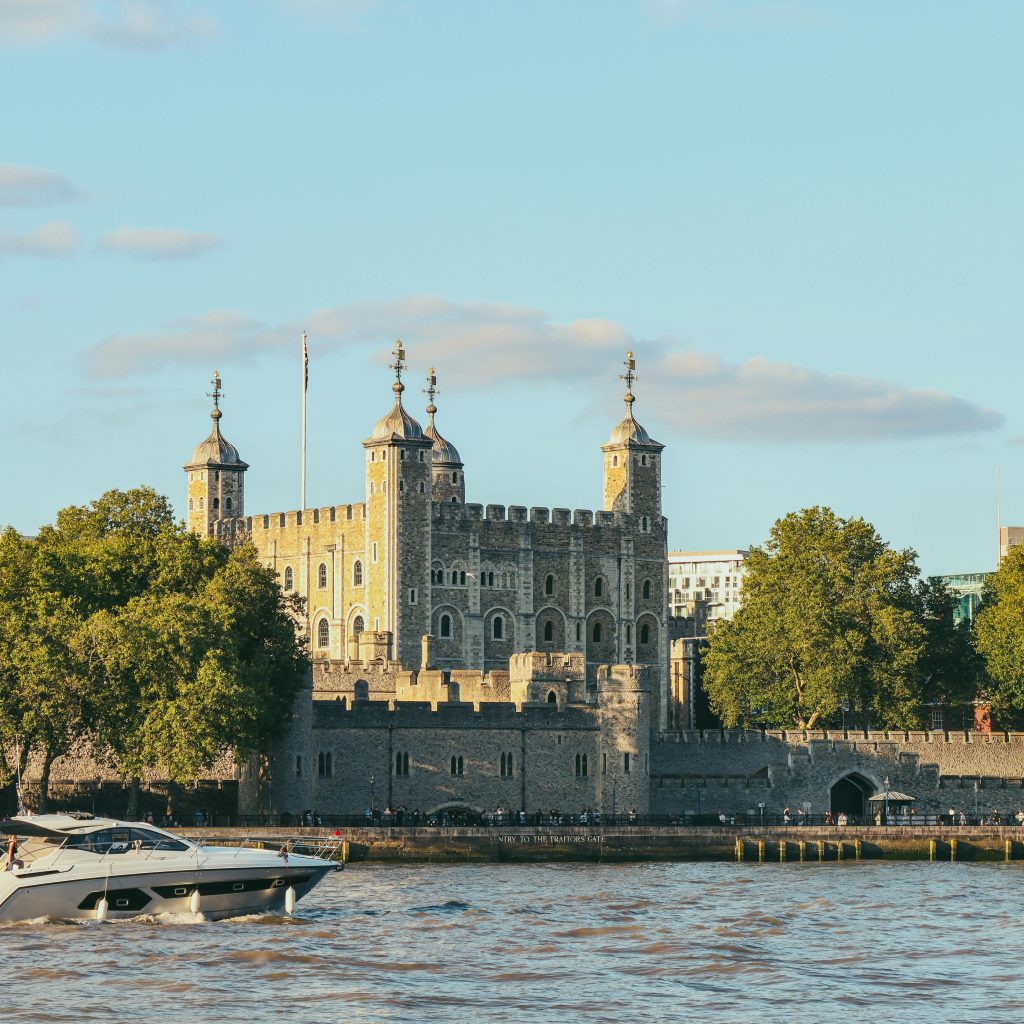
If Tower Bridge represents movement, the Tower of London represents restraint. Standing on the Thames for nearly a millennium, the Tower is not simply a castle but a record of authority, fear, and survival.
The Tower’s significance lies in its accumulation of roles — fortress, royal residence, prison, treasury. Few places in London carry such concentrated political and emotional weight. Unlike palaces designed to impress, the Tower was designed to endure.
By 2026, its presentation remains deliberately sober. The Crown Jewels, while undeniably impressive, are framed within a broader narrative of power rather than luxury. The Yeoman Warders’ presence reinforces this balance, blending history with lived continuity.
What makes the Tower compelling is its refusal to romanticise itself. Its walls are thick, its spaces enclosed, its atmosphere unapologetically serious. Visiting the Tower is not about admiration, but comprehension — understanding how power was once exercised, protected, and feared.
Together, the Tower of London and Tower Bridge offer one of the clearest contrasts in the city: innovation beside endurance, openness beside control. Seen in sequence, they deepen the visitor’s understanding of London not as a single era, but as a city shaped by tension between progress and preservation.
Borough Market
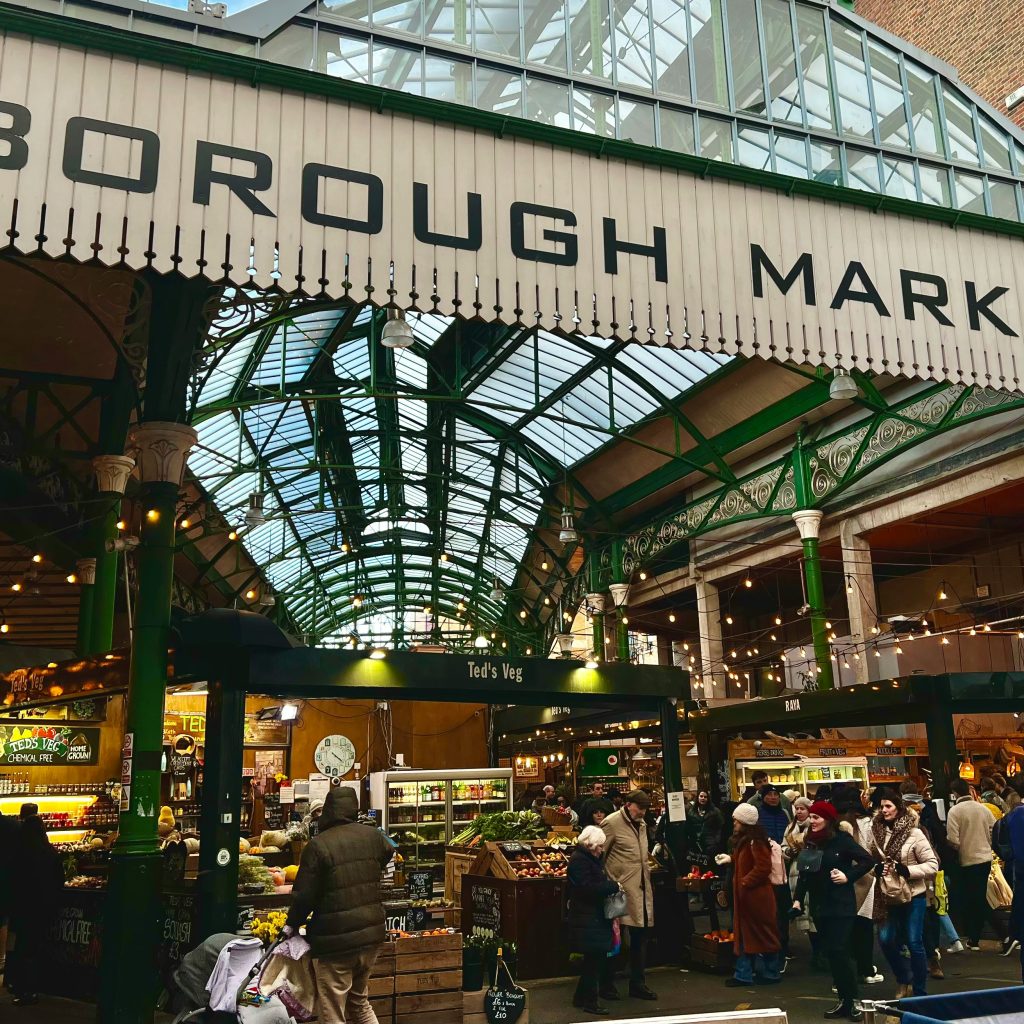
Borough Market is not simply a place to eat; it is a functioning portrait of London’s relationship with food, trade, and community. Operating on this site for centuries, the market has evolved without losing its purpose — to connect people directly with producers, techniques, and regional identity.
By 2026, Borough Market remains one of the city’s most credible food destinations precisely because it resists spectacle. While many markets chase trends, Borough prioritises provenance, seasonality, and craft. British cheeses, fresh bread, responsibly sourced meats, and global street food coexist not as competition, but as evidence of London’s layered culinary culture.
The market rewards patience and observation. Conversations with vendors often reveal as much as the food itself, and the best experiences come from wandering rather than planning. In a city that moves quickly, Borough Market offers something increasingly rare: authenticity without performance.
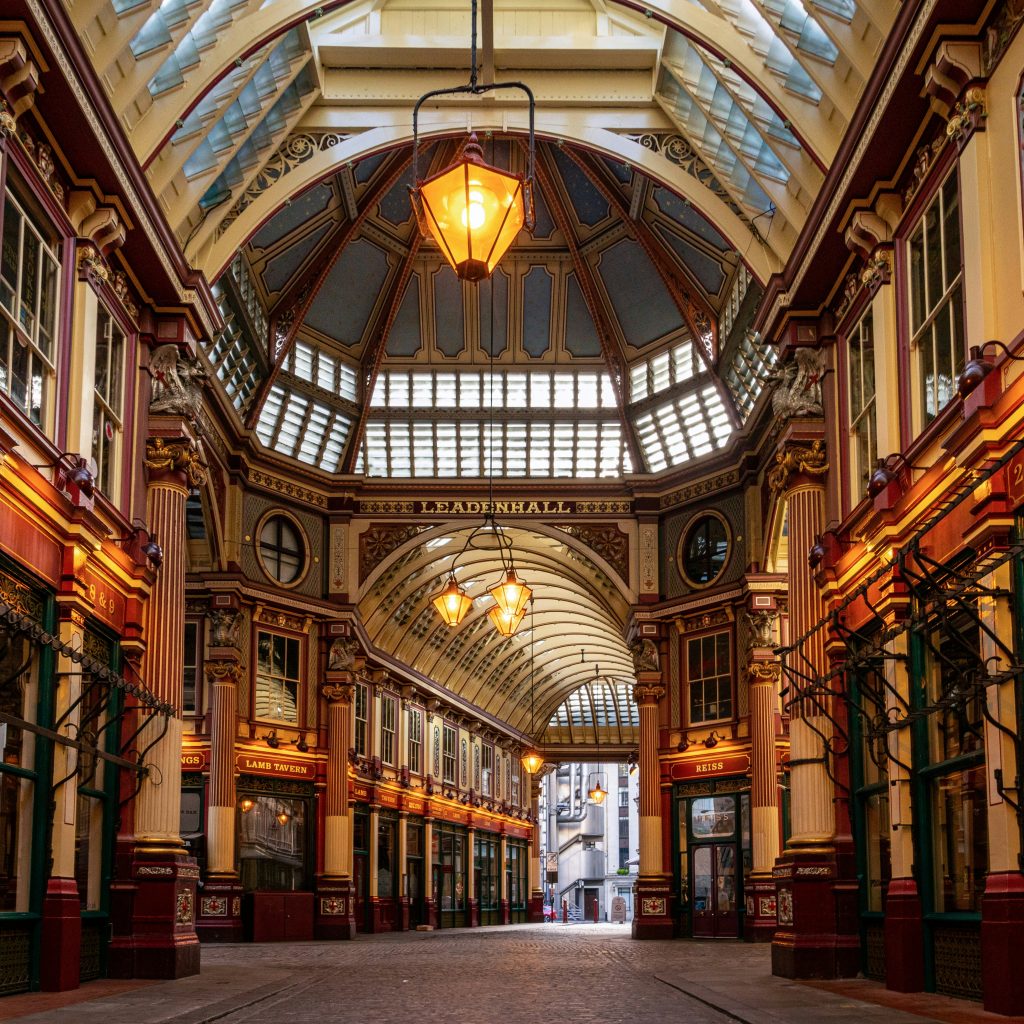
Leadenhall Market
Tucked within the City, Leadenhall Market offers a glimpse into London’s commercial past, preserved with remarkable clarity. Its ornate Victorian roof, wrought iron details, and cobbled walkways date back to the 19th century, though the market’s origins stretch much further.
Today, Leadenhall functions less as a traditional food market and more as a living architectural landmark. Independent shops, wine bars, and historic pubs occupy its narrow passages, making it particularly atmospheric during quieter hours. The contrast between the surrounding financial district and the market’s historic fabric is part of its appeal.
Leadenhall is best experienced slowly — not as a destination to rush through, but as a reminder of how deeply London values continuity.
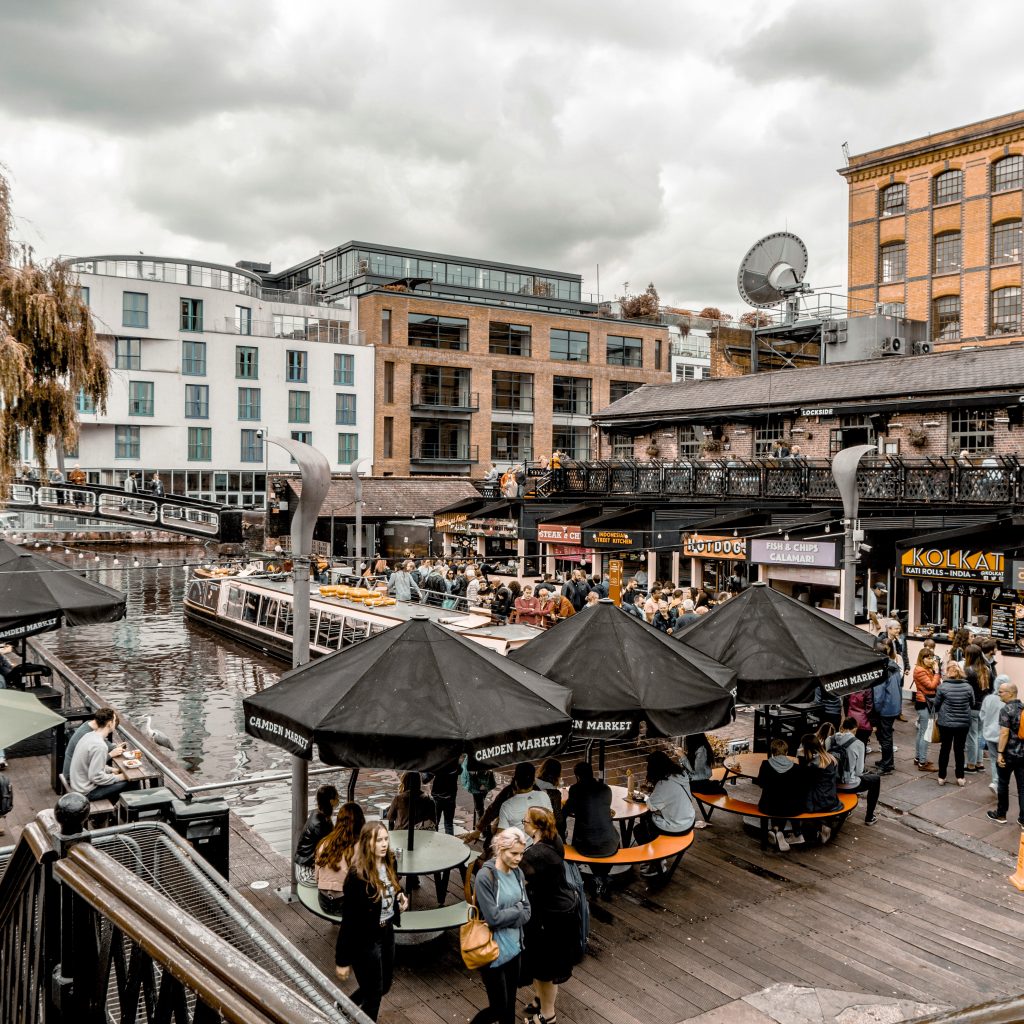
Camden Market
Where Leadenhall is restrained, Camden Market is unapologetically expressive. Spread across multiple sections near Regent’s Canal, it has long been a centre for alternative culture, independent fashion, and global street food.
Camden’s strength lies in its diversity. Vintage stalls sit alongside contemporary designers, while food vendors reflect London’s international identity as clearly as any museum collection. The area’s creative reputation — shaped by music, art, and counterculture — remains central to its character, even as it evolves.
Busy, layered, and constantly in motion, Camden Market captures a different side of London: informal, creative, and confidently individual.
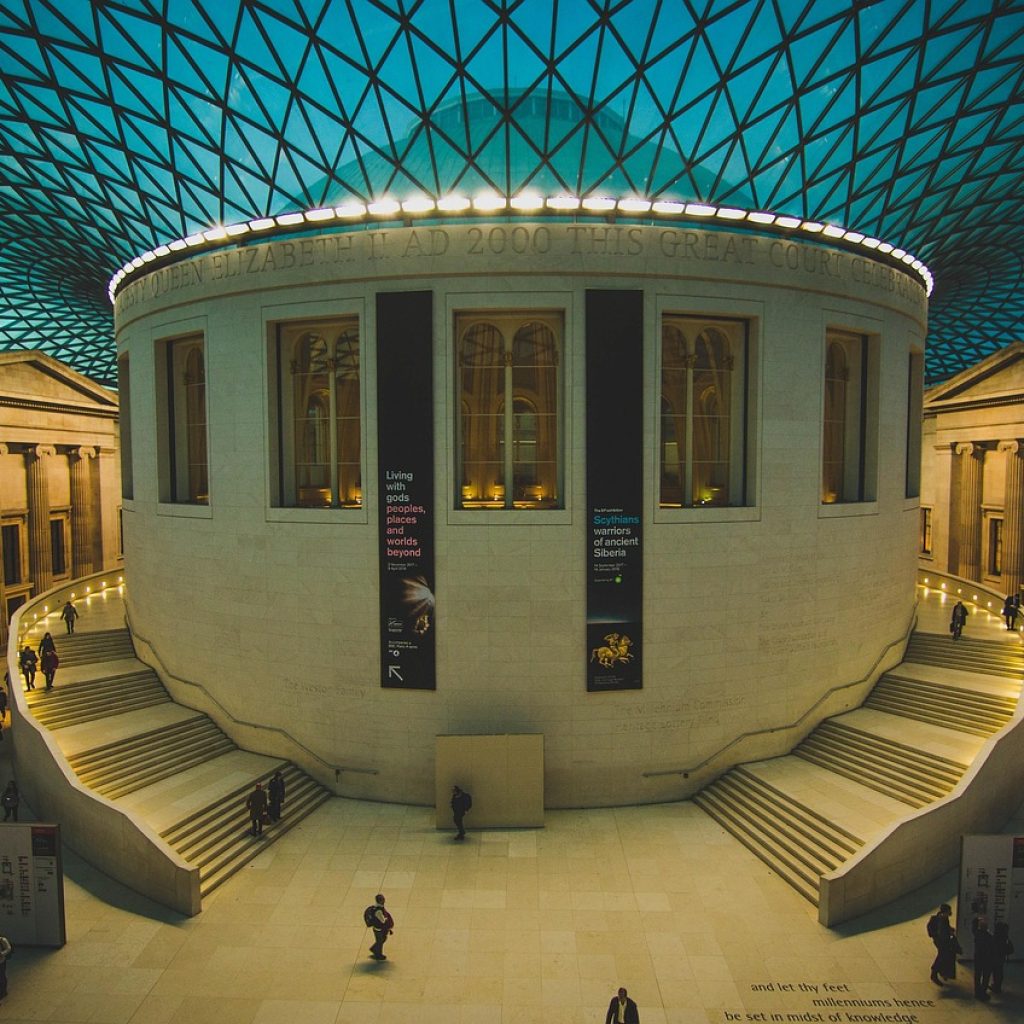
The British Museum
The British Museum stands as one of the world’s most comprehensive explorations of human civilisation. Its power does not lie in spectacle, but in perspective — the ability to trace ideas, belief systems, and societies across continents and centuries within a single institution.
By 2026, the museum has continued refining how its collections are presented, placing greater emphasis on context, interpretation, and dialogue. Exhibits increasingly acknowledge complexity, inviting visitors to question how history is preserved, understood, and shared.
Rather than overwhelming visitors, the museum encourages selectivity. Focusing on a few galleries allows for deeper engagement — whether examining ancient governance, artistic expression, or spiritual traditions. The experience becomes less about accumulation and more about understanding patterns that still shape the modern world.
It is a place that rewards curiosity, reflection, and time.
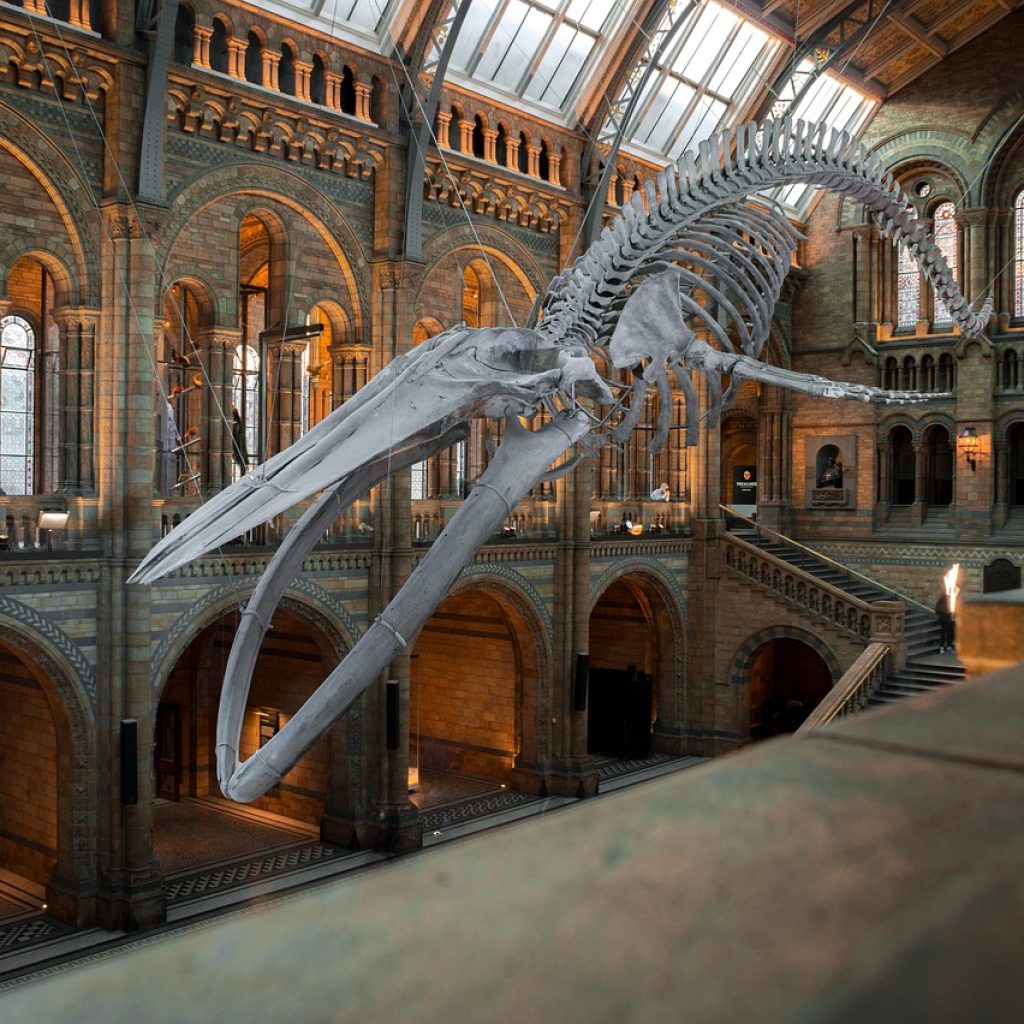
Natural History Museum
The Natural History Museum offers a different kind of immersion — one rooted in curiosity, scale, and scientific clarity. From its cathedral-like architecture to its carefully structured exhibitions, the museum frames the natural world as something both awe-inspiring and deeply relevant.
By 2026, its emphasis on climate science, biodiversity, and environmental systems feels especially urgent. Exhibits are no longer limited to explanation; they actively encourage awareness of humanity’s role within fragile ecosystems.
What distinguishes the Natural History Museum is accessibility without simplification. Complex scientific concepts are communicated visually and intuitively, allowing visitors of all backgrounds to engage meaningfully. It balances education with emotion, data with design.
The result is an experience that informs, challenges, and leaves a lasting impression — not as entertainment, but as understanding.
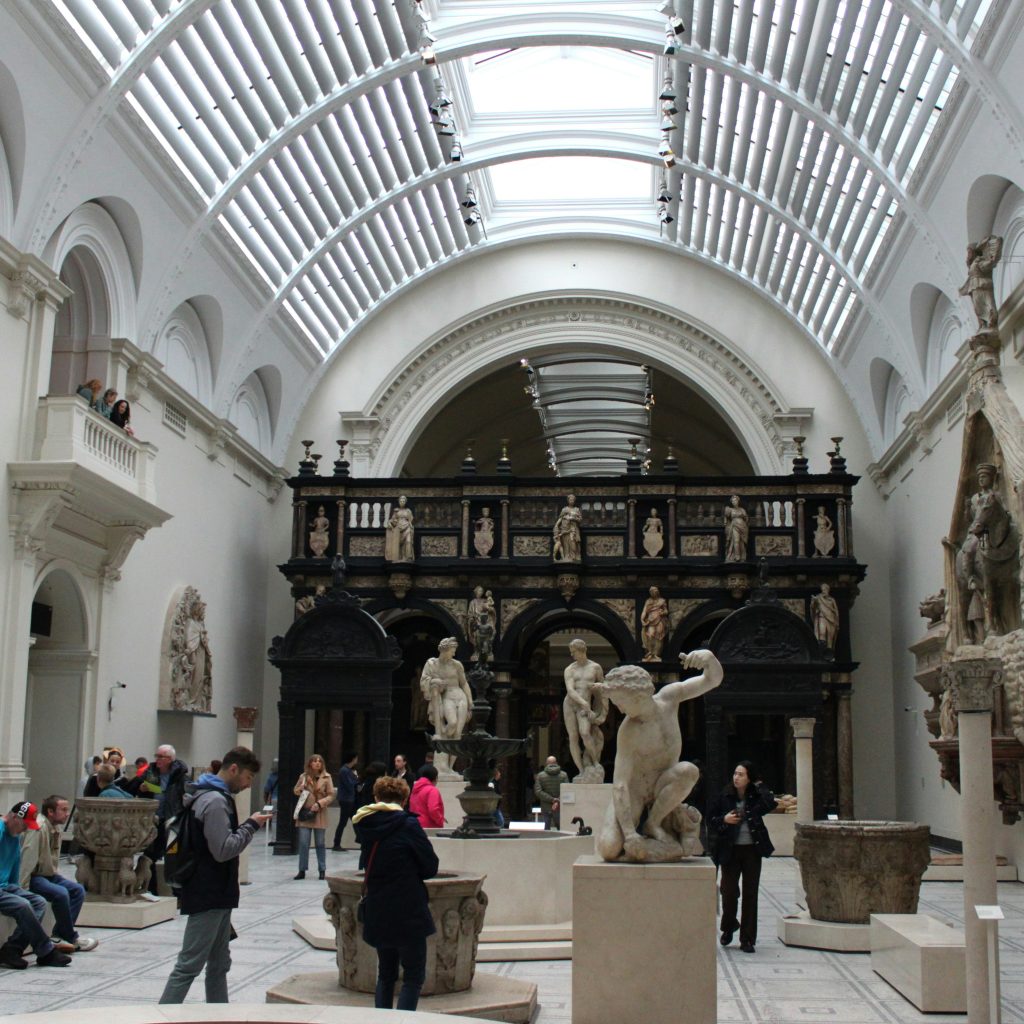
Victoria and Albert Museum
The Victoria and Albert Museum is not simply a museum of objects, but a study of how societies express values through design, craft, and innovation. Its collections span centuries and continents, tracing how function, beauty, and technology intersect across cultures.
By 2026, the V&A continues to stand out for how it connects historical craftsmanship with contemporary design thinking. Fashion, architecture, photography, and industrial design are presented not as isolated disciplines, but as part of a continuous cultural dialogue. Temporary exhibitions often explore modern issues through historical lenses, reinforcing the museum’s relevance rather than nostalgia.
The experience rewards intentional exploration. Rather than attempting to see everything, visitors gain more by focusing on a single discipline or period. The museum’s strength lies in its ability to show that design is not surface-level — it is how societies solve problems, communicate identity, and leave records of their time.
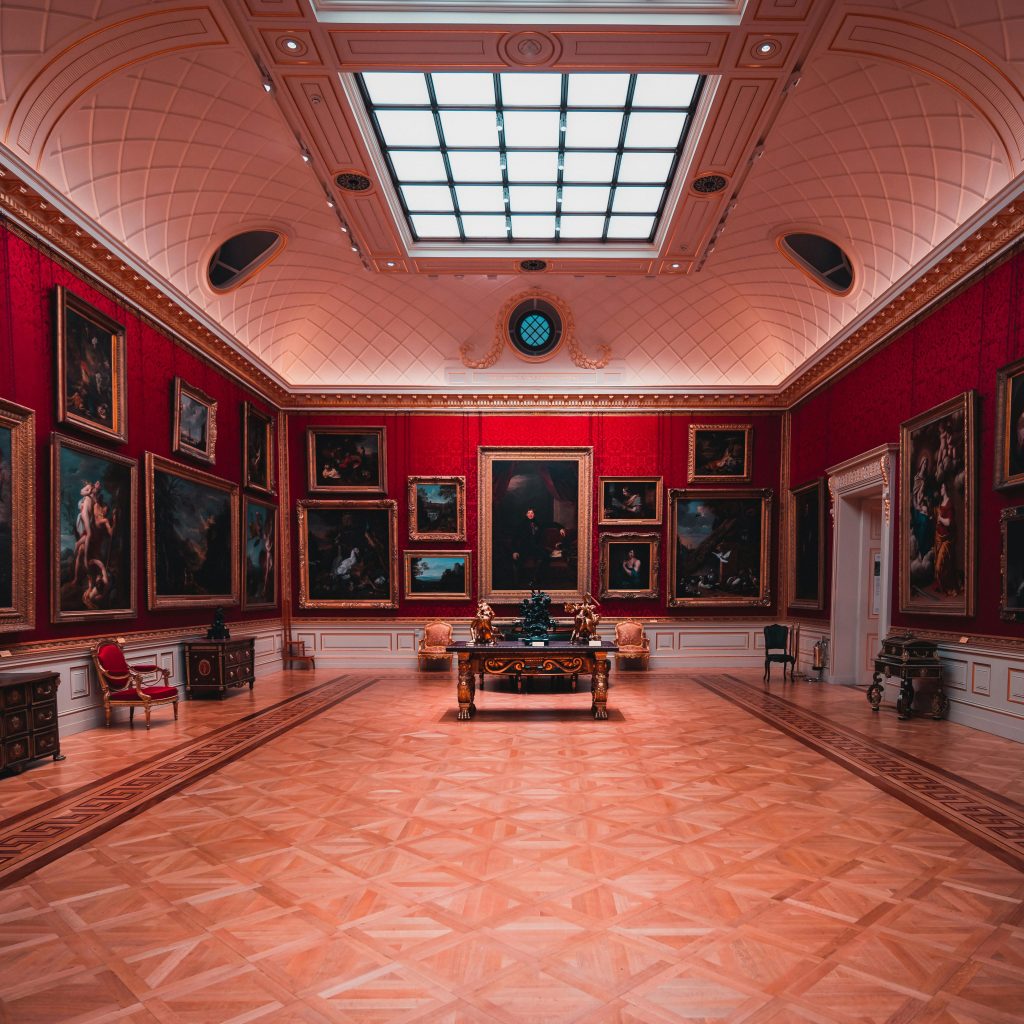
The National Gallery
The National Gallery offers one of the most refined introductions to Western painting in the world. Its significance lies not in scale alone, but in the clarity with which it presents artistic evolution — from early Renaissance works to late 19th-century masters.
What makes the gallery especially compelling in 2026 is its emphasis on interpretation rather than intimidation. Paintings are contextualised in ways that invite understanding, even for visitors without formal art knowledge. Lighting, layout, and explanatory material encourage slow looking, allowing details and techniques to reveal themselves gradually.
Rather than overwhelming, the National Gallery teaches visitors how to see — how composition, colour, and symbolism reflect the political, religious, and social conditions of their time. It is a space that values patience and attention, offering insight through restraint rather than spectacle.
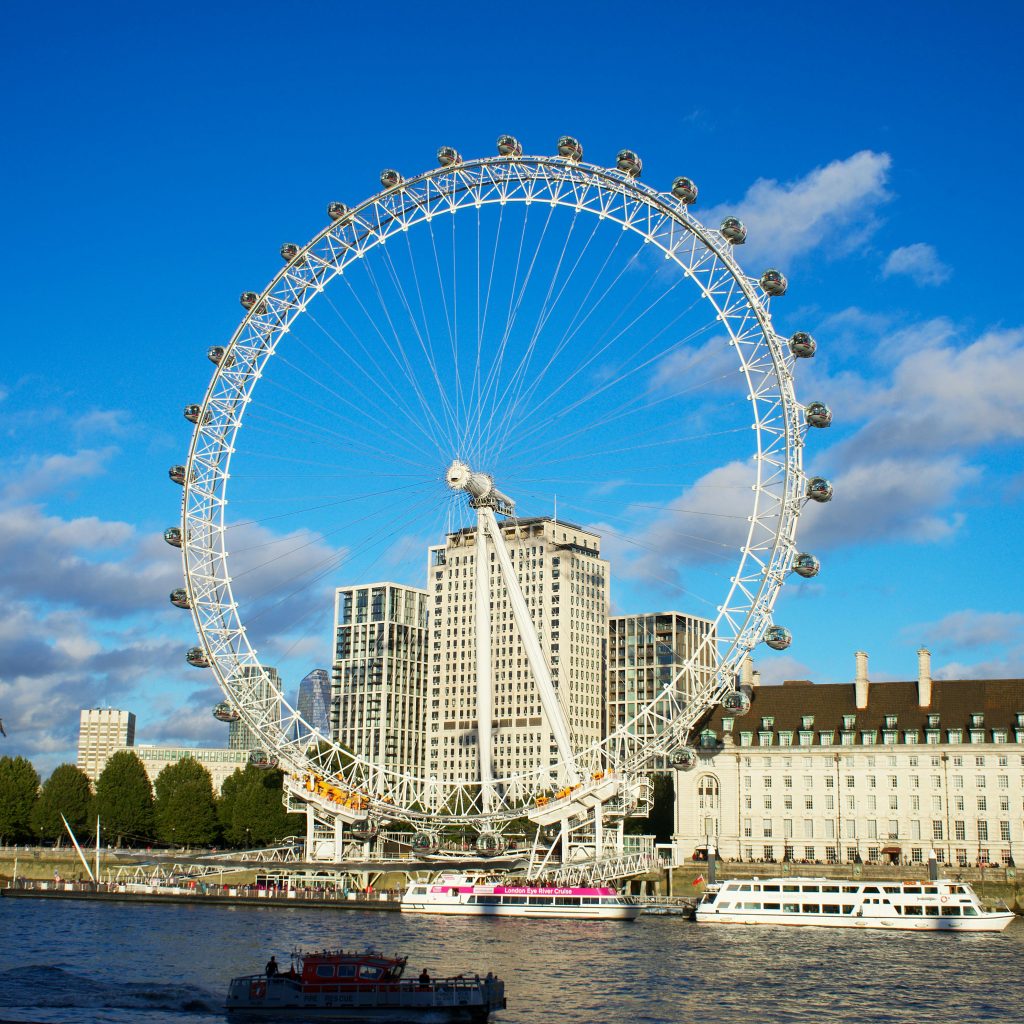
London Eye
The London Eye has become one of the city’s most recognisable features, yet its lasting appeal comes from perspective rather than novelty. Rising gradually above the Thames, it offers a measured, uninterrupted view of London’s structure — historic layers alongside modern expansion.
By 2026, the experience feels less like an attraction and more like an orientation tool. From above, the city’s layout becomes legible: royal parks, commercial districts, cultural institutions, and residential neighbourhoods all visible in relation to one another. It provides context that ground-level exploration cannot.
The slow rotation encourages reflection rather than urgency. Unlike faster observation points, the London Eye allows time to absorb scale and contrast, making it particularly valuable at the beginning or end of a visit. It reframes London not as a collection of landmarks, but as a living, evolving city.
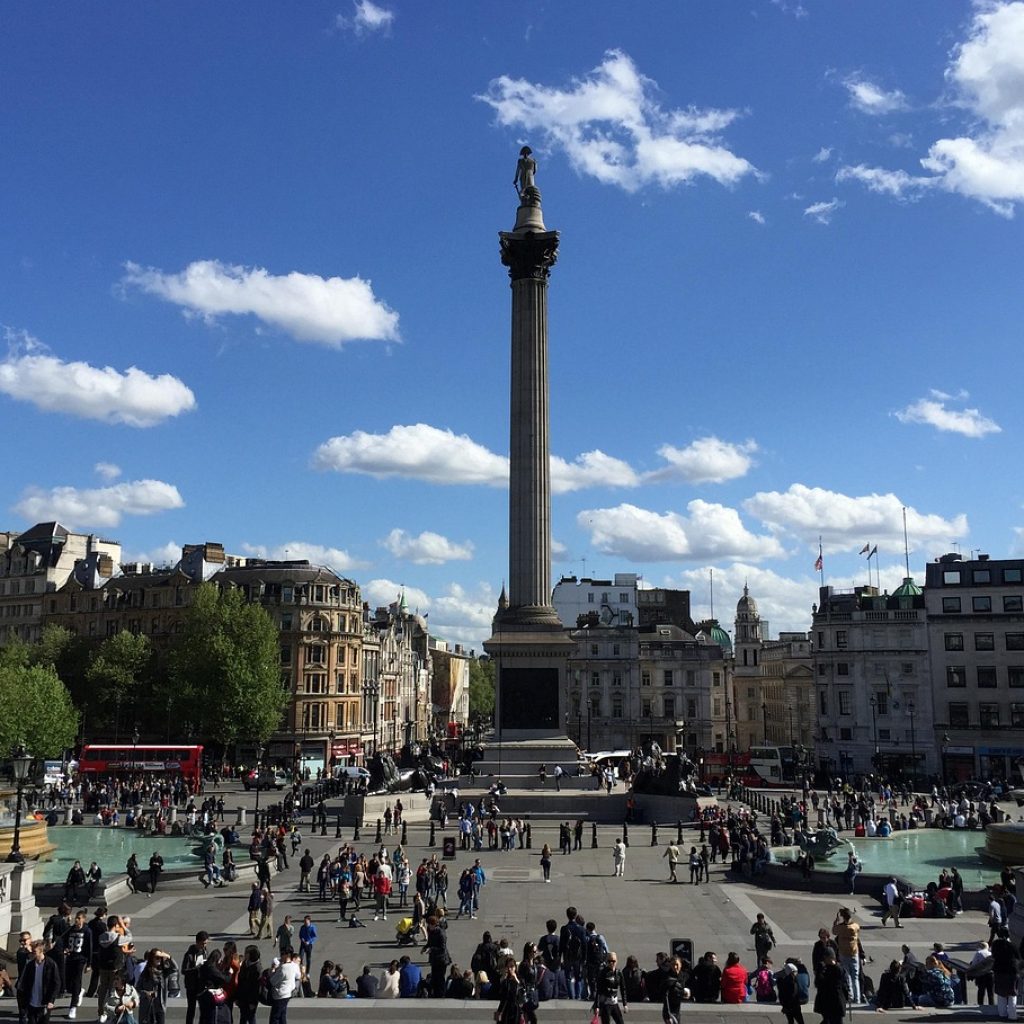
Trafalgar Square
Trafalgar Square functions less as a destination and more as a point of convergence. It is where London’s cultural, political, and social currents intersect, making it one of the city’s most symbolic public spaces.
Anchored by Nelson’s Column and framed by significant institutions, the square has long served as a site for public gathering — from celebrations to demonstrations. By 2026, it remains a place where London expresses itself openly, reflecting both continuity and change.
Its value lies in what surrounds it. With the National Gallery overlooking the square and major streets radiating outward, Trafalgar Square acts as a natural transition point between historic London and the modern city. It is best experienced as part of a wider walk rather than a standalone stop, offering context rather than spectacle.
Notting Hill
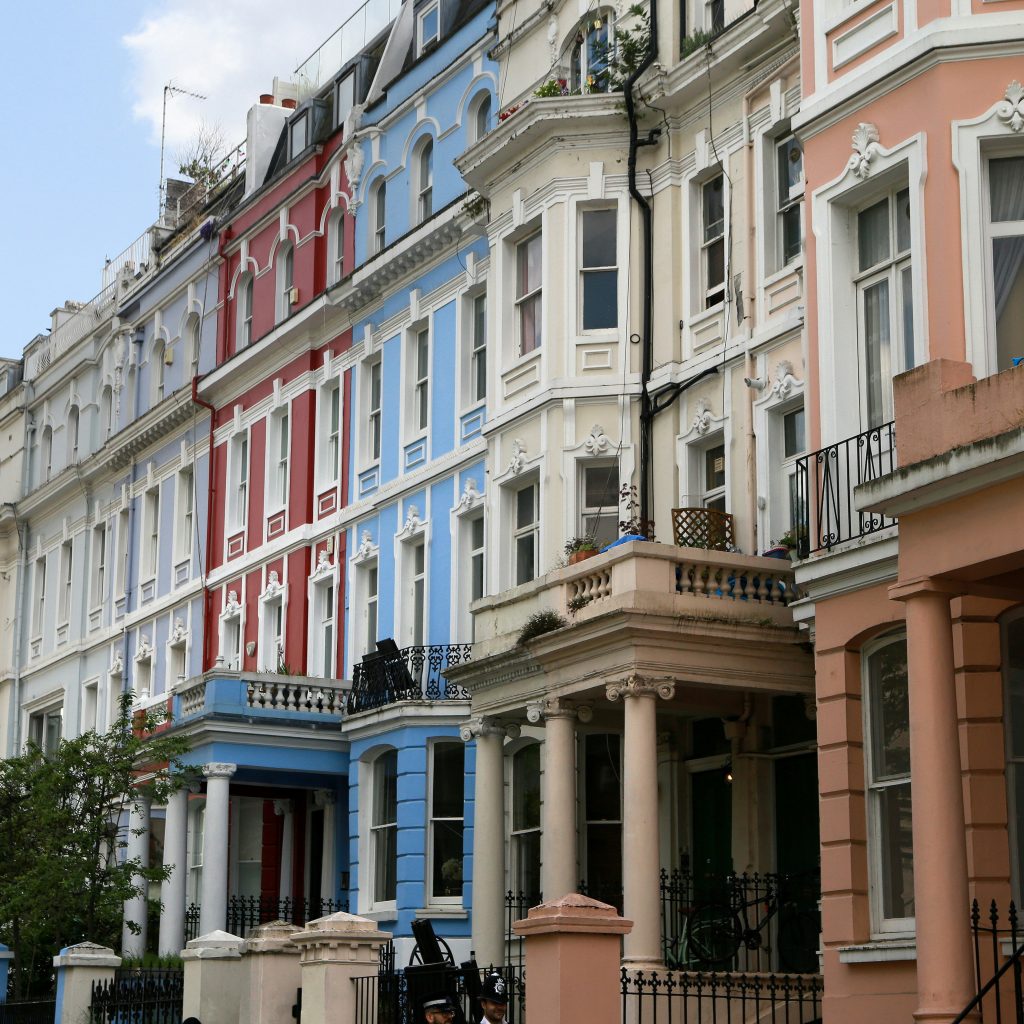
Notting Hill is often associated with its pastel façades and cinematic fame, but its appeal runs deeper than surface charm. Popularised globally by the film Notting Hill, the neighbourhood has retained a strong sense of local identity despite its international recognition.
At its heart lies Portobello Road, home to one of London’s most celebrated street markets. Antiques, fresh produce, and independent stalls give the area a lived-in rhythm that contrasts with more commercial districts. On weekdays, the streets feel residential and calm; on weekends, they come alive without losing character.
Notting Hill also reflects a layered cultural history. Long-standing Caribbean influences, most visibly celebrated through the annual Notting Hill Carnival, sit alongside bookshops, cafés, and classic London townhouses. It is a neighbourhood best explored slowly, where detail and atmosphere matter more than landmarks.
Mayfair
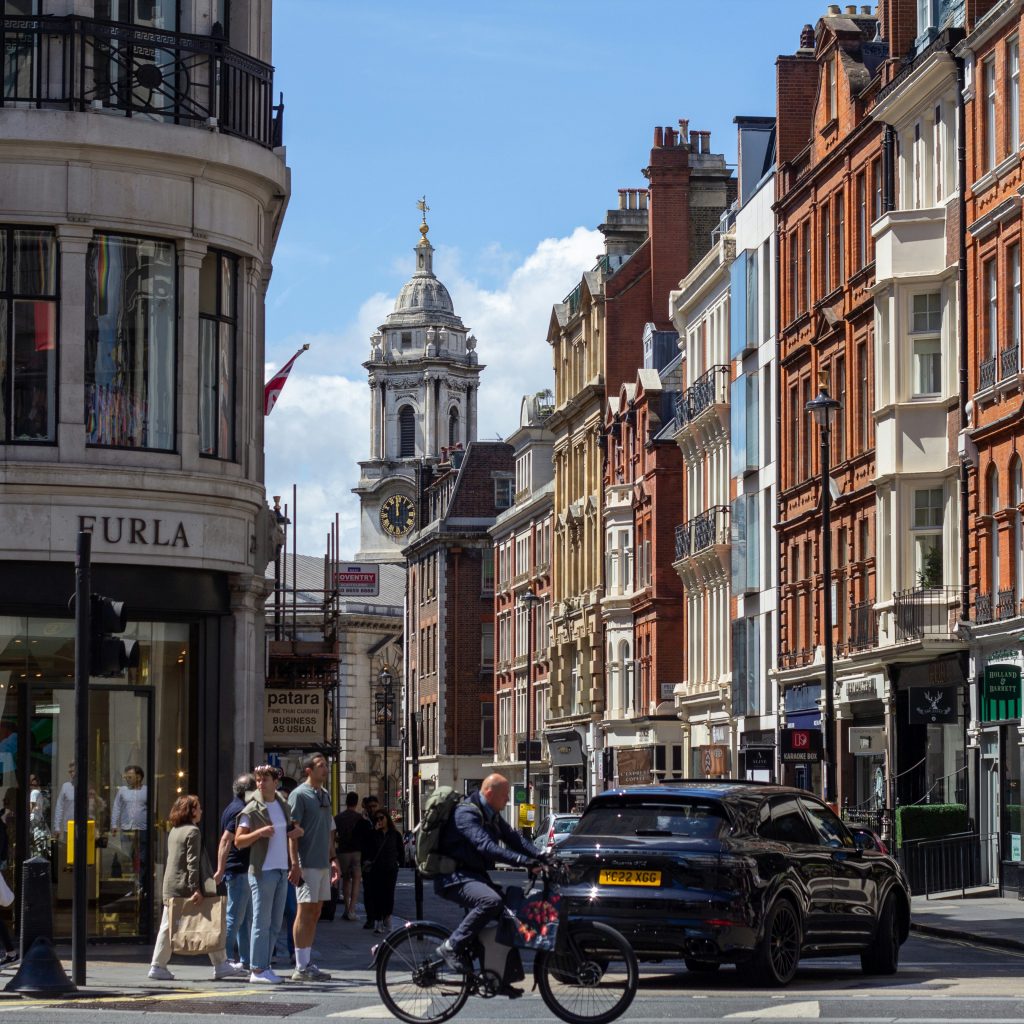
Mayfair represents one of London’s most enduring expressions of refinement. Traditionally associated with diplomacy, high society, and historic institutions, the area has evolved into a centre of contemporary luxury without abandoning its foundations.
Streets such as Savile Row remain globally respected for bespoke tailoring, while Bond Street continues to define high-end retail. Yet beyond these well-known names, Mayfair reveals quieter layers: discreet galleries, heritage hotels, and Georgian architecture that gives the neighbourhood its measured elegance.
In recent years, Mayfair has also become a focal point for modern dining and art, attracting an international audience while maintaining a distinctly London sensibility. It is not a neighbourhood of spectacle, but of detail — where quality, discretion, and continuity take precedence over trends.
Soho
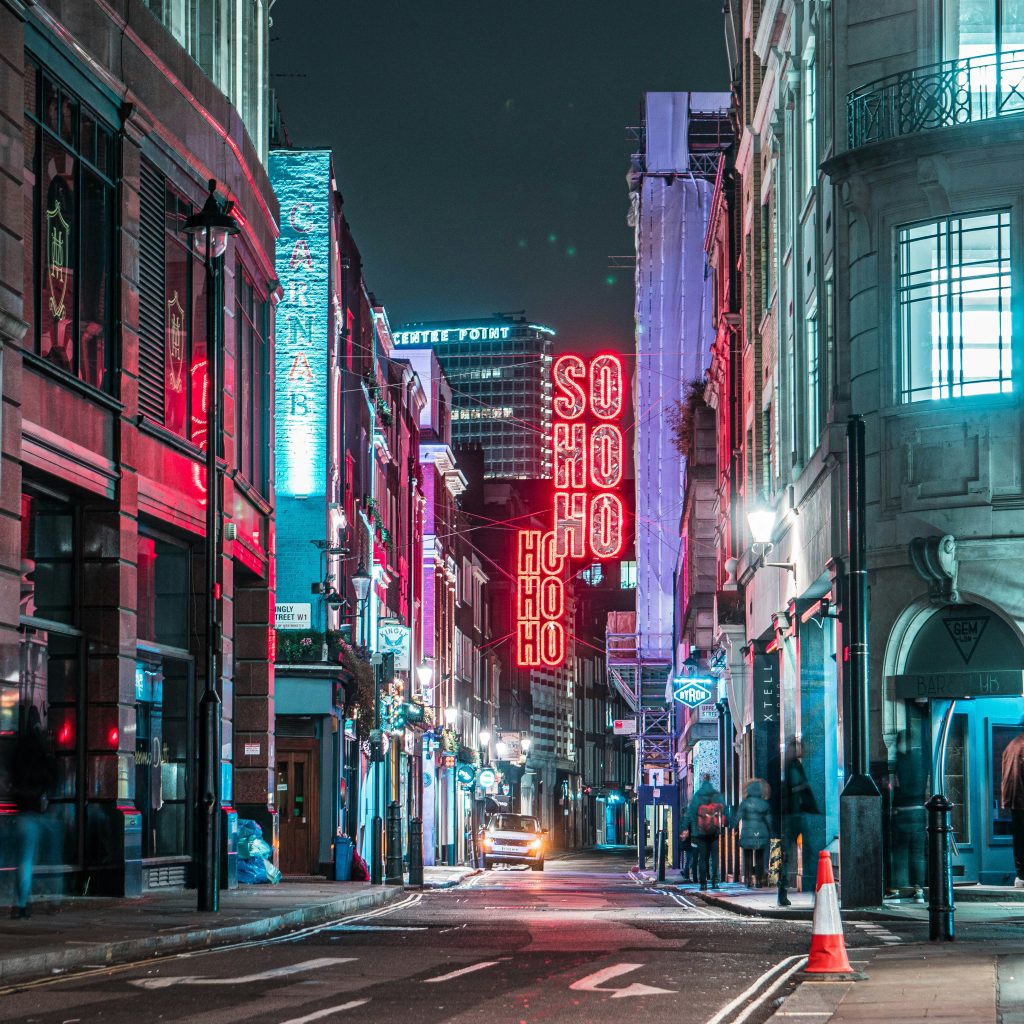
Soho has long been one of London’s most dynamic neighbourhoods, defined less by landmarks and more by atmosphere. Historically a centre for music, theatre, publishing, and nightlife, it continues to function as a cultural engine for the city — fast-moving, expressive, and unapologetically alive.
The area’s streets are compact, layered with independent restaurants, long-standing cafés, and creative studios. From record shops and small theatres to late-night dining, Soho operates on a different rhythm to the rest of London, blurring the line between day and night. Its proximity to the West End makes it a natural extension of London’s performing arts scene, while its history of openness and diversity has shaped its identity for decades.
Soho is not curated in the traditional sense. Its appeal lies in contrast — between old and new, refined and raw — making it one of the city’s most honest and continuously evolving neighbourhoods.
Marylebone
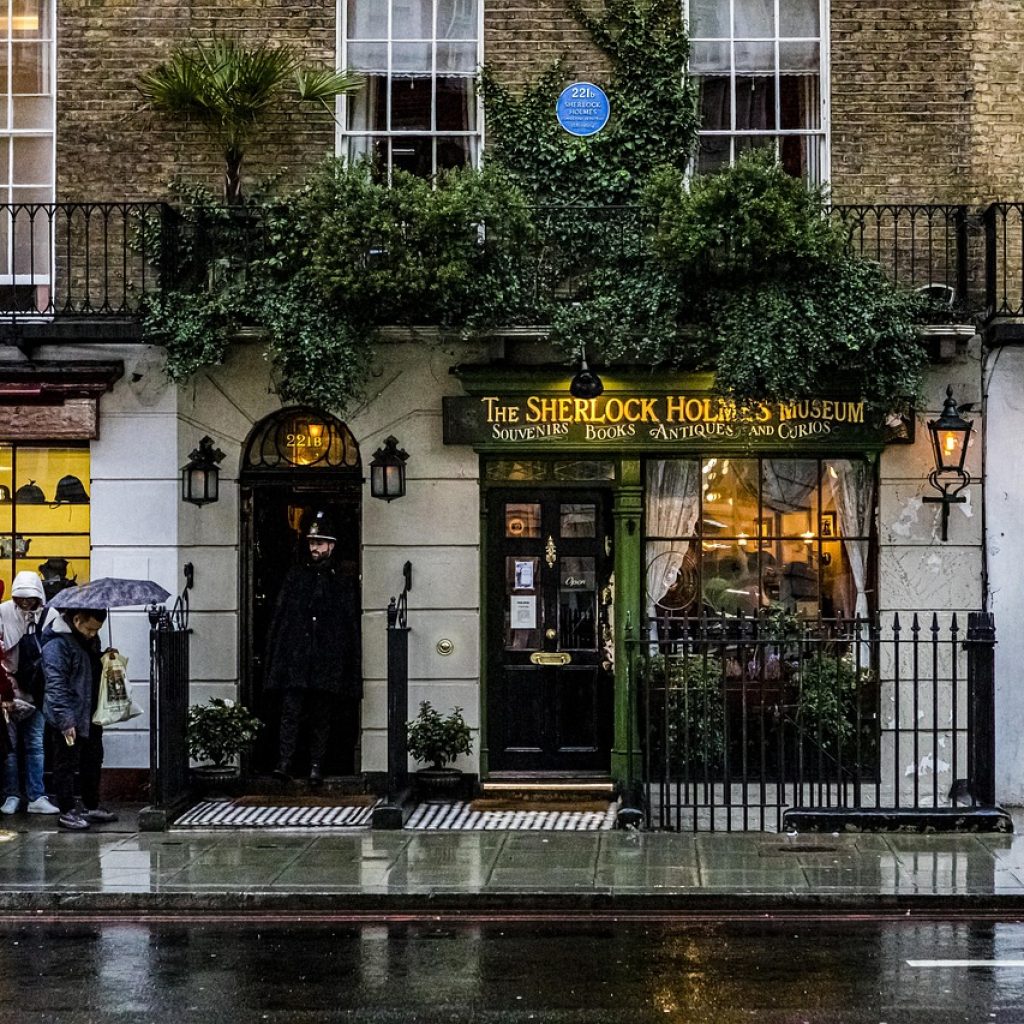
Marylebone offers a more measured interpretation of London, balancing residential calm with cultural depth. Centred around Marylebone High Street, the neighbourhood feels self-contained, favouring independent boutiques, bookshops, and cafés over large-scale retail.
Architecturally, Marylebone retains much of its Georgian character, contributing to an atmosphere that feels both elegant and lived-in. The area is also home to institutions such as The Wallace Collection, which reinforces its connection to art and design without dominating the neighbourhood’s everyday rhythm.
What distinguishes Marylebone is its sense of proportion. It is neither secluded nor overstated, appealing to travellers who value walkability, design, and a quieter form of sophistication. It represents London at its most balanced — confident without being performative
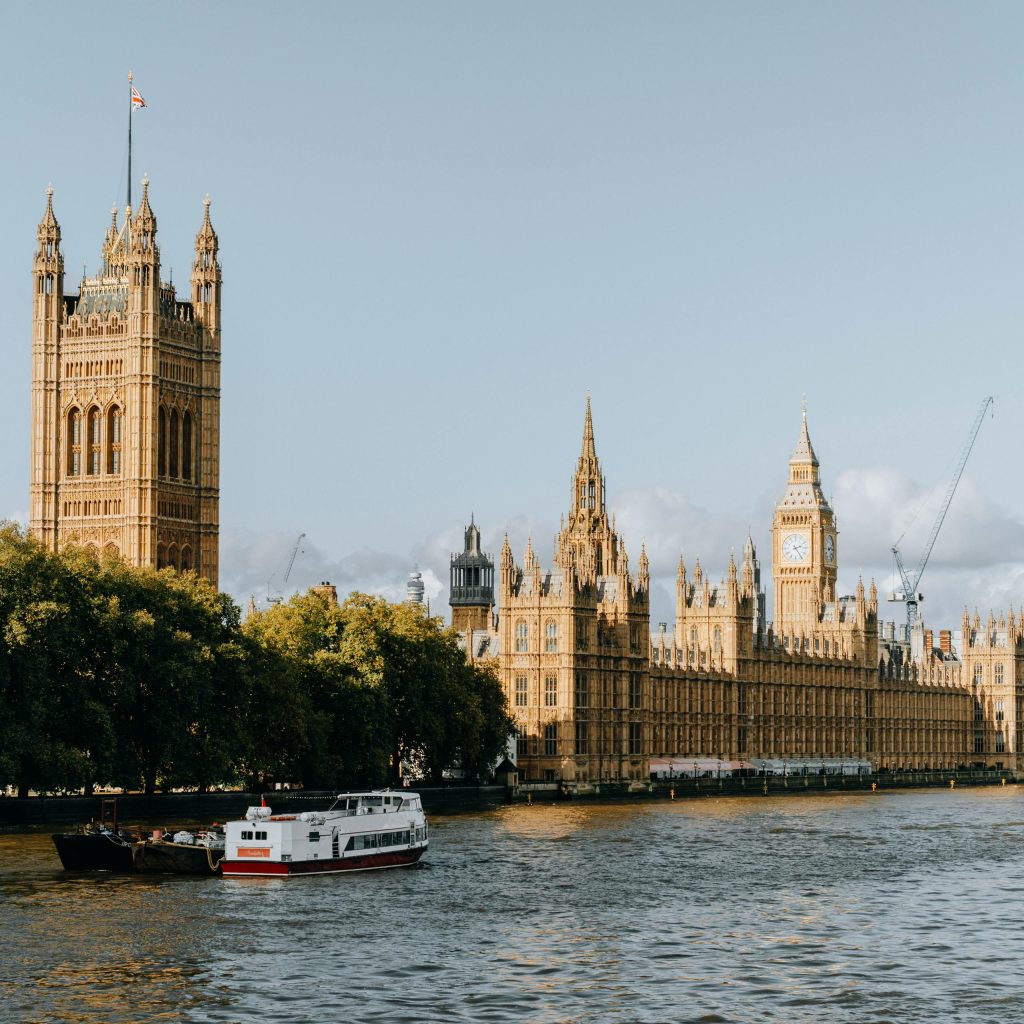
A Thames River Cruise
Few experiences contextualise London as clearly as viewing it from the River Thames. A river cruise offers a slower, more observational perspective, allowing the city’s architectural layers to unfold naturally.
From historic landmarks like Westminster, St Paul’s Cathedral, and Tower Bridge to modern developments along the South Bank, the route highlights how London has evolved without erasing its past. The experience is as informative as it is visual, providing scale and orientation that’s difficult to achieve on foot alone.
Whether taken during daylight or at dusk, a Thames cruise offers clarity — a reminder that London is a city shaped by movement, trade, and time
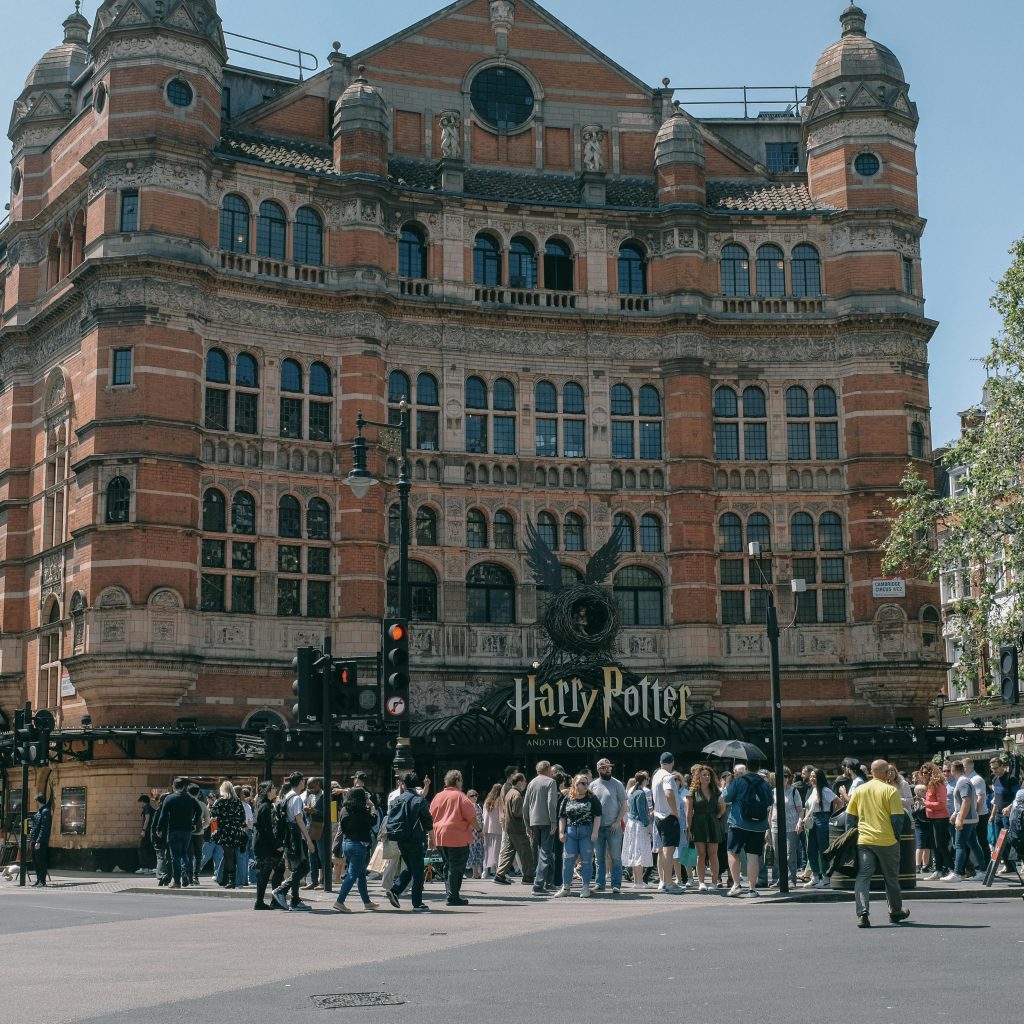
A West End Show
An evening in London is best experienced through its theatre scene, and the West End remains one of the most respected performing arts districts in the world. Home to historic venues and a rotating programme of productions — from long-running classics to contemporary plays — it offers cultural access that is both refined and approachable.
What sets the West End apart is range. You’ll find global productions alongside distinctly British storytelling, often within walking distance of Soho, Covent Garden, and Trafalgar Square. Many theatres retain their original interiors, adding a sense of continuity and ritual to the experience — a reminder that performance has long been part of the city’s fabric.
Among its most enduring cultural exports is Harry Potter and the Cursed Child, a production that extends London’s literary legacy onto the stage. Performed in purpose-adapted theatres, it blends traditional stagecraft with modern technical precision, offering an experience that resonates beyond fandom. It reflects how London transforms storytelling into living culture — immersive, meticulous, and rooted in place.
Whether planned in advance or chosen spontaneously, a West End performance captures London’s creative confidence — polished, expressive, and deeply connected to its literary and theatrical heritage.

Food in London
London’s food scene is best understood as layered rather than trend-driven. Traditional British cooking exists alongside some of the most established international cuisines in Europe, shaped by communities that have been part of the city for generations. The result is not novelty for its own sake, but depth — and consistency.
For visitors, the most reliable way to experience this is through neighbourhood dining and food markets rather than destination restaurants alone. Markets such as Borough offer insight into contemporary British produce and casual dining, while other areas of the city specialise quietly but confidently in regional cuisines — often without signage designed for tourists.
London also rewards those who eat outside peak hours and outside obvious districts. Lunch is often where quality and value intersect, particularly in business and residential areas. Reservations are useful but not always essential, and many of the city’s strongest kitchens prioritise regular clientele over spectacle.
The key to eating well in London is not searching for the “best” restaurant, but recognising context — where locals eat daily, where markets serve working neighbourhoods, and where food reflects the city’s diversity without needing explanation.
Best time to visit London
London is a year-round city, but the experience changes meaningfully with the seasons — not only in weather, but in rhythm, mood, and how the city reveals itself.
Late spring to early summer (May–June) offers the most balanced introduction. Parks such as Hyde Park and Regent’s Park are fully in bloom, outdoor seating becomes part of daily life, and daylight extends well into the evening. This period combines cultural intensity with comfort, making it ideal for first-time visitors and repeat travellers alike.
High summer (July–August) brings long days, open-air events, and a lively atmosphere across the city. While it’s an energetic time to visit, it’s also the busiest — with higher accommodation prices and dense crowds around major landmarks. It suits travellers prioritising festivals, river walks, and iconic sights, provided plans are made in advance.
Early autumn (September–October) is one of London’s most rewarding seasons. The city settles back into its natural pace, temperatures remain mild, and museums, galleries, and restaurants feel more accessible. It’s a strong choice for travellers seeking depth — neighbourhood walks, exhibitions, and dining without seasonal pressure.
Winter (November–February) reveals a more atmospheric London. December is defined by Christmas lights along Regent Street, festive displays in Covent Garden, winter markets, and an exceptional theatre season — making it one of the most culturally active months of the year despite shorter days. January and February are quieter and more reflective, offering fewer crowds, better hotel availability, and a focus on museums, historic interiors, and long-standing institutions.
Getting around London
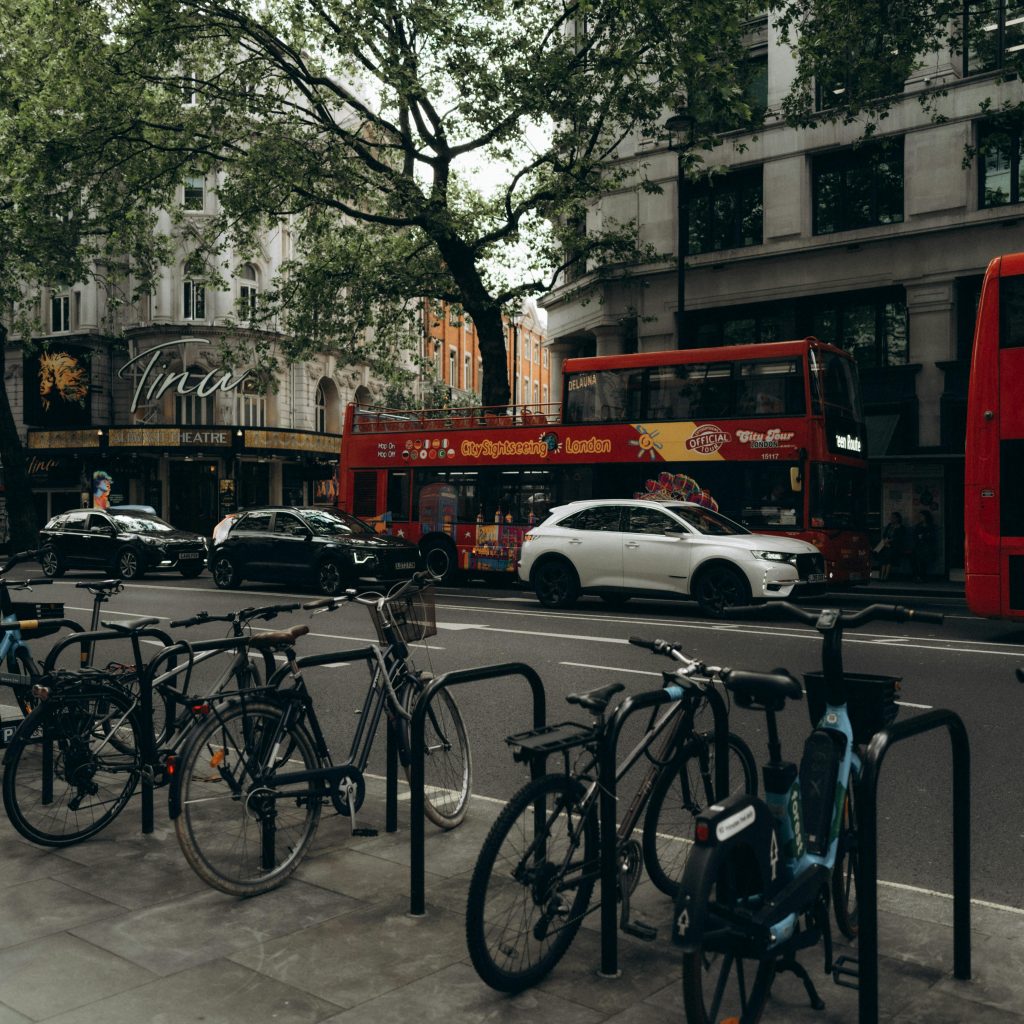
London’s transportation system is extensive, reliable, and designed for continuous movement rather than point-to-point sightseeing. The Underground provides fast access across the city, but it is often complemented more effectively by buses and walking — particularly within central areas where distances are shorter than they appear.
For visitors, payment is frictionless. Contactless cards and mobile wallets work across all public transport, eliminating the need for advance planning or ticket purchases. This allows travel decisions to be made in real time, based on convenience rather than route complexity.
Walking plays an essential role in understanding London. Many districts transition gradually, revealing changes in architecture, pace, and atmosphere that are lost underground. Combining short train journeys with walking often provides the most accurate sense of scale and location.
Taxis and ride services are available and dependable, but rarely necessary during the day. The city functions best when you move with it — adapting routes as needed, allowing time between stops, and treating transport as part of the experience rather than a logistical task to complete.

Comment (0)