Behind five red-brick Queen Anne Revival façades at 75 Sloane Street, where the borders of Chelsea, Knightsbridge, and Belgravia quietly converge, stands a hotel built less for grandstanding than for private intrigue. First opened in 1887 and reborn under Belmond’s stewardship in 2019 following an exhaustive architectural restoration, The Cadogan is one of London’s most storied residential addresses a 54-key townhouse retreat where Victorian scandal, literary history, and contemporary British craft sit side by side.


Its past reads like a late-nineteenth-century stage drama. In these rooms, Edwardian socialite and actress Lillie Langtry entertained the Prince of Wales from her adjoining townhouse on Pont Street, and in Room 118, on 6 April 1895, Oscar Wilde waited over hock and seltzer for Scotland Yard detectives to arrive an episode later immortalised in verse by Sir John Betjeman. Today, that cultural inheritance is carried forward not as a static museum piece, but through living details: more than 400 original artworks predominantly by British female artists, a lift lined with 600 bronze-cast books, private key access to the manicured tennis courts of Cadogan Place Gardens across the street, and Willett’s, the seasonal British bistro that opened in April 2026 in homage to the Victorian builder who shaped the surrounding neighbourhood.


For travellers considering a stay, understanding The Cadogan requires looking beyond conventional five-star checklists. With 39 of its 54 keys configured as suites and no subterranean swimming pool or sprawling lobby crowds—it operates closer to a well-connected private London residence than a grand boulevard hotel. This guide examines how Chelsea’s artistic and architectural character shaped the building, what distinguishes its rooms and signature suites, how its dining and garden privileges work in practice, and what to know before booking.


© Belmond


The Cadogan and the Story of Chelsea

To understand why The Cadogan feels so different from London’s grand hotels along Park Lane or Piccadilly, it helps to look at the ground beneath Sloane Street. Unlike Mayfair, which grew around aristocratic town palaces and diplomatic pomp, Chelsea evolved from a riverside village of market gardens, porcelain workshops, and artists’ studios into one of London’s most culturally self-assured neighbourhoods.


Much of that figure traces back to Sir Hans Sloane, the Irish-born physician, naturalist, and collector who purchased the Manor of Chelsea in 1712 and whose vast cabinet of curiosities later formed the founding collection of the British Museum. When his heirs—the Cadogan family began laying out the estate in the late eighteenth century, they envisioned an orderly residential quarter linking the rural calm of the Thames with the western edge of Westminster. Sloane Street, plotted in 1777 by architect Henry Holland, became its spine: a straight, dignified thoroughfare running south from Knightsbridge down to Sloane Square.


A century later, in the 1870s and 1880s, master builder William Willett transformed the estate’s visual language. Rejecting the pale stucco terraces of neighbouring Belgravia, Willett championed warm red terracotta brick, Dutch gables, tall sash windows, and ornate Queen Anne Revival proportions—a style celebrated by architects of the Aesthetic Movement as distinctly English, domestic, and humane. Those buildings gave Chelsea its unmistakable architectural warmth, attracting painters such as James Abbott McNeill Whistler and John Singer Sargent, playwrights, and a bohemian set that valued privacy over ostentation.


That geography still defines a stay at 75 Sloane Street. Step north from the front door and within three minutes you are amid the international flagship boutiques of Knightsbridge and Harrods; turn east and you enter the quiet, white-stucco crescents and embassy squares of Belgravia; walk south toward Sloane Square and the King’s Road and you find yourself in Chelsea proper a district of independent galleries, the Saatchi Gallery, Cadogan Hall, and neighbourhood restaurants. Sitting precisely at the intersection of all three, The Cadogan absorbs the polish of its neighbours while retaining the unhurried, residential rhythm that has defined Chelsea for more than two centuries.


© Belmond


Cadogan’s Architecture, Interiors and Restoration

The physical story of The Cadogan begins in 1887, when master builder William Willett constructed five red-brick townhouses at 75 Sloane Street on the Cadogan Estate. Designed in the Queen Anne Revival style with warm terracotta brickwork, Dutch gables, tall sash windows, and steep slate roofs the buildings were conceived as upscale private residences rather than a commercial hotel. Over the following decades, neighbouring addresses including Lillie Langtry’s former townhouse at 21 Pont Street were gradually folded into the footprint, uniting the separate structures into a single hotel. While Belmond’s wider historical notes reference two centuries of Cadogan Estate heritage, the hotel’s own operating lineage dates specifically to those 1887 townhouses.


After more than a century of continuous hospitality, the property closed in 2017 for an exhaustive architectural overhaul led by London-based studio GA Design, reopening in February 2019 under Belmond’s stewardship. The central challenge was stitching five distinct nineteenth-century buildings into a coherent whole without erasing their residential quirks. Protected Victorian bones remain front and centre: guests step across a restored floral mosaic floor at the entrance, pass beneath carved Edwardian wood panelling salvaged from Lillie Langtry’s former dining room, and ride a lift lined with 600 bronze cast books a sculptural nod to the building’s literary past.


Subtle references to Chelsea’s cultural heritage appear throughout the joinery and textiles, from custom botanical motifs honouring local naturalist Sir Hans Sloane to peacock-feather marquetry inspired by the Aesthetic Movement. Rather than defaulting to generic hotel prints, the interiors showcase more than 400 original artworks, with around 90 per cent created by British female artists spanning contemporary botanical photography and vibrant figurative works that give the public rooms the warmth of a private collector’s residence.


That domestic sensibility carries directly into the bedrooms, where bespoke British cabinetry houses curated mini libraries compiled by local literary specialists, alongside velvet seating and marble bathrooms dressed in soft neutral tones. By preserving the intimate scale, varied ceiling heights, and eccentric proportions of its five original townhouses, the restoration achieves something rare in central London: a five-star hotel that feels less like a corporate flagship and more like holding the keys to a well-read Chelsea home.


Lillie Langtry, Oscar Wilde and the Characters of The Cadogan

Before 75 Sloane Street functioned strictly as a commercial hotel, its domestic scale and discreet side-street entrance at 21 Pont Street made it an ideal sanctuary for late-Victorian society’s most talked-about figures. Chief among them was Lillie Langtry the Jersey-born actress, theatrical producer, and socialite who captivated London society in the late 1870s and became the celebrated confidante of Albert Edward, Prince of Wales (the future King Edward VII). Langtry took up residence at 21 Pont Street in 1892, using the townhouse as her London base during the height of her stage career. When she sold the lease in 1895, the property was absorbed directly into the neighbouring Cadogan Hotel, permanently folding her drawing rooms and private entrance into the hotel’s footprint a legacy preserved today in the dining room’s original wood panelling and the suite bearing her name.


The hotel’s most sobering literary chapter unfolded in those very same weeks. On the afternoon of 6 April 1895, following the collapse of his ill-fated libel suit against the Marquess of Queensberry, Oscar Wilde retreated to Room 118 at The Cadogan a suite frequently used by his companion, Lord Alfred Douglas. Rather than boarding the boat train to Dover as friends had urged, Wilde remained in the room drinking hock and seltzer until Detective-Inspectors Richards and Allen of Scotland Yard arrived shortly after 6:00 pm with a warrant for his arrest under the Criminal Law Amendment Act. Contemporary press reports from the following morning recorded the quiet formality of the scene on Sloane Street, capturing the precise moment the Victorian establishment turned on its sharpest wit.


Four decades later, future Poet Laureate Sir John Betjeman distilled the atmosphere of that afternoon into his 1937 poem The Arrest of Oscar Wilde at the Cadogan Hotel, contrasting the plush Edwardian comfort of the rooms the “satinwood furniture,” “yellow-striped wallpaper,” and the distant clatter of hansom cabs on Sloane Street with the personal tragedy unfolding inside. Today, Room 118 forms part of the hotel’s Oscar Suite, treated not as a theatrical novelty, but with quiet historical respect acknowledging both the brilliance of Wilde’s literary legacy and the human cost of the persecution that began behind its doors.


© Belmond


Rooms and Suites

Because The Cadogan was stitched together from five separate nineteenth-century Queen Anne Revival townhouses rather than built to a repetitive floor plan, no two rooms share the exact same proportions or ceiling heights. Across its 54 keys split between 15 guest rooms, 37 suites, and two signature residences GA Design balanced Victorian sash windows and bespoke British joinery with soft residential palettes, velvet seating, marble bathrooms stocked with Bamford toiletries, and curated mini-libraries compiled by local literary specialists. For travellers choosing between the hotel’s 16 publicly bookable configurations, the decisive variable is outlook: standard rooms and junior suites face the surrounding Chelsea streets Sloane Street, Pont Street, or quieter Pavilion Road whereas the Park View and Signature tiers open directly onto the leafy canopy of private Cadogan Place Gardens.


Rooms & Suites Showcase

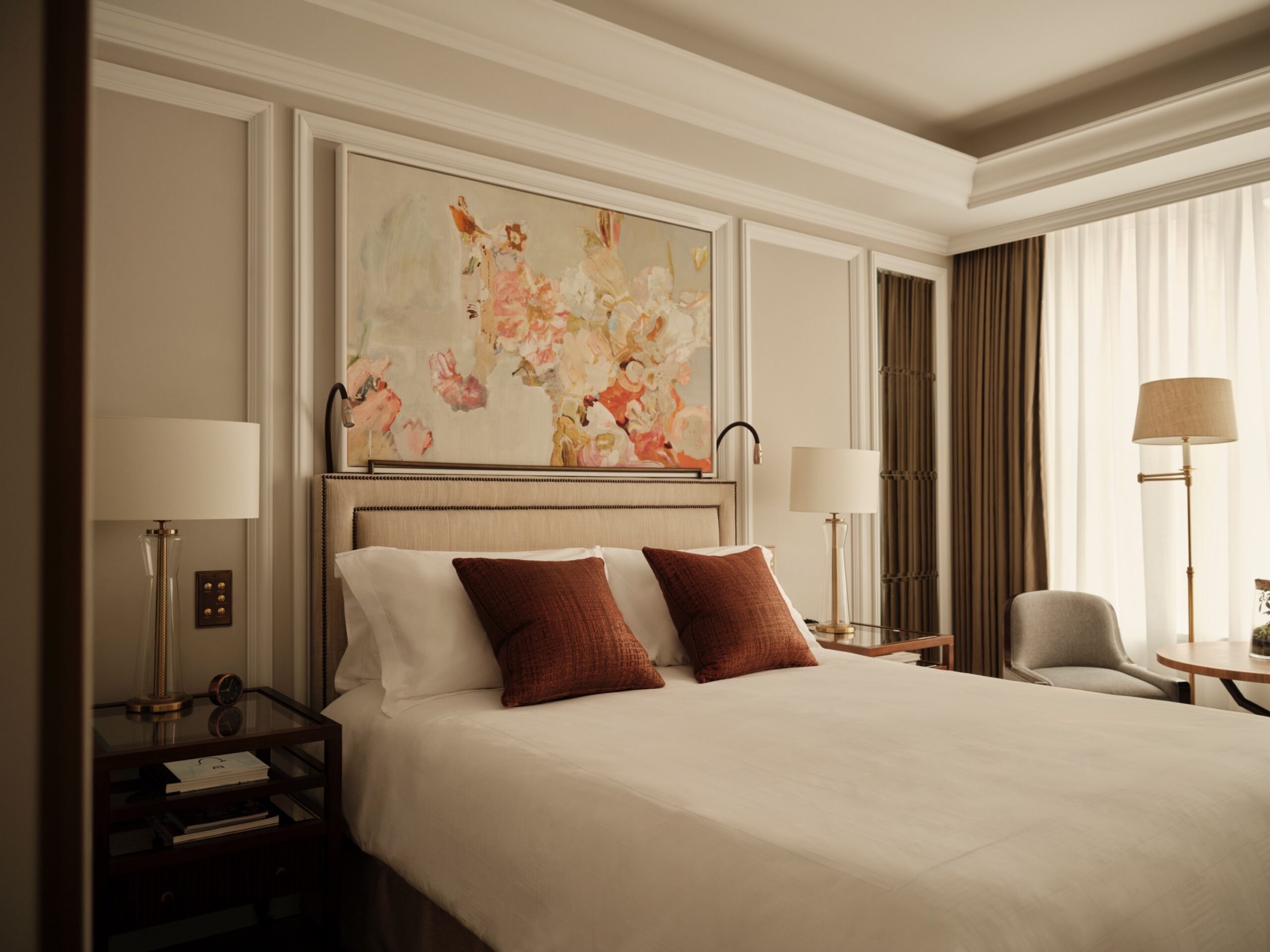
Superior Room

Measuring 26 m² (280 sq ft) and furnished with a queen-size bed and Chelsea neighbourhood street views, the Superior Room serves as the hotel’s entry-level category. Despite its compact footprint, the space retains the full design vocabulary of the 2019 restoration—including parquet flooring, bespoke British cabinetry, a curated bedside library, and a marble bathroom—making it an inviting pied-à-terre where every square metre is thoughtfully resolved.

Best for: Solo travellers and couples planning short city breaks who intend to spend most of their days out in London.
Deluxe Room

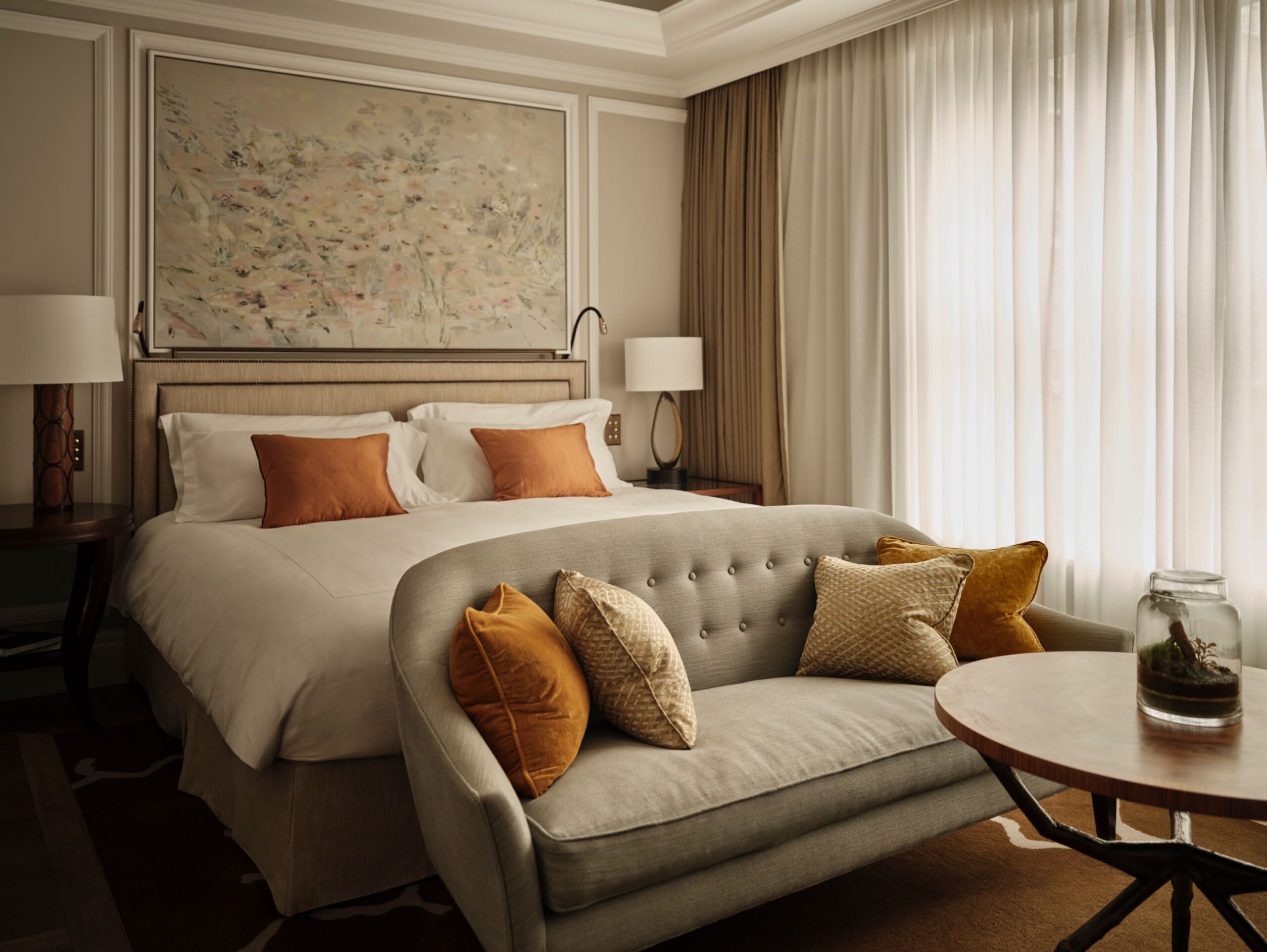
Stepping up to 30–35 m² (323–377 sq ft), the Deluxe Room introduces either a king-size or queen-size bed alongside noticeably more breathing room and a comfortable seating nook overlooking the surrounding Chelsea streets. Larger sash windows draw in greater natural light than the entry tier, while the marble bathroom adds generous vanity space suited to multi-night stays.

Best for: Couples and solo travellers seeking a classic, well-proportioned London bedroom without stepping up to suite pricing.
Deluxe Room Twin

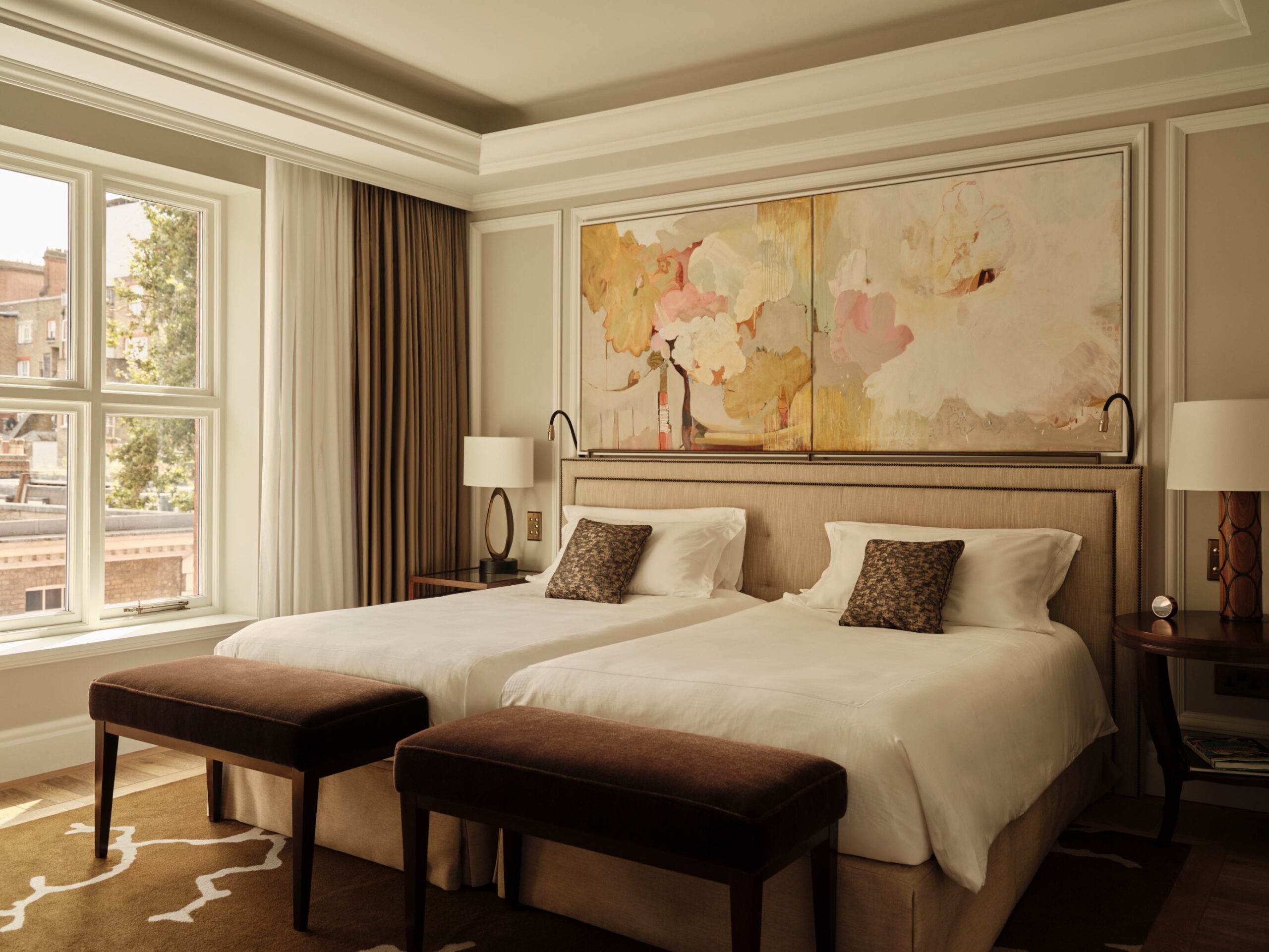
Configured specifically with two twin beds across 33 m² (355 sq ft) in the main building, this category mirrors the residential finish and Chelsea street outlook of the standard Deluxe tier while eliminating the compromise of a split mattress. The layout allows comfortable movement between beds and includes a dedicated writing desk and seating area.

Best for: Friends travelling together or a parent and older child who prefer separate beds in a single room.
 

Junior Suite King

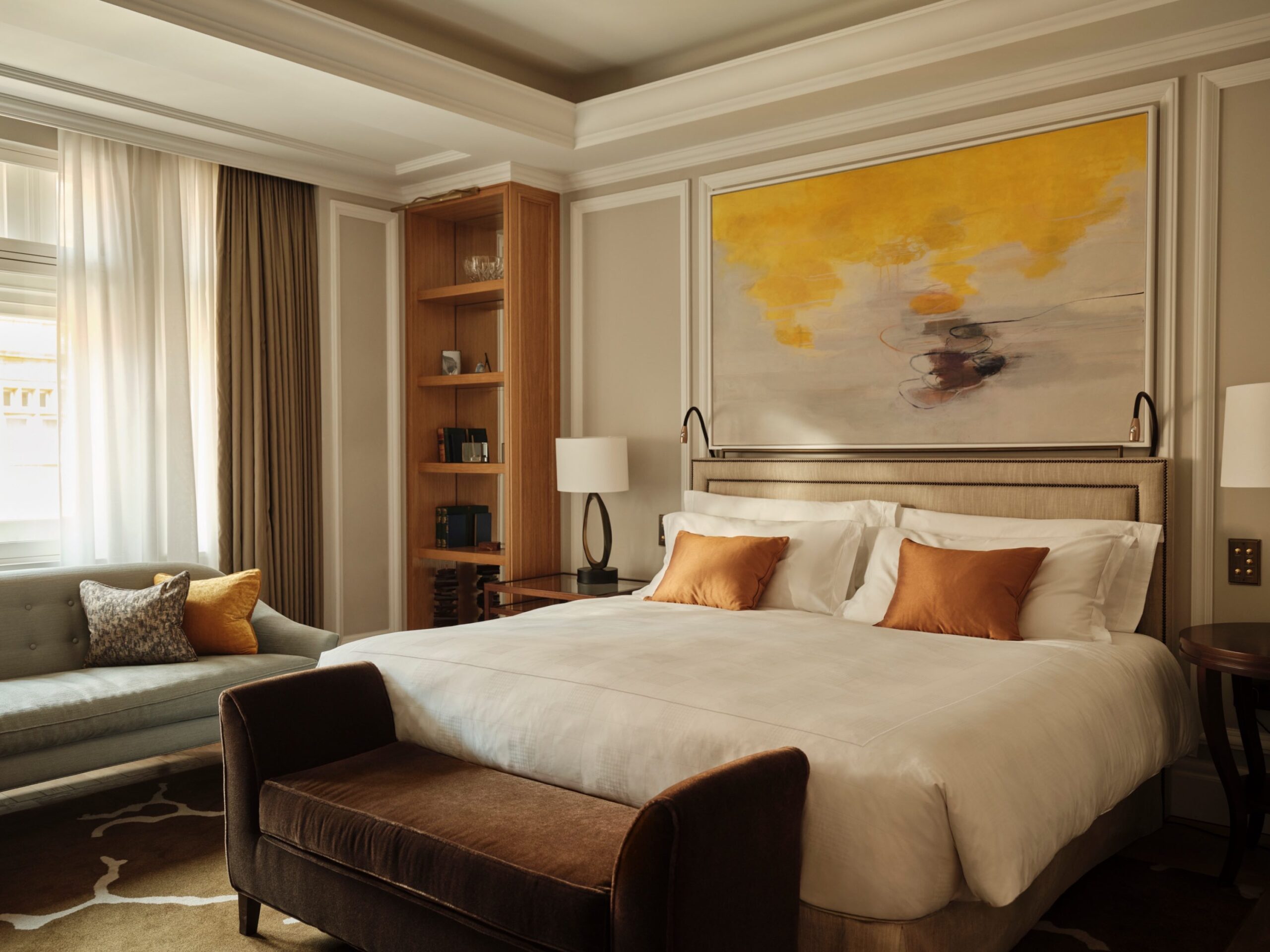
Spanning 39–43 m² (420–463 sq ft), the Junior Suite King introduces an open-plan living area furnished with a sofa, armchair, and coffee table alongside a king-size bed, with space for an additional rollaway bed on request (accommodating up to three guests). Facing the Chelsea neighbourhood streets, these suites capture the feel of a self-contained London studio apartment.

Best for: Couples wanting a proper lounge area for morning coffee or evening drinks, or small families travelling with one young child.
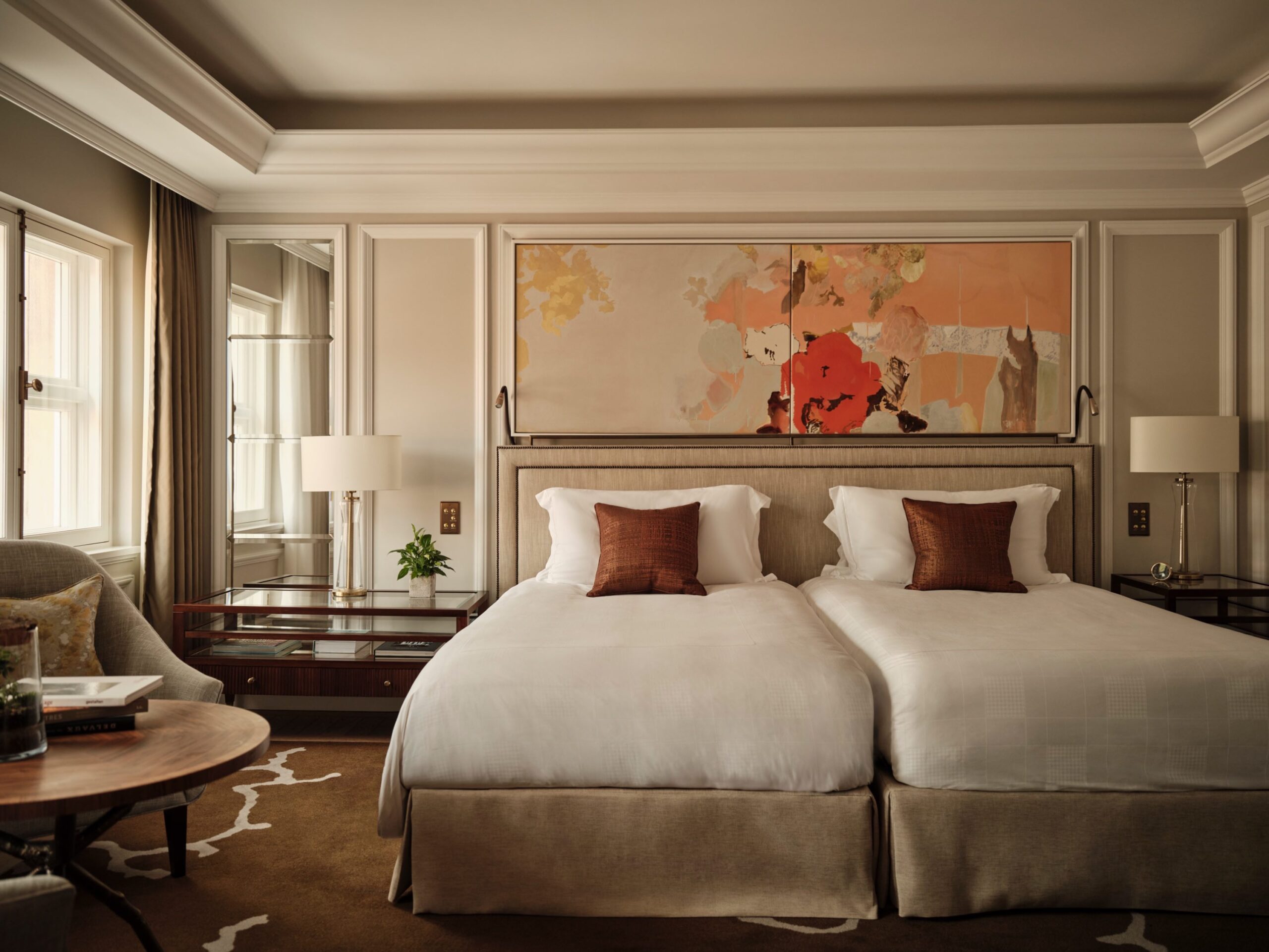
 

Junior Suite Twin

Offering 41–45 m² (441–484 sq ft) of open-plan living space with two twin beds and room for an optional rollaway bed, the Junior Suite Twin is among the most generously proportioned twin accommodations in Knightsbridge and Chelsea. Its Chelsea street views and separate seating zone allow two guests to unpack comfortably without feeling crowded.

Best for: Friends sharing on longer London stays, or two adults travelling with a child who appreciate extra floor space.
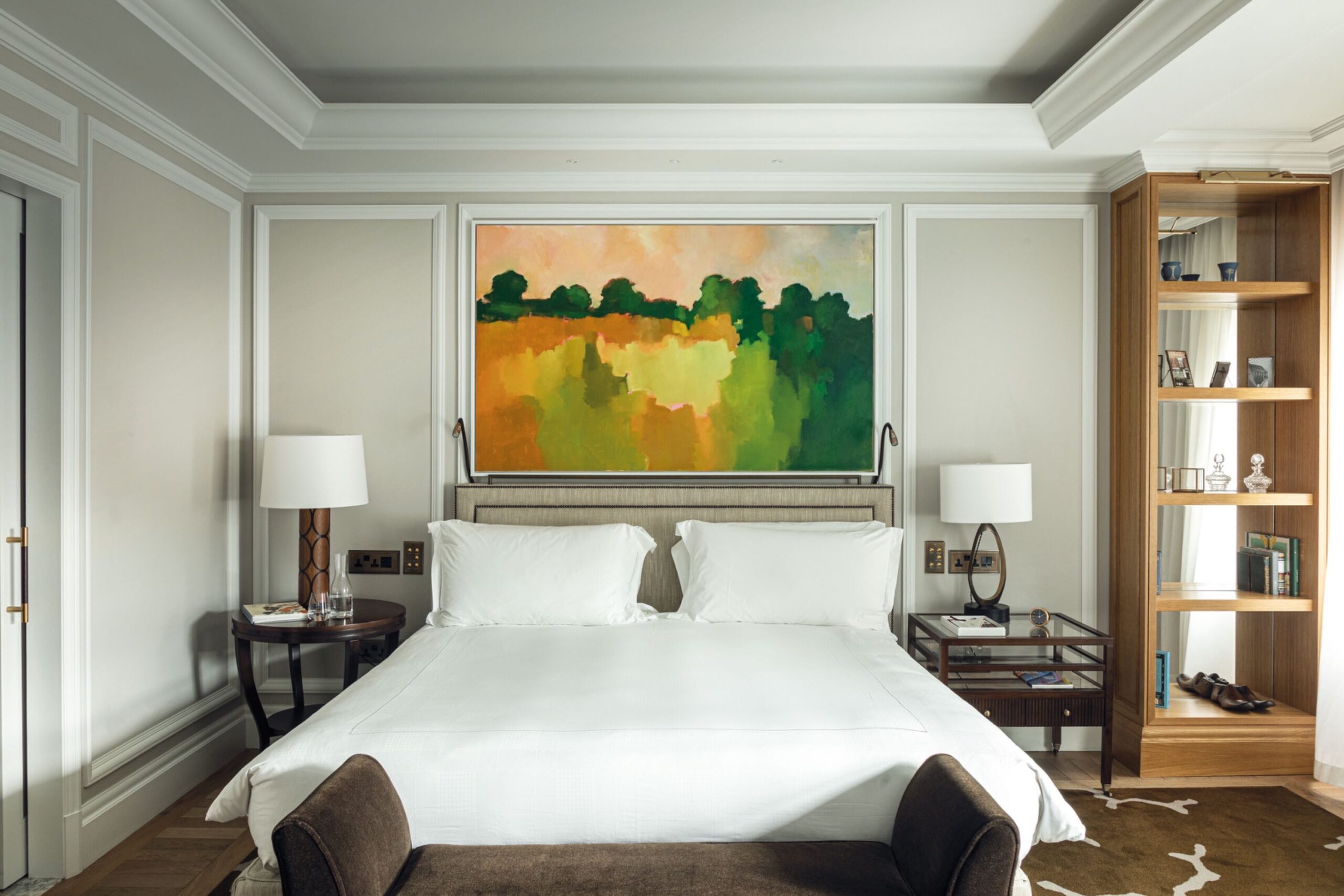
Deluxe Junior Suite

At 46–48 m² (495–517 sq ft), the Deluxe Junior Suite expands the open-plan layout with a larger lounge zone, a king-size bed (plus space for one rollaway bed), and wider Chelsea street aspects. Many of these suites feature distinct architectural quirks inherited from the original Victorian townhouses—such as bay windows or higher second-floor ceilings—alongside deep marble bathrooms with separate walk-in showers and soaking tubs.

Best for: Couples settling in for four or more nights who want the spaciousness of a suite without needing a closed bedroom door.
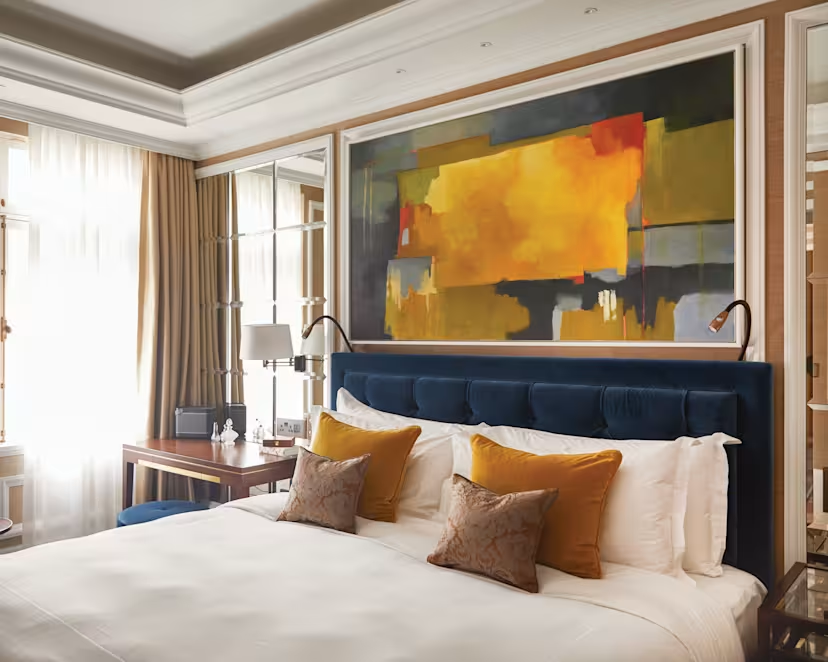
 

One Bedroom Suite

Measuring 51–54 m² (549–581 sq ft), the One-Bedroom Suite introduces a separate, door-closed living room alongside a king-size bedroom and views over the surrounding Chelsea streets. Designed strictly for two adults (with no rollaway beds permitted), it allows one guest to read, work, or entertain in the sitting room while the bedroom remains completely private.

Best for: Couples on extended stays or business travellers who value a separate parlour for meetings and quiet relaxation.
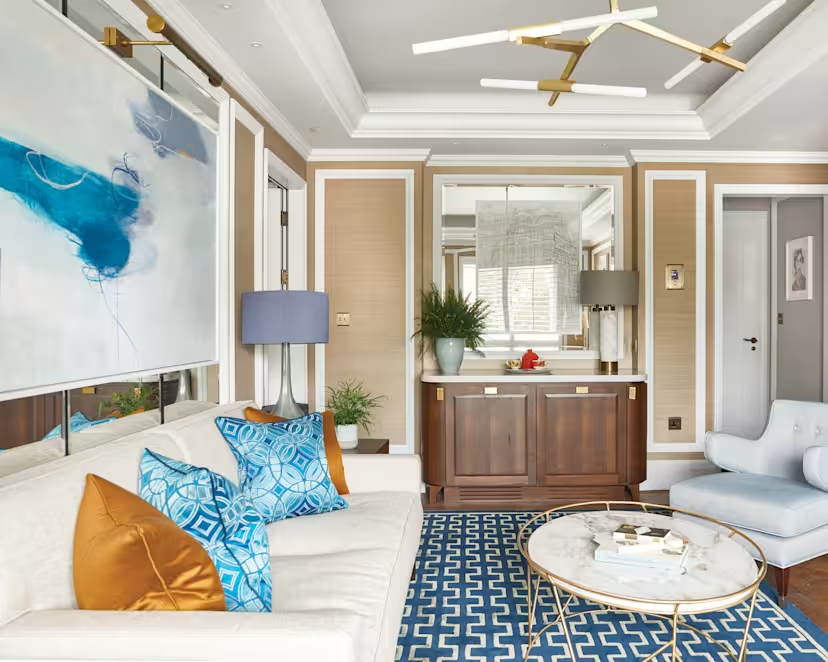
 

Park View Corner Suite

Occupying prime corner positions across 63 m² (678 sq ft), this category shifts the outlook from the neighbourhood streets directly onto the greenery of private Cadogan Place Gardens. Furnished with a king-size bed and space for one rollaway bed (sleeping up to three), its dual-aspect windows flood both the bedroom and sitting room with natural light.

Best for: Couples who prioritise tranquil garden views and abundant daylight over street-level bustle.
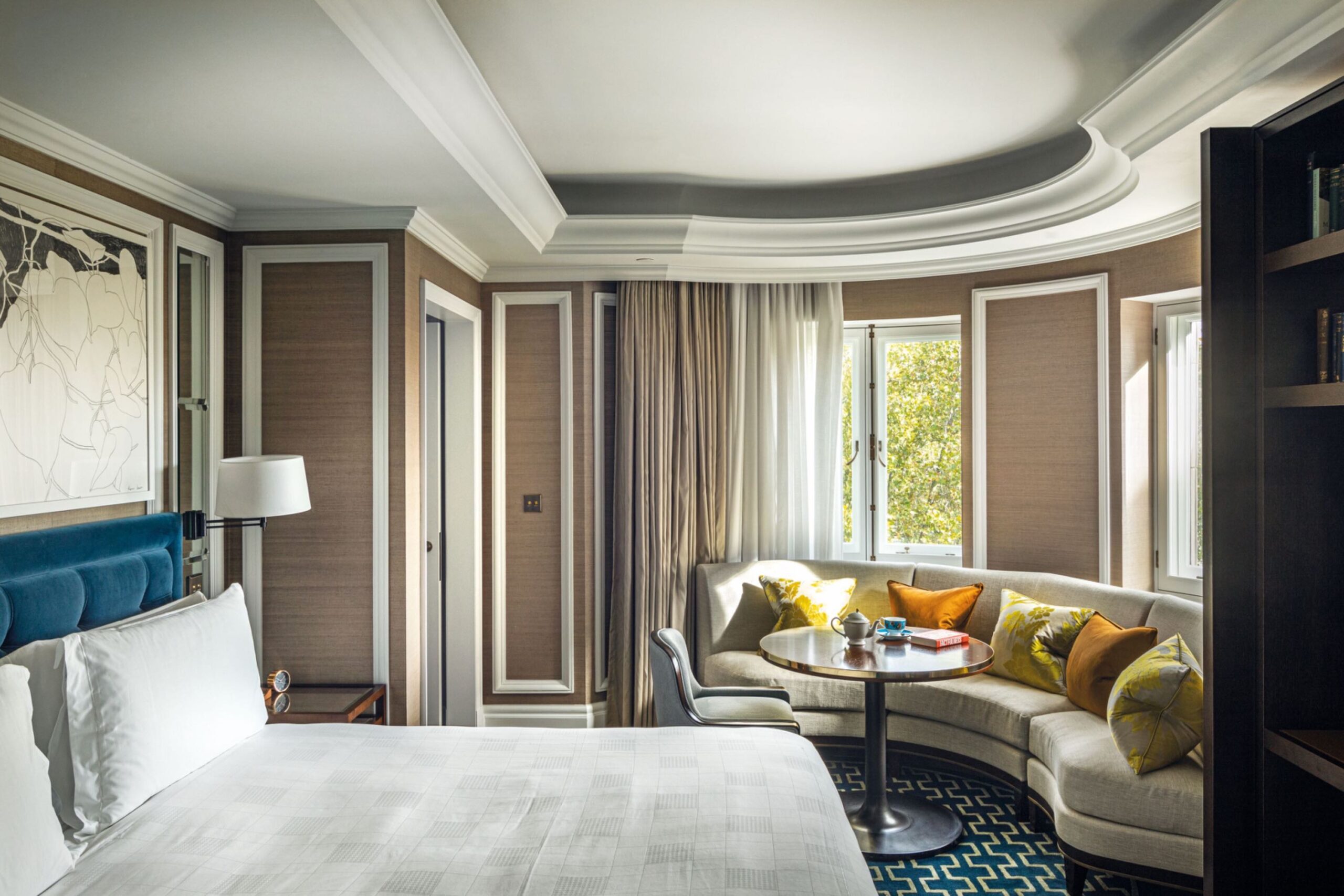
Deluxe Two Bedroom Park View Suite

Extending across 103 m² (1,109 sq ft) with corner views over Cadogan Place Gardens, this suite combines two bedrooms—configured with either two king-size beds or one king and two twins—plus space for two rollaway beds to accommodate up to six guests. Multiple bathrooms and a generous central living room allow the space to function like a private Mayfair-or-Chelsea flat.

Best for: Families with older children or two couples travelling together who want shared living space overlooking the gardens.
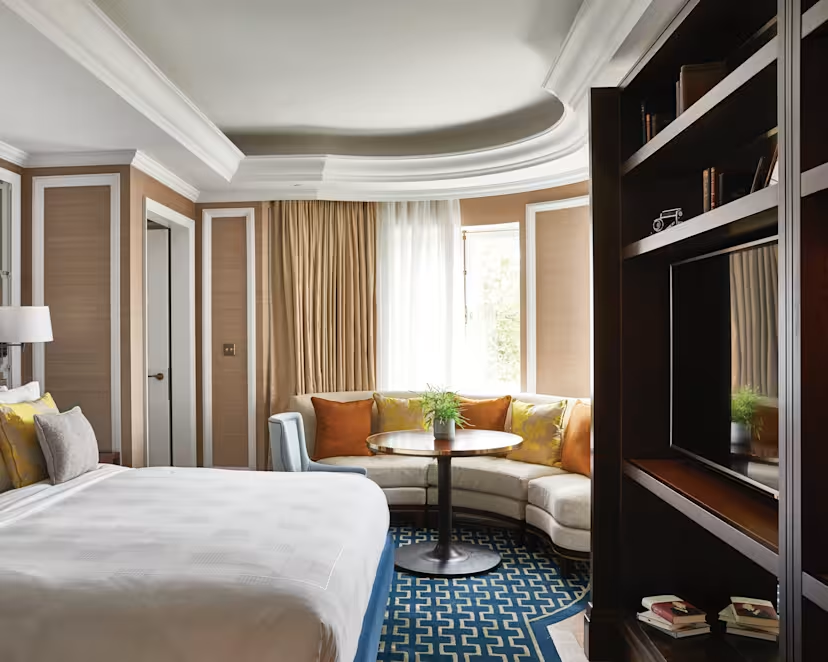
Deluxe Three Bedroom Park View Suite

Spanning 155 m² (1,668 sq ft) across a corner garden-facing footprint, this expansive layout pairs one king-size bed and two sets of twin beds (plus up to three rollaway beds on request, sleeping up to nine) with multiple marble bathrooms and an airy reception room. Its positioning frames unobstructed views across the manicured lawns and mature trees of Cadogan Place Gardens.

Best for: Multi-generational families or larger groups travelling together who prefer a single interconnected residence over separate hotel rooms.
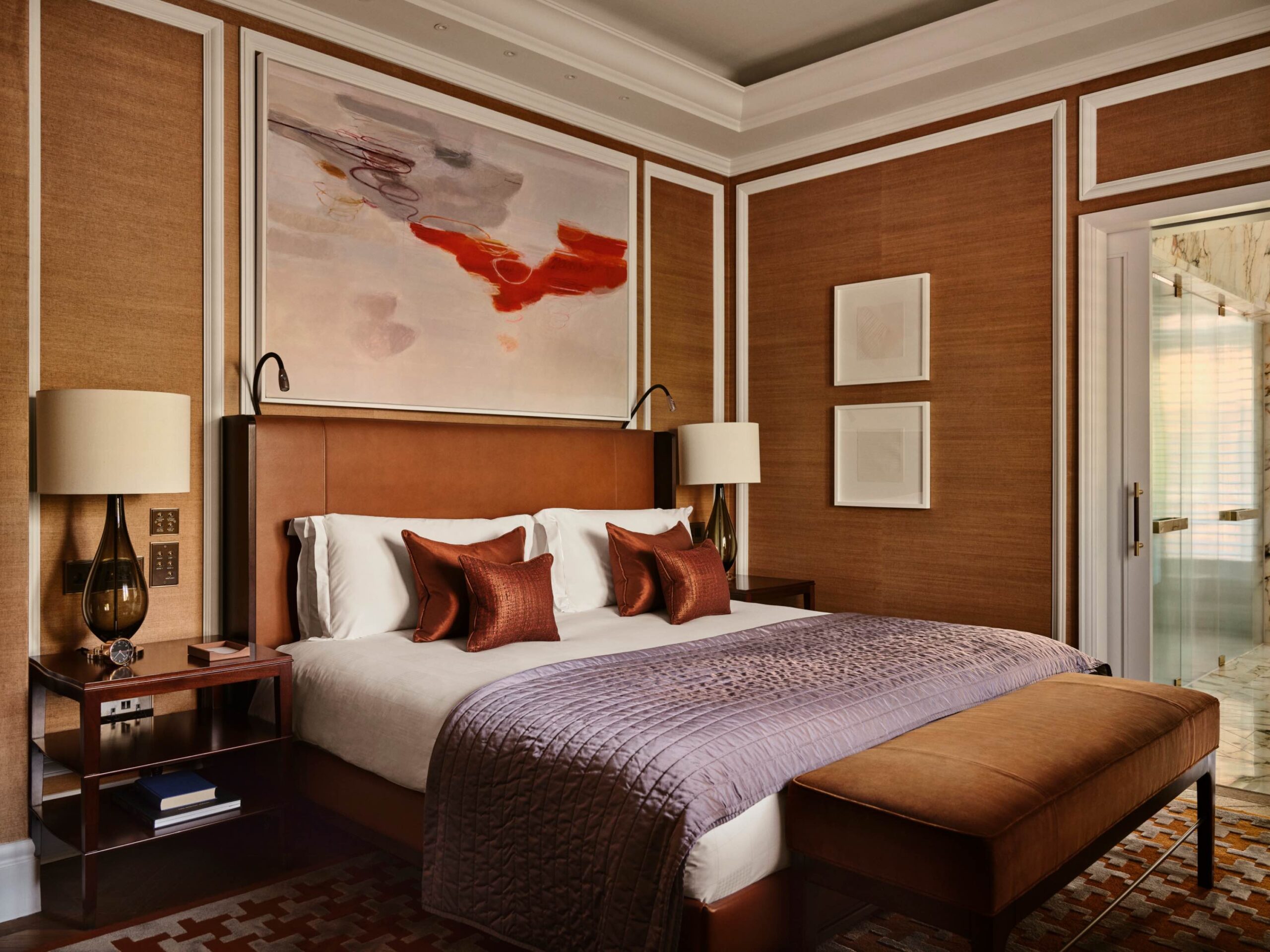
The Oscar Suite

Named in tribute to Oscar Wilde and incorporating historic Room 118, this 115 m² (1,238 sq ft) Signature Suite looks out over Cadogan Place Gardens. Furnished with a king-size bed (plus one optional rollaway bed, sleeping up to three), it pairs a formal dining area, fireplace-warmed drawing room, and bespoke literary details with VIP inclusions such as round-trip airport transfers, dedicated host service, complimentary laundry, and a curated in-suite bar.

Best for: Couples and literary enthusiasts seeking the hotel’s most historically resonant residence with full signature-suite privileges.

Two Bedroom Oscar Suite

Expanding The Oscar Suite to 160 m² (1,722 sq ft) within the main building by connecting an adjacent twin bedroom, this configuration provides one king-size bed and two twin beds (plus up to two rollaway beds, sleeping up to six) with views over Cadogan Place Gardens. Guests retain the historic drawing room, dining table, and dedicated host service while gaining a second private bedroom and bathroom.

Best for: Families or two couples looking for historic character, generous entertaining space, and private garden views.
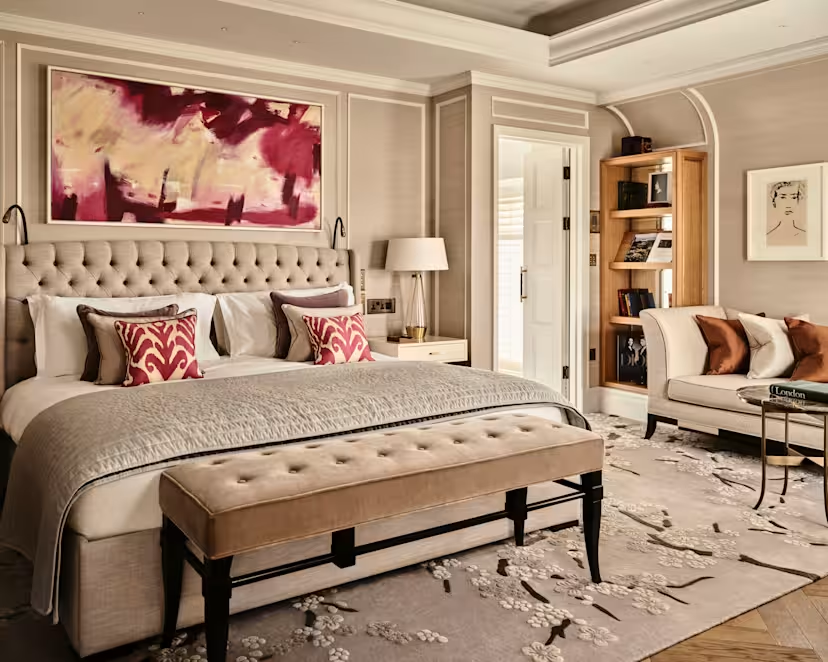
The Cadogan Penthouse

Set high on the fifth floor across 104 m² (1,119 sq ft), The Cadogan Penthouse features a private furnished balcony overlooking Cadogan Place Gardens and the London skyline. Inside, a king-size bedroom (with space for one rollaway bed, sleeping up to three) sits alongside a fireplace-lit living room, dining area, guest powder room, walk-in wardrobe, and marble bathroom with a deep-soak tub, complemented by round-trip transfers and dedicated host service.

Best for: Couples and honeymooners seeking top-floor privacy, outdoor terrace space, and skyline views.

Two Bedroom Penthouse Suite

Measuring 130 m² (1,399 sq ft) on the upper level of the main building, this signature configuration pairs one king-size bed and one queen-size bed (plus one optional rollaway bed, sleeping up to five) with two private balconies overlooking Cadogan Place Gardens and the surrounding rooftops. Its open-plan living and dining space creates an effortless residential flow above Sloane Street.

Best for: Small families or two couples who want top-floor elevation and twin outdoor balconies.

Family Deluxe Junior Suite

Created by pairing interconnecting spaces across 79 m² (850 sq ft), this configuration provides one king-size bed and two twin beds, with room for an extra rollaway bed to sleep up to five guests. Facing the Chelsea streets, it delivers the practical separation of two sleeping zones while keeping younger children close at hand.


Best for:
Families with two or three children seeking an interconnected townhouse layout rather than booking separate rooms on different corridors.
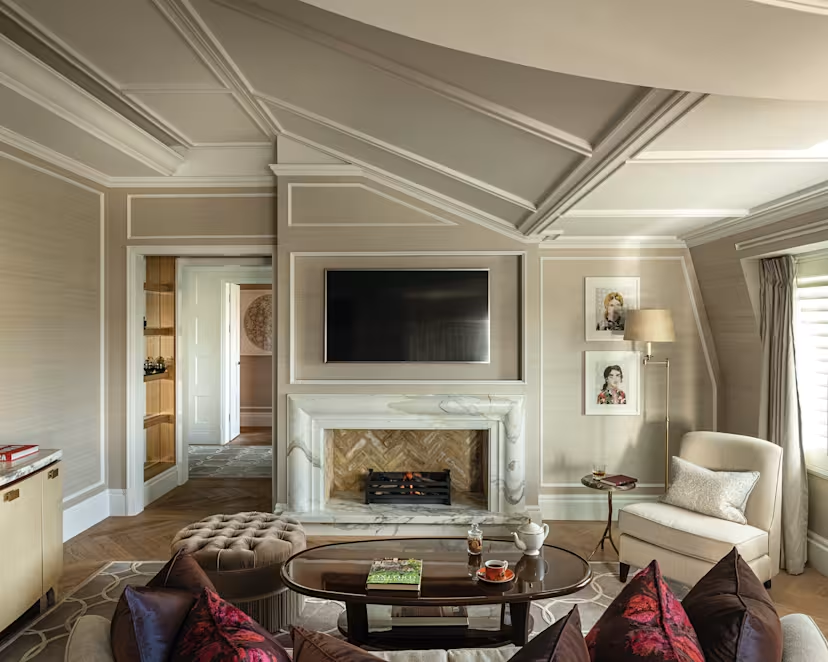
Seven Bedroom Cadogan Penthouse

By privatising the entire fifth floor via its own secure key-card entrance, the hotel transforms into a 334 m² (3,595 sq ft) private rooftop residence comprising four king-size beds, two queen-size beds, and two twin beds—sleeping up to 14 guests in existing bedding or 16 with rollaway beds. Combining multiple living areas, furnished balconies, and sweeping views across Cadogan Place Gardens and Chelsea, it offers complete exclusivity in central London.

Best for: Large extended families, diplomatic delegations, or private buyout groups requiring total floor security and residential scale.


© Belmond


Restaurants, Bars and the Social Life of The Cadogan

Rather than housing a sprawling hotel dining corridor, The Cadogan channels its culinary life through two distinct, ground-floor spaces that reflect its residential scale: Willett’s, the British bistro that opened in April 2026 in homage to master builder William Willett, and The Drawing Room, an intimate lounge and bar built around afternoon tea, evening cocktails, and unhurried conversation. Together, they anchor the hotel firmly within Chelsea’s neighbourhood dining rhythm—drawing local residents off Sloane Street alongside resident guests.


© Belmond


The Drawing Room

Designed with moulded decorative ceilings, brass-trimmed panelling, low-slung velvet sofas, and an arched mirrored back wall overlooking Sloane Street, The Drawing Room serves as the hotel’s private parlour from morning until late evening. Operating as a relaxed lounge open to residents and non-residents alike, it transitions effortlessly through the day beginning with morning coffee, moving into an exquisite Afternoon Tea service complete with seasonal pastries, warm scones with Cornish clotted cream, and loose-leaf Birchall infusions, and culminating by dusk in an intimate cocktail hour featuring house signatures like the Mead Martini and Shortbread Old Fashioned alongside light bistro plates.


Opening Rhythm: Breakfast is served exclusively to resident guests from 07:00 to 11:00, after which the room opens to non-residents for all-day light dining (11:00–22:00), Afternoon Tea (12:00–17:00), and evening drinks until 23:00.


Afternoon Tea: The afternoon ritual centres on loose-leaf blends presented so guests can sample the aromas before ordering—paired with finger sandwiches, warm scones with clotted cream, and seasonal patisserie (including dedicated vegetarian and vegan menus), typically priced between £50 and £79 per person depending on Champagne pairings. During warmer months, resident guests can also arrange to take afternoon tea across the street in private Cadogan Place Gardens.


Evening Cocktails & Light Plates: By dusk, the room shifts toward aperitifs and nightcaps, featuring house signatures such as the Mead Martini, an oyster and samphire Gibson, a Shortbread Old Fashioned, and a Spicy Marmalade Margarita, accompanied by light bistro plates and desserts.


© Belmond


Willett’s

Named after the Victorian developer William Willett who originally shaped the surrounding 1887 townhouses, Willett’s operates as an ingredient-led British bistro overseen by Executive Chef Michael Turner. Set beneath a teal ceiling with warm timber tones and street-facing windows, the dining room focuses on rigorous sourcing from across the United Kingdom—showcasing St Ewe’s eggs, Dingley Dell charcuterie, 42-day dry-aged ex-dairy beef, and Cornish day-boat fish. The menu balances modern neighbourhood appeal with nostalgic British comforts, featuring breakfast collaborations celebrating iconic farmhouse traditions, all-day dishes ranging from dry-aged beef tartare (£17) and sirloin on the bone (£43) to seasonal daily specials, traditional Sunday roasts with beef-dripping roast potatoes, and classic homestyle puddings such as sticky toffee pudding and jam roly-poly.


Opening Rhythm: Breakfast is served exclusively to resident guests from 07:00 to 11:00, after which the room opens to non-residents for all-day light dining (11:00–22:00), Afternoon Tea (12:00–17:00), and evening drinks until 23:00.


Afternoon Tea: The afternoon ritual centres on loose-leaf blends—presented so guests can sample the aromas before ordering—paired with finger sandwiches, warm scones with clotted cream, and seasonal patisserie (including dedicated vegetarian and vegan menus), typically priced between £50 and £79 per person depending on Champagne pairings. During warmer months, resident guests can also arrange to take afternoon tea across the street in private Cadogan Place Gardens.


Evening Cocktails & Light Plates: By dusk, the room shifts toward aperitifs and nightcaps, featuring house signatures such as the Mead Martini, an oyster and samphire Gibson, a Shortbread Old Fashioned, and a Spicy Marmalade Margarita, accompanied by light bistro plates and desserts.


Private Dining & In-Room Service

For private gatherings, the hotel offers The Oscar & Lillie, an intimate private dining room accommodating up to 44 guests and lined with original wood panelling salvaged from Lillie Langtry’s nineteenth-century dining room, while The Drawing Room itself can be hired privately for receptions of up to 90 guests (with three-course private dining packages starting around £125 per person). Resident guests also have access to 24-hour in-room dining drawn from both kitchens, allowing breakfast crumpets or late-night bistro classics to be served privately in-suite


© Belmond


Gardens, Wellness and Facilities

As the novelist Elizabeth Bowen once observed, a house is never just walls and wood, but an atmosphere shaped by the space around it. At 75 Sloane Street, that atmosphere spills outward across the threshold and into the private greenery of West London, trading underground spa labyrinths for open lawns, fresh air, and neighbourhood seclusion.


Private Access to Cadogan Place Gardens

Directly opposite the front doors lie the two-acre Cadogan Place Gardens, a manicured green sanctuary enclosed by wrought-iron fencing and accessible exclusively to local residents and hotel guests via a physical key collected from the concierge. Along with an illustrated map detailing historical touchstones, including a tree planted by the Queen Mother and the hotel’s own active beehives, the gardens offer a tranquil escape featuring expansive lawns, winding pathways, and a dedicated children’s play area. During warmer months, the kitchen can arrange bespoke picnic hampers for an afternoon on the grass, and dogs are welcome provided they remain on a lead.


Tennis Courts and Coaching

Tucked discreetly within the southern perimeter of Cadogan Place Gardens are two private, all-weather hard tennis courts available to guests on a complimentary basis. The concierge team manages court bookings, supplies rackets and tennis balls at no extra charge, and can arrange private coaching sessions upon request.


Spa Treatments by Minimal by Hadda

Eschewing a conventional multi-room thermal circuit, the hotel partners with London facialist Hadda Akrim for an exclusive spa residency under her Minimal by Hadda practice, operating Monday to Friday from 10:00 to 18:00 and Saturday from 10:00 to 15:00 (closed Sundays). Focusing on advanced skin science, lymphatic drainage, and sculpting facial therapy using tools such as The Byonik cold laser and LED light therapy, signature treatments include the Total Sculpt facial (55 minutes, £375), Advanced I and II cellular skin treatments (£455–£525), and The Quick Reset combining body pressure therapy with facial sculpting. Sessions take place either in the hotel’s dedicated private treatment room or within the complete privacy of a guest’s suite.


Yoga and Pilates

Guests can practise yoga or Pilates in the privacy of their room, inside the hotel gym, or outdoors in Cadogan Place Gardens. A yoga mat and a TechnoBody fitness bag are provided in guest rooms, with additional equipment available via the concierge. For deeper practice, one-to-one private sessions with specialist yoga and Pilates instructors can be arranged upon request for an additional fee.


24-Hour Gym and Guided Running Routes

Located on-site, the compact fitness studio remains open around the clock for independent workouts, equipped with modern TechnoGym cardio apparatus, free weights, and stretching zones, alongside private personal training on request. For runners and walkers, the concierge also provides curated local routes mapping scenic loops through neighbouring Hyde Park and Kensington Gardens.


No Swimming Pool

Visitors planning a stay should note clearly that The Cadogan does not feature a swimming pool, steam rooms, or hydrotherapy circuits. Travellers for whom daily lane swimming or extensive aquatic wellness facilities are essential will find the leisure offering here strictly tailored to intimate residential scale rather than resort-style infrastructure.


Bespoke In-Room and Family Amenities

True to its private-residence philosophy, the property offers an unusually attentive menu of thoughtful comforts. Guests can customise their sleep experience via a dedicated pillow menu, spanning anti-snoring to buckwheat options, alongside weighted blankets, mulberry silk eye masks, and Bamford bedtime mists. Families are similarly well supported with child-sized bathrobes, complimentary loaner Polaroid cameras to capture city memories, and in-room popcorn machines for private movie nights. Four-legged companions receive equal consideration, complete with personalised pet beds, bowls, and a dedicated canine room-service menu.


Experiencing Chelsea from The Cadogan Hotel

As Henry James once said, London is a collection of villages held together by a shared heartbeat, and few addresses capture that urban alchemy quite like 75 Sloane Street. Resting precisely where Chelsea, Knightsbridge, and Belgravia meet, The Cadogan serves as an ideal base for exploring the capital. Rather than existing as an isolated luxury bubble, the hotel functions as an extension of London’s cultural, artistic, and retail life, offering guests effortless access to the city’s finest institutions through a series of curated neighbourhood connections and seasonal traditions.


World-Class Retail and Iconic Shopping

The capital’s most prestigious luxury corridors begin practically at the front doorstep. A three-minute stroll north leads directly to Knightsbridge for Harrods and Harvey Nichols, while Sloane Street itself unfolds as a premier global fashion avenue housing flagship houses. Heading south leads straight into the independent boutiques, concept stores, and interior design showrooms of the King’s Road and Duke of York Square.


Theatre Royal and London’s Stage Heritage

 London’s legendary entertainment district is within easy reach, anchored by historic institutions such as Theatre Royal Drury Lane and Theatre Royal Haymarket. From classic plays and grand musicals to private backstage experiences, the concierge can secure priority seats and private transfers to the Theatre Royal and surrounding playhouses across Covent Garden and the West End.


The Natural History Museum and South Kensington’s Museum Mile

 Just a 15-minute stroll or five-minute drive west into South Kensington sits the Natural History Museum, housed in Alfred Waterhouse’s Romanesque cathedral of terracotta and famous for its Hintze Hall blue whale skeleton, dinosaur galleries, and Darwin Centre. Sitting immediately alongside the Victoria and Albert Museum and the Science Museum, it offers guests effortless access to London’s richest concentration of natural history, decorative arts, and design collections.


Artistic Sanctuaries and Horticultural Heritage

Chelsea’s deep artistic identity is anchored right in the neighbourhood. A short walk brings guests to the Saatchi Gallery on Duke of York Square for contemporary visual arts, or to the historic Chelsea Physic Garden—founded in 1673 as an apothecary’s garden on the banks of the Thames. Nearby cultural landmarks also include the Victoria and Albert Museum, the Natural History Museum, and the Royal Albert Hall.


Hyde Park and Green Spaces

For morning constitutionals or afternoon strolls, the vast open green spaces of Hyde Park and Kensington Gardens are just a ten-minute walk north from the hotel, offering shaded horse-riding tracks, the Serpentine Lake, and quiet tree-lined pathways.


Adventures by Rail aboard the British Pullman

Capitalising on its Belmond sister portfolio, the hotel sits just a fifteen-minute walk or a brief chauffeured drive from London Victoria Station. From there, guests can seamlessly transition their stay into a legendary day journey across the British countryside aboard the historic vintage carriages of the British Pullman, complete with fine dining and champagne.


Cadogan Hall

Located just around the corner on Sloane Terrace, this premier 950-seat classical music venue serves as the permanent home of the Royal Philharmonic Orchestra, offering world-class orchestral concerts, jazz performances, and vocal recitals right on the hotel’s doorstep.


Business Meetings, Weddings and Celebrations

For private gatherings, corporate events, and milestone celebrations, the hotel provides versatile townhouse spaces that balance historic grandeur with modern discretion. The Oscar & Lillie suite features its own private entrance, original wood panelling salvaged from Lillie Langtry’s nineteenth-century dining room, and the flexibility to host up to 60 seated guests for a wedding breakfast or 100 standing guests for a cocktail reception, backed by full civil ceremony licencing. Alternatively, The Drawing Room offers a light-filled residential setting overlooking Sloane Street for private receptions and afternoon tea gatherings of up to 80 standing guests. Dedicated event planners and bespoke catering menus from Executive Chef Michael Turner ensure every private function is executed to the highest standard.


Festive Season (Christmas and New Year)

When winter arrives, the hotel transforms into an enchanting holiday retreat. The festive calendar features exclusive seasonal experiences, including private wreathmaking workshops and floral masterclasses hosted by Neill Strain Floral Couture, Moët Hennessy champagne tastings, mince pie and Beef Wellington masterclasses, and carol singers alongside the Cadogan Christmas cart. Dining celebrations culminate in Willett’s festive set menus, a traditional Christmas Day lunch with live background music, and two vibrant New Year’s Eve dinner seatings welcoming the new year in style.


© Belmond


Planning a Stay at The Cadogan Hotel

A stay at The Cadogan places visitors in a distinctive part of west-central London, with Chelsea’s neighbourhood life on the doorstep and Knightsbridge, Belgravia and South Kensington within easy reach. Choosing the hotel, however, is only one part of planning a successful visit. The most suitable room, the length of the stay, the journey from the airport and the balance between exploring London and enjoying the hotel itself all deserve consideration. The Cadogan is well suited to visitors who value a residential London setting, convenient access to shopping and museums, and a hotel with a strong sense of history and personal service. Those whose plans centre on the City, Canary Wharf or London’s eastern districts may prefer to consider their daily travel requirements before booking. The guidance below covers the practical details that will help make the most of a stay.


Is The Cadogan the Right Base for Your London Visit?

The Cadogan occupies 75 Sloane Street, close to the meeting point of Chelsea, Knightsbridge and Belgravia. This is one of the hotel’s most useful advantages: visitors can spend time exploring the immediate neighbourhood on foot, while two Underground stations provide connections to the wider city. Sloane Square, served by the District and Circle lines, and Knightsbridge, served by the Piccadilly line, are both approximately five minutes away on foot.


For visitors interested in London’s museums, galleries and cultural institutions, the location is especially convenient. The Victoria and Albert Museum, Natural History Museum and Science Museum are approximately a 20-minute walk away in South Kensington. Hyde Park is around ten minutes away, while Buckingham Palace is approximately a 20-minute walk according to the hotel’s visitor information. Saatchi Gallery and Royal Albert Hall are also accessible from the hotel, making it possible to devote a substantial part of a visit to London’s cultural life without travelling across the capital each day.


Shopping is another strong reason to stay in this neighbourhood. Sloane Street is associated with international fashion houses and luxury boutiques, while King’s Road has a more varied mix of independent shops, restaurants and familiar British retailers. Harrods and Harvey Nichols are nearby in Knightsbridge. Visitors planning a shopping-focused stay will find it practical to arrange deliveries, shopping appointments and restaurant reservations around their time in the area.


For a first visit to London, The Cadogan offers a comfortable base for exploring the western and central parts of the capital. It is not, however, within walking distance of every major attraction. Westminster, the West End, the British Museum, the Tower of London and the City are better approached by Underground or taxi, depending on the destination and time of day. Grouping activities by neighbourhood will usually make a short stay more enjoyable than repeatedly crossing the city. Business visitors should consider the location of their meetings. The hotel is convenient for appointments in Chelsea, Knightsbridge, Belgravia, Victoria and parts of Mayfair. Regular journeys to Canary Wharf, the City or east London will involve more travel, so visitors with a demanding business schedule should compare their daily itinerary with the available transport connections.


How Long Should You Stay?

The ideal length of a visit depends on how much of London you intend to explore and whether the hotel is primarily a base for sightseeing or an important part of the stay itself.


Two nights work well for a focused Chelsea and Knightsbridge visit. There is time to explore Sloane Street, King’s Road and the surrounding neighbourhood, enjoy an afternoon at the hotel and visit one of the nearby museum districts. This is a good format for a short shopping break, a special occasion or a weekend in west London.


Three nights allow a more balanced introduction to the capital. Visitors can devote time to Chelsea and South Kensington, spend another day around Buckingham Palace and Westminster, and reserve an evening for the West End. The schedule remains manageable without making every part of the stay dependent on transport.


Four or five nights are more suitable for visitors who want to experience several sides of London. This provides room for the major museums, shopping districts, theatre, historic areas and a more extensive exploration of the city. It also allows time to enjoy The Cadogan’s gardens, dining and wellness facilities without treating them as activities to fit around a packed sightseeing schedule.


A longer stay is also worth considering when travelling with children, attending an event or combining London with a wider British itinerary. The hotel’s concierge can assist with arrangements for onward travel, including journeys connected with Belmond’s British Pullman and Britannic Explorer trains.


Arriving at The Cadogan and Getting Around London

The hotel is located at:

The Cadogan, A Belmond Hotel
75 Sloane Street
London SW1X 9SG
United Kingdom

The nearest Underground stations are Sloane Square and Knightsbridge, each approximately five minutes’ walk away. London Victoria railway station is around 15 minutes away on foot. The latter is useful for visitors arriving by train or connecting with onward rail services, although guests carrying substantial luggage may find a taxi more convenient.


Travelling from Heathrow Airport

Heathrow has a direct Piccadilly line service to Knightsbridge, making the Underground a practical option for visitors travelling with manageable luggage. The hotel is approximately five minutes’ walk from Knightsbridge station. The Elizabeth line is another option for reaching central London, with connections available for the onward journey to the hotel. For visitors arriving after a long-haul flight, travelling with children or carrying several suitcases, a pre-arranged car may be preferable. The Cadogan’s concierge can organise private airport transfers. Child seats and luggage assistance can be requested when arranging the journey. Contact concierge.cad@belmond.com to discuss the details.


Travelling from Gatwick Airport

Rail services from Gatwick connect with London Victoria, making this a useful arrival route for guests staying at The Cadogan. From Victoria, the hotel is approximately a 15-minute walk, although a short taxi journey is generally more convenient with luggage. Check the train operator’s timetable before travelling, particularly for late arrivals or journeys on weekends when engineering work may affect services.


Using London’s public transport

Contactless payment is one of the simplest ways for international visitors to use London’s public transport. A contactless bank card or compatible mobile device can be used for pay-as-you-go journeys across the Underground, buses and many rail services. An Oyster card is another option for those who prefer a separate transport card. One important detail is to use the same card or device when touching in and out of a journey. Using a physical bank card to enter and a phone to exit, for example, can result in the journey being treated as two separate incomplete transactions. Overseas card fees may also apply, depending on the bank. Visitors can check the current payment guidance and fare arrangements directly with Transport for London before travelling.


Booking, Arrival and Departure

The standard check-in time at The Cadogan is 3:00pm, while check-out is 12:00pm. Early check-in and late check-out can be requested, but neither should be assumed in advance. Late check-out is subject to availability and may incur an additional fee. Visitors with early flights or late departures should contact the hotel before arrival to discuss their requirements. When comparing room prices, look beyond the headline nightly rate. Belmond’s current accommodation listings identify displayed room rates as excluding a 5% service charge. The final booking total should therefore be checked carefully, together with any taxes, breakfast inclusions and other charges. Cancellation deadlines, advance-payment requirements and amendment conditions also depend on the rate selected. Read the terms attached to the specific reservation before making payment.


There is no on-site car park at The Cadogan. The hotel’s reception team can advise guests about suitable parking options in the surrounding Knightsbridge, Chelsea and Belgravia areas. Visitors planning to arrive by car should arrange this in advance rather than assume that a space will be available at the property. Reservations for dining, spa treatments, tennis and private experiences are best discussed before arrival, especially during busy periods. The concierge can also assist with airport transfers and the practical arrangements for exploring London. For room reservations and restaurant enquiries, the hotel lists reservations.cad@belmond.com. Its main telephone number is +44 (0)20 7048 7141.


Dining, Gardens and Wellness During Your Stay

The Cadogan’s restaurants and lounges provide options for guests who prefer to spend part of their visit at the hotel. Willett’s serves British bistro cooking throughout the day, with breakfast, lunch and dinner listed in the hotel’s dining information. The Drawing Room is suited to afternoon tea, light meals and drinks. Both venues welcome walk-in guests, although a reservation is advisable when a particular time or occasion matters. In-room dining is available 24 hours a day.


Guests should also make time for Cadogan Place Gardens, situated directly across the street. Access is complimentary for hotel residents, with keys available from reception. The gardens offer a convenient place for a morning walk or a quieter break between visits to the city. Tennis courts are located within the gardens and can be reserved through the concierge; the hotel provides equipment and can arrange professional coaching.


Wellness facilities require a little clarification when planning a stay. The Cadogan has a 24-hour gym equipped with Technogym equipment, along with one-to-one personal training available on request. Its spa offering, Minimal by Hadda, provides massages, facials and body treatments in a dedicated treatment room, with treatments also available in guests’ rooms or suites. The hotel does not have a swimming pool. Visitors looking for a full spa complex with swimming and thermal facilities should take this into account before booking.


Visiting with Children, Pets or Accessibility Requirements

Travelling with children

The Cadogan can accommodate families through connecting rooms and suites, with arrangements that allow family members to stay close together. The Family Deluxe Junior Suite is one option for larger family groups, with a published size of approximately 79m² and capacity for up to five guests. The hotel also offers connecting accommodation and can discuss larger arrangements, including the possibility of reserving an entire floor. Babysitting and childcare services are available on request. Families should confirm the exact number of beds, age-related occupancy requirements and any additional charges before booking.


Travelling with pets

The Cadogan welcomes dogs and provides pet amenities, including a canine room-service menu. Guests are asked to keep dogs on a lead inside the hotel and within the gardens. Because pet arrangements can depend on the accommodation selected, it is advisable to contact the hotel before booking to confirm availability, any applicable fee and the conditions governing where pets may accompany their owners.


Accessibility and mobility

Visitors with mobility requirements should discuss their needs directly with the hotel before selecting a room. This is especially important in a historic property comprising interconnected townhouses, where room layouts and internal levels may vary. Belmond’s descriptions of some suites specifically note that there may be a few steps within the accommodation. Guests who require step-free access should request precise information about the entrance, lift access, internal thresholds, bathroom arrangements and the route to the facilities they intend to use. The hotel can be contacted on +44 (0)20 7048 7141 to discuss individual requirements before a reservation is confirmed.


Making the Most of Your Stay

A well-planned visit should leave room for the neighbourhood as well as the city’s more famous attractions. Begin with the immediate surroundings: explore Sloane Street, spend time along King’s Road, visit the galleries and make use of the private gardens. A separate day can be given to South Kensington’s museums and Hyde Park, while another can be arranged around Buckingham Palace, Westminster and the West End. The concierge is worth consulting before arrival, especially when the visit includes theatre performances, important restaurant reservations, family arrangements or private experiences. Guests can also ask the team about tennis, personal training, spa treatments and airport transfers. Those with an interest in Belmond’s wider British portfolio may wish to discuss combining their stay with a journey on the British Pullman or Britannic Explorer.


The most successful stay at The Cadogan is one planned around the character of its location. Chelsea rewards a slower pace, while the Underground keeps the wider capital within reach. Allowing enough time for both is the best way to enjoy the hotel as a place to stay in its own right, rather than simply somewhere to return to at the end of a busy day in London.


Share This :

Leave a Reply

Your email address will not be published. Required fields are marked *